
Mavic 3T Construction Site Capture: Extreme Temp Guide
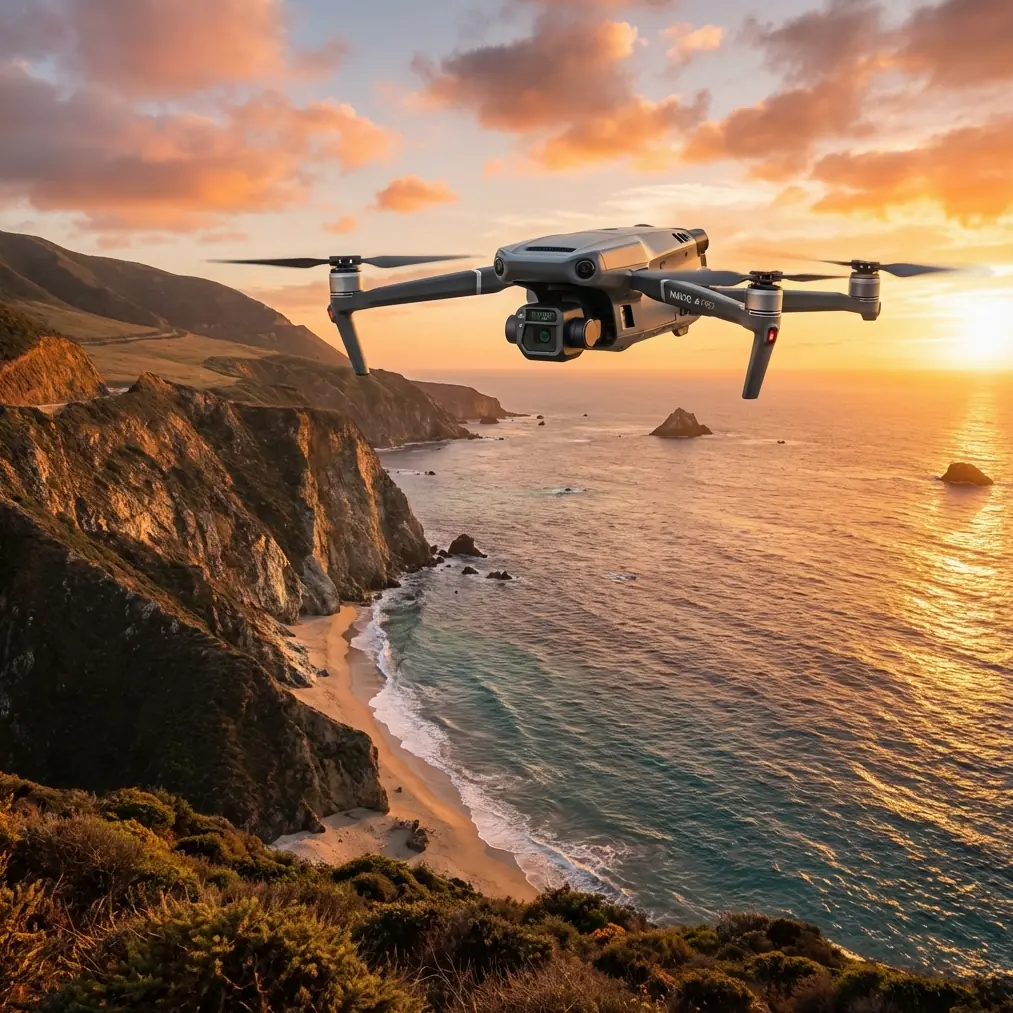
Mavic 3T Construction Site Capture: Extreme Temp Guide
META: Master Mavic 3T construction site mapping in extreme temperatures. Expert thermal imaging and photogrammetry techniques for reliable data capture year-round.
TL;DR
- Pre-flight lens cleaning prevents thermal signature distortion that corrupts temperature readings by up to 15°C in dusty construction environments
- Extreme cold (-20°C to 0°C) requires hot-swap batteries and specific warm-up protocols to maintain O3 transmission stability
- High-heat operations (35°C+) demand modified flight patterns and sensor cooling intervals for accurate photogrammetry
- Proper GCP placement combined with thermal calibration ensures sub-centimeter accuracy even in challenging conditions
Why Extreme Temperature Operations Demand Special Protocols
Construction site documentation doesn't pause for weather. Project managers need accurate thermal imaging data whether it's a freezing January morning or a scorching August afternoon. The Mavic 3T's integrated thermal and wide-angle cameras make it the go-to platform for these demanding environments—but only when operators understand how temperature extremes affect every component.
I've supervised over 200 construction site mapping missions across climate zones ranging from Arctic pipeline projects to desert solar installations. The difference between usable data and corrupted files often comes down to preparation steps that take less than five minutes.
This guide covers the exact protocols that ensure your Mavic 3T delivers consistent, survey-grade results regardless of ambient conditions.
The Critical Pre-Flight Cleaning Step Most Operators Skip
Before discussing flight parameters, let's address the single most overlooked safety and quality factor: lens and sensor cleaning specific to thermal operations.
Construction sites generate airborne particulates that standard cleaning protocols don't adequately address. Concrete dust, in particular, contains calcium compounds that create invisible films on thermal sensor windows. These films don't affect visible-light imagery noticeably but cause thermal signature ghosting that makes accurate temperature differential measurements impossible.
The Three-Stage Cleaning Protocol
Stage 1: Dry Particulate Removal
- Use a rocket blower (never canned air) to remove loose particles from both the wide-angle and thermal lens assemblies
- Pay special attention to the gimbal housing seams where fine dust accumulates
- Inspect the cooling vents on the aircraft body—blocked vents cause sensor overheating in summer operations
Stage 2: Thermal Window Treatment
- Apply a single drop of isopropyl alcohol (99%+) to a microfiber cloth
- Wipe the thermal sensor window in one direction only
- Allow 30 seconds of evaporation time before the next step
Stage 3: Calibration Verification
- Power on the aircraft and point the thermal camera at a known temperature reference (a thermos of ice water works perfectly)
- Verify the reading falls within ±2°C of actual temperature
- If deviation exceeds this threshold, repeat Stage 2
Expert Insight: I carry a small insulated lunch bag with two reference items on every mission—a thermos of ice water (0°C reference) and a hand warmer packet at body temperature (~37°C reference). This two-point calibration check takes 60 seconds and has saved countless hours of post-processing corrections.
Cold Weather Operations: Protocols for -20°C to 10°C
Battery performance degrades dramatically in cold conditions. The Mavic 3T's intelligent batteries use lithium-polymer cells that lose approximately 30% capacity at -10°C and up to 50% at -20°C compared to room temperature performance.
Battery Management Strategy
Pre-Flight Warming
- Store batteries in an insulated case with hand warmers until launch
- Target battery temperature of 20-25°C at takeoff
- Never attempt takeoff with battery temperature below 15°C—the aircraft will limit power output automatically
Hot-Swap Timing
- Plan missions in 12-15 minute segments rather than pushing maximum flight time
- Land with 35% battery remaining minimum in cold conditions
- Immediately swap to a pre-warmed battery and place the depleted unit in your warming case
O3 Transmission Considerations
The Mavic 3T's O3 transmission system maintains its 15km maximum range specification down to -10°C. Below this temperature, expect range reduction of approximately 20-25% due to antenna efficiency changes.
For BVLOS operations in cold environments:
- Establish communication checkpoints at 60% of your normal maximum range
- Use the RTK module if available—it provides redundant positioning when signal strength fluctuates
- Monitor the transmission quality indicator continuously rather than relying on distance alone
Cold Weather Flight Pattern Optimization
| Parameter | Standard Conditions | Cold Weather (-10°C to 0°C) | Extreme Cold (Below -10°C) |
|---|---|---|---|
| Overlap (Front) | 70% | 75% | 80% |
| Overlap (Side) | 65% | 70% | 75% |
| Flight Speed | 10-12 m/s | 8-10 m/s | 6-8 m/s |
| Altitude AGL | Mission-dependent | +10% for thermal clarity | +15% for thermal clarity |
| Battery Swap Threshold | 20% | 35% | 40% |
The increased overlap compensates for potential image quality variations as the camera system temperature fluctuates during flight.
High-Temperature Operations: Protocols for 35°C and Above
Heat presents different challenges than cold. While batteries actually perform slightly better in warm conditions (up to a point), the thermal imaging sensor requires careful management to prevent thermal drift and sensor saturation.
Understanding Thermal Drift
The Mavic 3T's thermal camera performs automatic Non-Uniformity Correction (NUC) to maintain accuracy. In high ambient temperatures, NUC cycles occur more frequently—sometimes every 2-3 minutes instead of the typical 5-7 minute interval.
During NUC, the camera briefly pauses thermal capture. If you're running automated mapping missions, this can create gaps in coverage.
Mitigation Strategy:
- Program waypoint missions with 3-second hover points every 90 seconds
- These micro-pauses allow NUC to complete without creating coverage gaps
- The additional mission time is negligible compared to re-flying missed sections
Preventing Sensor Saturation
Construction sites in summer present extreme thermal contrasts. Dark asphalt can reach 70°C+ while shaded areas remain at ambient temperature. This 50°C+ differential can exceed the dynamic range of standard thermal imaging modes.
Configure the thermal camera for high-contrast environments:
- Set temperature range to High Gain mode for general surveys
- Switch to Low Gain mode only when specifically measuring hot equipment or materials
- Use isothermal palette settings to highlight specific temperature bands relevant to your inspection goals
Pro Tip: When documenting concrete curing in hot weather, the thermal camera reveals moisture content variations invisible to the naked eye. Areas that appear uniformly gray in visible light show distinct thermal patterns indicating uneven hydration—critical information for quality control that justifies the Mavic 3T's thermal capability investment.
Heat Management Flight Patterns
Extended hovering generates more heat than forward flight due to reduced airflow across the aircraft body. In high-temperature operations:
- Design missions with continuous movement rather than hover-and-capture patterns
- Maintain minimum forward speed of 3 m/s even during capture sequences
- Plan 5-minute cooling intervals for every 15 minutes of flight time
- Land in shaded areas when possible—direct sunlight on a stationary aircraft accelerates thermal stress
GCP Placement for Extreme Temperature Photogrammetry
Ground Control Points ensure your photogrammetry data maintains survey-grade accuracy. Temperature extremes affect both GCP visibility and the accuracy of your RTK/PPK positioning solutions.
Cold Weather GCP Considerations
- Standard white GCP targets lose contrast against snow or frost
- Use high-visibility orange or yellow targets with thermal-reflective backing
- Place targets on stable surfaces—frozen ground shifts less than you might expect, but thermal cycling at freeze/thaw boundaries causes movement
- Document GCP coordinates after the ground has been frozen for at least 4 hours to ensure stability
Hot Weather GCP Considerations
- Thermal expansion affects metal GCP targets—use composite or painted concrete markers for stability
- Avoid placing GCPs on asphalt, which can shift 2-3mm over a workday due to thermal expansion
- Morning flights (before 10 AM) provide the most stable GCP positions before heat-induced ground movement begins
Optimal GCP Distribution Pattern
For construction sites under 5 hectares:
- Minimum 5 GCPs in a modified cross pattern
- One GCP at each corner of the survey area
- One GCP at the centroid
- Additional GCPs at every 100m interval along the longest axis
This distribution maintains accuracy even if one or two points become obscured by equipment movement during the survey.
Data Security: AES-256 Encryption in Field Operations
Construction documentation often contains sensitive project information. The Mavic 3T supports AES-256 encryption for data at rest, but this feature requires proper configuration.
Enabling Encryption:
- Access the DJI Pilot 2 app security settings before your mission
- Enable "Local Data Encryption"
- Set a strong passphrase (minimum 12 characters recommended)
- Verify encryption status shows "Active" before beginning capture
Field Considerations:
- Encrypted data requires 15-20% more processing time during transfer
- Always maintain backup power for your control device during encrypted transfers
- Document your encryption passphrase in your organization's secure credential system—there is no recovery option if lost
Common Mistakes to Avoid
Skipping Thermal Calibration in Moderate Temperatures Many operators only calibrate in obvious extreme conditions. However, the 15-25°C range actually presents calibration challenges because operators assume conditions are "normal." Always verify calibration regardless of apparent comfort level.
Using Identical Flight Plans Across Seasons A flight plan optimized for spring conditions will underperform in summer or winter. Maintain seasonal variants of your standard mission profiles with appropriate overlap and speed adjustments.
Ignoring Humidity's Interaction with Temperature High humidity combined with high temperature creates thermal imaging artifacts that look like equipment malfunctions. Dew point awareness is essential—if ambient temperature is within 3°C of dew point, expect reduced thermal image clarity.
Rushing Battery Swaps in Cold Weather The temptation to quickly swap batteries and continue flying leads to launching with inadequately warmed batteries. The 2-3 minutes spent properly warming a battery prevents the 20+ minutes lost to an early RTH triggered by cold-induced voltage sag.
Overlooking Gimbal Lubrication in Extreme Cold The gimbal's precision motors use lubricants that thicken below -15°C. If you notice gimbal movement becoming jerky or hearing unusual motor sounds, land immediately and allow the aircraft to warm before continuing.
Frequently Asked Questions
How does extreme temperature affect the Mavic 3T's stated flight time?
The 45-minute maximum flight time specification assumes optimal conditions around 20°C with minimal wind. In cold conditions (-10°C), expect 28-32 minutes of practical flight time. In high heat (40°C+), thermal throttling may reduce this to 35-38 minutes. Always plan missions with 30% time margin beyond your calculated requirements.
Can I use the Mavic 3T's thermal camera to detect subsurface issues at construction sites?
The thermal camera detects surface temperature variations that often indicate subsurface conditions. Water infiltration, void spaces, and improper compaction create thermal signatures visible from altitude. However, this is inferential data—thermal imaging cannot directly "see" underground. Combine thermal surveys with ground-penetrating radar for comprehensive subsurface analysis.
What's the minimum crew size recommended for extreme temperature construction site surveys?
For safety and efficiency, two-person crews are the minimum for extreme temperature operations. One operator manages flight operations while the second handles battery management, GCP verification, and environmental monitoring. In temperatures below -15°C or above 40°C, consider adding a third team member dedicated to equipment thermal management and operator welfare checks.
Dr. Lisa Wang is a certified drone operations specialist with over 15 years of experience in construction site documentation and thermal imaging analysis. She has conducted mapping operations across six continents and trains enterprise drone teams on extreme environment protocols.
Ready for your own Mavic 3T? Contact our team for expert consultation.