
Mavic 3T on Coastal Highways: A Field Report on Range
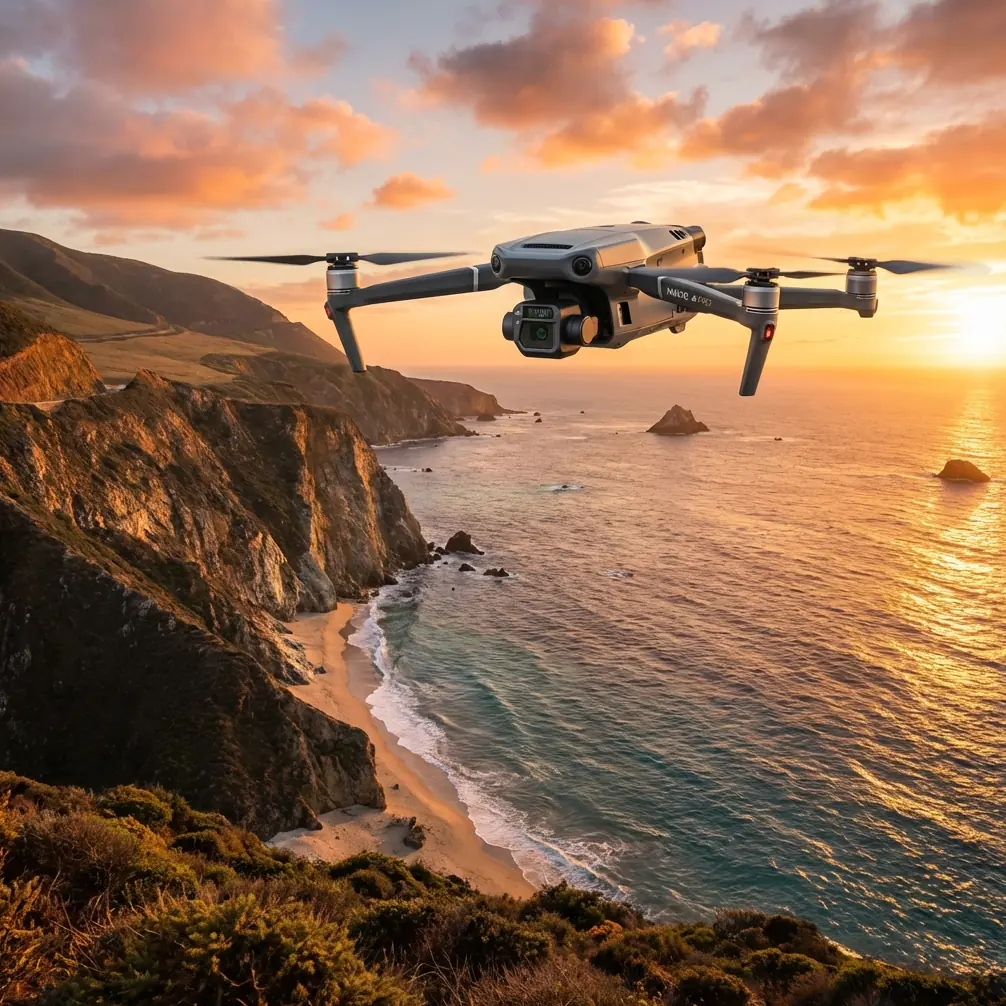
Mavic 3T on Coastal Highways: A Field Report on Range, Corrosion, and Thermal Reliability
META: A field-tested Mavic 3T field report for coastal highway capture, covering antenna positioning, thermal workflow, corrosion risks, transmission stability, and why contact mechanics matter in real operations.
Coastal highway work exposes a drone to the kind of stresses that spec sheets rarely explain well. Salt in the air. Long reflective road surfaces. Strong lateral wind. Repeating launch cycles from improvised shoulders and maintenance pull-offs. If you are using the Mavic 3T to document highways in these conditions, the conversation should go beyond camera payloads and battery time. The aircraft is only as dependable as its structure, electrical contact integrity, and link discipline.
That is where this field report starts.
The Mavic 3T is often discussed for its thermal signature capture, visual situational awareness, and fast deployment. All of that matters. But when you are flying coastal corridors, especially over long linear infrastructure, the practical differentiators are less glamorous: how the aircraft handles a corrosive environment, how confidently it maintains signal over distance, and how repeat contact loads affect mission continuity over dozens of battery changes.
Those are not abstract engineering concerns. They are flight-day concerns.
What coastal highway capture really demands from a Mavic 3T
A highway near the coast is a difficult subject. Asphalt can generate heat gradients that distort thermal interpretation. Painted lane markings, metal barriers, drainage structures, and concrete joints all create mixed emissivity scenes. Add sea spray and airborne chlorides and the mission becomes as much about preserving aircraft consistency as gathering imagery.
For Mavic 3T operators, that means balancing three capture modes at once:
- thermal signature collection for drainage, heat anomalies, or surface condition comparison
- RGB imaging for documentation and orthomosaic support
- operational resilience for repeated sorties along linear routes
The reason many teams choose the Mavic 3T is obvious. It is compact, fast to deploy, and capable of collecting actionable thermal and visual data without moving to a larger platform. But in a coastal corridor, field success depends on understanding two things the reference materials underline very clearly: corrosion protection and contact deformation.
One source focuses on 接触腐蚀防护, or contact corrosion protection, in aircraft structural design. Another goes deep into hydraulic-system design and states that calculated force and contact deformation results should be multiplied by a correction factor k, with the correction calculated by formula (15-19) and referenced through coefficient tables. On paper, that sounds far removed from a compact enterprise drone. In the field, it is not.
Why corrosion protection matters more near the sea than most operators admit
The structural design reference is unusually relevant here because it highlights surface protection, inspection, and contact corrosion protection as dedicated design concerns rather than afterthoughts. That tracks perfectly with what we see in coastal drone operations. Salt does not need dramatic exposure to cause trouble. It only needs repetition.
On a Mavic 3T mission set involving highway capture in coastal air, the most vulnerable points are not just the outer shell. The risk concentrates at interfaces:
- battery contacts
- folding arm joints
- exposed fastener regions
- charging accessories
- case foam that traps moisture after dawn operations
- landing surfaces contaminated with road dust and salt aerosol
The operational significance is simple. Corrosion at contact points can increase resistance, create inconsistent power behavior, and accelerate wear in areas that already see repeated insertion cycles. If you are hot-swapping batteries across multiple flights, every battery change becomes a mechanical and electrical event, not just a routine task.
That is why I advise crews to treat coastal work as a contamination-management problem. Wipe-downs should not be occasional. They should be built into the sortie rhythm. Dry storage between legs matters. So does keeping spare batteries sealed until needed rather than leaving them open in humid salt air.
The design manual’s emphasis on surface protection and special inspection has direct field meaning: if you wait for visible corrosion, you are already late. On the Mavic 3T, degraded contact quality can show up first as intermittent charging oddities, battery seating inconsistency, or unexplained caution around startup. Highway jobs are usually time-windowed. You do not want to discover any of that while traffic management is already in place.
The hidden lesson from contact deformation tables
The second reference may look even more removed from drone work, but it contains a principle every serious Mavic 3T operator should understand. It states that contact force and contact deformation calculations are adjusted by a correction factor k, derived from formula (15-19), and supported by a table of coefficients. It also references material properties including the elastic modulus of steel and Poisson’s ratio.
Why does this matter in a field report about a Mavic 3T?
Because drone reliability often fails at interfaces long before it fails at major components. Repeated contact loading changes how parts seat, compress, and recover. That applies conceptually to battery terminals, latch mechanisms, docking pressure, transport case compression, and accessory mounts. The manual’s reliance on a correction factor is a reminder that ideal calculations rarely match service reality. Actual contact behavior changes under geometry, angle, material response, and repeated use.
One table excerpt in the source shows coefficient shifts across values from 0.00 to 0.83, with one factor increasing from 1.00 to 1.29 while another decreases from 1.000 to 0.765. You do not need to transfer those exact values into drone maintenance math to grasp the operational point: small changes in contact geometry can significantly alter force distribution and deformation response.
In practical Mavic 3T terms, that means three things:
- Do not slam batteries into place. Repeated high-force insertion damages consistency before it damages appearance.
- Do not assume “it still clicks” means “it still contacts correctly.” Mechanical engagement and clean electrical contact are related, not identical.
- Watch for cumulative tolerance drift. If one battery seats slightly differently from the others, isolate it and inspect both the pack and aircraft contacts.
Coastal highway teams often fly in bursts, recover, relocate, and launch again. That cycle amplifies contact wear. Over a month of inspections, the wear pattern tells a more honest story than any single preflight check.
Antenna positioning advice for maximum range on coastal routes
Now to the topic that crews ask about first: getting the most stable transmission link over long highway stretches.
The Mavic 3T’s O3 transmission system is capable, but coastal corridors can make the link behave unpredictably. Water surfaces, guardrails, signage, and vehicle flows all create a cluttered RF environment. Wind often pushes crews into suboptimal pilot positions. The result is a preventable loss of range quality.
My rule is straightforward: aim the flat faces of the controller antennas toward the aircraft’s operating corridor, not the tips at the drone. Too many operators point the antenna ends directly at the aircraft and then blame the environment for weak video stability. The stronger radiation pattern is broadside, not off the tip.
For coastal highway work, I typically recommend this setup:
- stand slightly elevated if possible, even a minor embankment helps
- keep your body from blocking the controller line to the aircraft
- orient antennas so their broad surfaces face the drone’s general route
- if the highway curves, bias your antenna angle toward the next leg rather than the aircraft’s current hover position
- avoid standing next to parked metal vehicles, barriers, or large signposts
- if you launch from a shoulder, move a few steps away from guardrail reflections before the aircraft reaches distance
This matters more over linear assets than over compact sites. On a bridge approach or long coastal road segment, a small antenna mistake compounds over distance. Better positioning often does more for real-world range than changing altitude by a few meters.
If your team is building a repeatable corridor workflow and wants a practical checklist, I usually share one through this field contact channel.
Thermal capture over asphalt: where the Mavic 3T earns its keep
The thermal side of the Mavic 3T becomes especially useful on coastal highways when the mission objective is not just pretty imagery but operational interpretation. Surface water intrusion, drainage irregularities, shoulder instability, and patchwork repairs can all produce thermal variation worth documenting.
But interpretation requires discipline.
Early morning flights usually provide cleaner separation than midday because the asphalt has not yet equalized under full solar loading. Late afternoon can also be useful, especially when comparing heat retention differences across repaired sections. If you fly too late into the day’s thermal saturation curve, anomalies flatten and your thermal signature story gets muddy.
This is also where pairing thermal with photogrammetry matters. Even though the Mavic 3T is not the first aircraft many people choose for dense survey production, corridor documentation benefits from visual context. If you are using GCPs for positional confidence on selected assets, your thermal findings become easier to defend in engineering review. A hotspot without location discipline is just a curiosity. A hotspot tied to a known drainage transition or concrete joint becomes actionable.
Security and data handling on sensitive infrastructure jobs
Highway agencies, contractors, and utilities increasingly ask how flight data is protected. That is one reason enterprise users care about features such as AES-256 in the broader workflow conversation. On coastal infrastructure projects, especially those involving transport corridors and maintenance records, secure handling is not an IT detail tacked on after capture. It is part of operational credibility.
A clean handoff process matters as much as a clean flight. Organize thermal, RGB, and flight logs per segment. Tag environmental conditions. Note wind direction, salt exposure, and time since sunrise if thermal comparisons matter. A usable inspection archive is built during the mission, not after someone returns to the office and tries to reconstruct what happened.
BVLOS talk needs realism, not bravado
BVLOS comes up often in highway capture planning because linear corridors tempt teams to extend operations aggressively. My view is conservative: the Mavic 3T is very capable, but coastal route work still punishes overconfidence. Even where BVLOS frameworks exist, success depends on transmission discipline, visual environment, and predictable procedures. O3 helps, but signal strength is only one part of the chain. Salt haze, reflective clutter, and shifting coastal wind all reduce margin.
If a team is not already excellent at line-of-sight corridor management, battery rotation, image logging, and recovery discipline, stretching into more complex operational profiles usually magnifies weaknesses instead of productivity.
The field habit that prevents most bad days
After enough coastal deployments, I have become almost boring about one habit: inspect contact surfaces every time you break down the aircraft.
That advice comes directly from the logic behind the reference materials. One source emphasizes contact corrosion protection and inspection as formal design subjects. The other reminds us that contact behavior is not fixed; it changes with geometry, pressure, and material response, and may require correction factors to reflect reality. Put those together and you get a practical truth for Mavic 3T crews: reliability lives at the interfaces.
So after each coastal highway session:
- remove surface moisture before packing
- inspect battery contacts and latch feel
- check arms and joints for grit and salt residue
- review whether any pack seated differently than normal
- log transmission weak spots by location for the next mission
- verify thermal results against environmental timing, not assumptions
These habits sound modest. They are exactly what keep a compact thermal platform dependable over an entire project instead of just the first week.
Final field perspective on the Mavic 3T in coastal capture
The Mavic 3T is a strong tool for coastal highway work because it combines speed, thermal utility, and deployment flexibility in a compact airframe. But the best results come when operators think like field engineers, not just pilots. Range is affected by antenna discipline. Thermal quality is shaped by timing and surface behavior. Aircraft longevity depends on managing corrosion and repeated contact stress before they become obvious.
That is the deeper lesson hidden in the references. Aircraft design literature spends real attention on contact corrosion protection, surface protection, inspection, and even correction factors for contact deformation. Those are not academic side notes. They are a blueprint for how to keep a Mavic 3T trustworthy in one of the harshest routine civilian environments: the coast.
Ready for your own Mavic 3T? Contact our team for expert consultation.