
Mavic 3T Tips for Capturing Mountain Power Lines Without Los
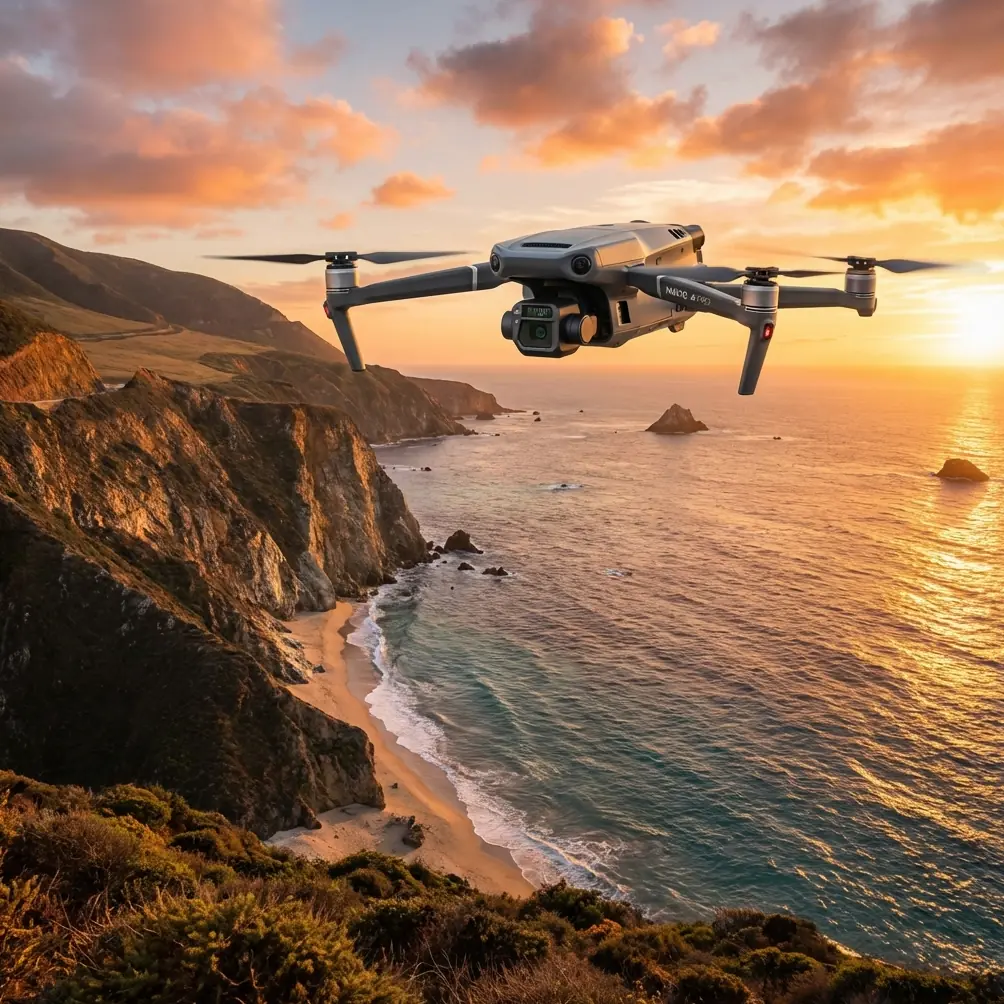
Mavic 3T Tips for Capturing Mountain Power Lines Without Losing Time or Data
META: Practical Mavic 3T field guidance for mountain power line inspection, covering thermal workflow, transmission stability, battery discipline, and why testability and forecast confidence matter in real operations.
Mountain power line work punishes weak planning.
You are dealing with narrow valleys, uneven lighting, changing winds, and long linear assets that don’t forgive missed frames. A drone operator can have excellent stick skills and still come home with an incomplete dataset if the mission design is loose. With the Mavic 3T, the aircraft is rarely the limiting factor. The bottleneck is usually how the team thinks about verification, battery rotation, and data confidence before takeoff.
That is where a surprisingly useful lesson from traditional aircraft design applies.
I’m Dr. Lisa Wang, and when I build Mavic 3T workflows for utility inspection teams, I borrow two ideas from classic aerospace engineering rather than treating drone flights as ad hoc camera runs. One comes from testability design. The other comes from prediction confidence. Both show up clearly in the reference material, and both matter in mountain power line capture far more than many crews realize.
The real problem in mountain line inspection is not flying. It is proving coverage.
Most crews define success too simply: launch, fly the corridor, collect thermal and visual imagery, land.
That sounds tidy. It is not enough.
In mountain environments, line-of-sight geometry changes constantly. A tower that looked clean from the map may be partially masked by slope, vegetation, or conductor overlap once you are airborne. Thermal signature quality can also drift with angle, sun load, and background terrain temperature. If you do not have a method to verify whether each asset segment was actually captured to standard, you are only guessing.
One reference document, from 飞机设计手册 第20册 可靠性、维修性设计, discusses testability analysis and verification. Even though it is not about drones specifically, the principle transfers perfectly. The text highlights the need to map system inputs, outputs, functional paths, signal flow, and testing points, and it explicitly references maintenance levels such as LRU and SRU alongside BITE, ETE, and ATE. In operational terms, that means a system should be designed so faults can be isolated and checked at the right level, with clear paths for confirming performance.
For a Mavic 3T mountain inspection mission, that same mindset should shape your capture plan.
Your “test points” are not electronic connectors. They are inspection checkpoints:
- tower approach angle
- conductor span overlap
- thermal pass timing
- zoom confirmation frames
- transmission integrity at terrain transitions
- battery reserve at each segment handoff
If you cannot define those points in advance, you are running a scenic flight, not a repeatable inspection program.
Why the LRU idea matters to a Mavic 3T operator
The same document also mentions calculating allocated values for constituent units and then correcting those values when they do not fit practical reality, including cases where a result approaches 1 and needs adjustment. The notation is rough in the extract, but the operational lesson is sharp: do not distribute performance assumptions evenly if the real system does not behave evenly.
That is exactly how mountain power line capture should be managed.
Many teams divide a route by distance alone. Ten kilometers becomes five equal sections, one battery plan per section. On paper, that looks efficient. In reality, one section may contain open ridge flight with strong GNSS visibility, while another section forces repeated altitude changes, oblique tower captures, and more hovering to confirm thermal anomalies. The second section consumes more battery, more pilot attention, and more re-framing time.
Treat each route section as if it were an LRU with its own burden. Allocate flight time and battery reserve according to complexity, not simple length.
Here is a practical framework I use:
- Assign higher energy weight to terrain transition zones where the aircraft must climb, descend, or reposition around towers.
- Reserve extra thermal pass time for sections with mixed rock and vegetation backgrounds, because thermal interpretation is slower.
- Shorten planned outbound range if you expect repeated zoom verification on insulator strings or connectors.
- Reallocate spare battery margin to the segment with the hardest recovery path, not the longest distance.
That is the same engineering logic as adjusting theoretical allocations when field conditions prove they are unrealistic.
Battery management tip from the field: rotate by temperature behavior, not just percentage
This is the tip I wish more Mavic 3T teams learned early.
In mountain inspections, crews often rotate batteries purely by state of charge and cycle count. That is too crude. What matters just as much is how each pack behaves under climb load and cold-soak recovery.
On a ridge launch at daybreak, I have seen two batteries both start near full charge, yet one sags earlier during a steep ascent to line elevation because it cooled longer in the vehicle or absorbed more overnight temperature drop. The aircraft still flies, but the return margin shrinks faster than expected. That is when rushed decisions happen.
My rule: after every mission leg, note not only remaining percentage, but also whether the pack showed early voltage drop during the first major climb and whether it recovered normally during descent or hover. If a battery consistently dips early, move it to a shorter segment or keep it as a near-base spare rather than assigning it to the farthest tower group.
If your team uses hot-swap batteries in a fast turnover rhythm, this discipline gets even more valuable. Fast swaps save daylight, but they can hide pack behavior patterns unless someone is logging them. A battery table with three simple notes—launch temperature feel, first-climb sag, landing reserve stability—can prevent a lot of avoidable mission compression.
This is not glamorous. It is the difference between finishing a corridor and explaining why the final span needs a second mobilization.
O3 transmission is helpful in mountains, but only if you plan terrain breaks
The Mavic 3T’s O3 transmission gives crews strong operational flexibility, especially where ridgelines and long linear assets force shifting geometry. But mountain work exposes a common misunderstanding: operators trust the link budget without respecting the terrain.
A stable transmission system is not a substitute for route architecture.
Think of the reference document’s emphasis on signal flow and testing points. In drone terms, every bend in the valley is a signal-flow event. Every ridgeline crossing is a test point. If you expect O3 transmission to carry you through terrain masking without preplanned reposition nodes, you are building fragility into the mission.
I recommend identifying three categories before launch:
- clean link segments with broad sky exposure
- conditional link segments where one slope or tower angle may partially shield the aircraft
- reposition-required segments where the pilot or visual support team must move before continuing
That classification changes how you sequence the mission. It may even change your GCP strategy if you are pairing line inspection with photogrammetry for surrounding corridor documentation. There is no value in perfect GCP placement if your image sequence gets interrupted at the exact terrain break where continuity matters most.
Thermal signature capture in mountains requires timing discipline
The phrase “thermal signature” gets overused, often without enough respect for environmental noise.
Power line components in mountain terrain can be visually simple yet thermally tricky. Bare rock faces hold heat differently from forested slopes. Morning shade can flatten contrast in one span while sunlit hardware on the next span blooms with excess background influence. The Mavic 3T is fully capable here, but only if the operator stops thinking in generic corridor terms.
For thermal work, I prefer to divide the mission into interpretive windows rather than a single continuous pass:
- an early pass for cooler background conditions
- a mid-morning validation on suspect components
- a short targeted revisit if terrain-reflected heat starts contaminating the reading
That sounds slower, but it often saves time because it reduces false positives and weak evidence frames. In civilian utility maintenance, the goal is not to produce dramatic thermal images. The goal is to generate defensible maintenance decisions.
Prediction confidence matters more than operators think
The second reference, from 飞机设计手册 第22册 技术经济设计, discusses market analysis, regression models, and confidence testing. One line stands out: prediction accuracy depends not only on the regression equation itself, but also on whether the independent variables can be estimated reliably. It also notes that you must test not just whether the whole regression is significant, but whether individual factors are genuinely contributing.
That idea belongs in mountain drone operations.
Teams often estimate mission duration using broad assumptions:
- corridor length
- number of towers
- average battery endurance
- expected wind
- expected number of anomaly stops
Those are your independent variables. If even one of them is weakly estimated, your whole mission forecast becomes unreliable.
A corridor with 16 or 10 planned flight elements on paper—numbers like those visible in the route and schedule table from the source—can still fail operationally if the underlying assumptions are poor. Maybe tower spacing is regular, but access roads are not. Maybe flight distance is short, but thermal validation time is long. Maybe the wind forecast is acceptable at launch point elevation but not at conductor elevation.
So when you plan a Mavic 3T mountain inspection, do what the reference suggests in spirit: test the whole model, then test the variables.
Instead of asking, “Can we finish this sector in one morning?” ask:
- Is tower count actually the main driver, or is terrain elevation change the stronger variable?
- Does wind exposure explain battery use better than route length?
- Does thermal verification time correlate more with hardware type than with span count?
- Are our BVLOS assumptions dependent on communication continuity that the terrain cannot consistently support?
This is how mature UAV teams improve. Not by flying more often, but by learning which variables really predict success.
A practical problem-solution workflow for Mavic 3T mountain inspections
Let’s make this concrete.
Problem: incomplete conductor and tower coverage
This usually happens when crews fly linear paths that look efficient on the map but fail to provide repeatable visual and thermal confirmation angles.
Solution: build a testability map before flight. Mark capture checkpoints the way an engineer would mark functional verification points. Include visual approach frame, thermal confirmation frame, and zoom detail frame for each critical structure group.
Problem: battery reserve collapses late in the mission
This often traces back to simplistic segmentation and poor battery rotation discipline.
Solution: weight each route section by terrain workload, not distance. Track battery behavior during first climb. Reassign weaker-performing packs to shorter near-base tasks. Hot-swap only after a quick note on sag behavior and landing reserve trend.
Problem: transmission confidence is mistaken for terrain immunity
Crews trust the link until a ridge or slope break creates interruption at the worst possible point.
Solution: pre-classify O3 link zones. Insert planned pilot or support reposition points before the aircraft reaches masked terrain. Treat terrain breaks as operational test points, not surprises.
Problem: thermal data looks impressive but does not support maintenance decisions
The mission generates images, but not enough consistency to distinguish a real issue from environmental interference.
Solution: schedule thermal passes around terrain heat behavior, not just around crew convenience. Use repeat windows on suspect hardware instead of one continuous sweep.
Problem: project estimates keep drifting
The team is always “almost right” on time and battery forecasts but rarely precise.
Solution: review mission variables the way a regression model should be reviewed. Validate which assumptions actually drive duration and quality. Remove weak predictors from planning and strengthen the ones that consistently explain field outcomes.
Where AES-256 and data handling fit in
When power infrastructure imagery is being collected, secure handling matters even in routine civilian work. AES-256 support is valuable, but security only helps if your workflow is clean from aircraft to archive. In mountain projects, crews are often tired, mobile, and working from temporary field setups. That is when sloppy media handling appears.
My advice is simple: tie transmission planning, storage discipline, and mission labeling together. The flight that nearly ran short on reserve is also the flight most likely to have rushed file handoff. Secure systems are only as good as the people following them.
Photogrammetry and GCPs: useful, but not always the center of the job
Some mountain power line projects pair inspection with corridor modeling or terrain context capture. In those cases, photogrammetry and GCP placement can add value, especially when vegetation encroachment or slope stability context matters. But with the Mavic 3T, crews should not let mapping logic overshadow the primary inspection objective.
A perfect surface model is not a substitute for a clear thermal record of a suspect connector.
Use GCPs when the deliverable requires measurable geospatial consistency. Otherwise, keep them in their proper place: supporting evidence, not the mission’s main story.
The best Mavic 3T operators think like systems engineers
That is the common thread running through the reference material and real mountain fieldwork.
The first source is about testability, verification, and allocating performance across replaceable units. The second is about forecast confidence and checking whether your model and variables deserve trust. Neither text was written for a compact UAV team inspecting mountain power lines. Yet both describe the difference between disciplined operations and optimistic improvisation.
The Mavic 3T performs well in these environments. The question is whether the crew uses it with the same rigor that larger aviation systems demand.
If you are building a mountain inspection workflow and want a second set of eyes on route logic, battery rotation, or thermal capture sequencing, you can send your scenario here: message Dr. Lisa Wang directly
That kind of review often reveals where the real risk sits: not in the aircraft, but in the assumptions around it.
Ready for your own Mavic 3T? Contact our team for expert consultation.