
Mavic 3T for Low-Light Solar Farm Capture
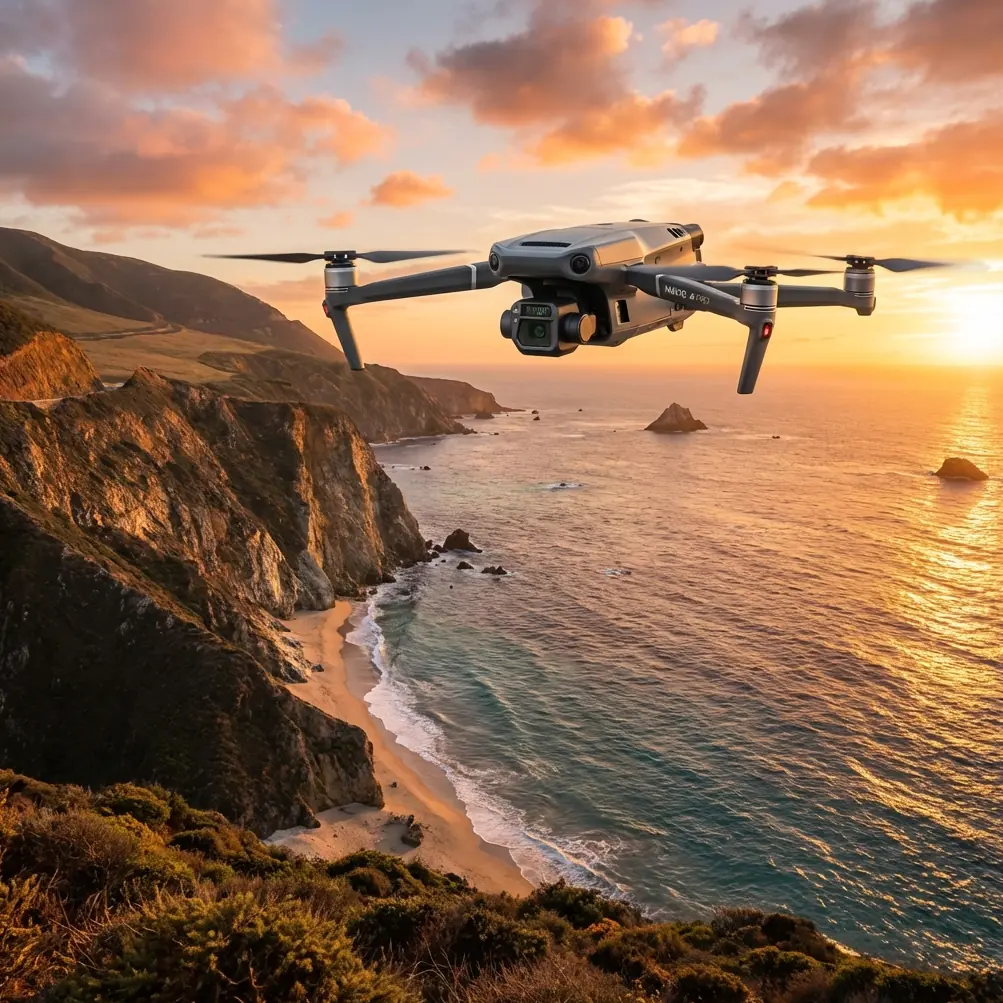
Mavic 3T for Low-Light Solar Farm Capture: What Actually Matters in the Field
META: Expert technical review of the Mavic 3T for low-light solar farm inspection, thermal capture, software reliability, transmission stability, and practical workflow decisions.
I’ve spent enough mornings on solar sites to know that “low light” is not a minor condition. It changes everything.
Before sunrise, a utility-scale array is quiet, cold in some zones, still radiating residual heat in others, and visually flat in a way that punishes weak imaging workflows. You’re trying to document thermal irregularities, maintain positional consistency across long rows, and avoid wasting the narrow window when temperature contrast is useful. That’s where the Mavic 3T starts to separate itself—not as a generic drone with a thermal camera, but as a practical field system that reduces friction when the clock is working against you.
This matters even more on large solar farms, where a delayed flight can turn a clean inspection pass into a compromised dataset. If you lose confidence in your aircraft link, your thermal interpretation, or your onboard logic, the entire morning can unravel. The interesting thing is that some of the most useful ways to understand the Mavic 3T in this role come from an unexpected place: old aircraft reliability thinking.
Why low-light solar work exposes weaknesses fast
A solar farm at dawn is an unforgiving test environment. Visual contrast is low. Terrain references can feel repetitive. Long distances put pressure on transmission stability. Thermal signatures can be subtle, especially if the site has mixed panel age, dust loading, vegetation encroachment, or uneven cooling patterns.
When I first started capturing these sites, the biggest mistake crews made was treating the mission like a simple aerial photo run. It isn’t. Low-light solar inspection is a reliability exercise. The aircraft needs to maintain a stable link over repetitive geometry. The sensor package has to preserve usable thermal data, not just produce pretty false-color images. The workflow has to hold together when conditions are less than ideal.
That is where the Mavic 3T earns its place.
Its value is not only in thermal visibility. It’s in how the platform behaves as a system under time pressure.
The Mavic 3T advantage is not one feature
People often reduce the Mavic 3T to “the one with thermal.” That misses the operational point.
On a solar farm, thermal signature only becomes valuable when it can be captured consistently enough to support decision-making. A hotspot on one string means little if your flight path drifted, if your overlap broke, or if the image set is too unstable to compare across sections. For operators building repeatable inspection programs, the Mavic 3T is useful because it brings together thermal imaging, visible imaging, dependable transmission, and compact deployment in one aircraft that can be in the air quickly.
That speed matters more than many teams realize. At dawn, every extra minute spent sorting wiring, checking connections, or troubleshooting setup erodes the best thermal capture period. One of the reference documents I was given is a build manual for a model jet aircraft, and while it has nothing to do with the Mavic 3T directly, one line from it captures a timeless field truth: route the cables, test that everything is working, then close the structure. In other words, verify before commitment.
That same discipline applies directly to Mavic 3T missions on solar farms. Before the first takeoff, the serious operator checks transmission integrity, thermal calibration behavior, mission route logic, battery status, and storage readiness. Once the aircraft is up over thousands of panels, that is not the time to discover a weak process.
What aircraft reliability theory tells us about real drone inspections
The most useful reference in the source material comes from an aircraft design handbook section on software reliability verification. It states that software reliability verification exists to prove the developed software meets system and software reliability requirements, and that validation should use review, analysis, and testing. That sounds abstract until you apply it to drone operations.
With the Mavic 3T, operators often focus on hardware specs. In practice, low-light solar work depends just as much on software behavior:
- mission execution logic
- sensor switching
- image capture consistency
- transmission resilience
- return and recovery behavior
- data handling and encryption pathways
The handbook also describes a concept that is remarkably relevant to field drones: a degraded-function backup module. In plain terms, if the primary system cannot continue at full capability, the fallback does not need to do everything. It only needs to preserve enough functionality to keep the operation safe and useful.
That principle matters on solar inspections. If light drops faster than expected, if wind shifts, or if the mission needs to be shortened, the best drone workflow is not “all or nothing.” It is graceful degradation. The Mavic 3T supports this style of operation well because it allows crews to shift priorities quickly: finish thermal coverage on critical blocks first, reduce visual capture density if necessary, or abandon full photogrammetry ambitions in favor of thermal anomaly verification.
That is not a compromise born of weakness. It is intelligent mission design.
The source handbook makes a second point that translates cleanly to drone work: for real-time systems, degraded alternatives are especially useful because there may not be enough time to execute a full-function backup when a fault occurs. Solar farm dawn inspections are exactly that kind of real-time environment. You do not always get a second chance at the same thermal conditions. If a system hiccup forces a workflow adjustment, you need the aircraft and team to preserve mission value immediately.
This is one reason experienced operators trust compact enterprise platforms like the Mavic 3T. Not because they are invincible, but because they make it easier to recover a usable outcome under pressure.
O3 transmission matters more over solar rows than many expect
Long rows of similar geometry can be deceptively difficult. They flatten visual cues and can create operator fatigue. On a massive site, the aircraft may not be physically far by industrial BVLOS standards, yet the inspection still feels operationally stretched because every section looks alike.
That’s where O3 transmission becomes more than a spec sheet bullet. A stable, high-quality link helps preserve situational awareness when visual monotony would otherwise make judgment harder. On solar farms, I care about transmission quality not only for command reliability, but for confidence in interpreting what the aircraft is seeing in real time. If I spot a thermal irregularity, I want enough link stability to make a good decision about whether to continue the pattern, circle back, or mark that row for follow-up.
The same goes for data security. When operators are surveying energy infrastructure, AES-256 is not a trivial detail. It supports a more defensible handling posture for imagery and mission information, especially when site owners are sensitive about asset data. This does not make the drone “secure” by magic. It means the platform aligns better with professional expectations around infrastructure workflows.
Thermal signature at dawn: where the Mavic 3T becomes genuinely useful
Early on, I learned a painful lesson on a large site with mixed panel vintages. The visible imagery looked clean. The thermal story was not. A few suspect zones were only apparent in the low-light period before full solar loading flattened the differences. By the time another team revisited later in the morning, the thermal contrast had shifted enough to make the anomalies harder to separate from normal variation.
That experience changed how I evaluate thermal aircraft. For solar work, the key question is not whether the camera can “see heat.” The question is whether the aircraft helps you exploit a narrow and changing thermal window efficiently.
The Mavic 3T does this well because it is fast to deploy, simple to reposition, and capable of collecting both visual and thermal context in one pass. That combination is useful when a hotspot or abnormal thermal signature needs interpretation. A thermal patch alone can mislead. Matching it with visible structure, row alignment, vegetation context, and physical module condition turns raw heat into something closer to diagnosis.
For teams also building photogrammetry layers, this is where discipline matters. Do not assume every low-light thermal mission should become a full mapping mission. If you need orthomosaic quality later, bring a workflow that supports proper overlap and GCP strategy. The Mavic 3T can contribute valuable site intelligence, but the best operators separate inspection intent from mapping intent and only merge them when the conditions support both.
The preflight philosophy that saves real projects
The second reference document, the BD5 build manual, repeatedly emphasizes a simple idea: connect components, route them correctly, and test that everything is working before final assembly. That may sound basic. It is also exactly how professionals avoid losing a solar inspection window.
A serious Mavic 3T low-light routine should include:
- confirming thermal and RGB settings before arrival
- verifying battery readiness and swap order
- checking controller display behavior under low ambient light
- validating mission boundaries and site geofencing assumptions
- testing link quality before pushing out across long rows
- confirming capture logic and storage availability
This is where battery strategy also becomes practical. Even if your platform supports fast turnarounds, your site plan should behave like a hot-swap mindset: one aircraft in motion, the next power cycle already anticipated, no confusion about pack order, no wasted minutes improvising at the truck tailgate. Dawn does not wait for disorganized crews.
When the Mavic 3T is the right tool—and when it isn’t
For low-light solar farm capture, the Mavic 3T is strongest when the mission goal is thermal inspection with enough visual context to support decisions. It is excellent for identifying suspect strings, connector heating patterns, inverter-area anomalies, edge effects, and irregular thermal patches that deserve a closer look.
It is also a strong fit when access is tight and the crew needs to move fast between sections of a site. The aircraft’s portability is not a lifestyle perk in this context. It directly affects how much useful work you can complete during the best thermal interval.
Where crews get into trouble is expecting one aircraft to solve every data requirement equally well. If the client’s primary need is survey-grade photogrammetry over a vast solar asset, with strict ground control and highly controlled reconstruction, then the Mavic 3T may be part of the workflow rather than the whole answer. If the need is actionable low-light thermal intelligence, it becomes much more compelling.
That distinction matters because many failed inspections are not caused by bad flying. They come from using the right drone for the wrong mission design.
The bigger lesson: reliability is a workflow, not a promise
The aircraft design handbook in the reference material makes a point worth carrying into every enterprise drone operation: reliability is not just a number. It must be verified through review, analysis, and testing. That is as true for a Mavic 3T team on a solar farm as it is for any larger aviation program.
On real sites, that means:
- reviewing mission intent before launch
- analyzing whether the environmental window supports your objective
- testing systems early enough to correct problems before the capture window closes
When operators adopt that mindset, the Mavic 3T becomes more than a compact thermal drone. It becomes a dependable node in a disciplined inspection process.
If you’re planning low-light solar farm work and want to compare mission setups, payload logic, or repeat-capture strategy, you can message an experienced M3T workflow specialist here.
Final assessment from the field
For dawn solar inspections, the Mavic 3T solves the problems that actually burn time: slow deployment, fragmented imaging workflows, weak real-time confidence, and poor recovery when conditions shift. Its thermal capability is the headline, but its real strength is operational coherence.
That is why I trust it on solar farms.
Not because it makes low-light work easy. It doesn’t. Low-light thermal capture across thousands of panels will always demand planning, discipline, and a clear objective. But the Mavic 3T removes enough friction that the operator can focus on the inspection rather than babysitting the aircraft.
And in that narrow pre-sunrise window, that difference is everything.
Ready for your own Mavic 3T? Contact our team for expert consultation.