
Mavic 3T for Low-Light Venue Capture: A Field Case Study
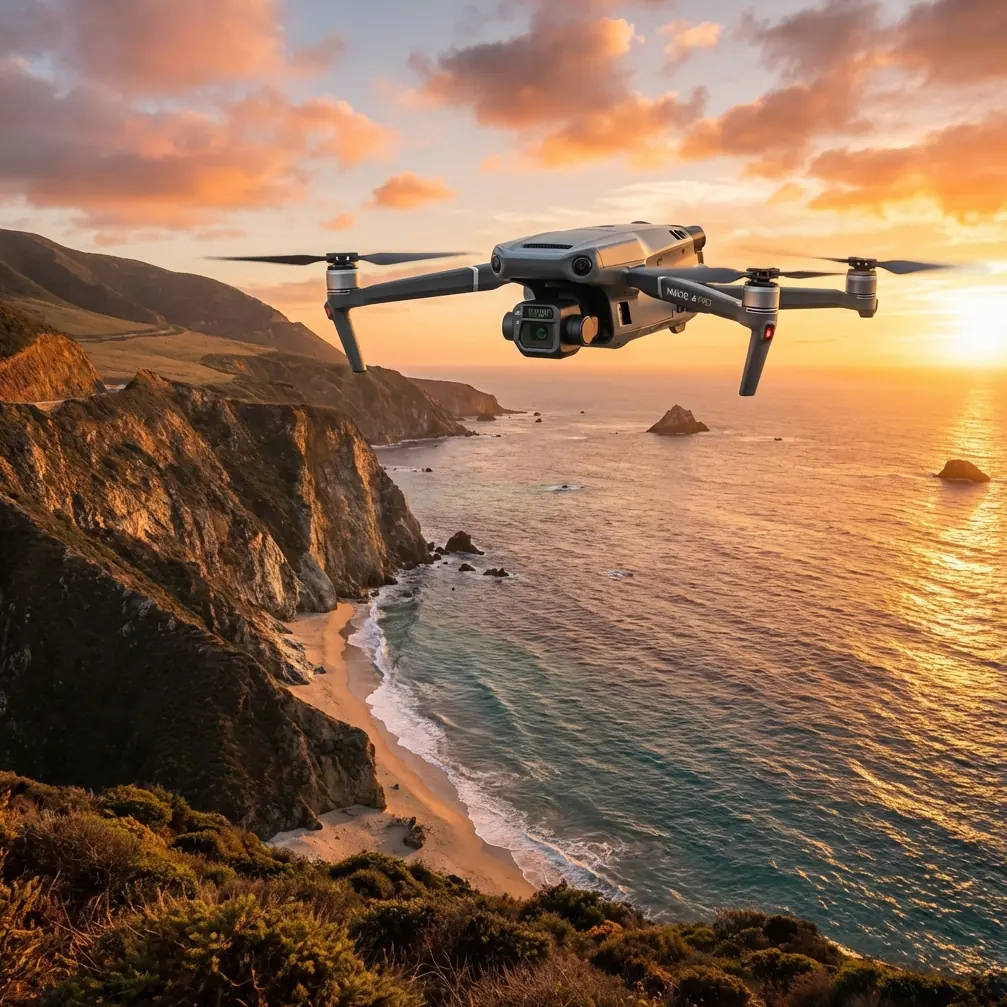
Mavic 3T for Low-Light Venue Capture: A Field Case Study on What Actually Matters
META: A practical case study on using the DJI Mavic 3T for low-light venue capture, with expert insight on thermal signature, O3 transmission, encrypted workflows, and why mass balance and firmware discipline matter.
When people evaluate the Mavic 3T for venue work at night, they usually start in the wrong place. They look at sensor headlines, zoom specs, or whether thermal is “useful” outside emergency workflows. The better question is simpler: can this aircraft deliver stable, repeatable information when the site is dark, cluttered, and time-limited?
That is where the Mavic 3T earns its place.
I’ll frame this around a real-world style scenario many operators recognize: documenting a large event venue in low light before public opening. The client wants more than pretty visuals. They need situational awareness, exterior condition capture, rooftop checks, thermal signature review of utility areas, and a usable record for facilities planning. In some cases, they also want the output aligned with later photogrammetry or inspection workflows. Those demands expose the difference between a drone that looks good on a spec sheet and one that performs cleanly in the field.
The assignment: low light, mixed surfaces, limited time
A venue at dusk or night is a difficult environment for any UAV. You have reflective metal, dark roofing membranes, glass, HVAC equipment, patchy illumination, and often electromagnetic clutter from nearby infrastructure. GPS quality can vary around structures. Visual references are weaker. Battery planning becomes less forgiving because crews tend to work in compressed windows.
The Mavic 3T is not just “a drone with thermal.” Its value in this setting comes from how multiple systems work together: visible imaging, thermal interpretation, stable transmission, encrypted handling of sensitive site data, and a compact airframe that can be deployed without the overhead of a larger platform.
In side-by-side operational terms, that compactness matters more than many people admit. Larger enterprise aircraft can carry more, but they also impose more setup burden, more transport friction, and often more conspicuous operations around active commercial properties. For venue teams trying to inspect, map, and clear a site efficiently, the Mavic 3T often reaches the sweet spot.
Why thermal matters for venues even when the client did not ask for it
A low-light venue mission is rarely only about imagery. It is about finding what the human eye misses.
Thermal signature review can reveal uneven roof heating, active mechanical zones, electrical irregularities around service corridors, or heat loss patterns near entrances and back-of-house structures. None of that replaces a formal engineering assessment, but it gives facilities managers a fast screening layer. It is especially useful when visible contrast is poor and the site has broad dark surfaces that flatten detail in standard night capture.
This is where the Mavic 3T separates itself from drones that are optimized mainly for daylight visual work. Competitors without integrated thermal can still document the site, but they force the team into a narrower information set. You end up collecting images and then guessing where to spend inspection time later. With the Mavic 3T, you can prioritize while airborne.
That efficiency compounds across a night shift. The aircraft is not simply recording the venue; it is helping decide what deserves closer attention.
Transmission reliability is not a minor feature in low-light operations
Venue capture at night puts unusual pressure on link quality. Visual confidence is lower, obstacles are harder to read, and the pilot depends more heavily on the downlink. That makes O3 transmission more than a convenience feature. It becomes a safety and productivity feature.
In practical terms, robust transmission reduces the hesitation that appears when operators lose confidence in what they are seeing. Around stadiums, exhibition halls, resorts, campuses, or event complexes, there may be reflective surfaces and local interference sources that punish weaker systems. The Mavic 3T’s O3 transmission helps preserve control and image continuity where a less capable link can introduce operational drag.
That has a direct commercial effect. When the feed stays usable, the crew spends less time re-positioning for confidence, less time repeating passes, and less time explaining data gaps to the client the next morning.
A detail most teams ignore: firmware discipline shapes mission reliability
There is a useful lesson hidden in one of the reference materials, even though it comes from a PX4 upload record rather than a DJI field guide. The log shows a firmware load for a PX4FMUv2 board, including a board ID of 9 and an uncompressed image size of 898,224 bytes, followed by a successful update in roughly 117 seconds. Those numbers are not relevant because the Mavic 3T uses PX4. It does not. They matter because they illustrate a broader truth: aircraft reliability begins long before takeoff, with disciplined version control and validation.
A lot of low-light mission failures are blamed on weather, signal conditions, or operator stress. In reality, many are rooted in preventable preflight sloppiness: inconsistent firmware states across aircraft and controller, untested updates, and poor documentation of configuration changes.
For venue capture, especially when the output may feed into inspection records or insurance-adjacent reporting, that sloppiness is expensive. A stable firmware regime gives the crew a known baseline. It reduces surprises in transmission behavior, battery reporting, and payload handling. If your team works across multiple aircraft, the lesson from that uploader log is straightforward: know exactly what version is flying, confirm the intended platform, and never treat software state as an afterthought.
That kind of discipline is one of the quiet reasons some Mavic 3T operators consistently deliver cleaner results than crews using more expensive hardware.
The structural lesson behind stable imaging
The second reference appears, at first glance, to be far removed from venue capture. It discusses aircraft modeling principles: each section should simulate weight, center of gravity, and inertia in a way that remains similar to the real object. That idea is fundamental in airframe design, but it also has immediate relevance to field operations.
Why? Because stable imaging depends on balanced behavior.
When aircraft designers talk about matching weight distribution and center of gravity, they are talking about preserving predictable motion. For drone operators, the field equivalent is avoiding ad hoc payload changes, nonstandard accessories, or mounting habits that alter aircraft response in subtle ways. A venue mission in low light exposes these flaws quickly. Small oscillations, less predictable braking, or compromised yaw smoothness become obvious when you are trying to capture rooflines, facades, or thermal overlays with precision.
The source text also notes that structural elements should be kept light and that added mass, when needed for simulation, should be applied deliberately. Operationally, that maps to a simple rule for the Mavic 3T: keep the aircraft in its intended configuration and resist improvised add-ons unless they have been tested thoroughly. Extra weight is never “just a little weight” when you are flying a compact platform near complex architecture after sunset.
This is one area where the Mavic 3T’s integrated design beats modular competitor setups. A platform that needs awkward external additions to achieve the required sensing package may look flexible, but flexibility often comes at the cost of balance, endurance, and repeatability. The Mavic 3T arrives with a tightly matched payload concept, and that is exactly what low-light venue work rewards.
Case workflow: how the Mavic 3T fits the job
On a typical venue assignment, I would divide the mission into four passes.
1. Establish the site envelope
The first pass is not about detail. It is about orientation. Fly the perimeter, identify obstacle patterns, confirm signal stability, and note any thermal anomalies that may deserve a return. This is where O3 transmission pays off early, because it helps the pilot maintain confidence while building a mental model of the site.
2. Thermal signature sweep
Next, conduct a systematic thermal review of roofs, service entries, loading zones, and mechanical areas. At venues, thermal anomalies often appear near infrastructure transitions rather than in the most visible spaces. The objective is not dramatic imagery. It is triage. The Mavic 3T lets you spot areas worth documenting more carefully in visible or zoom views.
3. Visible detail capture for facilities records
Once thermal hotspots or unusual patterns are tagged, the aircraft can revisit them for detailed visual capture. This is where a compact platform is a real advantage. The crew can work efficiently around facades and upper structures without redeploying a larger system.
4. Optional mapping tie-in
If the client wants future photogrammetry, planning for GCP placement and overlap discipline matters even if the primary mission is low-light documentation. Night is not ideal for classic mapping outputs, but a venue often needs hybrid deliverables: immediate inspection intelligence now, structured survey-friendly capture later. The best teams think about both from the start.
Security is operational, not just contractual
Venue clients are often sensitive about layouts, access routes, rooftop infrastructure, and utility zones. This is where AES-256 encryption deserves attention. Not because it sounds advanced, but because it fits the real sensitivity of the work.
A secure transmission and data handling posture is part of being credible with commercial property operators. If a site includes event infrastructure, restricted service corridors, or pre-opening build activity, secure workflows stop being a technical bullet point and become a trust requirement.
That matters when comparing the Mavic 3T with cheaper alternatives. If the aircraft can capture the site but cannot support a professional security posture, it may still fail the assignment.
Batteries, timing, and the reality of venue windows
Low-light venue operations often happen in tight windows: after staff exit, before contractors arrive, between setup phases, or in the gap before public opening. That makes battery turnover more than a convenience issue.
Hot-swap batteries are especially valuable in this context because they help maintain operational flow. When the crew has already established site rhythm, identified anomalies, and planned follow-up angles, interruptions cost more than minutes. They break continuity. They also increase the chance that environmental conditions shift before the mission is finished.
The Mavic 3T’s efficiency is one reason it fits this work well. It is not just about endurance on paper. It is about reducing procedural drag between flights so the same team can complete perimeter review, thermal screening, and detail capture without losing tempo.
Where it excels against competitors
The strongest argument for the Mavic 3T in venue work is not that it dominates every category. It does not. Larger systems may outperform it in payload flexibility or specialized endurance. Smaller consumer-first drones may look simpler for basic imaging.
But for low-light venue capture, the Mavic 3T has an unusually strong blend of qualities that competitors often split across different platforms:
- integrated thermal plus visible capture
- compact deployment
- strong O3 transmission confidence around complex structures
- enterprise-grade data security through AES-256
- practical workflow continuity through battery management and efficient field handling
That blend is why it excels. You do not need a two-aircraft strategy to move from thermal discovery to visible verification. You do not need to overbuild the mission. For many commercial teams, that translates into cleaner operations and fewer compromises.
A note on BVLOS and planning discipline
Some operators ask whether BVLOS concepts make the Mavic 3T more attractive for large venues or campus-scale properties. The answer is that BVLOS should be treated as a planning and regulatory question, not a shortcut. Even when missions remain within standard visual frameworks, the habits associated with BVLOS-grade planning are useful: route discipline, comms checks, contingency thinking, and cleaner data collection logic.
The Mavic 3T benefits from that mindset because it is often used on missions that mix inspection, situational awareness, and documentation. The more structured the plan, the more value you extract from the aircraft.
What the best operators do differently
The difference is rarely in raw piloting. It is in system thinking.
They keep firmware discipline tight. They understand that the lesson from a successful 898,224-byte firmware load on a board ID 9 PX4 device is not about hardware brand loyalty; it is about respecting software integrity before fieldwork begins.
They respect balance and mass distribution. The structural modeling reference emphasizes simulating real weight, center of gravity, and inertia because those properties control behavior. Good Mavic 3T operators apply the same philosophy operationally: fly the aircraft in a stable, intended configuration and avoid unnecessary modifications that compromise predictability.
They use thermal with purpose. Not as a novelty layer, but as a decision tool.
And they think one step ahead. If a venue project may later require photogrammetry, they capture accordingly. If the site data is sensitive, they build around secure handling from the start. If the client needs a quick field discussion, they make that conversation easy through a direct planning channel such as message our flight team here.
The result is not just better footage. It is better field intelligence.
Final assessment
For low-light venue capture, the Mavic 3T is at its best when treated as a compact multi-sensor work platform rather than a thermal add-on drone. Its practical edge comes from integration: thermal signature screening, stable O3 transmission, secure AES-256 workflows, and an airframe that stays agile under real commercial constraints.
If you are comparing it with alternatives, focus less on headline specifications and more on mission continuity. Can the aircraft move from discovery to verification without friction? Can it maintain control confidence around difficult structures at night? Can it support secure, repeatable commercial documentation? The Mavic 3T answers those questions better than many platforms in its size class.
That is why it keeps showing up on serious venue jobs.
Ready for your own Mavic 3T? Contact our team for expert consultation.