
Mavic 3T in Dusty Venues: A Field Report on Pre
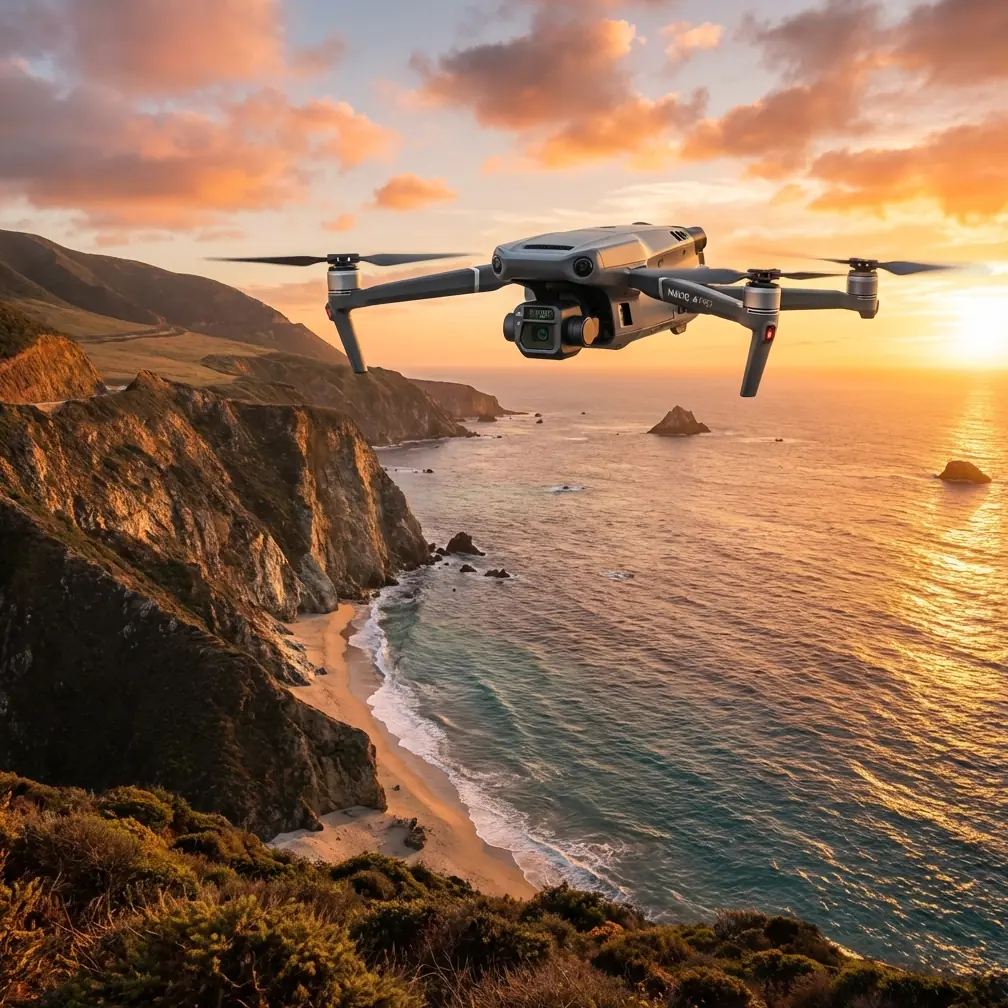
Mavic 3T in Dusty Venues: A Field Report on Pre-Flight Sealing Checks, Thermal Reliability, and Data Integrity
META: Expert field report on Mavic 3T best practices for dusty venue capture, with practical pre-flight cleaning steps, sealing insights, thermal workflow advice, and mission reliability tips.
Dust changes the way a Mavic 3T should be handled.
Not the broad marketing version of dust. The real kind: fine grit kicked up around parking lots, event grounds, construction-adjacent venues, horse arenas, dry sports fields, festival staging zones, quarry overlooks, and rural properties where every landing sends a pale cloud across the airframe. If your job is capturing venues in those conditions, image quality is only half the story. The other half is keeping the aircraft dependable from takeoff through data handoff.
I’ve seen crews obsess over camera settings and forget the small mechanical realities that decide whether a flight is smooth, repeatable, and safe. A dusty site can quietly compromise seals, increase friction at contact points, contaminate interfaces, and create the kind of drag in operations that doesn’t show up in a spec sheet. For a platform like the Mavic 3T, which often gets used for thermal signature review, visual documentation, light mapping support, roof assessments, and site progress records, that matters.
This field report focuses on one overlooked habit: the pre-flight cleaning and inspection step, especially around exposed interfaces and sealing surfaces. The reason is simple. The reference material behind this piece comes from classic aircraft design guidance, and while it was written for larger aviation systems, the engineering logic applies cleanly to professional UAV field practice.
Why dusty venue work deserves its own checklist
Dust is not just a cosmetic issue. It affects three things that commercial operators care about immediately:
- Mechanical reliability
- Sensor trustworthiness
- Workflow continuity
On the Mavic 3T, all three are tied together. You might be using the thermal payload to identify heat irregularities on a roofline after a venue inspection, then switching to RGB capture for context, then collecting imagery useful for photogrammetry or planning overlays. If the aircraft’s contact surfaces, battery interfaces, sensor windows, or port areas are contaminated, small problems can stack quickly.
A speck of grit on a sealing or mating surface may not stop a mission. But over repeated deployments, it can contribute to wear, fit inconsistency, heat retention in unwanted places, and intermittent connection issues that are miserable to diagnose in the field.
That’s where the aircraft design reference becomes useful.
The sealing lesson larger aircraft learned long ago
One of the most practical facts in the source material is about O-ring compression. The manual states that increasing compression beyond the intended value creates assembly problems and increases friction and rolling tendency in the seal, which shortens seal life. It also notes the opposite side of the tradeoff: reducing compression can slightly reduce friction and breakaway force at lower pressures, specifically below 500 lb/in², but then better surface finish becomes more important.
Why should a Mavic 3T operator care about a hydraulic sealing principle from a full-scale aircraft handbook?
Because the operating lesson is universal: interfaces work best when they are clean, correctly seated, and not forced.
In dusty venue work, that translates into a habit many pilots skip. Before powering up, inspect and gently clean:
- battery contact and seating areas
- charging and data port covers
- gimbal perimeter and camera face
- cooling intakes and visible crevices
- landing surfaces that can transfer grit on takeoff and recovery
If dust causes a cover, latch, battery, or protective cap to seat under tension or unevenly, you are effectively recreating the same design problem the handbook warns about. Too much compression or misfit raises friction, creates wear, and reduces long-term life. With a drone, that can show up as loose fit over time, sticky action, abrasive wear marks, or simply a platform that feels less confidence-inspiring after a season of hard field use.
This is not theoretical. Dusty missions tend to produce the exact behavior that damages interfaces: hurried swaps, pressure on covers that should close lightly, and batteries pushed in when contamination is still present.
The pre-flight cleaning step I recommend before every dusty venue launch
My routine for the Mavic 3T on dry sites is short enough to be repeatable and strict enough to catch the common failures.
1. Clean before unfolding fully
Keep the aircraft compact while doing the first inspection. It is easier to control and less likely you will brush debris deeper into hinges or recesses.
Use a soft brush, hand blower, or clean lens-safe cloth. Avoid aggressive wiping on dusty optics. Dust first, then wipe if needed.
2. Check sealing and seating surfaces, not just visible dirt
This is the part most crews rush through. Look at the contact path where components meet, not just the outer shell. The reference material makes another point that matters here: a flat-face seal works only when there is controlled compression across the sealing section and when radial movement under pressure is prevented.
Operationally, that means you should be suspicious of anything that might keep a cover or component from sitting evenly. On a field drone, “radial movement” becomes a practical idea: if a protective element can shift, rock, or seat unevenly because dust is trapped there, you have lost consistency.
For Mavic 3T work, focus on battery fit. Don’t just confirm insertion. Confirm uniform seating. A battery that clicks in while fine dust remains on the mating path may still be creating unnecessary stress on the mechanism.
3. Inspect the thermal and RGB windows separately
Thermal signature work is less forgiving than people assume. A light film of dust can soften contrast, distort edge interpretation, and produce false confidence in what the aircraft “sees.” On venue jobs, you may be checking rooftop HVAC irregularities, electrical hot spots in support infrastructure, or heat leakage patterns on temporary structures. If the thermal window is dirty, you’re not merely losing sharpness. You may be compromising decisions.
The RGB side matters too, especially if the client may later want orthomosaic outputs, surface models, or imagery aligned with GCP-supported mapping workflows. Even if the flight is not a formal photogrammetry mission, venue operators often repurpose capture sets. Dust on the lens can turn a simple inspection archive into unusable data.
4. Check cooling paths
Dust and heat are a bad pairing. The Mavic 3T is often deployed in bright, dry environments where ambient heat is already working against you. Fine dust accumulation near cooling openings can gradually affect thermal management. You may never see an obvious fault. What you do see is reduced efficiency, warmer batteries, slower turnaround, or less predictable behavior during repeated flights.
5. Clean the landing and handoff area
A clean aircraft launched from a dirty case lid or gravel patch is clean for about three seconds. Use a pad, case top, or dedicated fold-out landing surface. This small discipline reduces the amount of debris thrown back into the aircraft during takeoff and landing.
Surface finish still matters, even if you never say it that way
The reference also specifies a surface roughness requirement for metal surfaces contacting O-ring seals: not rougher than 32 microinches under ANSI B46.1-1996. You do not need to convert that into a DIY measurement ritual for your Mavic 3T. But the significance is clear: sealing performance depends heavily on surface condition.
For drone operators, the take-home message is this: stop treating scratches, scoring, packed dust, and abrasive residue as harmless field patina. Repeated dusty deployments can turn smooth mating areas into rougher, less reliable interfaces. That affects how confidently covers close, how consistently batteries seat, and how well protective elements do their job over time.
In practical terms, if something that used to close smoothly now feels gritty, stiff, or inconsistent, don’t normalize it.
Why this matters for transmission and secure data workflows
The Mavic 3T is often chosen because it can do more than capture images. It supports fast-response operational work where reliable live view, coordinated team movement, and dependable file handling matter. That’s where features like O3 transmission and AES-256 become relevant in a dusty venue environment.
O3 transmission is only valuable if the aircraft can stay stable and mission-ready long enough for the link advantage to matter. Dust-induced interruptions are rarely dramatic. They’re more often procedural: an avoidable battery reseat, a delayed relaunch, a lens re-cleaning after takeoff, or uncertainty about whether contamination has affected the payload view.
AES-256 matters because venue work often includes sensitive commercial infrastructure, private event layouts, asset placement, or unpublished site conditions. Clean operations support secure operations. If your aircraft workflow is sloppy, your data workflow usually is too. The best crews think of physical cleanliness and digital discipline as part of the same chain.
Thermal capture in dusty venues: trust, but verify
A lot of operators lean on thermal because dusty sites often have visual clutter. That’s reasonable. Thermal can reveal what the eye misses. But dusty air and dusty glass are not the same problem.
Airborne dust may reduce clarity during certain low-angle passes or in active vehicle zones. Dust on the payload window is worse because it follows every frame. If you are documenting a thermal signature difference between one section of a roof and another, or checking a venue utility area after a heat-related complaint, you need confidence that the anomaly is in the scene, not on the aircraft.
I tell crews to do one simple verification pass after takeoff in dusty conditions: briefly frame a known clean contrast subject and review it immediately. If the thermal image shows haze, unusual blooming, or smeared contrast that does not fit the target, land early and re-clean. That is faster than discovering a bad capture set back at the office.
Battery swaps, hot-swap rhythm, and dust discipline
The Mavic 3T is often worked in rotations that feel close to hot-swap batteries in spirit even if the aircraft itself demands normal power cycling and handling discipline between flights. On venue jobs, crews want quick relaunches. That speed is exactly when contamination gets ignored.
Every battery change in a dusty area is an opportunity to either preserve the aircraft or gradually wear it down.
The aircraft design reference warns that too much compression increases friction and shortens seal life. Translate that into field behavior: don’t force components. If a battery does not seat with normal confidence, stop and inspect. If a port cover resists closure, don’t press harder. Remove debris first.
A professional drone workflow should look boring here. Deliberate. Repeatable. Clean hands, clean battery bay, clean seating path.
That discipline pays off over dozens of missions, not just one.
A note on BVLOS-adjacent planning and venue documentation
Some venue capture programs are moving toward larger-area, recurring documentation models where route consistency, remote coordination, and future BVLOS readiness shape the operating standard even when flights remain within current local limits. Dust control belongs in that conversation.
Why? Because scaling operations is not just about permissions and route design. It is about reducing small failure points. A drone program that cannot keep aircraft interfaces clean, optics reliable, and batteries consistently seated in dirty environments is not ready for complex recurring workflows, no matter how good the camera payload is.
The same goes for photogrammetry support. If you expect imagery to align cleanly with control points, support GCP-based deliverables, or feed asset management systems later, your field handling standard has to protect image consistency from the start.
The venue operator’s version of airworthiness
Large aircraft manuals speak the language of design tolerances, seal behavior, and load cases. Drone crews live in the language of turnaround, battery count, client windows, and weather gaps. Still, they meet at the same point: reliability is built from small habits.
The helicopter design source in the references includes repeated structural load figures and operating states, with values such as 80 Hz and 22 Hz called out alongside condition tables. While that document is far removed from a Mavic 3T mission profile, the operational message is familiar. Real aircraft systems are evaluated under varied dynamic conditions, not in a static ideal. Your drone work should be approached the same way. Dusty venue capture is not a clean-room exercise. It is a dynamic operating environment, and pre-flight prep needs to reflect that.
That means the best Mavic 3T operators don’t just ask:
- Is the drone charged?
- Are the props intact?
- Do I have enough cards and batteries?
They also ask:
- Are the mating surfaces clean?
- Are protective interfaces seated without force?
- Is the thermal window truly clear?
- Am I launching from a surface that won’t contaminate the aircraft immediately?
That is the difference between getting through a mission and building a dependable field practice.
Final field advice from James Mitchell
If I had to reduce dusty venue best practice to one sentence, it would be this:
Treat pre-flight cleaning as part of your safety system, not housekeeping.
For Mavic 3T crews, that means spending an extra minute protecting the exact surfaces and interfaces that determine whether the aircraft performs as intended. The engineering references behind this article make the case in old-school terms: compression must be controlled, friction has consequences, surface condition matters, and movement where there should be stability leads to trouble.
That logic holds up perfectly on today’s commercial UAV jobs.
If your team is refining workflows for thermal venue inspections, visual capture, mapping support, or secure documentation pipelines, build the cleaning step into the mission card. If you want help pressure-testing your field routine, payload workflow, or site-specific capture plan, you can message our UAV team directly here.
Ready for your own Mavic 3T? Contact our team for expert consultation.