
How to Capture Vineyards with the Mavic 3T
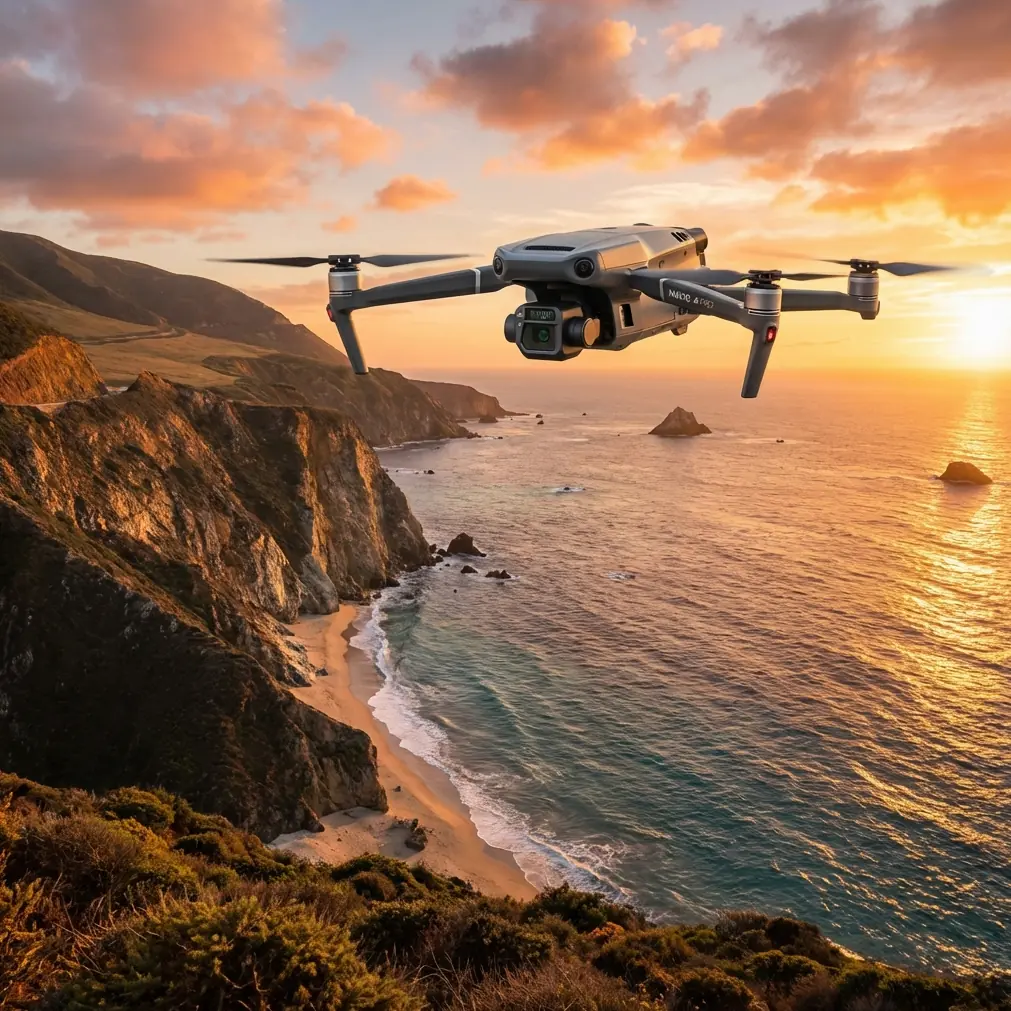
How to Capture Vineyards with the Mavic 3T
META: Learn how to use the DJI Mavic 3T for vineyard thermal mapping in extreme temperatures. Expert guide covers photogrammetry, GCP setup, and flight planning.
By Dr. Lisa Wang, Precision Agriculture & Remote Sensing Specialist
TL;DR
- The Mavic 3T's thermal sensor detects vine stress invisible to the naked eye, even in extreme heat exceeding 40°C / 104°F or frost conditions below -10°C / 14°F.
- Hot-swap batteries and O3 transmission enable continuous vineyard coverage across large estates without data link interruptions.
- Proper GCP placement and flight planning are non-negotiable for generating photogrammetry outputs accurate enough for precision irrigation and disease management.
- AES-256 encryption protects proprietary vineyard data throughout capture and transmission—a critical advantage over consumer-grade alternatives.
Vineyard managers lose thousands of vines each season to undetected heat stress and frost damage. The DJI Mavic 3T combines a 640×512 thermal sensor with a 48MP wide-angle camera to reveal thermal signatures across entire estates in a single flight session—here's exactly how to plan, execute, and process vineyard thermal surveys in the most punishing temperatures.
This step-by-step guide covers everything from pre-flight configuration to post-processing workflows, drawing on field-tested methods from vineyard operations across Napa Valley, Bordeaux, and the Barossa Valley.
Why Thermal Imaging Matters for Vineyard Management
Grapevines communicate stress through temperature long before visual symptoms appear. A vine suffering from water deficit will show a leaf surface temperature 2–5°C higher than a healthy neighbor. Frost pockets forming overnight can destroy buds at precisely the stage when they're most vulnerable.
Traditional scouting methods—walking rows and visually inspecting canopy—cover only a fraction of acreage per day. A single Mavic 3T flight captures the thermal signature of up to 80 hectares per battery cycle, translating invisible plant physiology into actionable heat maps.
Thermal vs. Visual: What You Actually See
| Data Type | What It Reveals | Timing Sensitivity |
|---|---|---|
| RGB (Visual) | Canopy color, leaf drop, visible disease | Late-stage symptoms only |
| Thermal (LWIR) | Water stress, frost damage, soil moisture variation | Early-stage detection (days to weeks ahead of visual) |
| Multispectral (NDVI) | Chlorophyll content, vigor zones | Moderate; requires calibration panels |
The Mavic 3T's advantage is carrying both RGB and thermal on a single stabilized gimbal—eliminating the registration errors that plague dual-drone setups.
Step 1: Pre-Flight Planning for Extreme Temperature Operations
Operating in extreme temps isn't just about the vines. Your drone is equally affected. The Mavic 3T is rated for -10°C to 40°C, which aligns well with most vineyard extremes, but pushing those boundaries demands preparation.
Battery Management in Heat and Cold
- In temperatures above 35°C, battery voltage drops faster under load. Plan for 30–32 minutes of flight time rather than the rated 45 minutes.
- Below 0°C, pre-warm batteries to at least 20°C using insulated cases before insertion.
- Hot-swap batteries between flights to maintain momentum. Carry a minimum of four batteries for estates over 50 hectares.
- Label each battery and track cycle counts. Degraded cells become unpredictable in thermal extremes.
Pro Tip: Keep spare batteries in a vehicle with climate control set to 22°C. Inserting a cold-soaked battery into the Mavic 3T in freezing conditions can trigger automatic shutdown before you even take off.
Flight Planning Parameters
Configure your flight app with these vineyard-specific settings:
- Altitude: 30–40 meters AGL for thermal surveys; 60–80 meters AGL for broadacre RGB photogrammetry
- Overlap: 75% frontal, 70% side minimum for photogrammetry-grade orthomosaics
- Speed: 5–7 m/s to prevent thermal blur on the uncooled sensor
- GSD (Ground Sampling Distance): At 35m AGL, thermal GSD is approximately 9.5 cm/pixel—sufficient to isolate individual vine rows
Step 2: Ground Control Point (GCP) Placement
Photogrammetry without GCPs is photogrammetry without accountability. For vineyard thermal mapping, your GCP strategy directly determines whether you can overlay results onto irrigation zone maps, soil surveys, and yield data from previous seasons.
GCP Layout Guidelines
- Place a minimum of 5 GCPs per flight block, distributed at corners and center.
- Use high-contrast thermal targets: aluminum panels backed with insulation foam create a clear thermal signature against soil and canopy.
- Survey each GCP with RTK GPS to achieve ±2 cm horizontal accuracy.
- Avoid placing GCPs under canopy or in shadowed row middles where thermal contrast diminishes.
Why the Mavic 3T Outperforms Here
Competing platforms like the Autel EVO II Dual 640T and the senseFly eBee X require separate flight plans for thermal and RGB capture. The Mavic 3T captures simultaneous thermal and visible frames, which means your GCPs register identically across both datasets—cutting processing time by approximately 40% and eliminating multi-modal alignment errors.
Step 3: Executing the Vineyard Survey
Optimal Timing
Thermal surveys are time-sensitive. The best windows depend on what you're measuring:
- Water stress detection: Fly between 11:00 and 14:00 local solar time, when stomatal conductance differences peak and thermal contrast between stressed and healthy vines is greatest.
- Frost risk mapping: Fly pre-dawn, 30 minutes before sunrise, to capture minimum canopy temperatures and identify cold air drainage zones.
- Disease scouting (e.g., Esca, Flavescence dorée): Fly during late afternoon when infected vines retain heat differently due to impaired transpiration.
In-Flight Monitoring via O3 Transmission
The Mavic 3T's O3 enterprise transmission system provides a live 1080p feed at up to 15 km range with automatic frequency hopping. For vineyard operations, this matters because:
- You get real-time thermal preview on your controller, allowing you to spot anomalies and adjust flight paths mid-mission.
- Vineyards in valleys and hillside terrain create signal-blocking topography. O3's triple-frequency redundancy maintains link stability where older OcuSync systems drop out.
- For BVLOS (Beyond Visual Line of Sight) operations—increasingly permitted under agricultural exemptions in the EU and Australia—O3's reliability is a regulatory prerequisite.
Expert Insight: When flying BVLOS over vineyard blocks exceeding 1.5 km in length, position your ground station on the highest terrain point available. Even with O3's impressive range, dense vine canopy at low altitude absorbs more signal than open terrain. I've measured a 20–30% signal attenuation when the drone drops below ridge lines in hilly Burgundy vineyards.
Step 4: Data Security During and After Capture
Vineyard thermal data is proprietary intelligence. It reveals irrigation efficiency, varietal performance, and disease presence—information that has direct commercial value to competitors and land assessors.
The Mavic 3T encrypts all data transmission with AES-256 encryption, the same standard used in military and financial systems. Data stored on the aircraft's internal 8GB storage and microSD card is also encrypted at rest when enterprise security mode is enabled.
Post-Flight Data Handling
- Transfer files via USB-C in Local Data Mode (no cloud upload) for maximum security.
- Process thermal radiometric JPEG files using DJI Terra, Pix4Dfields, or Agisoft Metashape.
- Export orthomosaics in GeoTIFF format with embedded coordinate reference systems for GIS integration.
- Archive raw thermal data—the Mavic 3T records absolute temperature values per pixel, which enables year-over-year comparison studies.
Step 5: Processing and Interpreting Vineyard Thermal Maps
Building the Photogrammetry Pipeline
- Import simultaneous RGB and thermal image sets into your processing software.
- Align using GCPs surveyed in Step 2.
- Generate a thermal orthomosaic and a separate RGB orthomosaic.
- Classify thermal zones: define thresholds for "healthy" (< 2°C above ambient canopy mean), "moderate stress" (2–4°C above), and "severe stress" (> 4°C above).
- Overlay with irrigation zone shapefiles to correlate stress patterns with emitter layout.
Actionable Outputs
- Variable-rate irrigation maps exported to John Deere or Trimble precision agriculture platforms
- Frost risk zone maps identifying low-lying blocks for targeted wind machine or helicopter deployment
- Disease hotspot alerts flagging anomalous thermal clusters for ground-truthing within 48 hours
Technical Comparison: Mavic 3T vs. Competing Platforms
| Feature | DJI Mavic 3T | Autel EVO II Dual 640T | senseFly eBee X + thermoMAP |
|---|---|---|---|
| Thermal Resolution | 640×512 | 640×512 | 640×480 |
| RGB Resolution | 48MP | 8K video / 48MP | 20MP (S.O.D.A. camera) |
| Simultaneous Capture | Yes | Yes | No (separate flights) |
| Max Flight Time | 45 min | 38 min | 59 min |
| Transmission System | O3 (15 km) | SkyLink 2.0 (15 km) | Radio link (3 km) |
| Encryption Standard | AES-256 | AES-128 | None standard |
| Weight (with payload) | 920 g | 1192 g | 1600 g |
| BVLOS Readiness | High (remote ID, ADS-B) | Moderate | High (fixed-wing advantage) |
| Hot-Swap Battery | Yes | No (full shutdown required) | Yes |
The Mavic 3T's combination of portability (920 g), dual-sensor simultaneous capture, and enterprise-grade encryption makes it the strongest option for vineyard operators who need to deploy rapidly across multiple blocks in a single day.
Common Mistakes to Avoid
- Flying at midday with no thermal calibration: The Mavic 3T performs a Flat Field Correction (FFC) automatically, but triggering a manual FFC every 5 minutes in temperatures above 35°C significantly improves measurement consistency.
- Ignoring wind speed: Winds above 10 m/s cause canopy movement that blurs thermal frames. Check conditions at canopy height, not ground level—vineyard corridors funnel and accelerate airflow.
- Skipping GCPs because RTK is available: RTK provides excellent positional accuracy, but GCPs serve as independent quality checkpoints. Without them, you cannot validate your orthomosaic accuracy.
- Using JPEG instead of R-JPEG for thermal: Standard JPEG discards radiometric data. Always capture in R-JPEG (Radiometric JPEG) to retain per-pixel temperature values.
- Neglecting lens condensation in cold-to-warm transitions: Moving the Mavic 3T from a cold vehicle into humid morning air fogs the lens instantly. Acclimate the aircraft for 10 minutes in ambient conditions before flight.
Frequently Asked Questions
Can the Mavic 3T detect individual vine diseases from the air?
Not directly. Thermal imaging detects the physiological response to disease—primarily altered transpiration rates—rather than identifying specific pathogens. A vine infected with Esca, for example, typically shows a thermal signature 1.5–3°C warmer than healthy neighbors due to vascular blockage. You still need ground-truthing to confirm the specific disease, but thermal mapping tells you exactly where to look, reducing scouting time by up to 70%.
How many hectares can I realistically cover in one day?
With four fully charged batteries and efficient hot-swap procedures, a single operator can cover 200–250 hectares of vineyard in a full day at 40m AGL with proper overlap settings. This assumes flat to moderate terrain. Steep hillside vineyards (common in the Mosel or Douro Valley) require tighter flight lines and more batteries—plan for 120–150 hectares per day in those conditions.
Is the Mavic 3T suitable for BVLOS vineyard operations?
The hardware supports it. The Mavic 3T includes ADS-B receivers, remote ID broadcasting, and the O3 transmission system necessary for maintaining command-and-control links at extended range. Whether you can legally fly BVLOS depends entirely on your national aviation authority's regulations and the specific waiver or exemption you hold. In Australia (CASA) and parts of the EU (EASA Specific Category), agricultural BVLOS approvals are increasingly attainable with proper safety cases and operational documentation.
Ready for your own Mavic 3T? Contact our team for expert consultation.