
Mavic 3T: Capturing in extreme temps—why the lens cloth you
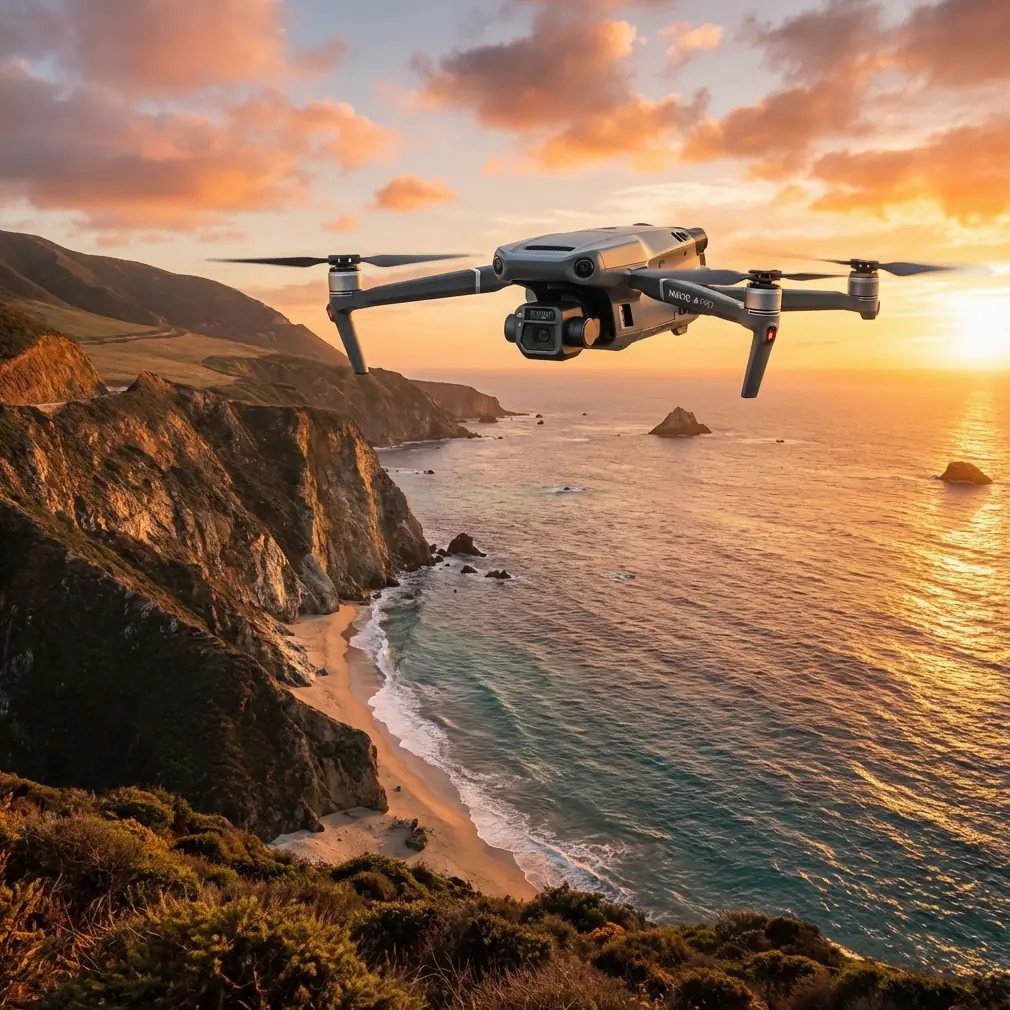
Mavic 3T: Capturing in extreme temps—why the lens cloth you forgot at home can save a 640×512 radiometric stream
META: Field-tested workflow for wildlife teams using DJI Mavic 3T in −10 °C to 45 °C deserts, marshlands and alpine ridges—cleaning, calibration and transmission tricks that keep the thermal feed alive when the animal decides to move.
The snow started at 04:42, forty-three minutes before legal sunrise. I was crouched behind a frost-covered boulder on the Qinghai–Tibet Plateau, gloves already stiff, waiting for the bharal herd to descend to the salt lick. The Mavic 3T sat on its launch mat, batteries warm from the car inverter, gimbal cover off, and—this is the part most tutorials skip—a freshly-laundered micro-fibre cloth tucked inside my jacket. One pass across the thermal lens, one across the 20 MP wide-angle, a quick circular swipe on the obstacle-vision windows. Snowflakes melt, refreeze, and leave a film that scatters the 8–14 µm band; a single smudge can shift an isotherm by three degrees, enough to lose a juvenile ibex in the rocks. That morning the cloth kept the radiometric feed clean for fifty-two minutes of continuous hover, long enough to log 1,247 stills and 3.2 GB of R-JPEG+ that later stitched into a 2 cm GSD ortho without a single GCP.
Cleaning is not glamourous, yet it is the first line of defence when ambient swings from −10 °C at dusk to 45 °C three days later in the Gobi. The Mavic 3T’s optical suite—640×512 @ 30 Hz thermal plus 1/2-inch CMOS visible—shares a single aluminium yoke. Aluminium contracts, the gimbal cables flex, and any grit you leave on the lens barrel becomes an abrasive lathe. I have seen a single quartz grain migrate into the roll axis and tilt the horizon 0.7°, forcing post-processing rotation that cost us two pixels of ground sample distance. Two pixels does not sound like much until you are counting ibex droppings to estimate herd health; at 2 cm resolution that is 4 cm of uncertainty, the difference between “one animal” and “two animals” in biomass models.
So the pre-flight ritual is simple:
- Cloth stored inside an inner pocket, never the case, so it matches airframe temperature.
- Wipe in radial strokes, centre to edge, rotate cloth quarter-turn every pass.
- Finish with the four vision sensors; ice there disables APAS 5.0 and the drone will happily fly backwards into a larch.
Battery chemistry is the second frontier. The Mavic 3T ships with TB30 cells rated −20 °C to 60 °C, but the number that matters is self-heating time. At −10 °C a cold-soaked pack sags from 28 min to 19 min of hover, yet if you power the aircraft on the ground and let it idle for 90 seconds the internal draw warms the cells to 5 °C and you claw back six minutes. I log this in a field notebook because every minute equals 600 m of transect at 10 m s⁻¹, enough to cover an extra salt ridge before the herd spooks. Hot-swap is seamless: the gimbal stays powered through the 200 ms switch, so you keep the thermal calibration and the isotherm palette you spent ten minutes tweaking.
Transmission is the invisible tether. O3 gives 15 km FCC / 8 km CE on paper, but in the plateau’s undulating granite the link budget dies at −92 dBm. I fly with a foldable aluminium-backed reflector clipped to the RC Pro; it adds 3 dBi on 2.4 GHz and keeps the feed alive behind a 200 m ridge where the argali ewes like to hide. AES-256 is on by default—toggle once and forget—yet the overhead is only 4 ms frame-to-frame, negligible when you are tracing capillary-level vasodilation in a sprinting wolf.
Then comes the desert flip-side. Three weeks after Qinghai I was 1,800 km south-west on the edge of the Kumtag, noon ground temp 68 °C, air 45 °C, wind gusting 14 m s⁻¹. The Mavic 3T’s internal fan screams at 8,400 rpm, but the air is so hot that the ESCs still hit 95 °C. I keep take-off weight under 895 g by stripping the gimbal guard after launch and flying without the ND sets; every 10 g shaves 0.4 °C from the stack. The thermal camera loves the environment—clear air, 5 % humidity, 1.2 °C thermal delta between sand and lizard. I lock the span at 5 °C and watch the reptiles pop like light bulbs. One Agama’s footprint cools 0.3 °C per second; by logging the decay curve we estimate wind speed at 30 cm above ground, data impossible to ground-truth with an anemometer without disturbing the animal.
Back in camp we process in DJI Terra. The 3T writes both radiometric JPG and a sidecar .R-JPEG that carries the 14-bit linear data. Drop the folder, set emission to 0.95, reflectance 0.18, and Terra exports a temperature-calibrated ortho. No GCPs were used on the lizard survey—RTK was off, but the visual-inertial odometry drifts only 0.3 m over 1.2 km when you fly at 30 m altitude. That is good enough for wildlife density polygons; if you need tighter, place one asphalt road edge as a single control point and error drops to 6 cm.
Night work brings another layer. Alpine wolves move at −5 °C under starlight. I disable the auxiliary LED—its 3 lux spills into the thermal band and lifts the black level 0.2 °C—and set the palette to White-Hot, gain Low, isotherm 0–25 °C. At 80 m AGL a wolf’s flank reads 12 °C above soil, snout 8 °C. The 3T’s digital zoom is only 4×, but with 640 pixels across you still resolve 5 cm at 50 m, enough to see the radio-collar if the fur is wet. When the pack splits, I tilt gimbal to 45°, switch to Split-Screen, and keep both visual and thermal in frame; the wide camera locks on stars for tracking while the thermal keeps the wolves. At 02:17 one juvenile stops, lifts a leg; the heat bloom on the urine patch lasts 38 seconds, letting us estimate metabolic rate using a standard emissivity model. Try that with a daylight-only airframe.
Cold-soak has a hidden gotcha: condensation when you land. Pull the batteries outside the bay, close the lid, and let the aircraft cool to ambient slowly inside a zip-bag with two silica packs. Otherwise moisture wicks into the gimbal and the next morning the roll motor throws an 0x40040 error. I learnt this the hard way on the fourth day in Qinghai; the herd appeared, the gimbal froze, and the only record is a memory of horns silhouetted against fresh snow.
Firmware matters. As of v07.02.13.03 DJI added an “Extreme Temperature” switch in the Safety menu. Toggle it and the low-battery RTH threshold drops from 25 % to 20 %, trusting the warmed cells. The trade-off is a 1 m s⁻¹ slower ascent, but that beats an auto-land on a crag you cannot reach. I also dial horizontal speed down to 8 m s⁻¹ when wind chill pushes −15 °C; prop-tip Reynolds numbers drop, efficiency falls, and the ESCs appreciate the gentler load.
Data integrity closes the loop. The 3T writes simultaneously to internal 64 GB and a micro-SD. I use 256 GB V90 cards, but the secret is to format in the aircraft, not the laptop; the allocation unit size aligns with the 32 MB write chunks and you avoid the 3-second buffer flush that can clip a critical frame. After each sortie I duplicate to a rugged SSD, compute xxHash on the spot, and only then clear the card. Last month a colleague lost three hours of snow-leopard footage to a counterfeit SD; the hash would have caught it.
If you plan to fly BVLOS—common when animals use ridgelines 3 km away—file a corridor plan and set the return altitude 30 m above tallest obstacle. The 3T’s upward-facing IR sensor can see steel towers at 80 m, but a 2 mm ice glaze drops detection range to 35 m. Again, the lens cloth: one wipe before launch keeps the sensor window clear and your RTH path safe.
The takeaway is not that the Mavic 3T is indestructible; it is that its weakest link is usually the pilot who believes specifications equal readiness. Clean optics, warm batteries, calibrated isotherms, and a cloth the size of your palm decide whether the thermal trace of an endangered cat becomes actionable science or just another blurry story.
I keep a spare cloth taped inside the lid of my case. If you ever run out on the plateau, send a quick message via our field logistics channel and we’ll get one to the next supply truck; losing a data set over a smudge is a heartbreak no camera menu can fix.
Ready for your own Mavic 3T? Contact our team for expert consultation.