
Mavic 3T for Coastal Power-Line Delivery
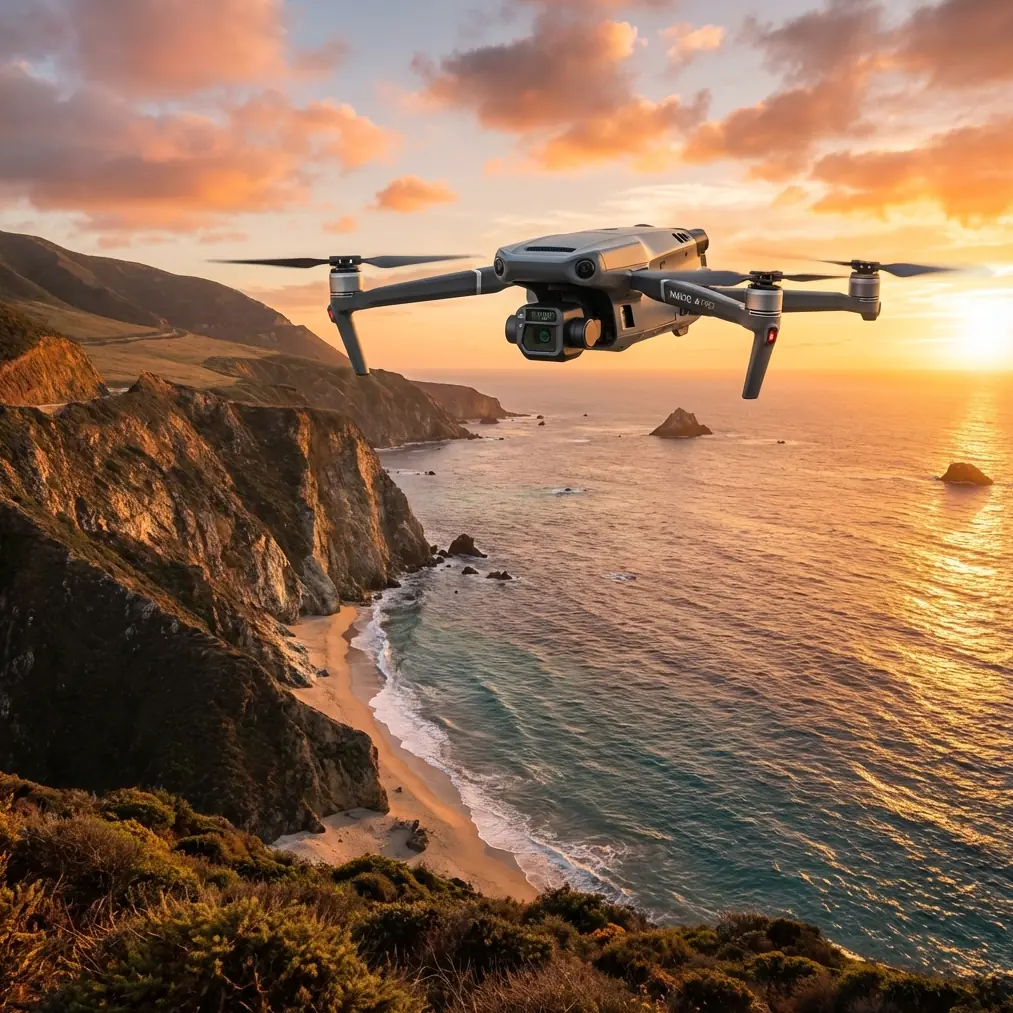
Mavic 3T for Coastal Power-Line Delivery: A Practical Field Method for Stable Links, Safer Structure Checks, and Better Thermal Decisions
META: Expert how-to for using the Mavic 3T around coastal power lines, with field tactics for EMI, antenna adjustment, thermal signature reading, inspection logic, and operational lessons drawn from aircraft structural inspection principles.
Delivering small payloads along coastal power-line corridors sounds straightforward until the environment starts stacking the odds against you. Salt haze softens contrast. Crosswinds disturb hover precision. Towers and conductors complicate radio behavior. On some days, the biggest problem is not flight time or camera settings. It is keeping the aircraft predictable when electromagnetic interference builds near energized infrastructure.
That is where the Mavic 3T earns its place. Not because it solves everything automatically, but because it gives a skilled operator enough control, visibility, and transmission stability to make disciplined decisions in ugly field conditions.
This article is built around one real operational problem: using the Mavic 3T for civilian utility support work in coastal power-line environments, where light delivery tasks overlap with inspection and route assessment. I will focus on what matters in practice—link management, antenna adjustment, thermal interpretation, and inspection discipline—rather than generic feature recaps.
Why coastal power-line work is different
A coastal line route combines three stressors that do not play nicely together:
- Electromagnetic noise from energized assets
- Variable reflectivity from water, metal, and damp surfaces
- Wind and corrosion exposure that changes the condition of structures over time
If you are using the Mavic 3T to move a small line, messenger, sensor, or training payload between access points, you are not just flying point to point. You are also reading the corridor. A route that looked clear on the planning screen may become a poor transmission path once the aircraft sits near a tower face or drifts into a reflective angle above wet hardware.
The Mavic 3T’s O3 transmission system helps, but coastal utility work still punishes lazy antenna habits. Many signal problems blamed on “interference” are really geometry problems: the controller antennas are not aligned with the aircraft’s actual position, or the pilot is standing where the tower itself becomes part of the obstruction pattern.
Start with an inspection mindset, not a delivery mindset
This is where the reference material offers a useful lesson. In the aircraft structural handbook, inspection is not treated as one single act. It breaks checks into levels: broad visual observation, targeted monitoring of defined areas, and more detailed methods using specialized tools. That logic matters for drone utility work.
For Mavic 3T coastal operations, I recommend thinking in three layers before every delivery leg:
1. Broad visual scan
Do a general corridor read from the ground. Look for obvious issues: salt deposits on insulators, bird activity, unusual conductor movement, loose fittings, and access hazards. The handbook’s idea of a simple visual “巡视” check—spotting obvious faults from the ground—translates well here. In power-line work, this saves time by filtering out routes that should never become flight tasks in the first place.
2. Monitored target review
Move to defined structural zones that matter to your flight path: tower tops, crossarms, insulator strings, and attachment points where your delivery path comes closest. The source text describes a structured visual review of specific internal or external areas when a particular kind of inspection is required. In field drone terms, that means you stop treating the line as one object and start treating it as a set of risk zones.
3. Instrument-based confirmation
Only then should you rely on thermal imagery and zoom confirmation for decision-making. This mirrors the handbook’s split between visual inspection and non-destructive testing methods such as X-ray, ultrasonic, and eddy current. Of course, the Mavic 3T is not replacing those industrial methods. The operational significance is that thermal should support inspection judgment, not substitute for a process.
That mindset changes how you fly. You stop asking, “Can I get the payload across?” and start asking, “What is the structural and radio condition of the corridor that will allow a stable and repeatable crossing?”
How to handle electromagnetic interference with antenna adjustment
Let’s get practical.
Around power lines, pilots often make one of two mistakes. They either back too far away from the structure and lose sight of detail, or they move too close and put the controller in a bad RF geometry relative to steelwork and conductors.
The Mavic 3T’s transmission link is usually more resilient when you manage the shape of the radio path, not just the distance.
Field method I use
Keep the controller face stable and intentional
Do not wave the controller around while trying to “find signal.” Maintain a fixed torso position. Rotate your whole body if needed. Small random hand movements often worsen the signal because they constantly change antenna orientation.
Adjust antenna direction based on aircraft height, not just range
If the aircraft is high and near the tower line, angle the antennas to maintain the strongest broadside relationship with the aircraft. Many pilots only think left-right. In coastal power-line work, vertical separation matters just as much because the aircraft may be almost above your standing position while still close to energized infrastructure.
Change the pilot position before changing the route
If link quality drops near a tower, move laterally on the ground to open a cleaner path around the steel structure. A five-meter shift in pilot position can outperform a much larger aircraft repositioning because it changes the obstruction profile between controller and aircraft.
Avoid standing directly beside vehicles or metal fencing
In coastal substations or service roads, parked trucks and guardrail sections can add reflection and multipath effects. Give yourself a cleaner launch point.
Use hover pauses to diagnose
Do not continue a marginal run just because forward speed hides instability. Pause in hover, note signal behavior, then adjust antennas deliberately. If the link improves without moving the aircraft, your issue was orientation. If it does not, your issue is probably environmental shielding or interference concentration.
This matters because coastal delivery work near power infrastructure rarely fails all at once. It degrades in steps: image feed softens, control confidence drops, and pilot workload spikes. The Mavic 3T gives you enough telemetry to catch that early if you are disciplined.
Why aircraft inspection guidance still matters to drone operators
One detail in the source stands out: the handbook explicitly separates routine visual checks from specialized non-destructive inspection, and it insists those checks be carried out using defined methods and qualified personnel. That may sound far removed from a compact UAV, but it maps neatly onto utility workflows.
If your Mavic 3T thermal image suggests a connector hotspot, that is not the end of the task. It is the start of escalation. The drone can identify a probable issue, classify severity, and create traceable evidence. It should not tempt teams into overclaiming certainty where closer testing is still required.
Another source detail has operational value too: after a damage event, the aircraft handbook refers to reduced load assumptions such as 70% of maneuver flight loads and 40% of gust loads for continued safety analysis in the remaining flight segment. You are not applying those exact numbers to a Mavic 3T mission, but the principle is gold: once an abnormal event occurs, you should mentally downgrade the operating envelope for the rest of the sortie.
For example, if your Mavic 3T experiences:
- a hard yaw correction near conductors,
- a branch strike on departure from a coastal access point,
- a temporary compass anomaly,
- or an unusual battery warning during hover,
you should not continue the mission as if nothing happened. Reduce aggressiveness. Shorten the route. Reassess return margin. That is how professional operators avoid turning a minor anomaly into a field loss.
Using thermal signature intelligently over coastal assets
Thermal on the Mavic 3T is most useful when paired with environmental skepticism.
Salt, moisture, and solar loading distort clean interpretation. A bright thermal signature is not automatically a fault, and a cool-looking component is not automatically healthy. The better question is whether the thermal pattern is consistent with electrical load and structural context.
Here is a practical sequence:
Compare like-for-like components
Do not stare at one fitting in isolation. Compare the same hardware type across adjacent spans or phases where possible. Relative difference is often more meaningful than absolute heat.
Watch for shape, not just peak temperature
A true anomaly usually produces a pattern. A hotspot concentrated at a clamp interface means something different from broad warming across a sunlit plate.
Re-check after slight angle change
In coastal glare conditions, one camera angle can mislead. Shift position and verify whether the thermal signature holds.
Tie thermal findings to zoom imagery
The thermal camera tells you where to look. The visible sensor helps explain why.
If you are documenting repeat inspections along the same corridor, georeferenced imagery and photogrammetry also become useful. Not because the Mavic 3T is your primary mapping platform for every utility task, but because orthomosaic references can help teams track tower settlement, vegetation encroachment, access-route changes, and shoreline erosion near support structures. Where accurate repeatability matters, GCP-backed control on separate mapping runs can tighten consistency across survey dates.
Delivery route planning: keep it boring on purpose
For small civilian utility delivery tasks, the best route is usually the least dramatic one.
Do not fly directly through the most RF-complex section if you can arc around it with a cleaner line of communication. A few extra seconds of transit is a small price for better command stability.
I build routes around four priorities:
- Clean radio geometry
- Predictable wind exposure
- Simple visual separation from wires and hardware
- Straightforward abort paths
If a route does not give you all four, it is not ready. Coastal work rewards boring plans. Fancy saves are for people who planned badly.
Battery and sortie discipline over salt-air corridors
The Mavic 3T is efficient, but coastal wind can quietly eat reserve margin. So can repeated hover pauses while you troubleshoot signal position. If your operation uses multiple batteries in sequence, treat the workflow like hot-swap discipline even if the aircraft itself requires proper power-down procedures between packs: fast turnover, clean labeling, temperature awareness, and no guessing about state of charge.
I also recommend:
- logging wind by segment, not just by launch site,
- separating delivery legs from detailed thermal inspection legs when possible,
- and wiping down gear after exposure to salt mist.
A drone that performs perfectly inland can behave differently after repeated coastal deployments if maintenance standards slip.
Security and data handling matter more than many teams admit
Utility imagery is not trivial data. Tower condition records, route maps, thermal anomalies, and maintenance visuals all have operational value. If your team is transmitting or sharing findings from the field, keep workflow security in mind. The Mavic 3T’s ecosystem discussions often include AES-256 because encrypted handling is not just an enterprise checkbox; it reduces unnecessary exposure of infrastructure data.
That is especially relevant if your workflow blends pilots, analysts, and field crews in different locations. Share only what the job needs, and keep your communication chain clean. If you need a practical field discussion about utility drone setup or corridor workflow, you can message our operations desk here.
What BVLOS changes—and what it does not
Some teams immediately think of BVLOS when corridor work comes up. Fair enough. Longer line infrastructure often pushes operations in that direction. But BVLOS does not erase the fundamentals discussed here.
Whether the mission is within visual range or conducted under approved beyond-visual-line-of-sight procedures, the same realities remain:
- RF geometry still matters,
- thermal still needs context,
- structure checks still benefit from layered inspection logic,
- and abnormal events still require a conservative response.
Technology can extend your reach. It cannot rescue poor field method.
A practical mission template for Mavic 3T coastal power-line work
Here is the short version of how I would run a typical job:
Pre-mission
- Review corridor maps, access points, wind, and reflective terrain
- Identify likely EMI trouble spots near towers and conductors
- Confirm payload limits and safe attachment configuration
- Set image and thermal capture plan
On site
- Conduct a broad visual corridor scan from the ground
- Pick a pilot position with the cleanest possible RF geometry
- Avoid metal clutter near the controller
- Launch for a short check hover and verify signal behavior before committing
In flight
- Keep antenna orientation deliberate
- Use pauses to diagnose link quality
- Reposition the pilot laterally if the tower structure is blocking or distorting the path
- Compare thermal patterns across similar components
- Capture visible confirmation for any thermal irregularity
After any abnormal event
- Reduce mission scope
- Reassess battery reserve and return margin
- Treat the rest of the sortie conservatively, not optimistically
Post-flight
- Log image findings, route notes, signal trouble zones, and environmental conditions
- Clean equipment exposed to salt
- Flag any thermal anomalies for engineering follow-up rather than overinterpreting them in the field
The Mavic 3T is a capable aircraft for this kind of utility support work, but capability only becomes value when the operator understands what the environment is doing. In coastal power-line delivery scenarios, success is usually decided before the payload moves—by inspection discipline, by radio awareness, and by whether the pilot knows how to adapt when the corridor starts fighting back.
Ready for your own Mavic 3T? Contact our team for expert consultation.