
Mavic 3T: Filming Highways in Low Light Conditions
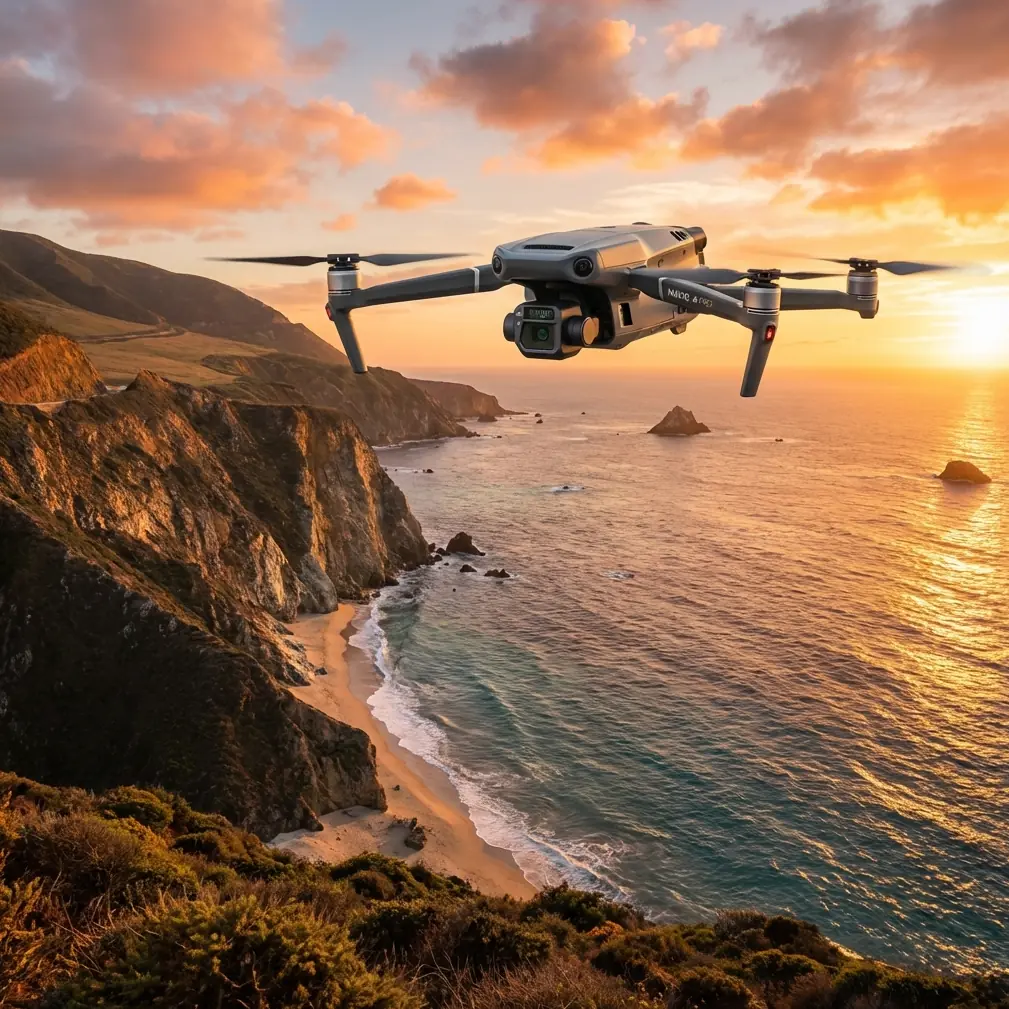
Mavic 3T: Filming Highways in Low Light Conditions
META: Learn how to film highways in low light using the DJI Mavic 3T. Expert guide covers thermal imaging, optimal altitude, camera settings, and BVLOS tips.
By Dr. Lisa Wang, Remote Sensing & Drone Operations Specialist
TL;DR
- Flying at 80–120 meters AGL provides the ideal balance between thermal signature clarity and wide highway corridor coverage in low-light conditions.
- The Mavic 3T's split-screen thermal and RGB workflow lets you capture usable footage even in near-total darkness.
- O3 transmission maintains a stable video feed up to 15 km, critical for extended highway survey missions.
- Proper use of hot-swap batteries and pre-planned waypoints can extend continuous filming sessions to cover 20+ km of highway per sortie.
Why Low-Light Highway Filming Is Uniquely Challenging
Highway filming after sunset or before dawn presents problems that standard commercial drones simply cannot solve. Ambient light drops rapidly, traffic headlights create extreme dynamic range conflicts, and maintaining consistent footage quality across kilometers of road demands a platform built for the task.
The DJI Mavic 3T addresses every one of these pain points with its triple-sensor camera system—a 48 MP wide-angle, a 12 MP zoom, and a 640 × 512 thermal imaging sensor. This guide walks you through the exact workflow, altitude strategy, and camera settings needed to produce broadcast-quality highway footage when light conditions are at their worst.
Understanding the Mavic 3T's Low-Light Arsenal
Triple-Sensor Camera System
The Mavic 3T isn't a single-camera drone with a thermal add-on. It's an integrated imaging platform designed for enterprise missions. Here's what each sensor brings to highway filming:
- Wide-angle camera (48 MP, f/2.8): Captures broad contextual footage of the highway corridor, lane markings, and surrounding infrastructure.
- Zoom camera (12 MP, 56× hybrid zoom): Isolates specific details—signage, pavement damage, vehicle flow patterns—from a safe altitude.
- Thermal camera (640 × 512 resolution, DFOV 61°): Detects thermal signature data from vehicles, road surfaces, and adjacent structures, delivering usable imagery regardless of visible light levels.
The ability to run split-screen or picture-in-picture modes means you're never choosing between RGB and thermal. You capture both simultaneously, time-stamped and geotagged for post-processing.
O3 Transmission: Your Lifeline at Distance
Highway corridors are linear, meaning your drone will frequently be flying several kilometers from the pilot station. The Mavic 3T's O3 enterprise transmission system provides:
- 1080p/30fps live feed at distances up to 15 km
- Triple-channel redundancy (2.4 GHz, 5.8 GHz, DFS)
- AES-256 encryption on all video and telemetry data, ensuring compliance with transportation authority data security requirements
This isn't a luxury feature for highway work—it's a necessity. Losing your video feed mid-mission over an active highway is a safety incident, not just an inconvenience.
Step-by-Step: How to Film Highways in Low Light with the Mavic 3T
Step 1 — Pre-Mission Planning and Airspace Authorization
Before powering on, complete these critical planning tasks:
- Map the corridor using DJI FlightHub 2 or DJI Pilot 2. Import highway GIS data if available.
- Set Ground Control Points (GCP) at known coordinates along the route if you plan to use the footage for photogrammetry or engineering-grade mapping.
- File for BVLOS authorization if your mission plan extends beyond visual line of sight. Many highway surveys require flights of 5–15 km, well beyond VLOS limits.
- Check NOTAMs and TFRs for the flight area. Highway corridors near airports or helipads carry additional restrictions.
Expert Insight: When placing GCPs for highway photogrammetry, position them on the shoulder or median—never in active traffic lanes. Use retroreflective targets that remain visible to the wide-angle camera even in twilight conditions. Spacing GCPs every 500–800 meters provides sufficient geometric accuracy for most transportation engineering deliverables.
Step 2 — Determine Optimal Flight Altitude
Altitude selection is the single most impactful decision you'll make for low-light highway filming. Too low, and you sacrifice coverage width. Too high, and the thermal sensor loses the resolution needed to distinguish individual vehicles and road features.
The optimal range for highway thermal filming is 80–120 meters AGL.
Here's why this range works:
- At 80 m AGL, the thermal camera's ground sampling distance (GSD) is approximately 11.2 cm/pixel, sufficient to identify vehicle types and detect pavement temperature differentials.
- At 120 m AGL, you gain a wider swath (roughly 140 m across) while maintaining a GSD of approximately 16.8 cm/pixel—still usable for most highway monitoring applications.
- Below 60 m, rotor wash and noise become problematic near traffic, and you lose the ability to capture full interchange geometry in a single pass.
| Altitude (AGL) | Thermal GSD | Swath Width | Best Use Case |
|---|---|---|---|
| 60 m | ~8.4 cm/px | ~85 m | Detail inspection, crack detection |
| 80 m | ~11.2 cm/px | ~110 m | Standard highway filming (recommended minimum) |
| 100 m | ~14.0 cm/px | ~125 m | Balanced coverage and detail |
| 120 m | ~16.8 cm/px | ~140 m | Wide corridor surveys, interchange mapping |
| 150 m | ~21.0 cm/px | ~175 m | Large-area overview only |
Pro Tip: If your deliverable requires both thermal and RGB footage, fly at 100 m AGL as your baseline. This altitude gives the wide-angle RGB camera enough context for a cinematic highway shot while keeping the thermal sensor in its performance sweet spot. Adjust downward only if you need sub-10 cm thermal resolution for specific inspection targets.
Step 3 — Configure Camera Settings for Low Light
The Mavic 3T's mechanical shutter on the wide-angle camera is a significant advantage in low light—it eliminates the rolling shutter distortion that plagues electronic shutters during fast lateral passes.
Recommended RGB settings for low-light highway filming:
- ISO: Start at 800, adjust up to 3200 based on ambient light. Beyond 3200, noise becomes excessive for broadcast use.
- Shutter speed: No slower than 1/60s for video, 1/30s for stills with the drone in hover.
- White balance: Set manually to 4000K–4500K to compensate for sodium vapor or LED highway lighting.
- Format: Shoot in D-Log color profile for maximum dynamic range recovery in post-production.
Recommended thermal settings:
- Palette: Use White Hot for general traffic monitoring or Ironbow for pavement temperature analysis.
- Gain mode: Set to High Gain for maximum thermal sensitivity when detecting subtle temperature differentials (pavement delamination, subsurface moisture).
- Isotherm: Enable and set the threshold to highlight specific temperature ranges—useful for identifying vehicles versus road surface versus vegetation.
Step 4 — Execute the Flight with Hot-Swap Battery Strategy
The Mavic 3T delivers approximately 45 minutes of flight time per battery. For a standard highway survey covering 10–20 km, you'll need a structured battery rotation plan.
- Carry a minimum of 4 batteries per mission.
- Pre-warm batteries to at least 20°C before flight. Low-light filming often coincides with cooler temperatures, and cold batteries lose capacity rapidly.
- Use hot-swap batteries if your operation supports it—land, swap, and resume within 90 seconds to maintain mission continuity.
- Set RTH (Return to Home) battery threshold at 25%, not the default 20%, to account for headwinds during the return leg.
Step 5 — Post-Processing and Deliverable Creation
Raw footage from a low-light highway mission requires deliberate post-processing:
- RGB footage: Apply noise reduction (Neat Video or DaVinci Resolve's built-in NR), recover shadow detail from D-Log, and color-grade to match your client's brand or agency standards.
- Thermal data: Export as radiometric TIFF files for engineering analysis. Use DJI Thermal Analysis Tool 3.0 to extract temperature measurement data from specific regions of interest.
- Photogrammetry workflows: If you flew with GCPs and sufficient overlap (75% frontal, 60% side), process in Pix4D, DJI Terra, or Agisoft Metashape to generate orthomosaics and digital surface models of the highway corridor.
Technical Comparison: Mavic 3T vs. Other Enterprise Platforms for Highway Filming
| Feature | Mavic 3T | Matrice 30T | Matrice 350 RTK + H20T |
|---|---|---|---|
| Weight | 920 g | 3,770 g | 9,200 g (with payload) |
| Max Flight Time | 45 min | 41 min | 55 min |
| Thermal Resolution | 640 × 512 | 640 × 512 | 640 × 512 |
| Zoom Camera | 12 MP / 56× hybrid | 48 MP / 200× hybrid | 20 MP / 200× hybrid |
| Transmission Range | 15 km (O3) | 15 km (O3) | 20 km (O3) |
| Portability | Backpack-friendly | Hard case required | Vehicle-mounted case |
| IP Rating | N/A | IP55 | IP45 |
| AES-256 Encryption | Yes | Yes | Yes |
| Best For | Rapid deployment, solo ops | All-weather, mid-scale | Large infrastructure projects |
The Mavic 3T wins on portability and deployment speed. For a solo operator surveying highway segments from a vehicle pulled onto the shoulder, the 920 g form factor and sub-60-second setup time make it the clear choice. Larger platforms justify their weight only when you need IP-rated weather resistance or extended zoom capabilities.
Common Mistakes to Avoid
- Flying too low over active traffic. Maintaining 80 m AGL minimum protects both your drone and road users. Turbulence from large trucks can destabilize a sub-1 kg drone at lower altitudes.
- Ignoring AES-256 encryption settings. If you're filming for a government transportation agency, unencrypted data transmission may violate your contract terms. Verify encryption is enabled before every mission.
- Using auto exposure in mixed lighting. Highway scenes with headlights, streetlights, and dark pavement will confuse auto exposure. Lock your settings manually.
- Skipping GCPs when photogrammetry accuracy matters. The Mavic 3T has an RTK module option, but even with RTK, GCPs improve absolute accuracy from ~5 cm to ~2 cm in the horizontal plane.
- Neglecting battery temperature. Cold batteries under 15°C can lose 20–30% of rated capacity. Pre-warm using insulated battery bags with hand warmers during winter night operations.
- Failing to set geofence boundaries. Highway corridors run near airports, hospitals, and restricted zones. Always program a geofence corridor in DJI Pilot 2 to prevent inadvertent airspace violations.
Frequently Asked Questions
Can the Mavic 3T produce usable RGB video in complete darkness?
No. The wide-angle and zoom cameras require some ambient light—streetlights, vehicle headlights, or twilight—to produce viable RGB footage. In complete darkness, the thermal camera becomes your primary imaging tool. For projects requiring visible-spectrum footage in zero ambient light, pair the Mavic 3T with a separate spotlight-equipped drone or schedule flights during civil twilight (30–45 minutes before sunrise or after sunset) for the best balance of low traffic density and residual light.
What flight speed should I use for highway corridor surveys?
For thermal and RGB video capture at 80–120 m AGL, maintain a ground speed of 8–12 m/s (29–43 km/h). This speed ensures adequate frame overlap for photogrammetry and prevents motion blur in thermal captures. If you're only collecting video without mapping requirements, speeds up to 15 m/s are acceptable. Avoid exceeding 15 m/s at night, as obstacle avoidance sensors have reduced effectiveness in low-light conditions.
Do I need BVLOS authorization for every highway filming mission?
It depends on your jurisdiction and the length of the highway segment. If the entire flight path stays within your visual line of sight (typically 500 m–1 km depending on conditions and regulations), standard VLOS rules apply. Most meaningful highway surveys cover 5+ km, which requires BVLOS authorization from your national aviation authority. In the United States, this means an FAA Part 107 waiver for BVLOS operations. The Mavic 3T's O3 transmission and ADS-B receiver support the safety case for these waivers, but approval is never guaranteed—plan your application 60–90 days in advance.
Ready for your own Mavic 3T? Contact our team for expert consultation.