
Mavic 3T for Highway Work at Night: What Actually Matters
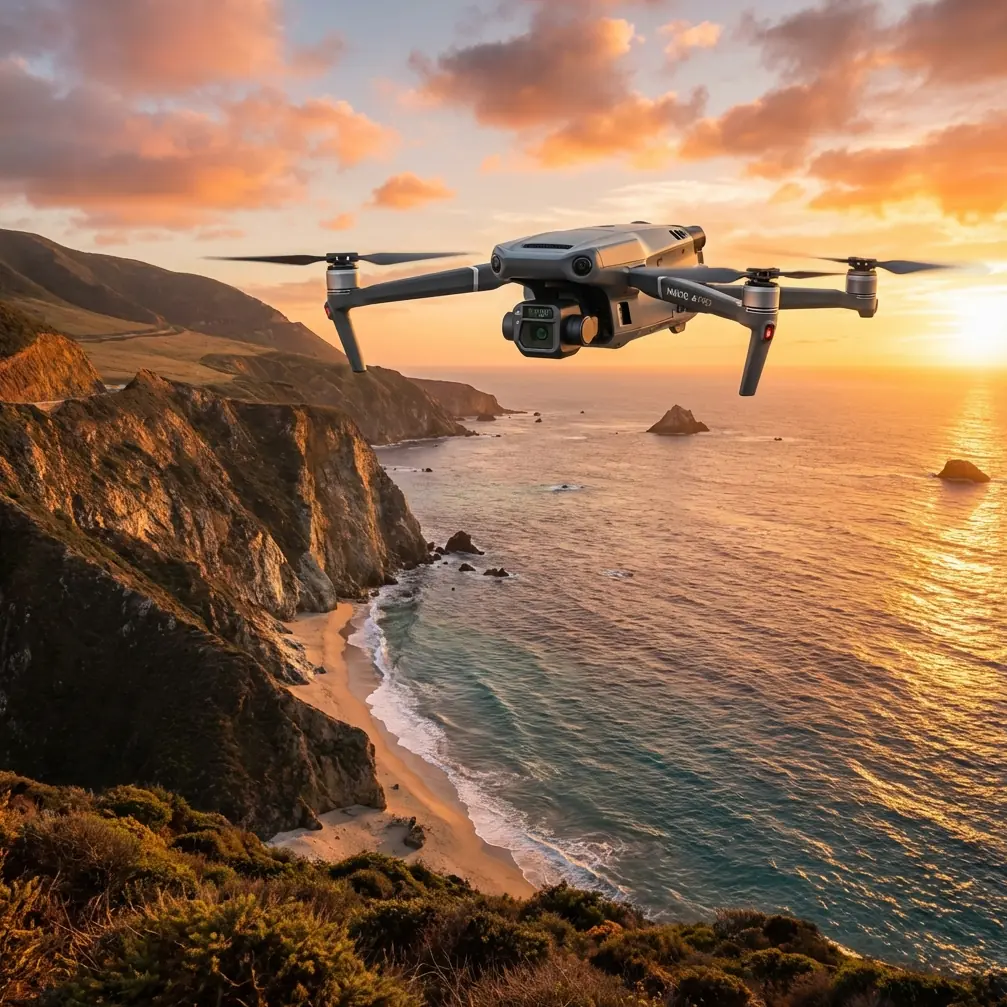
Mavic 3T for Highway Work at Night: What Actually Matters in the Field
META: Expert technical review of the Mavic 3T for low-light highway operations, covering thermal signature use, pre-flight safety checks, transmission stability, data security, and mission planning for civilian inspection teams.
Highway filming after dark exposes every weakness in an aircraft, a workflow, and a crew. Ambient light drops. Reflective surfaces flare. Long linear corridors punish weak transmission links. Fast-moving vehicles create visual clutter and heat noise. This is exactly where the Mavic 3T stops being a spec-sheet favorite and starts acting like a serious tool.
I’ve seen too many crews treat low-light road work as if it were just daytime flying with a darker sky. It isn’t. Night highway operations demand a very different discipline, especially when the goal is useful commercial imagery rather than pretty footage. If your brief involves infrastructure assessment, pavement condition review, drainage checks, bridge approach monitoring, or traffic-pattern observation for planning teams, the Mavic 3T has a distinct advantage because it combines visible imaging with thermal signature interpretation in one compact airframe. That matters more than people admit.
What also matters is understanding what the aircraft can and cannot solve on its own.
Start with the unglamorous step: clean the sensors before anything else
Before propellers spin, I want one thing done carefully: clean the forward, rear, upward, downward, and side-facing sensing surfaces, along with the main camera windows and thermal lens cover. On low-light highway jobs, this is not cosmetic housekeeping. It is operational risk control.
Roadside environments are dirty. Fine dust from shoulders, mist from passing vehicles, diesel residue, and even insect strikes can degrade obstacle sensing and compromise image clarity. At night, the system has less visual information to work with in the first place. A thin film on a sensor window can be the difference between a dependable caution buffer and a sluggish response to poles, gantries, sign structures, or utility lines near the corridor.
This is the step most rushed crews skip because it feels trivial. It isn’t. The Mavic 3T’s safety stack depends on clean sensor inputs. If you’re flying near overpasses, embankments, sound barriers, and variable message signs, your margin narrows fast. A microfiber cloth and a 60-second inspection can prevent bad data or worse, a hard stop in the middle of a critical pass.
That small habit tells me a lot about whether a team understands night operations.
Why thermal changes the value of a highway mission
Anyone can capture visible footage of a road at night. The harder question is whether the data reveals anything useful once the novelty wears off. This is where thermal earns its place.
On highways, heat behaves like a layer of hidden information. Drainage issues can alter surface temperature patterns. Recently stressed electrical cabinets and roadside equipment can stand out. Vehicle concentration zones often appear differently in thermal than they do in visible imagery. Bridge decks, patched pavement, and shoulder transitions may present thermal contrast that helps inspectors prioritize what to examine on the ground.
The point is not to pretend the Mavic 3T replaces full engineering diagnosis. It doesn’t. It helps teams see anomalies sooner and allocate human attention where it counts.
That is especially useful in low-light work because visible sensors often struggle with deep shadows, glare from headlights, and reduced texture across long asphalt surfaces. A thermal signature can cut through some of that visual ambiguity. For highway agencies, consultants, and contractors, that means less time guessing and more time verifying.
Long corridor flights expose the real value of transmission reliability
Highway work is linear. You are rarely orbiting one neat subject in open space. You’re tracking a corridor, often with mixed terrain, roadside structures, and moving traffic influencing the visual scene. For that reason, stable O3 transmission is not just a convenience feature. It shapes how confidently you can work.
When crews talk about “signal strength,” they often mean whether the live view looks smooth. That’s too simplistic. On a low-light highway mission, transmission quality affects framing decisions, obstacle awareness, thermal interpretation, and handoff timing between pilot and visual support. If the downlink breaks up while you’re aligning a pass along a median barrier or approaching a bridge approach, the mission quality drops immediately even if the aircraft remains technically controllable.
The Mavic 3T’s transmission system is one of the practical reasons it fits corridor work. It supports a more stable operating picture in environments where distance and roadside clutter can quickly erode confidence. For teams planning regulated BVLOS programs, this becomes even more relevant, though every such operation needs to remain within local regulatory approval and a documented risk framework. The aircraft helps, but procedure carries the mission.
Low-light filming is not the same as low-light inspection
This distinction matters because many buyers blur the two.
If your assignment is cinematic highway footage, you prioritize motion quality, composition, dynamic range, and exposure behavior under artificial light. If your assignment is inspection or engineering support, you care more about repeatability, anomaly detection, spatial consistency, and evidence capture. The Mavic 3T leans much more naturally toward the second category.
That doesn’t mean it cannot produce compelling night visuals. It can. But its strongest identity is as a dual-purpose observation platform. The thermal payload makes it unusually effective for teams that need to correlate what they see in the visible image with what the surface or asset is doing thermally. On highways, that dual read can be more informative than either view alone.
A good example is post-rain assessment at night. Visible imagery may show pooled water only where reflections are obvious. Thermal may help reveal moisture-related temperature differences across shoulders, drains, or patched sections. You still need trained interpretation. But the aircraft gives your team more than one way to read the scene.
Security and chain-of-custody are not side issues
Highway projects often involve sensitive infrastructure imagery, contractor documentation, or pre-opening surveys where data control matters. That is why onboard and transmission security deserve more attention than they usually get.
The Mavic 3T’s AES-256 support is not just a checkbox for procurement documents. In practical terms, it helps organizations build cleaner internal controls around captured infrastructure data and flight records. For engineering firms, utilities, and transport departments, that is part of professional due diligence. If you’re documenting a newly upgraded interchange, a tunnel approach, or restricted maintenance zone, data handling standards should be as disciplined as flight standards.
I’d go further: teams that obsess over airframe performance but ignore image security are only doing half the job.
Where photogrammetry fits, and where it doesn’t
A lot of users ask whether the Mavic 3T can handle photogrammetry for highway projects. The short answer is yes, within the limits of the sensor and mission design. The more honest answer is that the aircraft is strongest when thermal interpretation and rapid field collection matter more than pure survey optimization.
You can still create useful mapped outputs, especially for corridor overviews, surface documentation, and change detection. If accuracy matters beyond visual interpretation, bring proper ground control into the workflow. GCP placement remains one of the clearest ways to tighten your final deliverables and reduce ambiguity along long stretches of road where repetitive textures can challenge alignment.
This is another place where night work changes the equation. Photogrammetric consistency becomes harder when the visible scene lacks texture or is dominated by artificial lighting contrasts. If the mission is truly mapping-led, you need to be realistic about overlap, altitude, speed, and target visibility. If the mission is anomaly-led, the Mavic 3T becomes much more comfortable in its role.
In other words, don’t force it into the wrong job. Use it where its sensor mix creates an advantage.
Battery workflow affects mission quality more than most teams expect
Highway operations tend to run in extended sequences: one segment, then the next, then a return pass for thermal confirmation, then a closer look at a drainage outlet or sign support. That rhythm exposes weak battery discipline.
Hot-swap batteries matter here because they reduce downtime between sorties and help preserve mission continuity. On a highway job, continuity is not merely a convenience. It affects thermal comparability and the crew’s mental picture of the corridor. If your team has to stop too long between segments, surface temperatures shift, traffic patterns change, and the reference conditions you were comparing begin to drift.
Fast turnaround keeps the mission coherent. It also lowers the temptation to push a battery beyond a prudent reserve just to finish one more pass. That temptation is common on long linear inspections and it causes bad decisions.
A disciplined crew treats power management as part of data quality, not just endurance.
The hidden challenge of highways: thermal clutter
Thermal users quickly learn that roads are messy environments. Fresh tire heat, engine heat, recently used hard shoulders, lighting equipment, overhead electrical assets, and heat retained by different pavement materials can all complicate interpretation. This does not weaken the case for the Mavic 3T. It simply means expertise matters.
A novice sees a bright thermal area and assumes “problem.” A stronger operator asks better questions. Is it persistent? Is it tied to traffic flow? Is it localized near a utility enclosure? Does it align with a known patch, culvert, or drainage path? Does it change over multiple passes?
That is why the aircraft works best in the hands of teams who understand both flight operations and asset behavior. Thermal is powerful, but it is not self-explanatory.
Why this compact platform still earns respect
There are larger systems with bigger payloads. There are mapping platforms better tuned for high-accuracy survey. There are cinema rigs built for more dramatic night footage. Yet the Mavic 3T keeps finding a place in highway work because it compresses several useful functions into one manageable deployment package.
That matters at the roadside. Setup is quicker. Crew footprint is lighter. Transport is simpler. Decision-makers can move from question to airborne view without turning the mission into a major field exercise. For many transport consultants, utility inspection teams, and civil contractors, that speed translates directly into better site responsiveness.
The real strength of the Mavic 3T is not that it does everything. It’s that it does the right combination of things for low-light infrastructure work.
A note on operational maturity
If you’re building a professional highway workflow around this aircraft, resist the urge to let technology replace process. Create a night checklist that starts with sensor cleaning, lens inspection, battery temperature awareness, return-to-home review, airspace confirmation, and route hazard identification. Mark reflective signs, cables, poles, and overpass geometry in your briefing. Define exactly what the thermal pass is supposed to answer. Decide in advance whether you’re collecting for visual documentation, thermal anomaly screening, photogrammetry, or all three.
Those distinctions sharpen everything.
And if your team is still refining its setup for low-light transport work, it helps to compare notes with operators who already deploy the platform in corridor environments. If you need a practical field conversation rather than a marketing script, you can message an M3T workflow specialist here.
Final assessment
For filming highways in low light, the Mavic 3T is at its best when the mission is tied to real operational questions: where heat differs, where road assets need attention, where visual evidence and thermal evidence should be read together, and how to keep those flights safe in a cluttered corridor after dark.
Two details define its usefulness. First, the dual imaging approach lets crews compare visible conditions with thermal signature behavior, which is often far more revealing than standard night footage alone. Second, secure data handling through AES-256 support makes it more credible for infrastructure-sensitive documentation workflows where image control matters beyond the field.
Add dependable O3 transmission, efficient battery rotation, and a disciplined pre-flight cleaning habit for the safety sensors, and the aircraft becomes more than a compact drone with a thermal camera. It becomes a practical night-shift instrument for civilian highway teams that need answers, not just footage.
Ready for your own Mavic 3T? Contact our team for expert consultation.