
Mavic 3T for Coastal Solar Farm Filming: A Technical Review
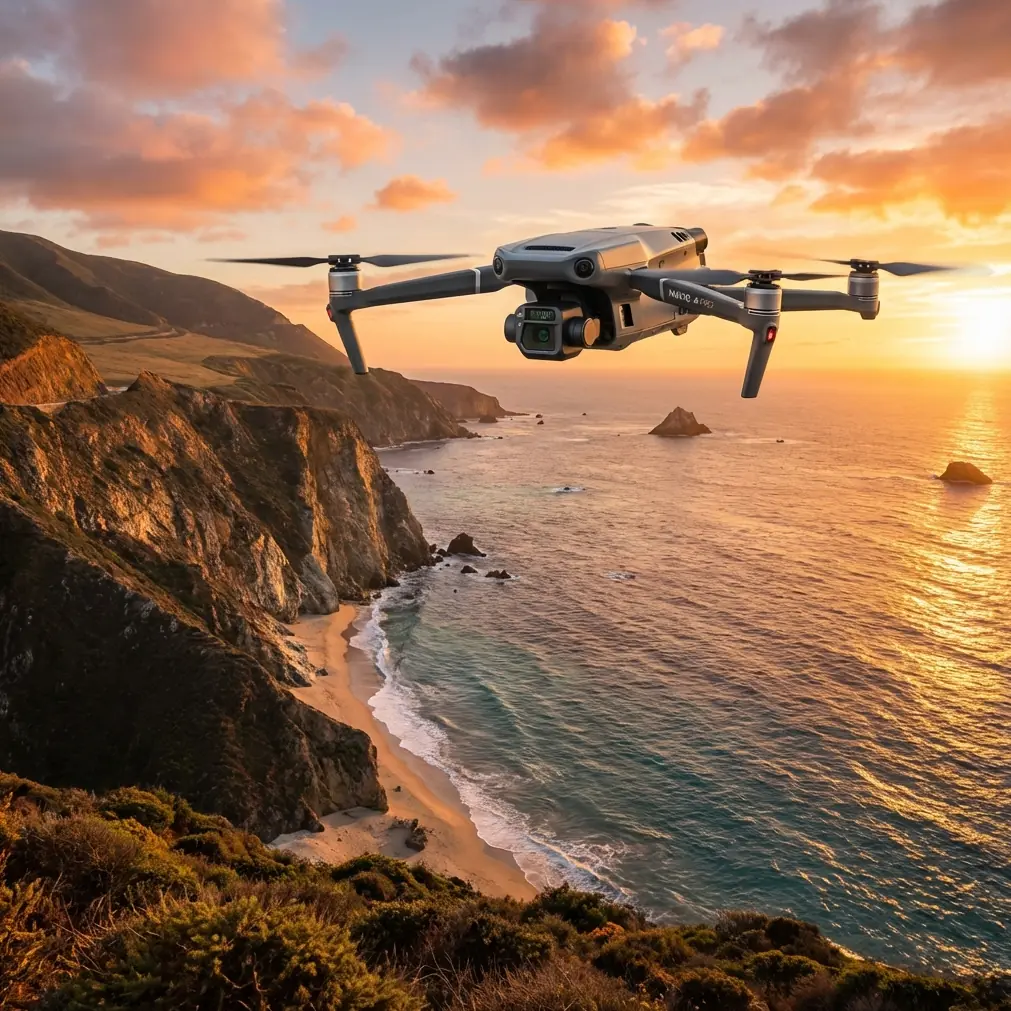
Mavic 3T for Coastal Solar Farm Filming: A Technical Review from the Field
META: Expert review of the Mavic 3T for coastal solar farm inspection and filming, with practical analysis of thermal workflows, power resilience, transmission reliability, and why its design matters in harsh marine conditions.
Coastal solar farms are unforgiving places to fly.
Salt hangs in the air. Wind is rarely still. Glare bounces off rows of glass. Midday heat can flatten contrast in visible imagery while masking subtle temperature deviations that matter to operators. If your aircraft drops signal, burns battery too quickly, or forces too many landings, the mission slows down fast. That is where the Mavic 3T separates itself from a long list of small UAVs that look capable on paper but become awkward in real inspection work.
I’m approaching this from a practical standpoint rather than a spec-sheet recital. For teams documenting utility-scale solar sites near the coast, the aircraft is not just a camera platform. It is an airborne electrical system, a sensor package, and a workflow tool. Those three layers determine whether you come back with usable thermal findings and clean visual coverage, or with fragmented data that needs to be re-flown.
Why power architecture matters more than most Mavic 3T reviews admit
One of the more interesting reference points for understanding field reliability comes from conventional aircraft electrical design rather than drones. In civil aircraft practice, emergency power is not treated as optional. The design logic is blunt: every aircraft should have an emergency power source, and when batteries are used for emergency loads, capacity should support at least 30 minutes of essential operation. The same source also points out that for missions where the aircraft may be far from a suitable landing point, simply increasing battery size is not always the right answer; a dedicated emergency generation strategy becomes necessary.
That principle matters when evaluating the Mavic 3T for coastal solar farm work.
No, the Mavic 3T is not built like an airliner, and no one should pretend it is. But the design lesson carries over cleanly: resilient operations depend on power planning, not wishful thinking. On a sprawling solar site, especially one stretched across reclaimed land or coastal industrial zones, the operator often works farther from the launch point than is comfortable for a casual visual-media drone. Add thermal inspection passes, repeated oblique shots, and wind compensation, and battery consumption becomes the hidden limiter of mission quality.
This is one reason the Mavic 3T stands out against lighter, lower-end thermal drones. Some competitors can collect decent thermal snapshots, but their endurance profile forces too many interruptions. Every additional landing breaks mapping continuity, changes sun angle, and introduces inconsistency in thermal interpretation. Over a large array, that means more than inconvenience. It means comparing one image set captured under one thermal state with another set captured after environmental drift. In solar diagnostics, that can muddy fault verification.
The operational takeaway is simple: on coastal solar farms, endurance is not just about staying in the air longer. It protects data consistency.
The thermal advantage is only useful if the platform can maintain the mission
The Mavic 3T’s thermal payload gets much of the attention, and rightly so. Solar modules with underperforming strings, hotspot cells, connector issues, or inverter-adjacent abnormalities often reveal themselves first through thermal signature rather than visible damage. But thermal imaging becomes truly valuable only when tied to stable flight behavior and predictable route execution.
That is where the Mavic 3T tends to outperform many compact rivals. It gives operators a cleaner bridge between targeted hotspot detection and broader site documentation. Instead of using one aircraft for thermal scanning and another for higher-quality contextual imagery, teams can work through both layers in one coherent field setup. For coastal facilities, that matters because weather windows are often narrower than expected. Cloud shifts, marine haze, and gust fronts can force a rushed workflow. A drone that can switch efficiently between thermal interpretation and visible capture saves more than time; it reduces site disruption and lowers the chance of incomplete records.
If the job includes stakeholder-facing footage as well as technical inspection, the Mavic 3T becomes even more useful. Solar asset owners increasingly want deliverables that combine fault evidence, panel-block context, and polished visual overviews for maintenance planning or investor reporting. That blend is where this model is particularly strong.
Coastal interference and the real value of O3 transmission
Readers often focus on camera specs first. I would argue the transmission system is just as important for solar farms near the sea.
Large solar fields can produce a visually repetitive environment with long, low rows and sparse vertical landmarks. Depending on nearby infrastructure, you may also encounter communication noise from substations, industrial equipment, or port-adjacent facilities. The Mavic 3T’s O3 transmission is a major operational benefit here. A robust link does more than preserve pilot confidence. It supports better framing, safer route management, and more reliable interpretation of thermal anomalies in real time.
Some competing platforms advertise acceptable range but feel less composed when the environment becomes messy. Signal stability degrades, preview smoothness suffers, and the operator starts flying more conservatively than the job requires. On a coastal solar site, that usually translates to slower progress and more rework.
A stable transmission link also matters for collaborative workflows. If your visual observer, thermographer, or client rep is reviewing live feeds during the mission, signal integrity directly affects decision-making. You do not want to discover after landing that a questionable hotspot should have been revisited while the aircraft was already airborne.
For teams building standardized inspection programs, O3 is not just a convenience feature. It is a consistency feature.
AES-256 is not a footnote for infrastructure work
The mention of AES-256 encryption tends to get skimmed over in casual reviews, but for critical energy assets, it deserves more attention. Solar farms are commercial infrastructure. Their layouts, equipment conditions, and maintenance records are not always information owners want loosely exposed through insecure handling.
When you are filming or inspecting a coastal solar site, you may be capturing more than panels. You may include substations, access control points, inverter housings, cable runs, or nearby industrial interfaces. AES-256 matters because it strengthens the trust chain around data movement and mission handling. For contractors serving utility clients, that is not abstract. It can shape procurement eligibility and internal approval.
This is another area where the Mavic 3T feels more mature than entry-level thermal options. The aircraft is not only about collecting information; it is designed with the expectations of enterprise workflows in mind.
Wind, glare, and repetitive geometry: where photogrammetry gets harder
Solar farms look easy to map until you actually try to generate usable outputs.
Rows of near-identical modules can confuse reconstruction if overlap discipline is weak or if your imagery is compromised by glare. Coastal light makes that problem worse. In visible-spectrum data collection, reflective surfaces and low-angle sun can produce inconsistent texture, while marine air can reduce local contrast. If you are building site models or change-detection baselines, the flight plan must be sharper than many operators assume.
This is where photogrammetry workflow choices become critical. The Mavic 3T is not the first aircraft people name for mapping, but it can be highly effective when the mission is properly planned. The use of GCPs, especially on large solar installations with long repeating geometry, becomes operationally significant. Ground control points help lock the model to reality when panel uniformity gives the software fewer natural reference variations. Without them, a visually acceptable orthomosaic may still drift enough to weaken asset-level decision-making.
That detail deserves emphasis because many teams overestimate what automated mapping can do in a solar environment. A good aircraft does not replace disciplined survey logic. The Mavic 3T gives you the sensor flexibility and platform stability to execute the work, but repeatable outputs still depend on proper overlap, lighting management, and GCP placement.
What the aircraft-design reference reveals about field discipline
The second source document is rougher and less directly tied to drones, but it still points to something useful: physical design is governed by tolerances, thicknesses, and theoretical weight at the component level. One table lists dimensions in millimeters and shows single-part theoretical weight values climbing into the 6.91 to 9.65 range depending on the configuration.
Why bring that into a Mavic 3T discussion?
Because serious UAV operations are won in the margins of design discipline. Weight, structural thickness, electrical redundancy, and conversion efficiency are not glamorous topics, yet they define how well a flying system behaves under stress. In coastal solar work, that translates into practical questions: Does the aircraft remain predictable when wind loads shift across open panel fields? Does it preserve enough usable endurance after repeated climbs and crosswind legs? Can it carry out thermal and visual tasks without becoming a compromise machine?
The Mavic 3T succeeds because it feels engineered as a system rather than assembled as a feature bundle. Competing models sometimes chase one headline capability while sacrificing another. You get stronger thermal imaging but clumsier flight handling, or good visual footage with weak enterprise controls, or acceptable endurance with a poorer link budget. The Mavic 3T is compelling because the balancing act is better executed.
Filming versus inspecting: the Mavic 3T handles both without becoming confused
A lot of drones are either comfortable as inspection tools or comfortable as content tools. Very few are equally convincing at both.
For coastal solar farms, that dual-role capability matters. Asset owners often want cinematic overview footage for project documentation, stakeholder updates, or environmental integration studies, but they also need task-focused thermal passes to identify abnormal heating. Running separate platforms can be justified on the biggest projects, yet many teams benefit from a single aircraft that can handle both missions in one deployment cycle.
This is where the Mavic 3T earns its place. It is particularly effective for operators who need to move from broad establishing shots to technical diagnostics without rebuilding the workflow from scratch. One pass can document the site in context; the next can narrow in on suspect arrays or connection zones. That flexibility becomes even more valuable in coastal settings where environmental conditions can deteriorate quickly.
About BVLOS: useful concept, limited by regulation and site reality
BVLOS is often brought up in discussions of large-area solar operations. From a mission-design perspective, the idea is attractive. Utility-scale sites can stretch far enough that extended corridor-style coverage would clearly benefit from beyond visual line of sight operations.
Still, the aircraft’s capabilities and the legal framework are separate things. The Mavic 3T fits well into advanced commercial workflows, but any BVLOS use must align with local regulations, approvals, and operator competency requirements. For most current civilian solar projects, the practical value is less about routine BVLOS deployment and more about having a platform whose transmission, situational awareness, and mission planning sophistication support safe, efficient visual-line operations on large sites.
In other words, the aircraft is future-ready without requiring you to build your whole business model around permissions you may not have.
Battery handling in the real world
You mentioned hot-swap batteries as an LSI hint, and while the Mavic 3T is not magically eliminating downtime the way larger industrial systems can, the broader issue is still central: battery turnover efficiency shapes field productivity.
On coastal solar farms, especially on humid or windy days, every unnecessary restart carries a penalty. Reacquiring the exact thermal context after a landing is not always easy. Panel temperatures evolve. Clouds move. The site changes minute by minute. Efficient battery management, preplanned sortie segmentation, and disciplined charging rotation become part of the quality-control process.
That circles back to the civil-aircraft emergency-power reference. The lesson is not to anthropomorphize the drone. It is to think like an electrical-system planner. Assume the mission will stretch. Assume reserve matters. Assume continuity is valuable. Teams that operate the Mavic 3T with that mindset tend to get much more from it than teams who treat it as a simple flying camera.
Where the Mavic 3T genuinely excels against competitors
If I had to narrow the comparison to one sentence, I would say this: the Mavic 3T is stronger than many competing compact thermal drones because it does not force a trade between inspection credibility and deployment agility.
That sounds subtle, but it is a major difference.
Some rival systems are decent for isolated thermal checks yet feel too brittle or too limited for large, windy, reflective sites. Others can capture attractive footage but do not integrate thermal work with the same confidence. The Mavic 3T sits in a particularly useful middle ground for solar professionals: portable enough for fast deployment, robust enough for serious commercial inspection, and integrated enough to support mixed deliverables from a single mission day.
For coastal solar farm filming, that blend is hard to beat.
If you are planning a workflow around thermal signature analysis, contextual imagery, photogrammetry support, and secure data handling, the aircraft’s strengths line up unusually well with the task. Add O3 transmission and enterprise-grade encryption, and the case becomes stronger still.
If you want to talk through a site-specific setup or compare mission profiles before deployment, you can reach a specialist directly on WhatsApp here.
Ready for your own Mavic 3T? Contact our team for expert consultation.