
Mavic 3T in Remote Vineyards: Flight Workflow
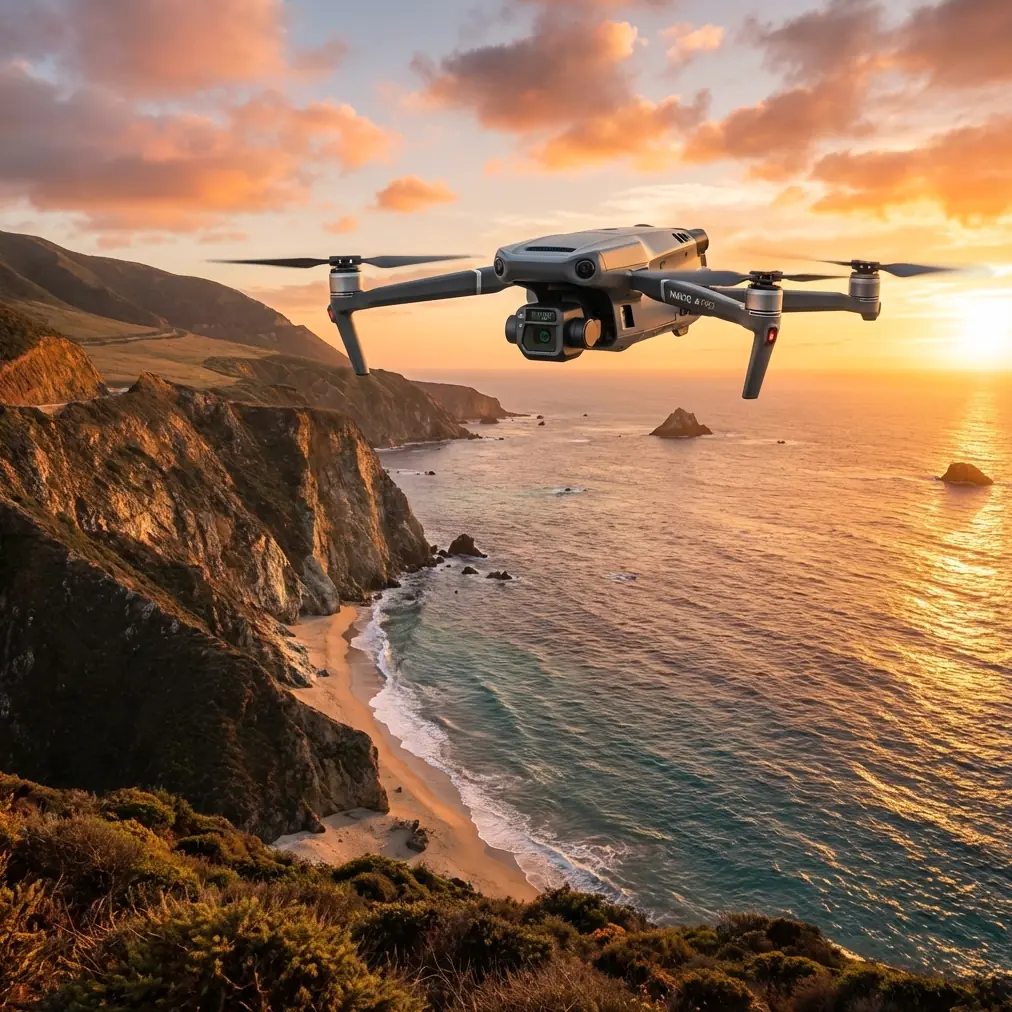
Mavic 3T in Remote Vineyards: Flight Workflow, Support Planning, and the Altitude That Actually Works
META: Expert tutorial on using the DJI Mavic 3T for remote vineyard imaging, thermal checks, and field-ready support planning, with practical altitude guidance and maintenance insights.
Remote vineyard work exposes a truth that hobby-style drone advice usually misses: image quality is only half the job. The other half is whether your aircraft, batteries, charging setup, storage habits, field kit, and training materials are organized well enough to keep flying when the site is far from the road and the workday is short.
That is exactly why the Mavic 3T makes sense in this environment. It is not just a camera drone with thermal capability. In a vineyard, especially one spread across slopes, access roads, and disconnected parcels, the real advantage comes from how quickly it can move between visual inspection, thermal signature review, and repeatable mission work without dragging a large support footprint behind it.
For vineyard managers, aerial survey teams, and media operators documenting crop health or estate conditions, the best results come from treating the Mavic 3T as a field system rather than a flying camera.
The overlooked part of vineyard drone work: support planning
One of the most useful ideas buried in the reference material is not about flight performance at all. It is about support equipment. The source explains that support equipment may require its own conditions in order to work properly, including things like power supply and ventilation or cooling. It also stresses that these support items must be planned in advance if they are expected to function effectively.
That sounds abstract until you are halfway up a vineyard access road with low battery reserves, full memory cards, and no shaded place to charge.
In a remote vineyard scenario, this matters operationally in three ways:
Power cannot be an afterthought.
If you are running repeated sorties for thermal sweeps at sunrise, then switching to visual capture later in the morning, your power plan has to include aircraft batteries, controller charging, mobile device charging, and often a vehicle-based charging rhythm. The Mavic 3T may be compact, but the mission chain around it still needs stable energy support.Heat management affects turnaround time.
The source specifically mentions ventilation and cooling as support conditions for equipment. In field terms, that means your charging gear, tablet, and spare batteries should not be left baking in direct sun on the hood of a truck. Vineyard crews often lose more operational efficiency to overheating support gear than to wind.Documentation and training are part of uptime.
Another source detail points to the need for training materials, charts, and technical references prepared according to user needs. For a commercial Mavic 3T operation, this has a direct parallel: your team needs a simple repeatable field checklist, battery rotation log, lens cleaning routine, mission naming standard, and thermal capture protocol. A pilot who “knows how to fly” is not the same as a crew that can produce consistent data over a full harvest season.
This is where many vineyard drone operations become unreliable. They invest in the aircraft, but not in the support logic around it.
Why the Mavic 3T is especially useful for vineyards
The Mavic 3T suits vineyards because the work is mixed. One block may need cinematic footage for investor reporting or hospitality marketing. Another may need thermal review to spot irrigation irregularities, stressed rows, or drainage patterns. In some cases, the same mission day includes both.
A remote vineyard adds constraints: long walking distances, changing elevation, patchy signal conditions, and limited staging space. The Mavic 3T’s portability is obvious, but what matters more is how that portability changes the workflow:
- you can launch from narrow access points rather than broad open fields,
- reposition quickly between blocks,
- capture thermal and visible data in the same operational window,
- reduce crew fatigue compared with larger airframes.
If your objective includes photogrammetry, the Mavic 3T can also support structured route planning, though vineyard users should be realistic. The denser the canopy and the more repetitive the row geometry, the more carefully you need to manage overlap, sun angle, and any GCP strategy if mapping-grade consistency is required.
The flight altitude I recommend for filming vineyards
The question I get most often is simple: what altitude works best?
For remote vineyard filming with the Mavic 3T, my practical starting point is 40 to 60 meters above ground level for most visual passes.
That range is not arbitrary. It balances four competing needs:
- enough vertical separation to reveal row structure and terrain flow,
- enough closeness to preserve vine texture and service-road detail,
- safer clearance from posts, trees, trellis infrastructure, and terrain changes,
- reduced need for aggressive gimbal movement that can make footage feel nervous.
At around 50 meters, you usually get the most useful “estate read” for a vineyard. The rows become legible. Drainage lines and block boundaries start to show clearly. Access tracks, missing growth patches, and spacing inconsistencies are easier to interpret in one frame. For many vineyard owners, this is the altitude where the footage stops being merely attractive and starts being useful.
When to go lower
Drop to 20 to 35 meters when you want:
- row-emphasis shots,
- trellis geometry,
- machinery movement footage,
- canopy variation detail,
- stronger sense of depth between vine corridors.
This lower band is best for short controlled runs, especially in calm wind. In remote vineyards, I avoid staying low across long distances unless I have already checked for wires, irrigation structures, and terrain surprises.
When to go higher
Climb to 70 to 90 meters when your goal shifts toward:
- showing parcel boundaries,
- comparing slope orientation,
- identifying irrigation layout,
- planning a broad thermal review of multiple blocks,
- collecting context for management reports.
Above that, row detail starts to flatten unless the shot is specifically meant to show estate scale. For promotional filming, too much altitude often makes even beautiful vineyards feel generic.
Thermal work in vineyards: what the Mavic 3T helps you see
Thermal is often misunderstood in agriculture. It does not “diagnose” crop problems by itself. What it does exceptionally well is reveal patterns that deserve a second look.
With the Mavic 3T, thermal signature differences can help surface:
- uneven irrigation coverage,
- blocked or underperforming sections,
- drainage anomalies after temperature shifts,
- stressed zones that are not yet obvious in standard visual imagery,
- infrastructure issues around pumps, tanks, or lines in a broader estate workflow.
The timing matters as much as the sensor. Early morning or transitional temperature windows usually produce the most interpretable contrast. Midday can still be useful, but the thermal scene often becomes noisier as surfaces absorb and radiate heat unevenly.
For vineyards in remote terrain, I suggest a two-pass logic:
- First pass at moderate height, roughly 50 to 70 meters, to identify broad patterns by block.
- Second pass lower and targeted over flagged areas to compare thermal anomalies against visible features.
That workflow saves battery and reduces guesswork. It also limits the temptation to stare at thermal imagery without ground-truthing what it actually represents.
O3 transmission and remote terrain
In vineyard operations, signal stability is not just a convenience issue. It affects confidence, route discipline, and how aggressively you can work around terrain.
The Mavic 3T’s O3 transmission architecture is valuable in broken landscapes where hills, tree lines, and structures can complicate the link. Even so, remote vineyards teach humility. Terrain always wins if you position yourself badly.
The best practice is simple:
- stand where you can maintain the cleanest possible line of sight to the mission area,
- avoid launching from depressions or behind buildings,
- move your takeoff point between blocks rather than trying to stretch one position too far,
- if your workflow includes encrypted handling of sensitive estate imagery, keep your data procedures disciplined from capture through transfer, especially where AES-256-based security expectations are part of the client environment.
Security rarely gets mentioned in agriculture filming, but large estates increasingly care about location data, crop-condition imagery, and infrastructure visibility. The aircraft is only one part of that chain.
Photogrammetry in vineyards: where people get it wrong
Vineyards are visually repetitive. That makes them harder to map cleanly than many first-time users expect. Straight rows can confuse tie-point consistency if the capture plan is weak.
If you are using the Mavic 3T for photogrammetry support rather than just general inspection, the discipline should tighten:
- keep overlap generous,
- choose light conditions that preserve texture,
- avoid rushing mixed-angle capture over reflective or monotonous canopy surfaces,
- use GCPs when the deliverable needs stronger positional confidence than onboard georeferencing alone can provide.
The practical issue is not whether the drone can collect images. It can. The issue is whether the resulting model will be reliable enough for agronomic comparison, terrain interpretation, or repeated seasonal analysis.
A vineyard manager comparing water stress trends across blocks does not need cinematic footage dressed up as survey work. They need repeatability.
Build your field kit the way aircraft programs build support systems
The second source includes another idea worth borrowing: support equipment should be selected with a priority order, starting with what already exists and is suitable, then moving toward more specialized solutions only when necessary. That principle is excellent for a Mavic 3T vineyard kit.
In plain language, do not overbuild your support package.
Start with the essentials that solve recurring field problems:
- a dependable charging plan,
- shade and cooling for batteries and devices,
- protective covers for equipment stored outdoors,
- simple maintenance tools,
- clearly structured operating notes for the crew,
- standardized media handling and file labeling.
Only after those basics are stable should you add specialized extras.
This is also where hot-swap battery habits matter, even if your operation is not literally using a larger enterprise airframe with true uninterrupted swaps. The mindset is what counts: battery rotation should be organized to keep the aircraft working while minimizing idle time, confusion, and heat stress. Label packs, log cycles, and separate “ready,” “used,” and “cooling” states in the field. That single habit often has a bigger effect on mission productivity than any accessory purchase.
A simple vineyard mission template for the Mavic 3T
If I were setting up a repeatable remote-vineyard workflow, I would keep it tight:
1. Pre-site planning
Review terrain, access roads, launch options, weather, and sun angle. Decide whether the day is primarily visual, thermal, or mixed.
2. Support setup
Stage power, cooling, battery rotation, lens cloths, landing surface, and storage protection before the first launch. This mirrors the source material’s insistence that support conditions be arranged in advance rather than improvised.
3. First reconnaissance pass
Fly at about 50 meters AGL to read the whole block. Note stress patterns, row gaps, slope transitions, and any obstacles.
4. Targeted low-altitude capture
Drop lower where needed for canopy texture, irrigation detail, or cinematic row runs.
5. Thermal verification
Use thermal on suspect zones during the best temperature window. Compare with visible imagery immediately while the location is fresh in mind.
6. Data discipline
Rename folders by date, block, and mission type before leaving the site. Back up while still in the field if possible.
7. Post-flight review
Check not only the footage and imagery, but also the support system: charging rate, battery heat, signal consistency, launch-point efficiency, and any repeated operational friction.
That last step is what turns one-off flights into a scalable workflow.
The hidden risk: aircraft changes, workflow drift, and training gaps
One more reference detail deserves attention. The source notes that support equipment development can be affected by design changes in the aircraft, which creates time pressure and forces updates to support documents and equipment requirements.
For Mavic 3T operators, the commercial version of this problem is familiar: firmware updates, accessory changes, revised mission procedures, updated client deliverables, and staff turnover gradually pull the operation out of alignment.
If your vineyard work is recurring, treat your SOPs as living documents. Update them when flight modes, payload habits, file naming rules, or post-processing expectations change. The source also mentions that training materials and specialized documents may need to be created separately based on user needs. That is exactly right in this setting. A vineyard owner, a pilot, and an agronomy consultant do not need the same briefing.
So build your operating material for the user in front of you.
When remote support matters
If you are operating across difficult vineyard terrain and want a cleaner field setup, mission planning help, or a second opinion on thermal and mapping workflow, you can reach out here for a practical conversation: message our UAV team directly
The point is not to make the operation more complicated. It is to remove the friction that wastes flight windows.
Final take
For remote vineyard work, the Mavic 3T performs best when you stop thinking about it as a standalone drone and start managing it as a compact aerial system. The reference material may come from aircraft support doctrine, but the lesson transfers cleanly: equipment only delivers value when its supporting conditions, documentation, training, and interfaces are handled with equal care.
That is why the most useful vineyard advice is not “fly higher” or “use thermal.” It is this:
- plan your support gear before arrival,
- fly the first visual pass at about 40 to 60 meters,
- use thermal to find patterns, not to jump to conclusions,
- structure your battery and data workflow,
- keep your training notes current as the operation evolves.
Do that, and the Mavic 3T becomes much more than a capable aircraft. It becomes a dependable field tool for real agricultural decision-making and polished visual documentation alike.
Ready for your own Mavic 3T? Contact our team for expert consultation.