
Expert Construction Site Inspecting with Mavic 3T
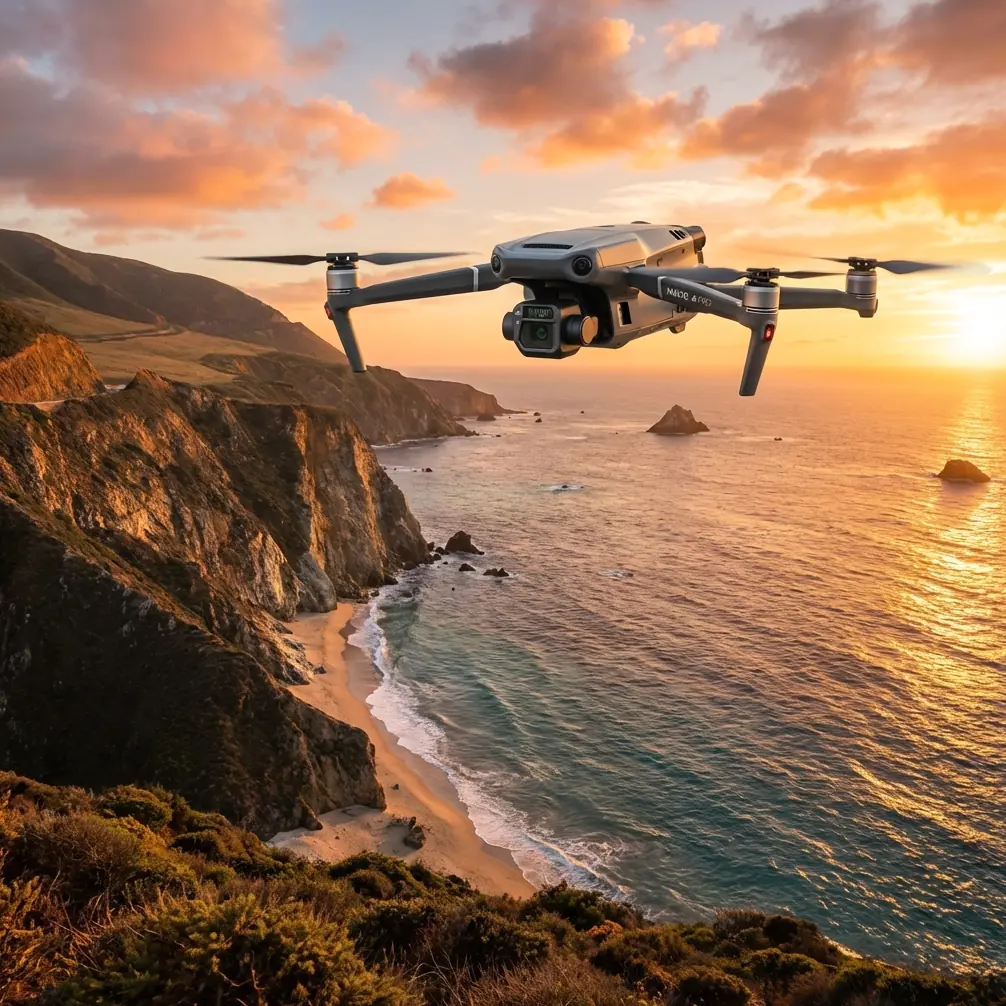
Expert Construction Site Inspecting with Mavic 3T
META: Discover how the DJI Mavic 3T transforms remote construction site inspections with thermal imaging, RTK precision, and extended flight time for professionals.
TL;DR
- Thermal + visual sensors detect structural anomalies, moisture intrusion, and equipment heat signatures across sprawling construction sites
- 45-minute flight time covers large remote sites without constant battery swaps
- O3 transmission maintains stable video feeds up to 15km in challenging terrain
- RTK-ready positioning delivers centimeter-level accuracy for photogrammetry and progress documentation
Remote construction site inspections present unique challenges that traditional methods simply cannot address efficiently. The DJI Mavic 3T combines thermal imaging, mechanical shutter photography, and enterprise-grade transmission to transform how project managers and inspectors monitor progress, identify defects, and ensure safety compliance across difficult terrain.
This technical review breaks down the Mavic 3T's capabilities for construction professionals working in remote environments—from battery management strategies I've refined over hundreds of field deployments to sensor configurations that capture actionable data.
Why Remote Construction Sites Demand Specialized Drone Solutions
Construction projects in remote locations—whether mountain infrastructure, rural developments, or offshore support facilities—share common inspection pain points. Ground-based surveys consume days of travel time. Traditional aerial photography misses thermal anomalies. Cellular connectivity gaps prevent real-time data transmission.
The Mavic 3T addresses each limitation through integrated sensor fusion and robust communication systems designed for professional workflows.
Terrain and Access Challenges
Remote sites often feature:
- Unpaved access roads limiting vehicle-based inspection equipment
- Elevation changes exceeding 500 meters across single project boundaries
- Limited or nonexistent cellular coverage
- Extreme temperature variations affecting equipment performance
- Restricted landing zones for larger drone platforms
A compact, foldable platform with enterprise sensors becomes essential rather than optional in these environments.
Mavic 3T Sensor Suite: Technical Breakdown
The Mavic 3T integrates three distinct imaging systems into a 920-gram airframe—a weight class that maintains portability while delivering professional output.
Wide Camera Specifications
The primary wide camera utilizes a 4/3 CMOS sensor with 12MP resolution and mechanical shutter. This combination eliminates rolling shutter distortion during photogrammetry flights, ensuring accurate orthomosaic generation.
Key specifications include:
- Focal length: 24mm equivalent
- Aperture: f/2.8 to f/11
- Pixel size: 3.3μm
- Shutter speed: 8s to 1/8000s mechanical
Expert Insight: For construction documentation, I consistently shoot at f/5.6 to f/8 during midday flights. This aperture range balances depth of field with diffraction limits, producing sharp imagery across varying subject distances—critical when capturing both foreground excavation work and background structural elements in single frames.
Telephoto Camera Performance
The 48MP telephoto sensor with 162mm equivalent focal length enables detailed inspection without close approach. This proves invaluable when examining:
- Structural connections on elevated steel frameworks
- Roofing material installation quality
- Facade defects on multi-story structures
- Equipment identification numbers and serial plates
The 56x hybrid zoom combines optical and digital magnification for readable text capture at 100+ meter standoff distances.
Thermal Imaging Capabilities
The 640×512 resolution thermal sensor operates in the 8-14μm spectral range, detecting temperature differentials as small as ≤50mK NETD. Construction applications include:
- Identifying moisture intrusion in concrete and masonry
- Detecting HVAC system leaks before envelope completion
- Locating underground utility lines through thermal signature analysis
- Monitoring equipment operating temperatures
- Verifying insulation installation quality
Thermal data exports in R-JPEG format, preserving radiometric information for post-processing temperature measurement in software like DJI Thermal Analysis Tool or FLIR Tools.
O3 Transmission: Maintaining Connectivity in Remote Terrain
The O3 enterprise transmission system delivers 1080p/30fps live feeds at distances up to 15km under optimal conditions. More importantly for construction professionals, the system maintains stable connections in challenging RF environments.
Signal Performance Factors
Remote construction sites often feature:
- Metal structural elements creating multipath interference
- Heavy equipment generating electromagnetic noise
- Terrain shadowing from hills and excavations
- Competing frequencies from site radios and equipment
O3 transmission utilizes dual-band operation (2.4GHz and 5.8GHz) with automatic frequency hopping to maintain links through interference. The system's AES-256 encryption protects sensitive project data during transmission—essential when documenting proprietary construction methods or security-sensitive infrastructure.
Pro Tip: When inspecting sites with significant metal structures, position yourself so the drone maintains line-of-sight to the controller rather than relying on signal penetration through steel frameworks. I've found that a 45-degree offset from major structural elements typically provides the most stable connection while still capturing necessary angles.
Battery Management: Field-Tested Strategies
Here's a battery management tip from extensive field experience that has saved countless inspection missions: never trust the percentage display alone in cold weather.
Lithium-polymer batteries experience significant capacity reduction below 15°C. A battery showing 40% at sea level in warm conditions might only deliver 25% of expected flight time at a cold, high-altitude construction site.
Cold Weather Protocol
My standard cold-weather battery protocol includes:
- Pre-warm batteries to 25-30°C using vehicle heaters or insulated battery warmers before flight
- Hover for 60 seconds after takeoff to allow internal cell warming
- Plan for 30% capacity reduction in temperatures below 10°C
- Return at 35% indicated charge rather than the standard 25%
- Rotate batteries through warming cycles during multi-flight sessions
Hot-Swap Battery Strategy
The Mavic 3T's hot-swap batteries enable rapid turnaround between flights. For comprehensive site coverage, I prepare four batteries minimum for each inspection day:
- Two batteries actively cycling through flights
- One battery warming/cooling to optimal temperature
- One battery charging via vehicle inverter or portable power station
This rotation maintains continuous operations across 3+ hours of effective flight time without returning to base.
Photogrammetry Workflow for Construction Documentation
Construction progress documentation demands consistent, repeatable data capture. The Mavic 3T integrates with DJI Pilot 2 for automated photogrammetry missions with GCP (Ground Control Point) support.
Mission Planning Parameters
For construction site orthomosaics, configure missions with:
- Front overlap: 75-80%
- Side overlap: 70-75%
- Altitude: 60-80 meters AGL for general progress documentation
- Gimbal angle: -90° (nadir) for planimetric accuracy
- Speed: 8-10 m/s maximum to prevent motion blur
RTK Integration for Survey-Grade Accuracy
When paired with the DJI D-RTK 2 Mobile Station, the Mavic 3T achieves 1.5cm horizontal and 2cm vertical positioning accuracy. This precision enables:
- Volume calculations for earthwork verification
- Structural deviation measurement
- As-built documentation meeting survey standards
- Progress comparison against BIM models
Technical Comparison: Mavic 3T vs. Alternative Platforms
| Feature | Mavic 3T | Mavic 3E | Phantom 4 RTK | M30T |
|---|---|---|---|---|
| Weight | 920g | 915g | 1391g | 3770g |
| Flight Time | 45 min | 45 min | 30 min | 41 min |
| Thermal Sensor | 640×512 | None | None | 640×512 |
| Mechanical Shutter | Yes | Yes | Yes | Yes |
| Max Transmission | 15km | 15km | 8km | 15km |
| RTK Support | Module | Module | Built-in | Built-in |
| IP Rating | None | None | None | IP55 |
| Zoom Range | 56x | 56x | None | 200x |
The Mavic 3T occupies a unique position—thermal capability in a sub-1kg platform with extended flight time. Larger platforms like the M30T offer weather sealing and enhanced zoom but sacrifice portability essential for remote site access.
BVLOS Considerations for Extended Site Coverage
Beyond Visual Line of Sight operations expand inspection coverage dramatically but require careful regulatory compliance and operational planning.
Regulatory Requirements
BVLOS operations typically require:
- Specific waiver or exemption from aviation authorities
- Visual observers or detect-and-avoid systems
- Enhanced flight planning and risk assessment
- Communication protocols for airspace conflicts
Technical Enablers
The Mavic 3T supports BVLOS through:
- ADS-B receiver integration for manned aircraft awareness
- Extended transmission range maintaining control authority
- Automated return-to-home with obstacle avoidance
- Flight logging for regulatory compliance documentation
Common Mistakes to Avoid
Ignoring thermal calibration cycles: The thermal sensor requires approximately 5 minutes to stabilize after power-on. Capturing thermal data immediately after takeoff produces inconsistent temperature readings. Allow the sensor to reach thermal equilibrium before beginning inspection passes.
Overlooking GCP distribution: Placing all ground control points in a single cluster defeats their purpose. Distribute GCPs across the entire survey area with points at varying elevations for optimal photogrammetric accuracy.
Flying during thermal crossover periods: Sunrise and sunset create thermal crossover conditions where ground and structure temperatures equalize, minimizing detectable contrast. Schedule thermal inspections for mid-morning or late afternoon when temperature differentials peak.
Neglecting lens cleaning in dusty environments: Construction sites generate significant airborne particulates. A single dust spot on the thermal lens creates artifacts across every image. Inspect and clean all three lenses before each flight session.
Underestimating wind effects at altitude: Ground-level wind measurements poorly predict conditions at 80-100 meter inspection altitudes. The Mavic 3T handles 12 m/s winds, but turbulence around structures can exceed this locally. Monitor real-time wind warnings and reduce altitude if stability degrades.
Frequently Asked Questions
Can the Mavic 3T detect underground utilities through thermal imaging?
Thermal imaging can reveal buried utilities under specific conditions. Pipes carrying heated or cooled fluids create surface temperature differentials detectable from aerial platforms. Detection depends on burial depth (typically under 1 meter), soil moisture content, and temperature differential between the utility and surrounding ground. Early morning flights after cool nights often provide optimal contrast for utility detection.
What file formats does the Mavic 3T export for professional workflows?
The Mavic 3T captures JPEG and DNG (RAW) from visible cameras and R-JPEG from the thermal sensor. R-JPEG preserves full radiometric data including temperature values for each pixel, enabling post-flight thermal analysis. Video exports in MP4 (H.264/H.265) format. All files include embedded GPS coordinates and flight telemetry for integration with GIS and photogrammetry software.
How does the Mavic 3T perform in high-altitude construction sites?
The Mavic 3T operates at altitudes up to 6000 meters above sea level, covering virtually all construction environments. High-altitude operations reduce air density, affecting both lift efficiency and battery performance. Expect 10-15% flight time reduction at 3000+ meters elevation. The aircraft automatically adjusts motor output to compensate for reduced air density, maintaining stable flight characteristics.
Ready for your own Mavic 3T? Contact our team for expert consultation.