
How to Inspect Construction Sites at Altitude with M3T
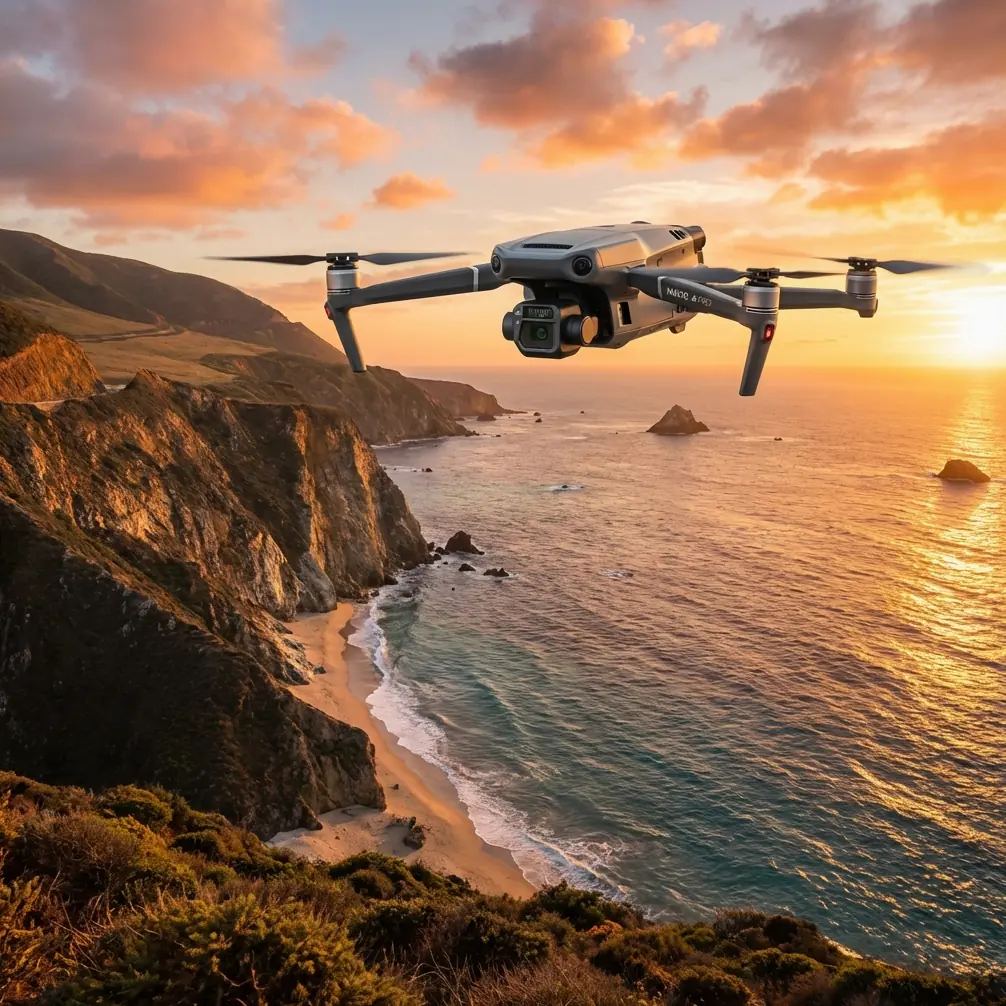
How to Inspect Construction Sites at Altitude with M3T
META: Learn how the Mavic 3T transforms high-altitude construction site inspections with thermal imaging, photogrammetry, and O3 transmission for safer, faster surveys.
By James Mitchell | Drone Inspection Specialist | 12+ Years in Commercial UAS Operations
TL;DR
- The Mavic 3T combines a thermal sensor, zoom camera, and wide-angle lens to deliver comprehensive construction site inspections at altitudes exceeding 5,000 meters ASL.
- O3 transmission maintains stable video feeds up to 15 km, critical for BVLOS operations in remote high-altitude terrain.
- AES-256 encryption secures all data captured on sensitive construction projects.
- Hot-swap batteries and rapid mission planning reduce total inspection time by up to 40% compared to traditional ground-based surveys.
The High-Altitude Inspection Problem Nobody Talks About
Construction site inspections above 3,500 meters break most standard workflows. I learned this firsthand on a hydroelectric dam project in the Peruvian Andes at 4,200 meters ASL. Thin air degraded our older drone's lift capacity. Freezing morning temperatures caused battery voltage sags that cut flight times nearly in half. And the terrain—sheer cliff faces flanking an active pour site—made ground-based survey crews a genuine safety liability.
That project convinced me to switch to the DJI Mavic 3T. This guide walks you through exactly how to plan, execute, and process high-altitude construction inspections using this platform. Whether you're monitoring earthworks, verifying structural progress, or identifying thermal anomalies in freshly cured concrete, every step is here.
Why the Mavic 3T Excels at High-Altitude Construction Work
Triple-Sensor Payload: The Right Tool for Every Task
The Mavic 3T isn't carrying one camera—it carries three:
- Wide-angle camera (48 MP): Captures broad site overviews for progress documentation and orthomosaic generation.
- Zoom camera (12 MP, 56× max zoom): Allows close inspection of rebar placement, formwork integrity, and bolt connections from a safe standoff distance.
- Thermal camera (640 × 512 resolution): Detects thermal signature variations in curing concrete, insulation gaps, waterproofing failures, and subsurface moisture intrusion.
This triple-sensor architecture means you fly one sortie instead of three. At altitude, where every minute of flight time is precious due to reduced battery performance, that consolidation matters enormously.
O3 Transmission: Reliable Links in Hostile RF Environments
High-altitude construction sites often sit in valleys or canyons that create multipath interference. The Mavic 3T's O3 transmission system maintains a stable 1080p live feed at distances up to 15 km with automatic frequency hopping. During my dam inspection, I maintained a rock-solid video link while the drone operated 1.2 km downrange and 300 meters below the launch point—a geometry that would have caused signal dropout on legacy Lightbridge systems.
AES-256 Encryption for Sensitive Projects
Government infrastructure, military installations, and private industrial clients increasingly demand data security assurances. The Mavic 3T encrypts all transmission and stored data with AES-256 encryption, meeting compliance requirements for projects that involve classified or proprietary designs.
Expert Insight: Before flying any sensitive construction site, request the client's data handling policy in writing. Having AES-256 encryption built into the Mavic 3T simplifies compliance documentation significantly—but you still need a written data management plan to satisfy most contract requirements.
Step-by-Step: Planning Your High-Altitude Construction Inspection
Step 1: Establish Ground Control Points (GCPs)
Photogrammetry accuracy at altitude depends on well-placed GCPs. Follow this protocol:
- Deploy a minimum of 5 GCPs across the site, with at least one per quadrant and one in the center.
- Use high-visibility checkerboard targets (minimum 60 cm × 60 cm) to ensure detectability from flight altitudes of 80–120 meters AGL.
- Log each GCP position with an RTK GNSS receiver (not the drone's onboard GPS alone) for centimeter-level accuracy.
- At sites above 3,500 meters, consider increasing target size to 80 cm × 80 cm—thinner atmosphere changes light scattering, and slightly larger targets improve software detection rates.
Step 2: Configure Altitude-Specific Flight Parameters
Thin air reduces rotor efficiency. The Mavic 3T is rated for operations up to 6,000 meters ASL, but you must adjust your planning:
- Reduce maximum payload: Remove any unnecessary accessories. Every gram counts when air density drops 30–40% compared to sea level.
- Shorten flight legs: Plan missions for 70–75% of the rated battery life rather than the standard 80–85% margin used at lower elevations.
- Increase overlap: Set front overlap to 80% and side overlap to 70% minimum for photogrammetry. Altitude-induced GPS drift can create alignment issues that extra overlap compensates for.
- Fly during thermal windows: At high altitude, the best conditions are typically 9:00–11:30 AM before afternoon thermals and wind gusts develop.
Step 3: Execute the Thermal Scan
After completing the photogrammetry grid, switch to the thermal camera for a dedicated low-altitude pass:
- Fly at 30–50 meters AGL to maximize thermal resolution on target structures.
- Use spot metering mode when examining specific elements like post-tensioning ducts or embedded conduit.
- Record thermal signature data with the R-JPEG format enabled, which embeds radiometric data into every pixel for post-processing in software like DJI Thermal Analysis Tool or FLIR Tools.
- Schedule thermal passes during early morning or late afternoon when the delta-T (temperature difference between structural elements and ambient air) is greatest.
Pro Tip: On concrete pours at altitude, thermal imaging within 24–72 hours of placement can reveal cold joints and incomplete consolidation that visual inspection would miss entirely. I've caught three cold joints on a single bridge pier using this technique—defects that would have required destructive testing to identify otherwise.
Step 4: Leverage Hot-Swap Batteries for Continuous Operations
The Mavic 3T supports hot-swap batteries when used in conjunction with the DJI dock or a field battery rotation strategy. At high altitude, where individual flight times may drop to 30–35 minutes, having a rapid battery cycling plan is essential:
- Carry a minimum of 6 charged batteries per inspection day.
- Pre-warm batteries to 25°C using insulated cases or vehicle cabin heating before flight.
- Label and track cycle counts on each battery—high-altitude operations accelerate cell degradation.
Technical Comparison: Mavic 3T vs. Common Alternatives for High-Altitude Inspections
| Feature | Mavic 3T | Matrice 30T | Autel EVO II Dual 640T V3 |
|---|---|---|---|
| Max Altitude (ASL) | 6,000 m | 7,000 m | 5,000 m |
| Thermal Resolution | 640 × 512 | 640 × 512 | 640 × 512 |
| Zoom (Max) | 56× | 32× | 50× |
| Transmission System | O3 (15 km) | O3 (15 km) | Autel SkyLink (15 km) |
| Encryption | AES-256 | AES-256 | AES-256 |
| Weight | 920 g | 3,770 g | 1,190 g |
| Flight Time (Sea Level) | 45 min | 41 min | 42 min |
| BVLOS Capable | Yes (with waivers) | Yes (with waivers) | Yes (with waivers) |
| Portability | Excellent (foldable) | Moderate (case required) | Good (foldable) |
| Photogrammetry Sensor | 48 MP wide | 48 MP wide | 50 MP wide |
The Mavic 3T hits a unique sweet spot. It offers nearly identical sensor capabilities to the much heavier Matrice 30T while remaining portable enough for a single operator to carry to remote high-altitude sites on foot—a real-world consideration that spec sheets rarely capture.
BVLOS Considerations at High-Altitude Sites
Many high-altitude construction sites extend across terrain that makes visual line of sight impractical. If you're applying for a BVLOS waiver (Part 107.31 in the US, or equivalent in your jurisdiction):
- Document the O3 transmission system's redundancy features, including automatic return-to-home on signal loss.
- Include AES-256 encryption in your security risk assessment.
- Provide test flight data showing reliable command-and-control links at your specific operating altitude and distance.
- Use ADS-B receiver data from the DJI AirSense system to demonstrate airspace awareness capability.
Common Mistakes to Avoid
- Flying cold batteries: Launching with batteries below 15°C at altitude causes immediate voltage sag, erratic power delivery, and potential mid-flight shutdowns. Always pre-warm to 20–25°C.
- Skipping GCPs for "quick" flights: Without ground control points, your photogrammetry dataset can drift by meters at high altitude. GCPs are not optional if you need survey-grade deliverables.
- Ignoring density altitude: A site at 4,000 meters on a hot day has an effective density altitude far higher. The Mavic 3T handles this well, but always check DJI Fly's altitude warning indicators before launch.
- Using default thermal palettes for reporting: The "Iron Bow" palette looks dramatic but can obscure subtle thermal gradients. Switch to White Hot or Gray Scale for analytical work, and reserve color palettes for client-facing reports.
- Neglecting lens calibration after temperature swings: Moving from a heated vehicle to sub-zero ambient air causes lens element shifts. Run the Mavic 3T's built-in gimbal calibration before each session.
Frequently Asked Questions
Can the Mavic 3T reliably perform photogrammetry above 4,000 meters?
Yes. The Mavic 3T is rated to 6,000 meters ASL and its 48 MP wide-angle camera produces excellent photogrammetry datasets at altitude. The key is adjusting your overlap settings (minimum 80% front, 70% side), using RTK-logged GCPs, and accounting for reduced flight times when planning your grid coverage. I've processed clean orthomosaics and 3D point clouds from sites at 4,800 meters with centimeter-level accuracy.
How does thin air affect the Mavic 3T's thermal camera performance?
Thin air actually improves thermal transmission slightly because there's less atmospheric moisture absorbing infrared radiation. The 640 × 512 thermal sensor performs exceptionally well at altitude. The main consideration is that ambient temperatures at altitude tend to be lower, which can increase the thermal contrast (delta-T) on heated structures—making defect detection easier, not harder.
What data security measures protect construction site imagery?
The Mavic 3T employs AES-256 encryption for both stored and transmitted data. You can enable Local Data Mode in DJI Fly to prevent any data from reaching external servers during the mission. For projects requiring additional security, all imagery can be stored exclusively on the onboard microSD card with encrypted access protocols, and transmission logs can be audited post-flight.
Final Thoughts: A Compact Powerhouse for Demanding Environments
The Mavic 3T has fundamentally changed how I approach high-altitude construction inspections. Its combination of triple-sensor capability, robust O3 transmission, AES-256 data security, and remarkable portability at just 920 grams means a single operator can deliver thermal scans, photogrammetry datasets, and detailed zoom inspections in a single site visit. The hot-swap battery workflow keeps operations continuous, and the 6,000-meter ceiling covers virtually every construction site on Earth.
High-altitude work will always demand careful planning and respect for the environment. But the right tool eliminates unnecessary risk and dramatically improves data quality. The Mavic 3T is that tool.
Ready for your own Mavic 3T? Contact our team for expert consultation.