
Mavic 3T on Urban Construction Sites: A Field Report
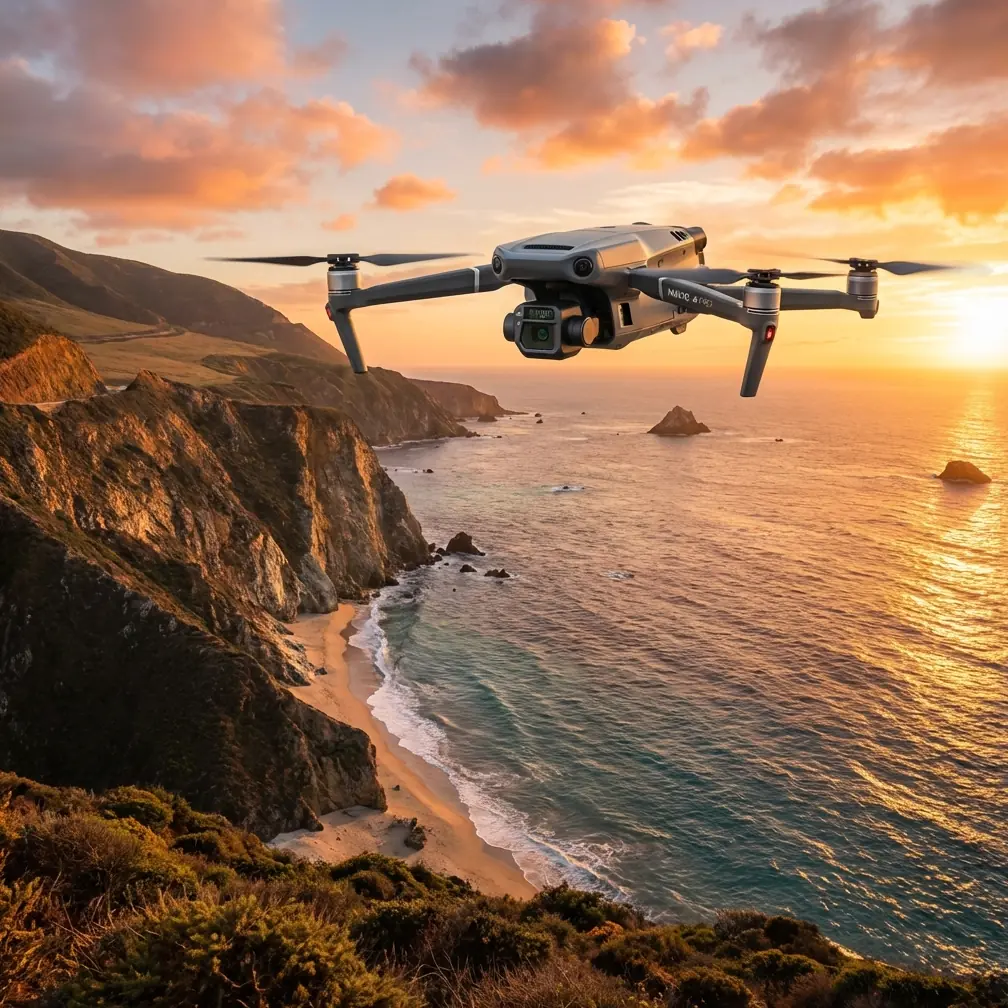
Mavic 3T on Urban Construction Sites: A Field Report from the Details That Actually Matter
META: Expert field report on using the DJI Mavic 3T for urban construction inspection, with practical insight on thermal workflows, transmission reliability, failover logic, and what separates it from typical compact UAVs.
I’ve spent enough time around inspection crews to know that urban construction work exposes the difference between a drone that looks capable on paper and one that keeps a workflow moving when the site gets messy.
The Mavic 3T sits in an interesting spot. It is compact enough to deploy from a crowded curb lane or a fenced staging area, but it is expected to produce decisions, not pretty footage. On a city project, that means more than a thermal camera and a zoom lens. It means stable transitions between tasks, reliable uplink in reflective environments, predictable behavior when operators are under pressure, and enough security to make asset owners comfortable when they hand over sensitive building data.
What makes the Mavic 3T stand out, especially against many smaller thermal UAV options, is not one headline specification. It is the way multiple systems support continuity. That continuity is what matters when you are documenting envelope defects on a mid-rise, checking rooftop mechanical installations, validating concrete curing patterns, or tracking heat anomalies around temporary electrical distribution.
Why urban construction inspection punishes weak drone systems
Construction sites in dense city blocks create a stack of operational problems at once.
You are dealing with steel, glass, cranes, signal reflections, and tight launch zones. The pilot may need to switch quickly between overview imaging, thermal confirmation, and targeted close inspection of facades, parapets, HVAC housings, or panel interfaces. Sometimes the client wants a same-day visual brief. Sometimes they want georeferenced outputs for follow-up measurement or comparison against prior site captures.
This is where a lot of compact thermal drones start to show their limits. Some do thermal passably. Some do visual passably. Few handle the entire urban inspection chain with the kind of composure that reduces friction for the pilot and the project team.
The Mavic 3T tends to excel because it behaves like a tool built for work continuity, not just image capture.
The hidden engineering lesson: failover matters more than spec-sheet theater
One of the more revealing ideas from the reference material has nothing to do with drones directly, yet it maps perfectly onto serious UAV operations. In aircraft hydraulic system testing, emergency or backup actuation is not treated as a footnote. The system must still operate designated functions under prescribed conditions, and switching from normal to emergency power has to be evaluated for controllability during the transition itself, not just after the switch is complete.
That distinction matters.
The source even emphasizes simulated failure testing during transition, including checks on the transient behavior when moving from the normal system to the emergency system. In other words, good engineering is not simply “does the backup exist?” It is “what happens in the moment when things stop being normal?”
For an urban construction operator flying a Mavic 3T, this same philosophy is far more relevant than most marketing copy will admit. A professional inspection platform has to manage disruptions gracefully: temporary signal degradation, obstructed view, route changes, battery rotation, or altered flight geometry due to site activity. The value of O3 transmission in the Mavic 3T is not just range bragging. In a city environment, stable link behavior is operational continuity. The cleaner that continuity is, the less likely the pilot is to lose time re-positioning, re-acquiring a subject, or repeating a pass because the visual feed became unreliable.
Competitor platforms often claim similar compact form factors and thermal capability. Where many fall behind is exactly here: the transition quality when conditions become less than ideal. The Mavic 3T is usually stronger in these moments because the whole package feels tuned for a working pilot, not for a feature comparison chart.
Thermal signature work is only useful when it fits the site tempo
Urban construction thermal inspections are not always dramatic. Often they are subtle.
You may be looking for insulation voids behind newly enclosed sections, moisture patterns near roof penetrations, heat irregularities in electrical cabinets, temperature inconsistencies in installed mechanical systems, or curing differences across concrete surfaces. On live sites, those findings are only valuable if the drone can move from broad scan to precise verification without breaking the rhythm of the operation.
That’s where the Mavic 3T’s multi-sensor setup earns its keep. You can identify a thermal signature, correlate it to the visible scene, and then tighten the inspection with zoom-based context. This sounds simple until you do it around scaffolding, edge protection, rooftop clutter, and moving crews. Having those perspectives in one aircraft saves time and lowers the chance of interpretation errors between separate flights or separate devices.
For construction managers, that translates into faster resolution of questions like:
- Is that roof section retaining heat differently because of trapped moisture or just material variation?
- Is the mechanical line set installation behaving consistently across repeated units?
- Is the facade anomaly thermal bridging, shading, or a surface condition?
- Does a temporary power component need immediate review by the electrical contractor?
A weaker platform forces more guesswork between thermal and visible evidence. The Mavic 3T usually reduces that gap.
What a spring design handbook can teach us about drone reliability
The second useful lesson from the reference set comes from landing gear detail design. On the surface, disk springs and wheel layouts seem unrelated to a compact enterprise UAV. They are not.
One cited design note says stacked disk springs must include a guiding device, preferably on the outer diameter, because without proper guidance the risk of self-locking rises during compression. Another note warns that stack height should not exceed the spring’s outer diameter in the unloaded state, otherwise buckling and heavy friction can develop. The same source also states that for static loads, spring stress up to 2068 MPa may still be considered safe under the right conditions.
Why does this matter to a Mavic 3T operator on a construction site?
Because real engineering is about controlled force paths, bounded tolerances, and predictable behavior under load. The handbook’s message is straightforward: even a strong component becomes troublesome when guidance, geometry, or stacking discipline is poor. In UAV terms, this is a useful lens for judging platforms. Urban inspection work stresses every part of the system at once: airframe portability, sensor alignment, transmission robustness, battery logistics, mission pacing, and data handling. A drone that lacks guidance in the broader system sense can become “self-locking” operationally. The pilot gets stuck compensating for workflow friction.
The Mavic 3T avoids much of that friction because its design is integrated rather than improvised. Hot-swap battery discipline is not just a convenience feature in enterprise fleets. It is a workflow guide rail. The same goes for quick deployment, stable app logic, and secure handling of captured site data. AES-256 matters here because urban construction imagery often includes adjacent properties, critical building systems, and commercially sensitive project details. Security is not abstract when your client is a developer, general contractor, or facilities stakeholder with internal reporting obligations.
Transmission quality is a bigger deal in city blocks than many teams expect
When crews compare the Mavic 3T to competing compact thermal drones, they often focus first on sensor differences. Fair enough. But in urban work, transmission quality deserves equal attention.
O3 transmission can make the difference between a smooth facade sweep and a stop-start session where the pilot hesitates every time the aircraft passes near reflective glass or structural steel. That hesitation has a cost. It lengthens the sortie, drains battery cycles, and increases the number of partial captures the analyst later has to reconcile.
Reliable link performance also helps with thermal interpretation. Subtle heat behavior can be easy to misread if the pilot is fighting video interruptions or lag while trying to maintain framing over a target area. On a live site, where access windows can be short and rooftop conditions can change quickly, steadiness is productivity.
This is one of the less glamorous reasons the Mavic 3T often outperforms smaller or less mature alternatives in actual job conditions. Not because the others never work, but because they more often ask the operator to babysit the platform.
Mapping, photogrammetry, and the limits of thermal-only thinking
Many urban inspection teams initially buy a thermal drone for one purpose, then discover that their clients want deliverables that extend beyond heat findings alone. The same visit may need orthomosaic context, progress snapshots, stockpile references, roof condition documentation, or visual evidence tied to known control points.
That is where photogrammetry discipline and GCP planning can elevate the Mavic 3T from “problem finder” to “site documentation node.” While it is not the first aircraft most surveyors would choose for every mapping assignment, it can still support valuable contextual capture around inspection tasks when flown with proper planning. On dense urban projects, tying observations back to consistent site geometry helps teams compare conditions across weeks, coordinate punch-list actions, and communicate with consultants who were not present during the flight.
The operational significance is simple: thermal anomalies become more useful when they are anchored to repeatable site context. A hotspot with no spatial discipline creates debate. A hotspot tied to a mapped roof zone, identifiable penetrations, and dated visual confirmation creates a work item.
Battery rotation and flight pacing: where the day is won or lost
The reference material on aircraft systems testing repeatedly returns to a practical principle: systems should be evaluated under real operating conditions, including edge cases, sequence timing, and degraded modes. That mindset is exactly right for managing drone inspection days.
Battery rotation is not glamorous, but on urban construction jobs it shapes throughput. Hot-swap batteries let crews maintain tempo between roof zones, facade elevations, and repeat verification passes with less downtime. If the client, superintendent, or consultant is waiting at the edge of the site for results, those minutes matter.
This is one more area where the Mavic 3T tends to feel more mature than lighter-duty alternatives. The platform supports a professional cadence. You land, swap, verify the next task, and go again. The work feels sequenced instead of interrupted.
If your team is planning to build a repeatable inspection routine around this kind of operation, it helps to talk through aircraft configuration, battery count, charging flow, and deliverable design before your first site cycle. A quick way to do that is through a direct Mavic 3T workflow chat.
A field-tested way to think about the Mavic 3T
I would not describe the Mavic 3T as merely a thermal drone for construction. That undersells what makes it useful.
It is better understood as a compact urban inspection platform that keeps multiple evidence streams aligned: thermal signature, visual confirmation, close-detail review, secure handling, and dependable transmission. In crowded city projects, that alignment matters more than isolated specs. It shortens the path from “something looks off” to “here is what it is, where it is, and what trade should review it.”
The strongest insight from the reference materials is also the most transferable one. Good systems are not judged only by peak capability. They are judged by what happens under load, during transitions, and when conditions are less than ideal. The hydraulic testing guidance stresses function under prescribed conditions and verifies control during automatic conversion from normal to emergency mode. The landing gear design notes stress guidance, stack limits, and safe load behavior, even citing a static spring stress threshold of 2068 MPa as acceptable within the right design logic.
That is engineering maturity. And that is the right standard for evaluating a drone that will spend its working life in urban construction environments.
By that standard, the Mavic 3T earns its reputation. It is not the loudest platform in the conversation. It is the one that usually asks the fewest excuses from the operator while producing evidence a project team can act on.
Ready for your own Mavic 3T? Contact our team for expert consultation.