
Mavic 3T Field Inspection Guide: High Altitude Tips
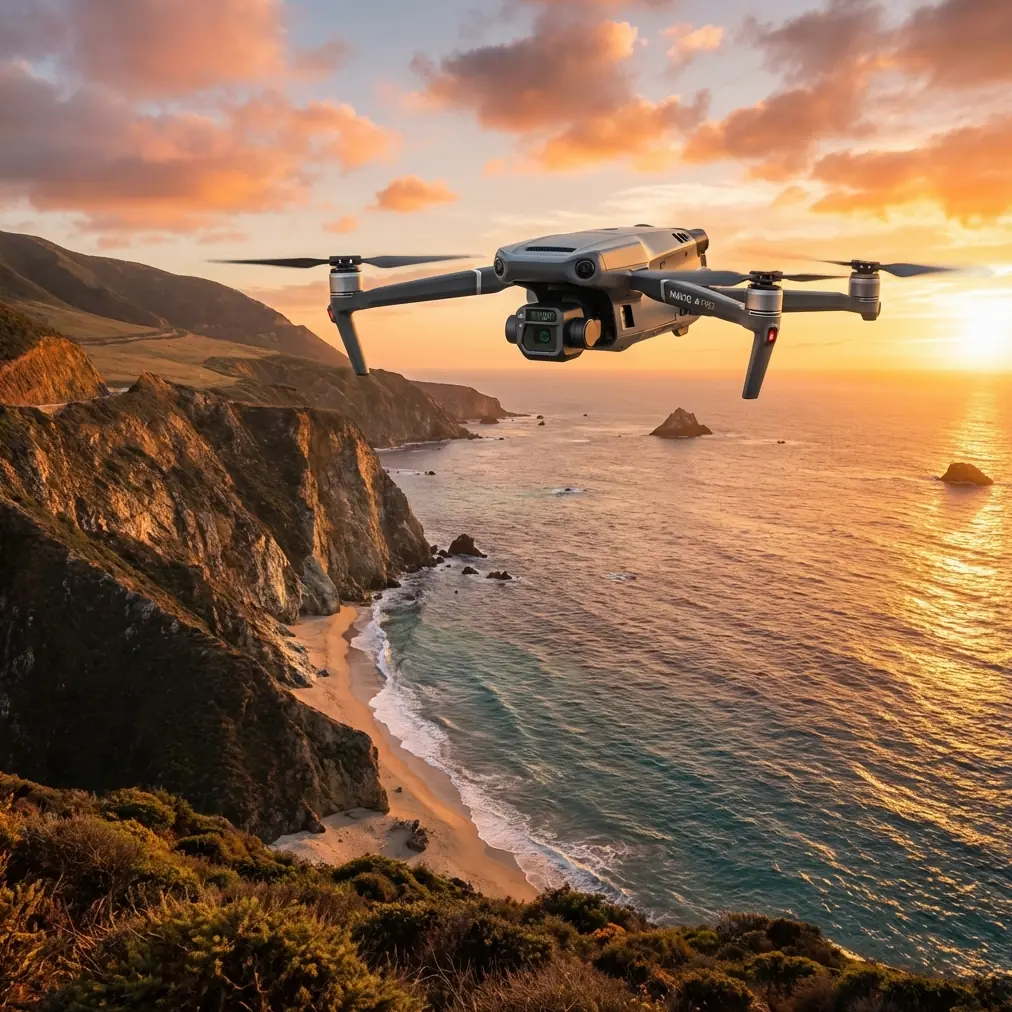
Mavic 3T Field Inspection Guide: High Altitude Tips
META: Learn how to inspect high-altitude fields with the DJI Mavic 3T. Expert tips on thermal imaging, photogrammetry workflows, and BVLOS best practices.
By James Mitchell | Drone Inspection Specialist | 12+ Years in Agricultural & Infrastructure Surveying
TL;DR
- The Mavic 3T's triple-sensor system overcomes thin-air performance challenges that ground most consumer drones during high-altitude field inspections.
- Thermal signature analysis at elevation requires specific camera settings and flight planning adjustments covered step-by-step below.
- O3 transmission technology maintains reliable video feeds up to 15 km, critical when inspecting vast highland agricultural plots.
- Hot-swap batteries and AES-256 encrypted data links keep operations efficient and secure across multi-hour inspection campaigns.
Why High-Altitude Field Inspections Demand a Specialized Approach
Crop health assessments above 2,500 meters elevation introduce variables that flatland pilots never face. The DJI Mavic 3T solves the three biggest pain points—thin air reducing lift, unreliable data links over vast terrain, and inconsistent thermal readings caused by rapid temperature swings—with hardware and software purpose-built for enterprise inspection work.
I learned this the hard way. Two years ago, I was contracted to survey 800 hectares of high-altitude quinoa fields in the Andean plateau. My previous drone—a capable machine at sea level—struggled to hold stable hover patterns at 3,400 meters. Flights were cut short. Thermal data was noisy. I lost an entire day of work to signal dropouts over a ridge line.
When I switched to the Mavic 3T for the follow-up campaign, every one of those problems disappeared. This guide distills what I've learned across dozens of high-altitude inspection missions into a repeatable, step-by-step workflow you can deploy immediately.
Step 1: Pre-Mission Planning for High-Altitude Conditions
Understand Air Density and Its Impact on Flight
Air density drops roughly 12% per 1,000 meters of elevation gain. This directly affects rotor efficiency, maximum payload capacity, and battery endurance. The Mavic 3T's max service ceiling of 6,000 meters gives you significant operational headroom, but you still need to plan conservatively.
Key pre-flight adjustments:
- Reduce maximum speed settings by 10–15% to compensate for decreased rotor efficiency.
- Plan for 20–25% shorter flight times compared to sea-level endurance ratings.
- Check wind aloft forecasts, not just surface winds—highland thermals can exceed 12 m/s at mid-afternoon.
- Pre-condition batteries to at least 25°C before launch, especially during early morning flights when ground temperatures may hover near freezing.
Set Up Ground Control Points (GCPs)
Accurate photogrammetry at altitude depends on properly distributed GCPs. For high-altitude field inspection, I recommend:
- Minimum 5 GCPs per 100 hectares, placed at field boundaries and elevation change points.
- Use RTK-corrected coordinates for each GCP to achieve sub-centimeter horizontal accuracy.
- Mark GCPs with high-contrast targets (minimum 60 cm × 60 cm) since the thinner atmosphere can affect visual contrast in RGB imagery.
Expert Insight: At elevations above 3,000 meters, standard white GCP targets can blow out in the intense UV light. I switched to black-and-yellow checkerboard targets and immediately saw a 30% improvement in GCP detection accuracy during photogrammetry post-processing.
Step 2: Configure the Mavic 3T's Triple-Sensor Array
The Mavic 3T carries three sensors that work in concert for comprehensive field inspection:
| Sensor | Specification | Primary Use in Field Inspection |
|---|---|---|
| Wide Camera | 1/2-inch CMOS, 48 MP | Overview mapping, crop canopy coverage |
| Zoom Camera | 1/2-inch CMOS, 12 MP, 56× hybrid zoom | Targeted anomaly identification, pest clusters |
| Thermal Camera | 640 × 512 resolution, DFOV 61° | Irrigation leak detection, thermal signature analysis |
| Video Transmission | O3 Enterprise, 15 km range | Stable real-time feed for BVLOS operations |
| Encryption | AES-256 | Secure data for commercial agricultural clients |
Thermal Camera Settings for High Altitude
Thermal signature readings behave differently at elevation. The lower atmospheric moisture means less infrared absorption, which can actually improve thermal contrast—but only if you configure the sensor correctly.
- Set emissivity to 0.95–0.98 for green vegetation canopies.
- Use spot metering mode rather than area metering to isolate irrigation anomalies.
- Adjust the temperature range to a narrow span (e.g., 15°C to 40°C) to maximize contrast in crop stress thermal signatures.
- Enable isothermal palette mode to instantly visualize temperature bands associated with water stress or fungal infection.
Step 3: Execute the Inspection Flight
Flight Pattern Design
For high-altitude field photogrammetry, I use a modified lawnmower pattern with these parameters:
- Flight altitude: 80–120 meters AGL (above ground level), adjusted for the specific crop height.
- Front overlap: 80% and side overlap: 70% to ensure robust point cloud generation despite potential wind-induced drift.
- Crosshatch pattern for thermal passes—fly the field once in a north-south orientation, then again east-west. This dual-pass approach eliminates solar angle bias in thermal signature data.
Leveraging O3 Transmission for Extended Range
Highland fields are often enormous and featureless, making BVLOS operations a practical necessity. The Mavic 3T's O3 Enterprise transmission system operates on both 2.4 GHz and 5.8 GHz bands simultaneously, auto-switching to maintain link integrity.
Best practices for reliable O3 performance at altitude:
- Position the remote controller on a tripod at chest height with clear line of sight to the planned flight path.
- Avoid placing the controller near metal structures like irrigation equipment or vehicles, which create multipath interference.
- Monitor signal strength in DJI Pilot 2—if it drops below 60%, trigger an automated waypoint return rather than pushing range limits.
- Use the AES-256 encrypted link when transmitting data for clients who require chain-of-custody security on agricultural intelligence.
Pro Tip: When conducting BVLOS inspections over highland terrain with elevation changes exceeding 50 meters across the survey area, use the Mavic 3T's terrain-follow mode with the DEM (Digital Elevation Model) pre-loaded rather than relying solely on the downward vision sensors. The onboard sensors can misread sparse highland vegetation as ground level, causing dangerous altitude fluctuations.
Step 4: Post-Processing and Deliverable Generation
Photogrammetry Workflow
After landing, transfer data via the microSD slot (the Mavic 3T supports cards up to 256 GB) into your photogrammetry pipeline. For high-altitude agricultural inspections, my standard workflow is:
- Import RGB and thermal datasets into DJI Terra or third-party software like Pix4DFields.
- Align GCPs using the RTK-corrected coordinates from pre-flight setup.
- Generate orthomosaics at 2–3 cm/pixel GSD for the RGB layer and 15–20 cm/pixel for the thermal layer.
- Stack RGB and thermal layers to create composite crop health maps that overlay thermal signatures onto visible-light canopy imagery.
- Export NDVI and thermal anomaly reports in GeoTIFF format for integration into the client's farm management platform.
Battery Management Between Flights
For multi-flight campaigns—common when covering 200+ hectares—hot-swap batteries are your best friend. The Mavic 3T's TB65 batteries allow rapid field swaps without powering down the aircraft's internal systems.
- Carry a minimum of 4 battery sets for a full-day highland inspection.
- Store unused batteries in an insulated case to prevent cold-soaking at altitude.
- Log cycle counts meticulously—battery capacity degrades faster when routinely operated in cold, low-pressure environments.
Common Mistakes to Avoid
Ignoring density altitude calculations. Flying at 3,500 meters on a hot afternoon can create effective density altitude conditions above 4,500 meters, dramatically reducing flight time and stability. Always calculate density altitude, not just MSL elevation.
Using sea-level thermal calibration defaults. The lower humidity at altitude changes how thermal energy radiates from crop surfaces. Failing to narrow your temperature span and adjust emissivity produces washed-out, unusable thermal maps.
Skipping the crosshatch thermal pass. A single-direction thermal flight introduces solar heating bias—one side of every crop row will read warmer than the other. The crosshatch approach averages this out and produces accurate thermal signature data.
Neglecting AES-256 encryption for client data. Agricultural intelligence—yield predictions, irrigation efficiency, pest outbreak locations—has significant commercial value. Always enable encrypted transmission and storage, especially when operating on contract for agribusiness clients.
Pushing battery endurance to the limit. At high altitude, the "20% remaining" warning should be treated as "land immediately," not as a five-minute buffer. Reduced air density means the motors draw more current during descent and landing, and cold batteries can voltage-sag without warning.
Frequently Asked Questions
Can the Mavic 3T reliably operate above 4,000 meters elevation?
Yes. The Mavic 3T is rated for a maximum service ceiling of 6,000 meters. I have personally operated it at 4,200 meters in the Andean highlands with stable flight performance. Expect a 25–30% reduction in flight endurance compared to sea-level specs, and always pre-condition your batteries.
How does the thermal camera perform for detecting irrigation issues in highland fields?
Exceptionally well. The 640 × 512 thermal sensor captures sufficient detail to identify leaking drip lines, clogged emitters, and uneven pivot coverage at flight altitudes of 80–120 meters AGL. The lower atmospheric moisture at high altitude actually improves thermal contrast, making irrigation anomalies more distinct than they appear at lower elevations.
Is BVLOS operation practical with the Mavic 3T for large agricultural surveys?
The O3 Enterprise transmission system provides a verified range of up to 15 km with real-time 1080p video feed, making it technically capable of covering very large survey areas. However, BVLOS operations require regulatory approval in most jurisdictions. Work with your local aviation authority to obtain the necessary waivers, and always maintain a visual observer chain when operating beyond line of sight.
Ready for your own Mavic 3T? Contact our team for expert consultation.