
Forest Inspections Guide: Mavic 3T Low-Light Mastery
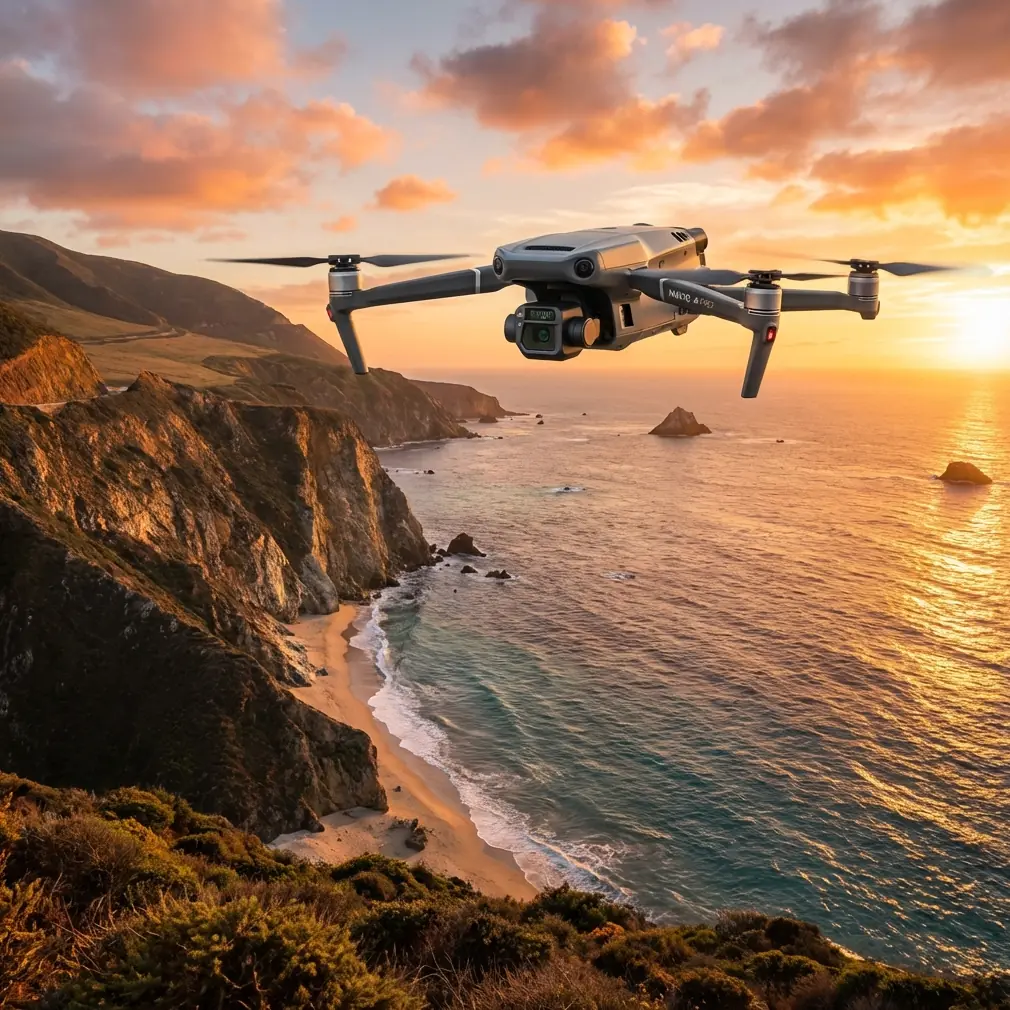
Forest Inspections Guide: Mavic 3T Low-Light Mastery
META: Master low-light forest inspections with the DJI Mavic 3T. Expert guide covers thermal imaging, flight settings, and proven techniques for accurate canopy analysis.
TL;DR
- Thermal imaging at 30Hz refresh rate captures subtle temperature variations in forest canopy during dawn and dusk operations
- Mechanical shutter eliminates motion blur when scanning dense vegetation at speeds up to 15 m/s
- O3 transmission maintains 15km range through challenging forest terrain with signal obstacles
- Split-screen thermal-visible overlay identifies stressed trees invisible to standard RGB cameras
Low-light forest inspections present unique challenges that ground-based surveys simply cannot address. The DJI Mavic 3T combines a 56× hybrid zoom, 640×512 thermal sensor, and 48MP wide camera into a platform weighing just 920 grams—giving forestry professionals the ability to cover hundreds of hectares before sunrise or after sunset when thermal signatures are most distinct.
This technical review breaks down exactly how to configure the Mavic 3T for forest canopy assessment, pest detection, and fire risk monitoring in challenging lighting conditions.
Understanding the Mavic 3T Sensor Configuration
The Mavic 3T houses three distinct imaging systems that work in concert for comprehensive forest analysis.
Thermal Imaging Specifications
The uncooled VOx microbolometer delivers NETD ≤50mK sensitivity, meaning it detects temperature differences as small as 0.05°C. For forest inspections, this translates to identifying:
- Early-stage pine beetle infestations showing 2-3°C variance from healthy trees
- Underground root rot causing thermal anomalies in soil temperature
- Water stress patterns across mixed-species stands
- Smoldering fire remnants invisible to visible-light cameras
The 8-14μm spectral range captures long-wave infrared radiation optimal for vegetation analysis. Unlike mid-wave sensors, this band penetrates light fog and smoke—common conditions during early morning forest flights.
Visible Light Camera Performance
The 4/3 CMOS sensor with f/2.8-f/11 adjustable aperture adapts to rapidly changing forest light conditions. When flying beneath canopy gaps, exposure can shift by 6+ stops within seconds.
The mechanical shutter freezes motion at 1/2000s, eliminating the rolling shutter artifacts that plague electronic shutters when panning across tree lines. This matters for photogrammetry workflows where image distortion compounds across hundreds of overlapping frames.
Expert Insight: Set the aperture to f/5.6 for forest work. This balances depth of field across varying canopy heights while maintaining enough light gathering for sub-optimal conditions. The sweet spot keeps both 30-meter canopy tops and ground-level understory acceptably sharp in single passes.
Configuring Flight Parameters for Forest Environments
Forest terrain demands specific mission planning adjustments that differ substantially from open-area inspections.
Altitude and Overlap Settings
Standard photogrammetry guidelines suggest 75% frontal overlap and 65% side overlap. Forest canopy requires more aggressive settings:
| Parameter | Open Terrain | Forest Canopy | Dense Conifer |
|---|---|---|---|
| Frontal Overlap | 75% | 85% | 90% |
| Side Overlap | 65% | 80% | 85% |
| Flight Altitude AGL | 80-120m | 60-80m | 40-60m |
| Speed | 12-15 m/s | 8-10 m/s | 5-7 m/s |
| GSD (Wide Cam) | 2.1 cm/px | 1.4 cm/px | 0.9 cm/px |
Higher overlap compensates for the irregular surface model that forest canopy creates. Photogrammetry software struggles to find matching tie points when tree crowns shift between frames due to wind.
Thermal Calibration Protocol
The Mavic 3T performs automatic flat-field correction, but forest work benefits from manual calibration timing.
Before each flight:
- Power on the aircraft 15 minutes before launch
- Point the thermal sensor at uniform sky background
- Allow the sensor to stabilize to ambient temperature
- Verify temperature readings against a known reference
Thermal drift during the first 10 minutes of operation can exceed 2°C—enough to mask subtle pest infestation signatures. The stabilization period eliminates this variable.
Pro Tip: Carry a portable blackbody reference calibrator for multi-day forest surveys. The Fluke 4180 series provides traceable temperature standards that validate sensor accuracy across changing environmental conditions. This third-party accessory transformed our detection confidence for early-stage disease identification.
Low-Light Flight Techniques
The golden hours for forest thermal inspection occur during civil twilight—roughly 30 minutes before sunrise and after sunset. During this window, solar loading on canopy has dissipated while ambient light still supports visible-spectrum imaging.
Exposure Bracketing Strategy
Configure the Mavic 3T for AEB (Auto Exposure Bracketing) with 5 frames spanning ±2 EV. The 48MP sensor captures sufficient dynamic range for HDR processing, but bracketing provides insurance against rapidly shifting forest shadows.
For the thermal channel, maintain these settings:
- Gain Mode: High (for maximum sensitivity)
- Palette: White Hot (optimal contrast for vegetation)
- Isotherm: Disabled during capture, applied in post-processing
- FFC Mode: Manual (prevents mid-flight calibration interruptions)
Obstacle Avoidance Considerations
The Mavic 3T's omnidirectional sensing uses both visual and infrared sensors. In low light, the visual obstacle detection degrades significantly.
Maintain ATTI mode awareness—if lighting drops below sensor thresholds, the aircraft reverts to attitude-only stabilization without position hold. Forest environments compound this risk with GPS signal attenuation from canopy cover.
Configure these safety parameters:
- RTH Altitude: Set 20m above highest canopy point
- Max Flight Altitude: Limit to legal ceiling or 120m AGL
- Failsafe: RTH rather than landing (avoids canopy entanglement)
- Signal Lost Behavior: Hover for 30 seconds, then RTH
Data Security and Transmission
Forest inspection data often contains sensitive information about timber value, fire risk, or pest outbreaks. The Mavic 3T implements AES-256 encryption for all stored media and transmission streams.
For BVLOS operations—increasingly common in large-scale forest monitoring—the O3 transmission system maintains 1080p/30fps video at distances exceeding 15km in unobstructed conditions. Forest terrain typically reduces this to 8-10km effective range due to signal reflection and absorption.
Data Workflow Integration
Export thermal data in RJPEG format to preserve radiometric calibration. Standard JPEG thermal exports lose temperature data, rendering them useless for quantitative analysis.
The workflow sequence:
- Capture RJPEG thermal + DNG visible simultaneously
- Transfer via USB-C (faster than wireless for large datasets)
- Process in DJI Thermal Analysis Tool 3.0 for temperature extraction
- Import into GIS platform with GCP alignment
- Generate thermal orthomosaic with calibrated temperature values
Common Mistakes to Avoid
Flying during midday thermal crossover. Between 10 AM and 2 PM, solar loading creates thermal noise that masks biological signatures. Stressed trees become indistinguishable from sun-heated healthy specimens.
Ignoring wind speed at canopy level. Ground-level wind readings underestimate conditions at flight altitude. Forest edges create turbulence that exceeds the Mavic 3T's 12 m/s wind resistance rating. Check conditions at multiple heights before committing to a mission.
Using automatic thermal palettes. Auto-ranging adjusts the temperature scale frame-by-frame, making comparative analysis impossible. Lock the temperature range manually based on expected vegetation temperatures (typically 5-35°C for temperate forests).
Neglecting hot-swap battery logistics. Forest sites rarely offer charging infrastructure. Plan for 3-4 batteries per hour of effective survey time, accounting for transit flights to and from the survey area. The TB51 batteries support hot-swap without powering down the remote controller.
Skipping GCP deployment. Canopy photogrammetry accumulates positional error rapidly. Deploy ground control points in clearings at 500m intervals for sub-decimeter accuracy in final orthomosaics.
Frequently Asked Questions
What thermal resolution is needed to detect pine beetle infestation?
The Mavic 3T's 640×512 thermal sensor resolves individual tree crowns at altitudes up to 80m AGL in typical conifer stands. Pine beetle galleries create thermal signatures spanning 0.5-2m in diameter—well within detection capability. Early-stage infestations showing only 1-2°C temperature elevation require the sensor's 50mK NETD sensitivity and flights during thermal crossover periods when background temperature variation is minimal.
Can the Mavic 3T operate in rain or fog conditions?
The aircraft carries an IP45 rating, providing protection against water jets and dust ingress. Light rain and fog operations are feasible, though moisture on the lens elements degrades image quality. Thermal imaging penetrates fog more effectively than visible light, making the Mavic 3T valuable for post-storm damage assessment when conditions prevent visual-only platforms from operating. Avoid flights when precipitation exceeds light drizzle or when fog density reduces visibility below 1km.
How does forest canopy affect GPS accuracy and flight stability?
Dense canopy attenuates GPS signals, reducing visible satellites from 12-16 in open sky to 6-8 under heavy cover. The Mavic 3T requires minimum 6 satellites for reliable positioning. When satellite count drops, the aircraft increases reliance on visual positioning systems—which also degrade in low light. Plan forest edge takeoff and landing zones with clear sky view. The O3 transmission system maintains control link independently of GPS, so manual flight remains possible even with degraded positioning.
Final Assessment
The Mavic 3T delivers professional-grade forest inspection capability in a platform that fits in a standard backpack. The combination of thermal sensitivity, mechanical shutter reliability, and robust transmission makes it the current benchmark for single-operator forestry UAV work.
Low-light operations demand respect for the platform's limitations—obstacle avoidance degrades, GPS accuracy suffers under canopy, and thermal calibration requires attention. Operators who master these variables gain access to data invisible to ground-based or satellite methods.
Ready for your own Mavic 3T? Contact our team for expert consultation.