
Inspecting Forests with Mavic 3T in Wind | Guide
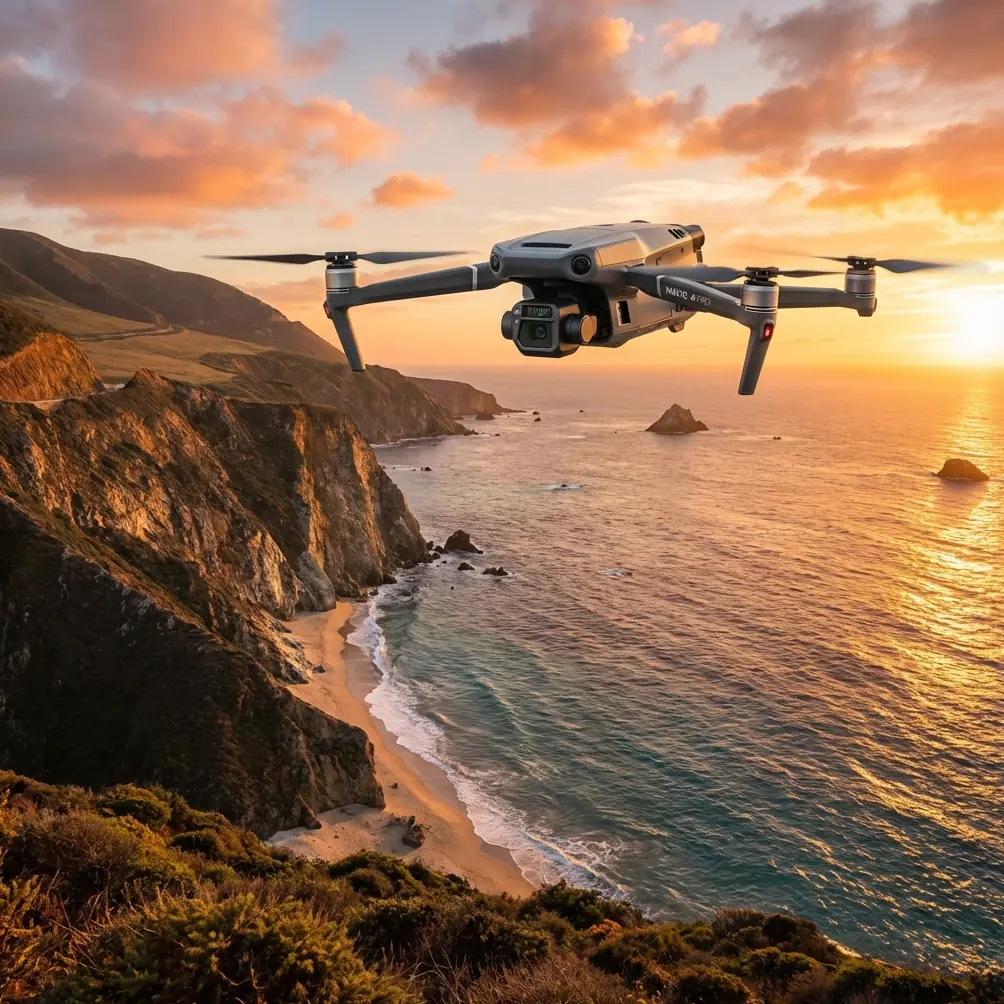
Inspecting Forests with Mavic 3T in Wind | Guide
META: Learn how to inspect forests with the DJI Mavic 3T in windy conditions. Expert tips on thermal signature detection, antenna positioning, and BVLOS operations.
By James Mitchell, Certified Drone Operations Specialist | 12+ years in aerial surveying and forestry inspection
TL;DR
- The Mavic 3T's thermal sensor detects subtle thermal signature variations beneath dense canopy, even when wind gusts exceed 10 m/s.
- Antenna positioning relative to the aircraft is the single biggest factor in maintaining reliable O3 transmission range during forest operations.
- Hot-swap batteries and pre-planned flight corridors eliminate downtime and reduce the risk of signal loss in remote, wind-exposed terrain.
- This tutorial walks you through a complete forest inspection workflow—from mission planning to post-processed photogrammetry deliverables.
Why Forest Inspections in Wind Demand a Specific Approach
Forest inspection isn't a fair-weather luxury. Pest infestations spread daily. Wildfire risk doesn't wait for calm skies. When you're tasked with surveying thousands of hectares of forested terrain, you'll inevitably face sustained winds of 8–12 m/s at canopy level—and the Mavic 3T is one of the few sub-900 g class enterprise drones rated to handle it.
This guide covers the exact settings, antenna strategies, and flight techniques I use to deliver reliable forest inspection data when conditions push back. You'll learn how to maximize thermal detection accuracy, maintain O3 transmission integrity over long distances, and avoid the mistakes that ground most operators before they even launch.
Understanding the Mavic 3T's Sensor Suite for Forestry
The Mavic 3T packs three sensors into a compact airframe, and each one plays a distinct role in forest inspection:
- Wide Camera (48 MP): Captures high-resolution RGB imagery for visual canopy health assessment and photogrammetry reconstruction.
- Zoom Camera (12 MP, 56× Hybrid Zoom): Isolates individual trees, nests, structural damage, or signage from safe standoff distances.
- Thermal Camera (640 × 512 resolution): Detects thermal signature anomalies that indicate disease, moisture stress, animal presence, or subsurface smoldering in post-fire monitoring.
The thermal sensor operates in the 8–14 µm LWIR band. In forestry, this range is critical because it captures emissivity differences between healthy foliage (which transpires and cools) and stressed or dead vegetation (which retains heat). Wind actually helps here—it strips away the thin boundary layer of warm air around leaves, making genuine thermal signature anomalies stand out more clearly against ambient conditions.
Sensor Settings for Windy Forest Missions
| Parameter | Recommended Setting | Why It Matters |
|---|---|---|
| Thermal Palette | Ironbow or White Hot | Best contrast against green canopy backgrounds |
| Thermal Gain Mode | High Gain | Detects subtle <2°C temperature differences |
| RGB Shutter Speed | 1/1000 s minimum | Prevents motion blur from wind-induced drift |
| ISO (RGB) | Auto, capped at 800 | Balances exposure without excessive noise |
| Photo Interval | 2 s (for mapping) | Ensures >75% front overlap at 8 m/s flight speed |
| Zoom Level (Inspection) | 7–14× optical | Resolves bark-level detail from 50 m standoff |
Pro Tip: In windy conditions, increase your front overlap target from the standard 75% to 80–85%. Wind gusts cause micro-variations in ground speed, and the extra frames ensure your photogrammetry software has enough tie points for a clean reconstruction. Set your flight speed to no more than 8 m/s to compensate.
Antenna Positioning: The Range Multiplier Nobody Talks About
Here's the insight that separates reliable forest operations from the frustrating ones: your O3 transmission range is only as good as your antenna orientation relative to the aircraft.
The DJI RC Pro Enterprise controller uses two transmission antennas mounted on adjustable arms. The O3 transmission system is capable of 15 km max range in unobstructed conditions—but forests are the opposite of unobstructed. Tree trunks, branches, foliage, and terrain undulations all attenuate signal.
How to Position Your Antennas
Follow these rules for every forest mission:
- Angle the antenna arms so the flat faces point directly toward the drone's operating area. The antennas radiate most strongly perpendicular to their flat surface, not from the tips.
- Elevate your launch position. Even 3–5 meters of elevation gain—a hilltop, a vehicle roof, a cleared ridgeline—dramatically reduces the number of tree-trunk obstructions between you and the aircraft.
- Never stand in a depression or valley floor if the drone is operating over a ridge. The signal path will clip terrain and canopy simultaneously.
- Orient your body so the controller faces the mission area. Your body itself attenuates signal by 3–6 dB if you stand between the antennas and the aircraft.
- If operating near the edge of range, keep the drone above canopy height. Flying below the treeline at 1.5 km+ distance is a recipe for signal dropout.
Expert Insight: I carry a lightweight aluminum camera tripod with a controller mount adapter on every forest mission. Mounting the controller at 1.8 m height, angled toward the operating zone, and stepping to the side gives me consistently 20–30% better signal strength readings compared to handheld operation. For BVLOS forest surveys, this isn't optional—it's essential.
Step-by-Step Forest Inspection Workflow in Wind
Step 1: Pre-Mission Planning
Before you arrive on site, complete these planning tasks:
- Check wind forecasts at canopy height, not ground level. Tools like Windy.com allow you to view wind speed at specific altitudes. Canopy-level winds are typically 1.5–2× stronger than ground-level readings in forested terrain.
- Define your survey boundaries in DJI Pilot 2 using the mapping mission mode. Set your altitude to 80–120 m AGL for broad canopy surveys, or 40–60 m AGL for targeted thermal signature detection.
- Identify GCP placement locations. For photogrammetry accuracy below 5 cm, you need a minimum of 5 ground control points distributed across the survey area. In forests, place GCPs in clearings, on access roads, or at trail intersections where they'll be visible from above.
Step 2: On-Site Equipment Check
Wind adds mechanical stress that amplifies any pre-existing hardware weakness. Run through this checklist:
- Inspect propellers for nicks, cracks, or warping—replace any damaged blade
- Confirm firmware matches between aircraft, controller, and batteries
- Verify AES-256 encryption is enabled if transmitting sensitive forestry or government data
- Test hot-swap batteries by swapping once on the ground to confirm connector seating
- Perform a compass and IMU calibration if you've traveled more than 50 km from your last calibration site
Step 3: Launch and Initial Hover Test
Launch into the wind, not with it. Hold a 10 m hover for 30 seconds and monitor:
- Attitude stability: The Mavic 3T should hold position within ±0.5 m horizontally. Excessive oscillation suggests a propeller or motor issue.
- Wind speed readout in DJI Pilot 2: If sustained winds exceed 12 m/s at your hover altitude, consider aborting or reducing mission altitude.
- Battery drain rate: In high wind, expect 15–25% higher power consumption than calm-air benchmarks. Factor this into your return-to-home calculations.
Step 4: Execute the Survey Grid
Fly your pre-planned grid with these wind-specific adjustments:
- Fly crosswind legs rather than into-and-downwind legs when possible. This keeps ground speed more consistent across passes and produces more uniform image overlap for photogrammetry processing.
- Monitor thermal imagery in real-time on a split-screen display. Flag anomalies for closer inspection on a second pass with the zoom camera.
- Set RTH altitude 20 m above the tallest obstacle in your operating area. Wind-driven GPS drift during automated return can push the aircraft into trees if your RTH altitude is too tight.
Step 5: Battery Swaps and Multi-Sortie Operations
The Mavic 3T's hot-swap battery design is a genuine advantage in remote forest locations. Each battery provides approximately 40 minutes of flight in calm conditions, dropping to 28–34 minutes in sustained wind.
- Keep spare batteries in an insulated bag if ambient temperatures are below 15°C—cold batteries deliver less capacity
- Plan for 4–6 sorties to cover a 100-hectare survey area at 100 m AGL with 80% overlap
- Log battery cycle counts and retire any battery exceeding 200 cycles or showing >10% capacity degradation
Step 6: Post-Processing and Deliverables
After completing your flights:
- Import RGB imagery into photogrammetry software (DJI Terra, Pix4D, or Agisoft Metashape) along with your GCP coordinates
- Process thermal imagery separately—thermal orthomosaics reveal stress patterns invisible in RGB
- Export deliverables in GeoTIFF format with embedded coordinate reference systems for GIS integration
Common Mistakes to Avoid
1. Ignoring wind gradient effects. Ground-level wind readings are misleading in forests. Always plan for canopy-level wind speeds, which can be double what you feel on the ground.
2. Flying below canopy in remote areas. Sub-canopy flights in forests decimate O3 transmission range and make GPS positioning unreliable. Unless you're within 200 m visual line of sight, stay above the canopy.
3. Skipping GCP placement for photogrammetry. The Mavic 3T has an RTK module option, but without GCPs or RTK corrections, your photogrammetry output may have positional errors exceeding 1–3 meters—unacceptable for change-detection forestry analysis.
4. Using default thermal palettes without calibration. Always perform a flat-field calibration (the Mavic 3T does this automatically during boot, but verify it completes) and choose a palette that contrasts with your specific environment.
5. Neglecting BVLOS regulatory requirements. Forest surveys frequently push beyond visual line of sight. Ensure you hold the appropriate waivers, approvals, or certifications for BVLOS operations in your jurisdiction before launching.
Frequently Asked Questions
Can the Mavic 3T detect individual diseased trees using thermal imaging?
Yes. Diseased or water-stressed trees exhibit elevated thermal signatures compared to healthy surrounding foliage because they lose the cooling effect of transpiration. At 40–60 m AGL, the Mavic 3T's 640 × 512 thermal sensor can resolve individual tree crowns, and temperature differentials as small as 1–2°C are detectable in High Gain mode. Wind actually improves detection by stripping convective heat from healthy leaves, increasing contrast.
How does AES-256 encryption protect my forest survey data?
The Mavic 3T encrypts all data transmitted between the aircraft and controller using AES-256, a military-grade encryption standard. This prevents interception of live video feeds, telemetry, and mission data. For government forestry agencies or contractors handling sensitive land-management data, this encryption is often a mandatory compliance requirement.
What's the realistic flight time in sustained 10 m/s wind?
Expect approximately 30–33 minutes per battery in sustained 10 m/s wind, compared to the rated 45-minute maximum in ideal conditions. The reduction comes from increased motor output to maintain position and heading against gusts. Always plan your missions with a 25% battery reserve—in wind, that reserve is your margin against unexpected gusts during the return leg.
Ready for your own Mavic 3T? Contact our team for expert consultation.