
Mavic 3T in Low-Light Forest Inspection: The Altitude
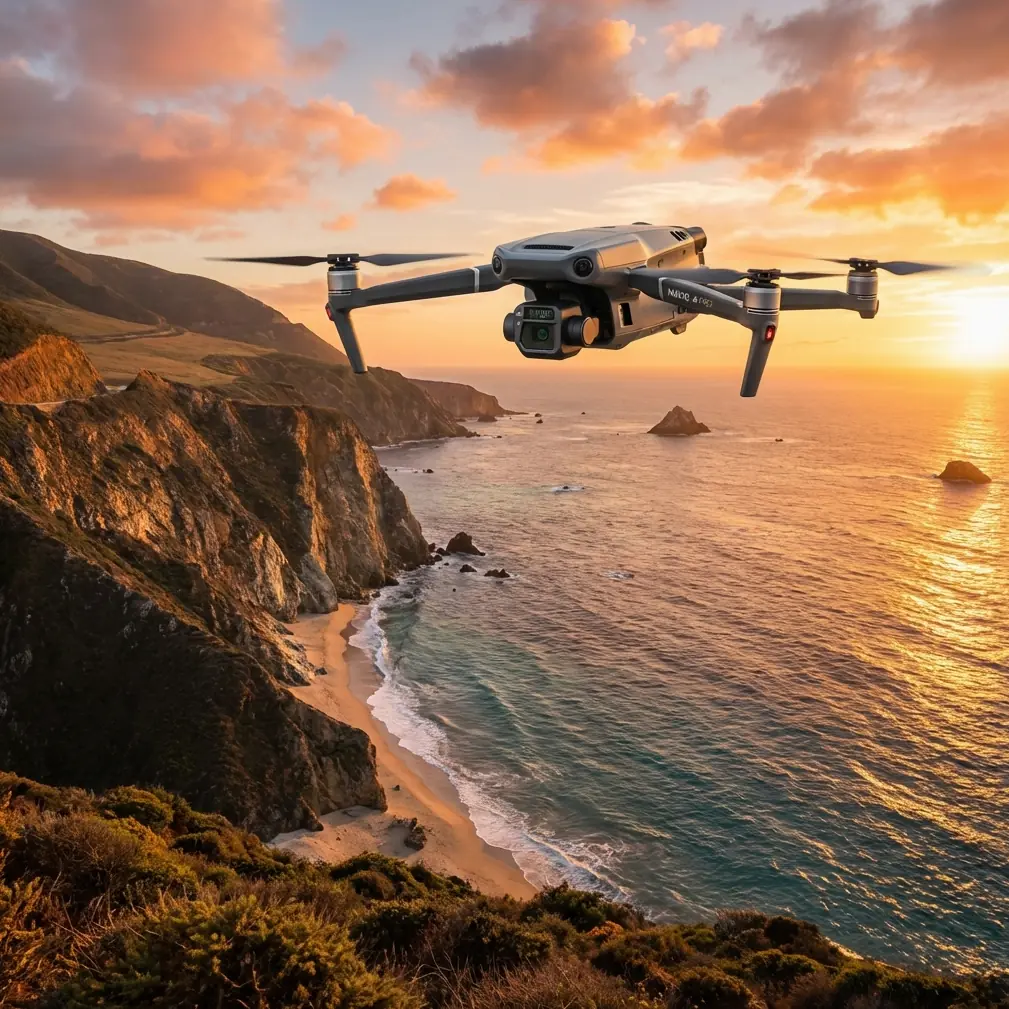
Mavic 3T in Low-Light Forest Inspection: The Altitude Mistake Most Teams Make
META: Expert guide to using the Mavic 3T for low-light forest inspection, with practical altitude strategy, thermal interpretation, transmission reliability, and field workflow tips.
Forest inspection after sunset exposes a weakness in a lot of drone programs: they fly the Mavic 3T as if darkness changes only the camera, not the entire mission logic.
It does.
In daylight, crews often rely on visual texture, canopy color variation, and obvious line-of-sight references to understand what they are seeing. In low light, those cues collapse. The operator is suddenly leaning much harder on thermal signature behavior, transmission stability, and disciplined altitude control. That is where the Mavic 3T earns its place—but only if you fly it with the right assumptions.
I’ll make the central point early: for low-light forest inspection, optimal flight altitude is usually lower than many teams first choose, but not as low as beginners assume. In dense woodland, the sweet spot is often the altitude band that preserves enough thermal separation between trunks, understory, and open gaps without widening each pixel footprint so much that weak anomalies blend into the background. If you climb too high, the thermal image becomes operationally “clean” yet less useful. If you drop too low, coverage slows, obstacle pressure rises, and the mission becomes harder to repeat accurately.
That tradeoff matters more than people think.
The Real Problem in Low-Light Forest Work
Most forest inspections in poor light are not about creating beautiful imagery. They are about detecting exceptions:
- stressed vegetation near utility corridors
- warm mechanical assets hidden by canopy edges
- wildlife-sensitive zones that require non-intrusive observation
- smoldering ground hotspots after controlled burns
- water intrusion, seep lines, or disturbed earth near access tracks
The challenge is that forests generate thermal clutter. Tree trunks hold heat differently than leaves. Open ground cools at a different rate than shaded soil. Moisture changes the scene again. A drone pilot who expects thermal to simply “reveal” the answer will waste battery time scanning noise.
This is why flight altitude should be treated as a filtering tool, not just a safety parameter.
At the wrong height, a Mavic 3T can still produce a technically acceptable thermal image while hiding the exact thing your client needs to find.
Why Altitude Is the First Decision, Not the Last
When crews prepare for a low-light mission, they often start with route planning, battery count, or whether BVLOS permissions are available for a long corridor. Those things matter, but altitude deserves to be fixed earlier because it affects almost every downstream choice:
- thermal contrast interpretation
- overlap for photogrammetry on the visible side
- obstacle clearance margins
- O3 transmission confidence under canopy edge conditions
- battery consumption and time-on-task
- revisit consistency for monitoring change over time
In practical field terms, the Mavic 3T performs best in forests when altitude is selected to match the size of the anomaly you are looking for—not the size of the property.
That sounds obvious. It rarely gets applied properly.
If the inspection target is broad canopy stress across a plantation block, you can work higher because you are reading patterns, not individual points. If the target is a narrow hotspot along a firebreak or a damaged component partially obscured by branches, you need to compress the scene and tighten your altitude. Otherwise the target merges into surrounding thermal values.
The mistake is assuming one universal height will serve both jobs.
A Useful Engineering Analogy: Design Margin Matters
The reference material behind this brief comes from classic aircraft design manuals, not drone marketing copy, and that is useful because it points to something UAV teams often neglect: margin discipline.
One source discusses oxygen system outlet design and explicitly adds a 5% safety factor as the minimum reserve, then extends to a 6% design tolerance upper band. The reason is not abstract caution. It is about balancing reliability against weight, excess flow, and system burden. Too little margin creates risk. Too much margin creates inefficiency and penalties elsewhere.
That same logic belongs in Mavic 3T forest inspection.
Your altitude should include a mission margin. Not a vague one—a deliberate one. If your ideal thermal interpretation height in a test pass is, say, just above the canopy break where heat signatures remain separated, you should still account for terrain undulation, GNSS variation near tree cover, and operator workload. The right altitude is not merely the clearest image from one pass. It is the clearest image you can repeat safely and consistently across the entire block.
The design-manual lesson is simple: tolerance is a tradeoff. In the aircraft example, wider flow tolerance can force heavier oxygen storage. In the drone example, wider altitude drift can cost you interpretability. That may mean reflying the site, which is the operational equivalent of carrying unnecessary weight.
Another detail from the source is just as relevant: outlet performance curves were established by testing multiple orifice options because real performance had to be verified empirically, and repeatability was considered critical. That maps perfectly to low-light drone work. Don’t set forest inspection altitude by instinct alone. Run test legs at two or three heights and compare thermal repeatability before the main mission. Good crews validate. They do not guess.
What “Optimal” Looks Like on a Mavic 3T
For low-light forest inspection, I recommend thinking in three altitude layers rather than one absolute number.
1. Recon layer
This is the faster, broader pass. You are looking for thermal discontinuities, canopy openings, edge anomalies, heat concentration near tracks, drainage lines, or infrastructure cuts. The Mavic 3T’s thermal payload is excellent here because it can quickly separate zones that deserve a second look.
The point of the recon layer is not final diagnosis. It is triage.
2. Verification layer
Once you flag potential anomalies, drop to a lower altitude that improves thermal signature separation. This is often where the mission succeeds or fails. At this height, you are trying to answer: is this a real hotspot, retained ground heat, an animal, exposed rock, or a reflective artifact?
This pass should be deliberate and slow enough to preserve interpretation confidence.
3. Documentation layer
If the job requires reporting, asset records, or condition tracking, use the visible camera side to capture support imagery with enough overlap for photogrammetry where appropriate. In forest environments, full canopy photogrammetry is rarely as straightforward as open-site mapping, but local documentation around roads, clearings, firebreaks, or managed stands can still benefit from measured outputs. If the client wants comparative change analysis, tie critical spots to GCP-supported workflows whenever terrain access allows.
The Mavic 3T is strongest when crews stop asking it to do everything in one pass.
Low Light Changes the Meaning of Thermal Signature
A thermal signature in a forest is not a label. It is a relationship.
A warm patch means little without context. Is it warmer than adjacent trunks? Warmer than exposed soil? Persistently warm across successive passes? Located on an uphill runoff path? Framed by an open gap where residual daytime heating is expected?
This is why altitude and timing work together. Early evening may still preserve solar loading in rocks, tracks, and exposed stumps. Later windows often improve anomaly confidence, but they can also reduce battery efficiency depending on ambient conditions and mission duration.
The Mavic 3T gives you the sensing capability. Interpretation still depends on field discipline.
My advice: when inspecting forests in low light, do not chase the “hottest” thing on screen first. Chase the least explainable thing.
Transmission Reliability in Forest Edges
Forest inspection adds another complication: radio environment instability. Dense vegetation, terrain folds, and edge transitions can all affect control confidence and live view usability. The Mavic 3T’s O3 transmission is a serious advantage because it gives crews a robust link for maintaining situational awareness when the route moves in and out of cluttered terrain features.
That said, strong transmission is not permission to get lazy. If you are working near the practical edge of the link budget, thermal interpretation quality often degrades before crews admit the mission geometry is poor. Frame hesitation, partial occlusion, and awkward antenna orientation can quietly undermine confidence in what you think you saw.
For teams developing repeatable forest workflows, I prefer route shapes that preserve clean communication arcs rather than overly ambitious one-shot sweeps through difficult terrain. If your program includes approved BVLOS operations, the pressure to overextend one sortie can be even higher. Resist that. Repeatability beats heroics.
Where data handling matters—especially for contracted industrial forestry, environmental monitoring, or sensitive landowner operations—the Mavic 3T’s AES-256 security support is also more than a spec-sheet ornament. It helps keep inspection data protected during transfer and storage workflows, which matters when imagery covers proprietary sites, ecological study plots, or regulated infrastructure passing through woodland corridors.
Battery Planning Is Part of Image Quality
Low-light teams sometimes talk about batteries as if they are only a logistics issue. They are also an image-quality issue because rushed final passes are usually the weakest passes.
This is where disciplined field turnover helps. If your operation uses hot-swap batteries as part of a larger mission rhythm—even though the aircraft itself still requires proper shutdown and swap procedure planning—the operational lesson is the same: minimize dead time between sorties so your thermal conditions remain comparable. The longer the gap, the more the forest scene changes. Ground cools. Breeze shifts. Moisture behavior changes. The anomaly you are tracking may not look the same 20 minutes later.
Consistency is everything.
Another Design Lesson from the Reference Material
The second reference item deals with aircraft tire selection. On the surface, it has nothing to do with a Mavic 3T. But the engineering logic is highly relevant. It recommends adding a 25% increment factor to account for weight fluctuation before final tire selection, specifically to avoid redesign pressure later. It also cites a ground maximum speed of 330 km/h in the example aircraft scenario, which highlights how design choices must account for real operating extremes, not idealized averages.
For drone teams, the transferable lesson is this: build your mission around the worst credible field condition, not the clean test condition.
In low-light forest inspection, that means planning altitude, route spacing, and sortie count around:
- the thickest canopy section
- the weakest likely contrast period
- the most cluttered radio segment
- the most battery-demanding leg
- the least experienced pilot likely to execute the workflow
If your forest inspection method works only when conditions are easy, it is not really a method yet.
A Practical Altitude Strategy for Mavic 3T Forest Work
Here is the field approach I trust most:
Start with a short calibration segment over representative terrain before the main route. Pick an area that includes at least three elements: canopy, exposed ground, and one likely anomaly type such as a track edge, drainage cut, stump cluster, or equipment point.
Fly that segment at three heights:
- a conservative broad-area height
- a mid-level inspection height
- a lower verification height
Then compare:
- Can you still separate individual warm sources from background?
- Do trunks and ground begin to merge thermally?
- Does obstacle pressure rise enough to slow your work?
- Is the live view stable enough for confident interpretation?
- Can you repeat that height over uneven terrain without creeping risk?
The best altitude is the one that preserves interpretability with enough margin to be flown repeatedly across the whole forest block.
If you want help pressure-testing a route or choosing a starting profile for your site, you can message our field team here: https://wa.me/85255379740
The Mavic 3T Is at Its Best When the Mission Is Narrowly Defined
The strongest Mavic 3T forest operations are not trying to prove that thermal can do everything. They use thermal to narrow the search, visible imaging to document context, and repeatable altitude control to remove ambiguity.
That is the real edge in low light.
Not just seeing heat, but seeing it at a height where it still means something.
Ready for your own Mavic 3T? Contact our team for expert consultation.