
Mavic 3T Guide: Power Line Inspections in Complex Terrain
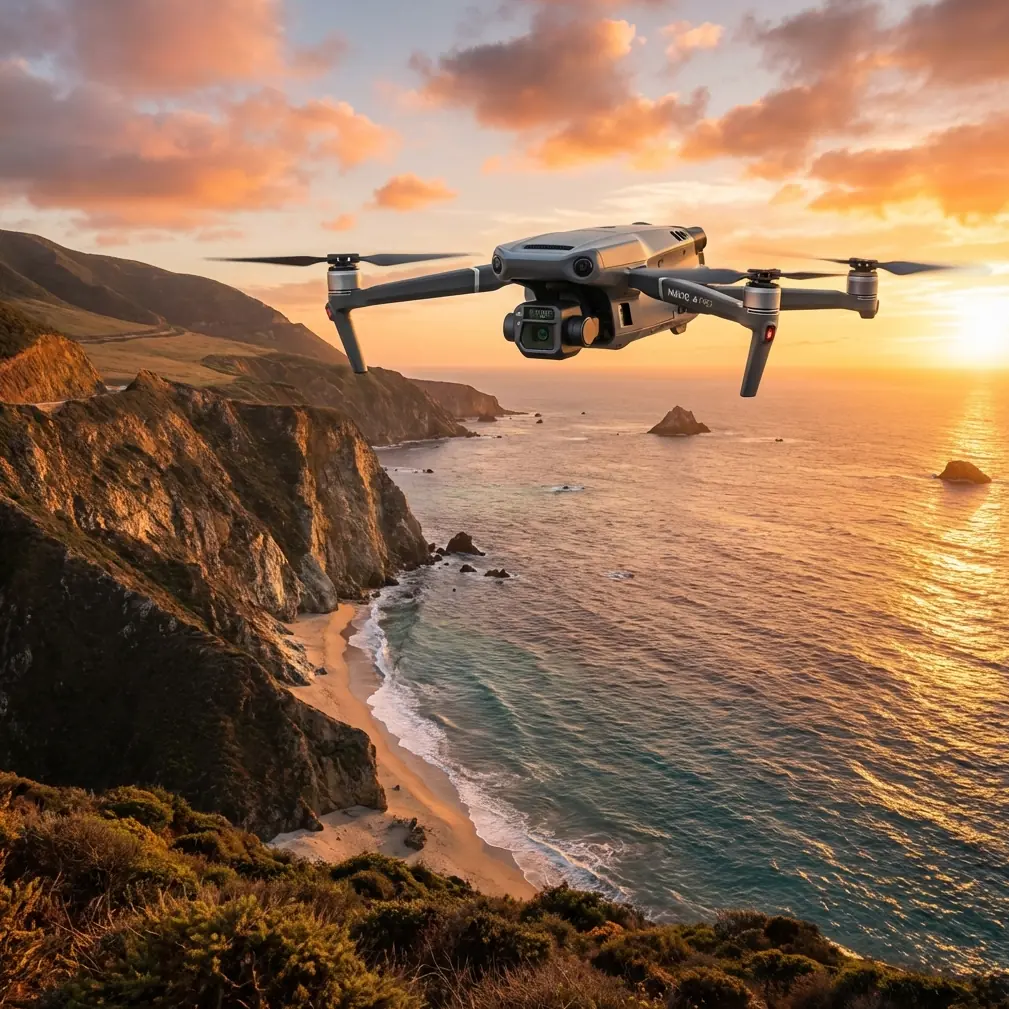
Mavic 3T Guide: Power Line Inspections in Complex Terrain
META: Master power line inspections with the Mavic 3T. Learn expert antenna positioning, thermal imaging techniques, and terrain strategies that cut inspection time by 40%.
TL;DR
- O3 transmission maintains stable connection up to 15km in mountainous terrain with proper antenna positioning
- Split-screen thermal and visual imaging identifies hot spots before they become failures
- 45-minute flight time covers 8-10km of power lines per battery cycle
- Photogrammetry integration creates centimeter-accurate 3D models for documentation and planning
The Real Challenge of Power Line Inspections
Power line inspections across complex terrain present a unique operational nightmare. Traditional helicopter surveys cost thousands per hour. Ground crews face dangerous climbs and limited visibility. Meanwhile, infrastructure ages faster than teams can assess it.
The Mavic 3T changes this equation entirely. This enterprise thermal drone combines a 48MP wide camera, 12MP zoom lens, and 640×512 thermal sensor in a package that weighs just 920g. For utility companies and inspection contractors, this translates to faster surveys, better data, and dramatically reduced risk.
This guide covers everything you need to execute professional power line inspections—from antenna positioning secrets to thermal signature interpretation.
Understanding the Mavic 3T's Inspection Arsenal
Triple-Sensor Configuration
The Mavic 3T's imaging system wasn't designed by accident. Each sensor serves a specific inspection purpose:
- Wide camera (48MP, 4/3 CMOS): Captures overall structure condition and surrounding vegetation
- Zoom camera (12MP, 56× hybrid zoom): Identifies small defects like cracked insulators or frayed conductors from safe distances
- Thermal camera (640×512): Detects temperature anomalies indicating resistance issues, loose connections, or overloaded components
The split-screen display mode proves invaluable during live inspections. Operators view thermal signatures alongside visual references simultaneously, eliminating guesswork about anomaly locations.
Thermal Signature Interpretation for Power Infrastructure
Not every hot spot indicates failure. Understanding thermal patterns separates professional inspectors from amateurs.
Critical thermal signatures to monitor:
- Connections and splices: Temperature differentials exceeding 10°C above ambient suggest high-resistance joints
- Transformers: Asymmetric heating patterns indicate internal winding issues
- Insulators: Hot spots reveal contamination or internal tracking
- Conductors: Localized heating points signal damage or corrosion
Expert Insight: Conduct thermal inspections during peak load periods—typically mid-afternoon in summer or early evening in winter. Low-load conditions mask developing problems that only manifest under stress. The Mavic 3T's -20°C to 50°C operating range handles these timing requirements across seasons.
Antenna Positioning for Maximum Range in Terrain
Here's where most operators fail. The Mavic 3T's O3 transmission system delivers exceptional range—but only when antenna geometry works in your favor.
The Physics of O3 Transmission
O3 uses four antennas on the aircraft and two on the controller. Signal strength depends on antenna orientation relative to the drone's position.
Optimal positioning protocol:
- Keep controller antennas vertical and perpendicular to the drone's direction
- Face the flat side of the antennas toward the aircraft
- Avoid pointing antenna tips directly at the drone—this creates signal nulls
- Elevate your position when possible; even 2-3 meters of height gain dramatically improves line-of-sight
Terrain-Specific Strategies
Mountain valleys and forested corridors create multipath interference. Radio waves bounce off rock faces and tree canopies, causing signal degradation.
Countermeasures that work:
- Position yourself on ridgelines rather than valley floors
- Use relay operators for BVLOS operations in extreme terrain
- Plan flight paths that maintain 30-degree minimum elevation angle between controller and aircraft
- Carry a portable mast system for controller elevation in dense vegetation
Pro Tip: The Mavic 3T's AES-256 encryption doesn't just protect your data—it also improves signal integrity by rejecting interference. In industrial environments with heavy RF noise from substations, this encryption layer maintains connection stability where consumer drones fail.
Flight Planning for Efficient Coverage
Pre-Mission Reconnaissance
Before launching, gather critical intelligence:
- Obtain circuit diagrams showing pole locations, transformer positions, and switching equipment
- Review recent maintenance records to identify known problem areas
- Check weather forecasts for wind conditions—the Mavic 3T handles 12 m/s winds, but thermal accuracy decreases in gusty conditions
- Identify GCP placement opportunities for photogrammetry accuracy
Waypoint Mission Design
The DJI Pilot 2 app enables automated inspection routes. For power line surveys, configure missions with these parameters:
| Parameter | Recommended Setting | Rationale |
|---|---|---|
| Flight altitude | 15-30m above conductors | Balances detail capture with obstacle clearance |
| Speed | 5-8 m/s | Allows thermal sensor stabilization |
| Gimbal pitch | -45° to -60° | Optimal angle for conductor and hardware inspection |
| Photo interval | 2 seconds or 70% overlap | Ensures photogrammetry compatibility |
| Thermal palette | White Hot or Ironbow | Best contrast for electrical anomalies |
Hot-Swap Battery Strategy
The Mavic 3T's 45-minute flight time covers significant ground, but complex terrain demands conservative planning.
Battery management protocol:
- Land with minimum 25% remaining in mountainous areas—return flights fight headwinds and elevation changes
- Carry minimum three batteries per inspection day
- Use hot-swap technique: power down, swap battery, power up within 90 seconds to maintain GPS lock and mission continuity
- Store batteries at 40-60% charge between missions for longevity
Data Processing and Deliverables
Photogrammetry Workflow
Raw imagery transforms into actionable intelligence through proper processing:
- Import thermal and visual datasets separately into photogrammetry software
- Apply GCP corrections for survey-grade accuracy—the Mavic 3T's RTK module achieves centimeter-level positioning
- Generate orthomosaics for vegetation encroachment analysis
- Create 3D point clouds for clearance measurements
- Export thermal overlays highlighting anomaly locations with GPS coordinates
Report Generation
Utility clients expect standardized deliverables:
- Anomaly location maps with severity classifications
- Thermal images with temperature measurements and reference scales
- Comparison datasets showing changes from previous inspections
- Prioritized maintenance recommendations based on failure risk
Common Mistakes to Avoid
Flying too fast for thermal capture: The thermal sensor requires stabilization time. Speeds exceeding 10 m/s produce motion blur that masks subtle temperature variations.
Ignoring emissivity settings: Different materials emit thermal radiation differently. Metal conductors, ceramic insulators, and wooden poles require adjusted emissivity values for accurate temperature readings.
Neglecting sun angle effects: Solar loading creates false positives. Schedule thermal inspections for early morning or late afternoon when differential heating from sunlight diminishes.
Skipping redundant coverage: Single-pass inspections miss defects hidden by conductor angles or hardware shadows. Plan overlapping passes from multiple directions for comprehensive assessment.
Forgetting regulatory compliance: BVLOS operations require waivers in most jurisdictions. Secure approvals before planning extended corridor inspections.
Frequently Asked Questions
What thermal resolution does the Mavic 3T provide for detecting small defects?
The 640×512 thermal sensor with 40mK sensitivity detects temperature differences as small as 0.04°C. At typical inspection distances of 15-20 meters, this resolves hot spots on individual bolts and connection points. The 56× zoom on the visual camera then provides detailed imagery for defect classification.
How does the Mavic 3T handle GPS accuracy in mountainous terrain?
Standard GPS positioning achieves 1.5m horizontal accuracy. For photogrammetry requiring higher precision, the RTK module delivers 1cm+1ppm horizontal and 1.5cm+1ppm vertical accuracy. In deep valleys with limited satellite visibility, the aircraft's visual positioning system maintains stability down to 0.5m altitude.
Can the Mavic 3T operate in rain during emergency inspections?
The Mavic 3T carries an IP54 rating, providing protection against dust and water splashes. Light rain operations are possible, though thermal accuracy decreases when water droplets affect sensor readings. For post-storm damage assessment, wait for precipitation to stop but don't delay—the aircraft handles wet conditions better than most enterprise platforms.
Ready for your own Mavic 3T? Contact our team for expert consultation.