
Mavic 3T Mapping Tips for Remote Agricultural Fields
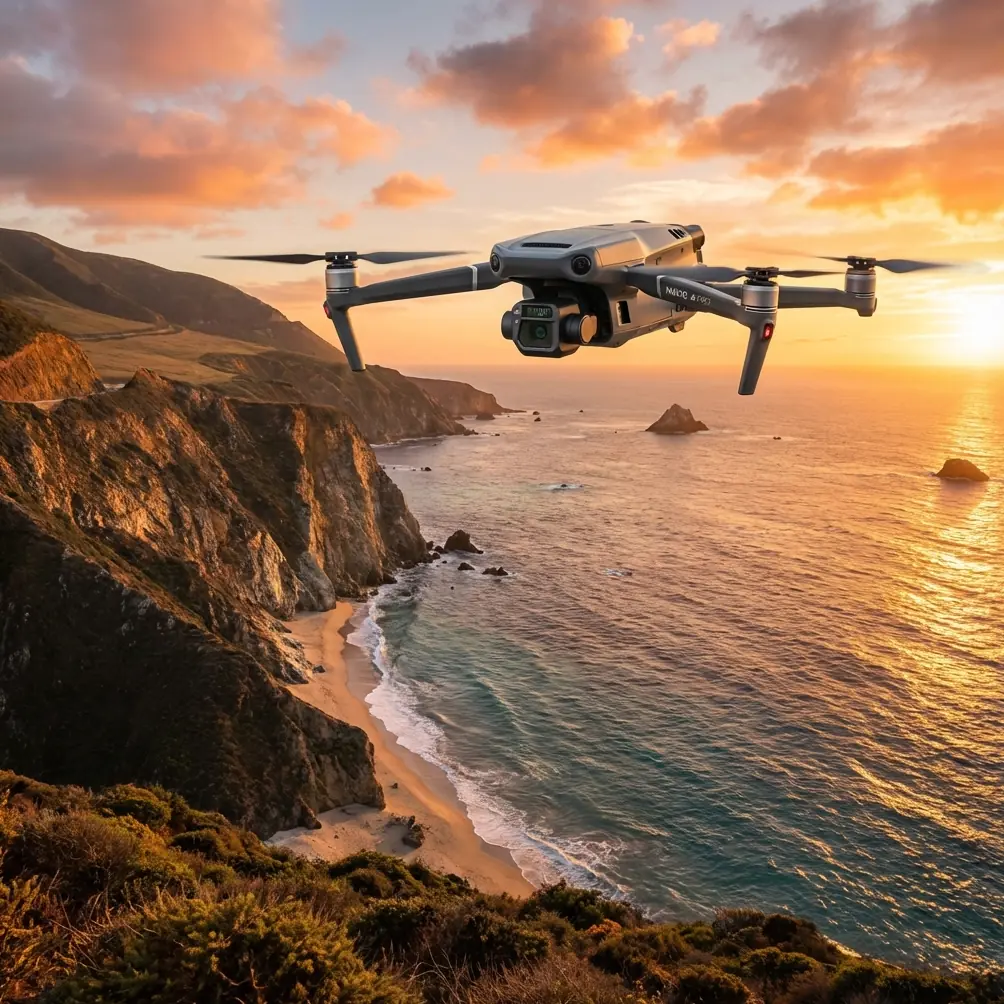
Mavic 3T Mapping Tips for Remote Agricultural Fields
META: Learn proven Mavic 3T mapping tips for remote agricultural fields. Expert guide covers antenna positioning, GCP placement, thermal workflows, and BVLOS best practices.
By Dr. Lisa Wang, Remote Sensing & Agricultural Drone Specialist
TL;DR
- Antenna positioning on the DJI RC Plus controller is the single biggest factor in maintaining stable O3 transmission across vast remote fields—orientation matters more than altitude.
- Strategic GCP placement and proper photogrammetry overlap settings (80/70% front/side) ensure survey-grade accuracy even without reliable cellular connectivity.
- The Mavic 3T's thermal signature capabilities let you detect irrigation failures, drainage issues, and crop stress invisible to standard RGB sensors.
- Hot-swap batteries and pre-planned BVLOS waypoint missions allow you to map 200+ hectares in a single session without returning to base.
Why the Mavic 3T Excels for Remote Field Mapping
Mapping agricultural fields in remote locations punishes weak equipment. Poor signal, no cell coverage, vast acreages, and unpredictable weather can derail an entire survey day. The DJI Mavic 3T was engineered to thrive in exactly these conditions—and this guide will show you how to extract maximum mapping performance from every flight, even when the nearest town is 50 kilometers away.
The Mavic 3T combines a 48MP wide-angle camera, a 56× zoom lens, and a 640×512 thermal sensor into a single compact airframe. That triple-sensor configuration means you capture RGB orthomosaics, detailed inspections, and thermal signature data simultaneously—no second aircraft, no second pass, no wasted battery life.
But hardware alone doesn't guarantee results. Technique does. Let's break down the complete workflow.
Step 1: Pre-Mission Planning for Remote Operations
Before your vehicle even leaves paved roads, your mission should be fully planned. Remote field mapping leaves no room for improvisation.
Select Your Mapping Software
Use DJI Pilot 2 for waypoint mission planning directly on the RC Plus controller. For advanced photogrammetry planning, pre-load missions using DJI Terra or DJI FlightHub 2 while you still have internet access.
Key planning parameters to set before departure:
- Flight altitude: 80–120 meters AGL for standard crop mapping
- Front overlap: 80% minimum
- Side overlap: 70% minimum
- Speed: 8–12 m/s depending on wind conditions
- GSD (Ground Sampling Distance): Target 2–3 cm/pixel for agronomic analysis
Prepare Ground Control Points
GCP accuracy determines your entire map's georeferencing quality. For remote fields without RTK base station access, GCPs become non-negotiable.
Pack at least 5 GCPs per mission area. Place them in this pattern:
- 4 at the field corners, inset by approximately 10% of the field dimensions
- 1 in the center of the mapping area
- For fields exceeding 100 hectares, add 1 additional GCP per 30 hectares
Expert Insight: Use high-contrast checkerboard targets (60×60 cm minimum) rather than spray paint or natural features. At 100 meters AGL, the Mavic 3T's 48MP sensor resolves a 60 cm target at roughly 20 pixels across—enough for sub-centimeter identification in post-processing. Spray paint fades in thermal imagery and becomes invisible by your second flight.
Step 2: Antenna Positioning for Maximum O3 Transmission Range
This is where most remote operators lose performance—and it's entirely preventable.
The DJI RC Plus uses a dual-antenna O3 Enterprise transmission system rated at 15 km maximum range. However, that rating assumes optimal antenna orientation. In the field, poor positioning can cut your reliable range to under 5 km.
The Correct Technique
Follow these rules for maximum signal integrity:
- Keep both antennas pointing upward and flat-face toward the drone. The antennas radiate strongest perpendicular to their flat surfaces.
- Never angle antennas toward the ground or cross them. Crossed antennas create destructive interference patterns.
- Rotate your body to face the aircraft as it moves across the field. This is more effective than adjusting antenna angles.
- Elevate the controller. Place the RC Plus on a tripod at 1.5–2 meters height rather than holding it at waist level. This alone can add 2–3 km of usable range by clearing ground-level obstructions like crop canopy and terrain undulation.
Environmental Factors That Degrade Signal
| Factor | Impact on Range | Mitigation |
|---|---|---|
| Dense tree lines between pilot and drone | 40–60% range reduction | Relocate launch point to clear line-of-sight |
| High humidity (>85%) | 10–15% range reduction | Fly earlier in the day before moisture peaks |
| Metal structures (silos, fencing) | Multipath interference, signal drops | Maintain >30 meters distance from metal objects |
| Other 2.4 GHz / 5.8 GHz sources | Channel congestion | Use auto-frequency selection on O3 system |
| Tall crop canopy (corn >2 m) | Ground-level signal absorption | Elevate controller on tripod above canopy height |
Pro Tip: For BVLOS operations in approved jurisdictions, position a visual observer at the midpoint of the flight path and use the DJI Cellular Module (if available) as a redundant data link. Even without cellular coverage, the AES-256 encrypted O3 link provides secure, low-latency video at distances exceeding 10 km when antenna positioning is optimized as described above.
Step 3: Executing the Mapping Flight
With your mission loaded and GCPs deployed, it's time to fly.
Battery and Hot-Swap Strategy
The Mavic 3T delivers approximately 45 minutes of flight time per battery. For remote mapping, carry a minimum of 6 batteries to ensure continuous operations.
Here's an efficient hot-swap workflow:
- Plan missions in segments that consume no more than 70% of a single battery
- Land with at least 25% remaining to maintain a safety reserve
- Swap batteries in under 60 seconds—practice this before field day
- Keep spare batteries in a shaded, insulated case between 20–40°C for optimal discharge performance
- Number each battery and log cycle counts to track degradation
A disciplined hot-swap approach lets you map 200+ hectares without returning to a vehicle for charging.
Thermal Mapping Configuration
Switch the thermal sensor to the appropriate palette before launch:
- Ironbow or White Hot for irrigation leak detection
- Isotherm mode for isolating specific temperature bands (e.g., crop stress between 28–35°C)
- Set emissivity to 0.95–0.98 for vegetative surfaces
- Fly thermal missions during early morning (pre-dawn to 2 hours post-sunrise) for maximum thermal contrast—soil retains heat differently than vegetation, and this window reveals drainage and moisture patterns invisible later in the day
Step 4: Post-Processing Photogrammetry Data
Back at base, your data pipeline determines whether you get a pretty picture or an actionable agronomic map.
Recommended Processing Workflow
- Import RGB images into DJI Terra, Pix4Dfields, or Agisoft Metashape
- Mark GCPs across overlapping images—minimum 5 images per GCP
- Generate dense point cloud at high quality settings
- Build orthomosaic and DSM (Digital Surface Model)
- Process thermal data separately to generate radiometric temperature maps
- Layer RGB and thermal outputs in GIS software (QGIS is free; ArcGIS Pro for enterprise)
Achievable Accuracy Benchmarks
| Metric | Without GCPs | With 5+ GCPs | With RTK + GCPs |
|---|---|---|---|
| Horizontal accuracy | 1–3 meters | 2–5 cm | 1–2 cm |
| Vertical accuracy | 3–5 meters | 3–8 cm | 2–3 cm |
| Thermal temp. accuracy | ±3°C | ±3°C (GCPs don't affect thermal calibration) | ±3°C |
| Point cloud density | ~500 pts/m² | ~500 pts/m² | ~500 pts/m² |
The difference between the first and second columns represents the entire value proposition of hauling GCPs into remote fields. A 1-meter horizontal error can place crop stress indicators in the wrong management zone. A 3 cm error keeps your prescription maps agronomically precise.
Mavic 3T vs. Alternative Mapping Platforms
| Feature | Mavic 3T | Phantom 4 RTK | Matrice 350 RTK + H20T |
|---|---|---|---|
| Weight | 920 g | 1,391 g | ~9.2 kg (with payload) |
| Flight time | 45 min | 30 min | 41 min |
| Thermal sensor | 640×512 integrated | None | 640×512 (H20T) |
| Zoom | 56× hybrid | None | 200× hybrid |
| Transmission | O3, 15 km | OcuSync, 8 km | O3, 20 km |
| Encryption | AES-256 | AES-256 | AES-256 |
| Portability | Backpack-deployable | Case required | Vehicle-dependent |
| BVLOS suitability | High | Moderate | High |
| Ideal field size | 10–500 ha | 10–200 ha | 50–2,000 ha |
For remote agricultural mapping under 500 hectares, the Mavic 3T hits the optimal balance of portability, sensor capability, and endurance. You can hike to a launch point that larger platforms simply cannot reach.
Common Mistakes to Avoid
1. Flying thermal maps at midday. Solar heating equalizes surface temperatures and destroys the thermal contrast you need. Fly thermal before 9:00 AM local time or after 5:00 PM.
2. Ignoring antenna orientation. Laying the RC Plus flat on a truck hood with antennas flopped sideways is the fastest way to trigger a signal-lost failsafe at 3 km. Always orient antennas as described in Step 2.
3. Skipping GCPs because "the drone has GPS." The Mavic 3T's onboard GNSS delivers 1.5-meter accuracy at best. That's acceptable for scouting, not for variable-rate prescription mapping or legal boundary documentation.
4. Setting overlap too low to save battery. Dropping below 75/65% front/side overlap creates gaps in point cloud density that cause holes in your orthomosaic—especially over uniform green canopy where feature matching is already difficult.
5. Forgetting to calibrate the IMU and compass at the remote site. Magnetic environments vary. A calibration performed 200 km away in a parking lot does not apply to a field surrounded by iron-rich soil or metal infrastructure. Calibrate on-site, away from vehicles.
6. Neglecting AES-256 encryption settings. When mapping sensitive agricultural data—especially under precision ag contracts—verify that encryption is enabled to protect flight logs and imagery during O3 transmission.
Frequently Asked Questions
Can the Mavic 3T perform BVLOS mapping legally?
BVLOS regulations vary by country and region. In many jurisdictions, operators can obtain specific BVLOS waivers for agricultural mapping by demonstrating risk mitigation measures: visual observers, detect-and-avoid protocols, and redundant communication links. The Mavic 3T's O3 transmission range, AES-256 encryption, and reliable failsafe return-to-home behavior make it a strong candidate for waiver applications. Always consult your national aviation authority before conducting BVLOS operations.
How many hectares can I map per battery?
At 100 meters AGL with 80/70% overlap and 10 m/s flight speed, expect approximately 35–50 hectares per battery depending on wind conditions and field geometry. Rectangular fields are more efficient than irregular shapes because fewer turns mean less wasted flight time. With 6 hot-swap batteries, a single operator can realistically complete 200–250 hectares in one session.
Is the Mavic 3T thermal sensor accurate enough for irrigation analysis?
The 640×512 uncooled VOX thermal sensor provides ±2°C measurement accuracy and NETD <30 mK sensitivity. While it won't replace a dedicated radiometric thermal camera for scientific research, it detects relative temperature differences across a field with excellent reliability. Irrigation leaks, blocked emitters, and waterlogged zones produce thermal signature variations of 3–8°C—well within the sensor's detection capability. For best results, fly during the pre-dawn thermal crossover window when soil moisture differences produce the strongest contrast.
Bringing It All Together
Remote agricultural mapping with the Mavic 3T is a discipline built on preparation, antenna awareness, and disciplined data collection. The hardware is exceptional—triple sensors, 45-minute endurance, enterprise-grade O3 transmission with AES-256 security, and a form factor that fits in a backpack. But the operator who plans GCP placement meticulously, positions antennas correctly, times thermal flights for early morning, and maintains a rigorous hot-swap battery rotation will consistently produce maps that are orders of magnitude more useful than the operator who simply launches and hopes.
Master these techniques, and you'll deliver photogrammetry outputs that drive real agronomic decisions—irrigation adjustments, variable-rate fertilization, drainage remediation—across hundreds of hectares per day, even in the most connectivity-challenged environments.
Ready for your own Mavic 3T? Contact our team for expert consultation.