
Mavic 3T for Coastal Forest Mapping: A Technical Review
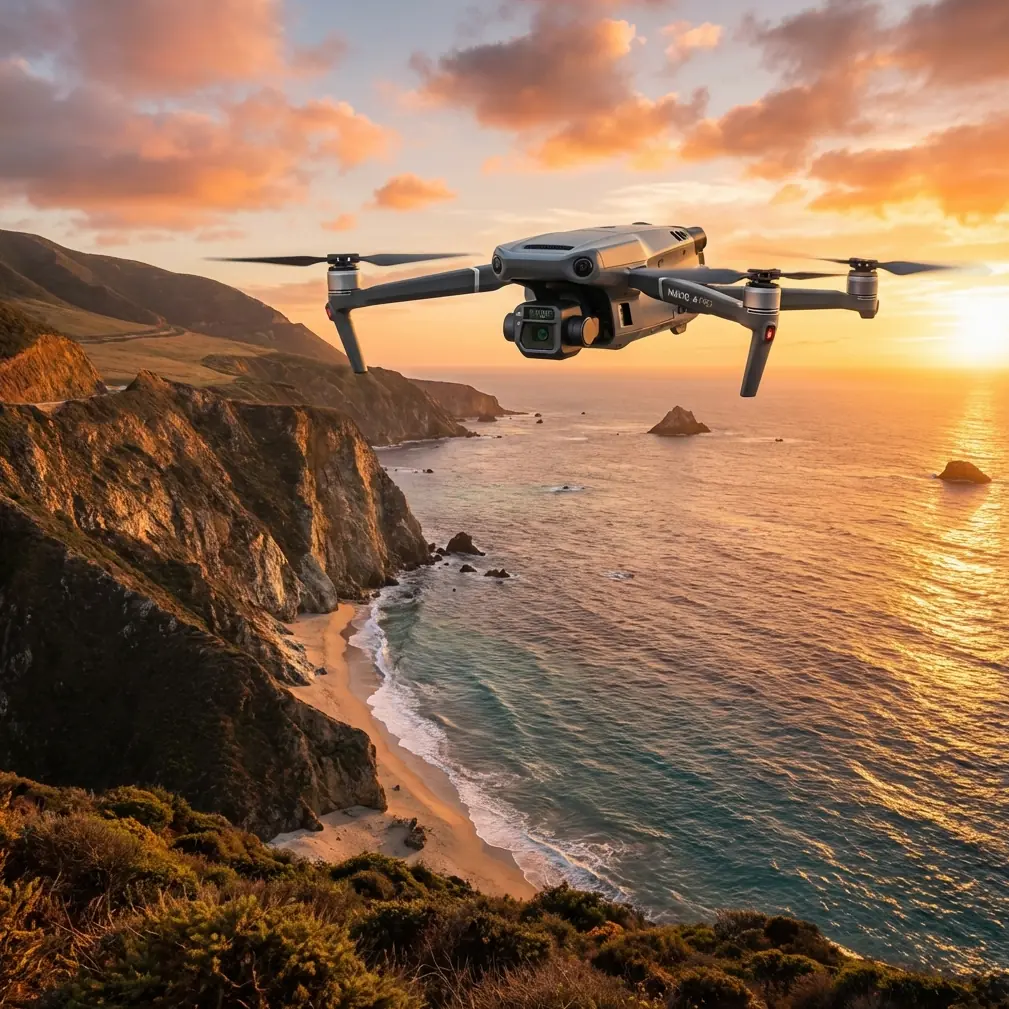
Mavic 3T for Coastal Forest Mapping: A Technical Review from the Field
META: Expert review of the DJI Mavic 3T for coastal forest mapping, covering thermal workflows, photogrammetry limits, O3 transmission, AES-256 security, GCP strategy, and practical accessory upgrades.
Coastal forest mapping exposes weaknesses in aircraft and workflows faster than many operators expect. Salt haze dulls contrast. Wind shear rolls in from open water. Dense canopy obscures the ground, while wet vegetation creates thermal noise that can mislead anyone treating infrared output as a shortcut to certainty. In that setting, the Mavic 3T is not a one-tool solution. It is a compact, highly capable field platform that becomes genuinely useful when you understand where its thermal system shines, where photogrammetry needs support, and how mission planning changes in coastal terrain.
I’ve worked with teams using the Mavic 3T in vegetation analysis, corridor checks through coastal woodland, post-storm assessment, and habitat documentation. The pattern is consistent: this aircraft delivers excellent operational value when you build the workflow around its strengths rather than forcing it into the role of a dedicated large-area mapping platform.
Where the Mavic 3T fits in a coastal forest workflow
The Mavic 3T earns attention because it combines visible imaging, thermal sensing, and a portable airframe that can be deployed quickly from restricted access points. In coastal forests, that matters. You are often launching from narrow service tracks, wet clearings, dune edges, or temporary field bases where larger systems are inconvenient.
Its practical advantage is speed to information. If a forestry consultant needs to identify stressed zones after salt intrusion, check drainage changes after heavy weather, or document canopy temperature anomalies near infrastructure, the thermal payload gives immediate spatial clues. That is the right way to think about its thermal signature capability: not as a replacement for ground truthing, but as a triage layer that tells you where to look harder.
The visible camera side is equally relevant. Coastal forests are messy from a mapping perspective. You have mixed crown density, shadows cast by low-angle light, and repetitive textures that can reduce tie-point quality in photogrammetry. A drone that can switch between thermal interpretation and visual contextualization without changing aircraft saves time and reduces alignment mistakes in the field.
Thermal is useful here, but only if you respect the environment
The biggest mistake I see is assuming thermal imagery over coastal vegetation is self-explanatory. It is not. Wet bark, saturated soil, tidal influence, and sun loading can all create false patterns. The Mavic 3T’s thermal output is most valuable when flown with timing discipline.
Early morning flights usually provide the cleanest separation for identifying moisture retention, stressed vegetation, drainage pathways, and warm equipment or structures intruding into forest margins. By late afternoon, the canopy may hold and re-radiate heat in uneven ways that obscure the signal you actually care about.
Operationally, this has a direct consequence: the aircraft should be scheduled as part of a two-pass workflow. First pass for thermal interpretation under stable conditions. Second pass for visible-light documentation at the sun angle that best supports surface detail and photogrammetric consistency. Trying to collect both datasets under one convenient launch window often degrades one of them.
This matters especially in coastal forestry because thermal anomalies can indicate several different things: saline stress, standing water below canopy gaps, exposed root systems after erosion, or simply sun-warmed branches. Without visible imagery and field notes, thermal signatures remain hypotheses.
Photogrammetry with the Mavic 3T: workable, but not frictionless
Let’s be direct. If your sole objective is the highest-efficiency photogrammetry production over broad forest acreage, the Mavic 3T is not the obvious first choice. Its value is the combination payload. That said, it can contribute strong spatial outputs when paired with sensible expectations.
Forest mapping by photogrammetry is hard even with ideal sensors because canopy overlap hides the ground. In coastal sites, the challenge is amplified by moving foliage and inconsistent light from cloud bands blowing in off the water. The Mavic 3T can still support orthomosaic generation, edge-of-forest surface modeling, access route mapping, drainage observation, and stock or structure documentation near wooded areas. It is particularly useful where the mission requires thermal context alongside visual products.
The term GCP should not be treated as optional jargon here. Ground control points are often the difference between “looks fine on screen” and “usable for decision-making.” In coastal forests, GNSS quality can degrade under dense cover or near terrain interruptions, and repetitive canopy texture can reduce confidence in automated reconstruction. Well-placed GCPs at access roads, open patches, trail junctions, and cleared boundaries add a layer of positional discipline that the final dataset needs.
If the site is heavily wooded, I recommend treating GCP placement as a perimeter-and-corridor exercise rather than trying to chase impossible points under canopy. Build control around edges, openings, and persistent visible surfaces. Then document those locations rigorously. The operator who rushes this step usually pays for it later in software.
O3 transmission matters more in coastal forests than spec sheets suggest
On paper, O3 transmission is just a link technology. In practice, it changes how confidently you can work around interrupted sightlines, variable topography, and reflective moisture-heavy environments. Coastal forests create signal complications: trunks absorb, branches scatter, and terrain can break clean geometry between pilot and aircraft.
A stable transmission system does not remove legal or procedural responsibilities, and it certainly does not erase visual line-of-sight requirements where they apply. What it does do is reduce pilot workload and improve video reliability when flying near forest margins, creek lines, or broken canopy corridors. That reliability translates into better framing, safer route adjustments, and fewer compromised datasets.
This becomes especially relevant for teams preparing for regulated BVLOS pathways in the future. Even if current operations remain within standard line-of-sight rules, crews that build disciplined link-management habits now are better prepared for more advanced approvals later. The Mavic 3T’s communications stack gives operators a credible foundation for that kind of procedural maturity.
AES-256 is not just a box-tick feature
The mention of AES-256 often gets buried under flight and sensor talk, but for environmental work it has operational significance. Coastal forest projects frequently involve land managers, utilities, infrastructure owners, conservation groups, or consultants handling location-sensitive data. Drainage patterns, access routes, asset conditions, and habitat observations can all be commercially sensitive even when the work is entirely civilian.
Strong encryption matters because data security starts in the field, not after export. If your team is flying over remote sites and transmitting live imagery to support decisions on erosion control, invasive species response, or infrastructure planning, a secure link is part of the professional standard. On projects involving multiple stakeholders, that can be the feature that moves a platform from “technically capable” to “acceptable under internal governance rules.”
It also supports cleaner client conversations. When data handling questions arise, being able to point to AES-256 as part of the transmission environment is a tangible reassurance, not marketing fluff.
Battery strategy is where field productivity is won or lost
Coastal forest work rarely happens from a comfortable staging area. You may be crossing soft ground, launching between weather windows, or working from vehicles parked far from the actual survey block. In those conditions, hot-swap batteries are not a luxury concept. They are part of maintaining continuity.
Strictly speaking, operators should think less about abstract endurance and more about cycle rhythm. Can the crew land, log observations, replace power, relaunch, and maintain dataset consistency before light or tide conditions change? That is the real productivity test. The Mavic 3T’s field convenience supports this style of operation well, especially when teams organize batteries by mission segment and thermal timing rather than simply flying until depletion.
One practical lesson from coastal work: battery handling discipline needs to be tighter than inland teams often expect. Humidity, salt exposure, and fast-moving weather can all compromise rushed field routines. Protected staging, dry case management, and structured swap procedures improve both safety and data continuity.
A third-party accessory that genuinely improves results
One accessory I’ve seen make a measurable difference is a high-visibility third-party landing pad designed for wet, sandy, or debris-prone surfaces. That may sound modest compared with sensors and software, but in coastal forests it solves real problems.
Takeoff and landing are where contamination risk spikes. Fine sand, salt residue, pine needles, and leaf fragments are constant nuisances. A stable elevated visual target for launch and recovery reduces rotor wash recirculating debris into the aircraft and helps crews maintain consistency when operating from uneven clearings. Better still, it creates a predictable zone for battery swaps and pre-flight checks.
I’ve also seen operators pair the Mavic 3T with third-party RTK-compatible survey markers for GCP visibility in mixed-light woodland edges. That combination is not glamorous, but it improves photogrammetry workflows far more than many people realize. In technical fieldwork, boring accessories often save the mission.
What the Mavic 3T does especially well in coastal forest projects
It is excellent for rapid thermal reconnaissance after storms. Coastal forests change quickly after heavy weather. Drainage lines shift, root plates lift, standing water accumulates, and certain vegetation zones show stress before it becomes obvious from the ground. The Mavic 3T can identify patterns worth investigating while the site is still difficult to access on foot.
It is also strong in mixed mission profiles. If a team needs one aircraft to inspect trail corridors, document edge erosion, review culverts or drainage structures, and assess temperature anomalies near utility interfaces, the platform is highly efficient. That “one airframe, several layers of information” model is where it justifies itself.
And for training, it is unusually practical. Coastal forest operations demand judgment more than brute capability. Pilots need to learn how wind behaves at the canopy edge, how thermal scenes shift with moisture, and how visual overlap degrades when branches move. The Mavic 3T is compact enough to deploy often and sophisticated enough to teach the right lessons.
Where you need restraint
The aircraft is not a magic answer for dense-canopy topographic truth. If the client expects detailed ground surface mapping beneath closed forest cover, photogrammetry from a compact platform will face hard limits. You can still produce valuable datasets, but only if the deliverable is defined honestly.
The same applies to thermal interpretation. Heat contrast in vegetation is useful, not self-verifying. Salt exposure, water content, sun angle, and species differences all affect readings. The operator who treats thermal data as a diagnostic endpoint will overpromise. The operator who uses it as a spatial indicator will produce better work.
My practical recommendation
For coastal forest mapping, I would frame the Mavic 3T as a compact multisensor field aircraft best suited to targeted assessment, condition monitoring, and hybrid visual-thermal missions with selective photogrammetric output. Use GCPs wherever the map product must stand up to scrutiny. Exploit O3 transmission for cleaner situational awareness in broken terrain. Treat AES-256 as a serious part of your data governance. Build battery changes into mission design, not as an afterthought. And invest in accessories that protect launch quality and improve control visibility rather than chasing gadget novelty.
If your workflow involves repeated woodland-edge surveys, post-weather inspections, habitat documentation, and anomaly detection across difficult coastal terrain, the Mavic 3T is one of the more sensible platforms available. Not because it does everything perfectly, but because it covers the real work surprisingly well when flown by people who understand its boundaries.
If you want to compare field setups or discuss a coastal forest mapping workflow, you can reach out directly on WhatsApp here.
Ready for your own Mavic 3T? Contact our team for expert consultation.