
Mapping Dusty Forest Corridors with the Mavic 3T
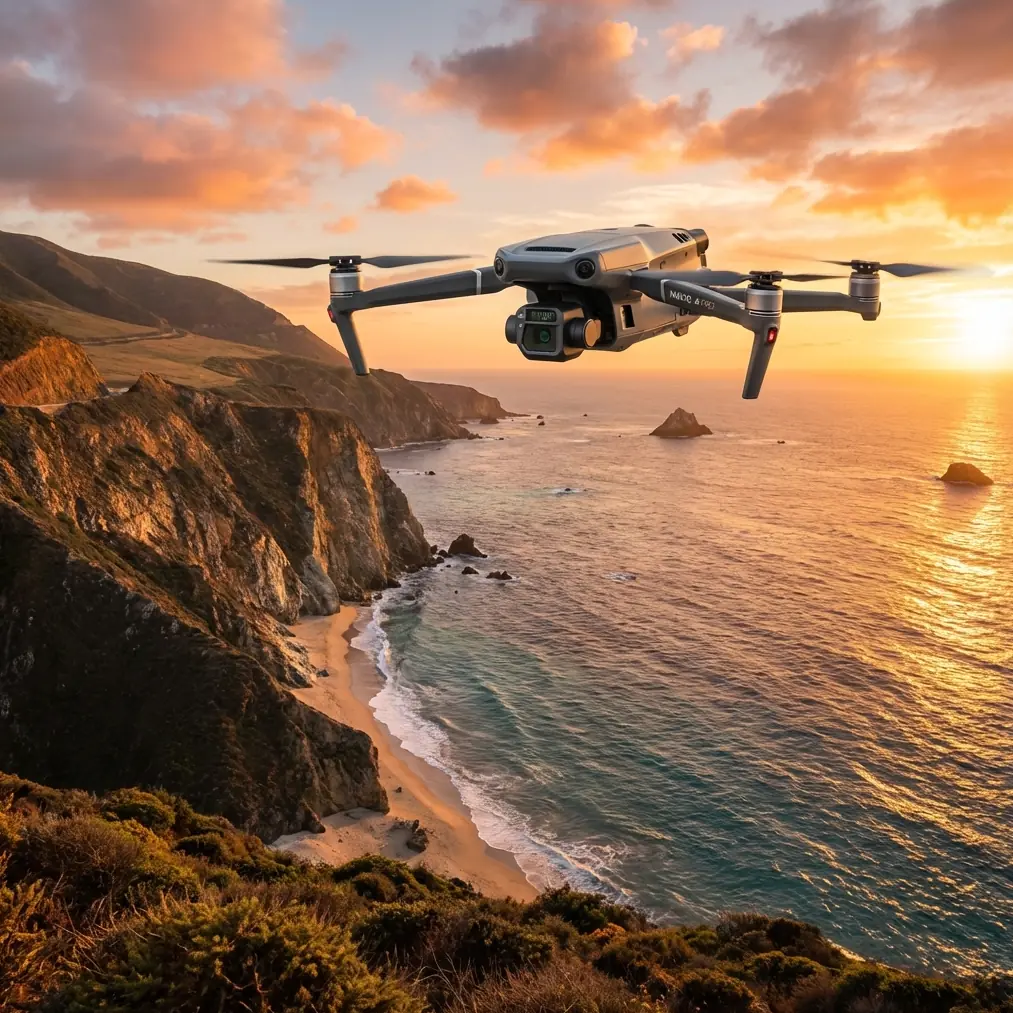
Mapping Dusty Forest Corridors with the Mavic 3T: A Field Case Study on Reliability, Thermal Context, and System Awareness
META: A field-based Mavic 3T case study for dusty forest mapping, covering thermal signature use, photogrammetry workflow, O3 transmission stability, AES-256 data handling, battery strategy, and why fuel-system design logic from classic aircraft engineering still matters.
I still remember a forestry corridor job that should have been simple on paper. The client needed an updated map of access tracks, canopy gaps, drainage cuts, and a handful of heat anomalies near equipment staging points after an unusually dry stretch. The environment was not dramatic in the cinematic sense. It was worse: powder-fine dust, broken terrain, weak visual contrast under midday light, and a field team that could not afford repeated launch-and-recover cycles just because the aircraft was fighting conditions instead of collecting data.
That project changed how I evaluate compact enterprise drones for forest work. The Mavic 3T did not solve the mission because it was new or because its spec sheet looked polished. It solved the mission because, in practice, it reduced friction in several small but critical ways at once. When you combine thermal context, photogrammetry discipline, stable transmission, and sane battery management, you get something more valuable than a feature list. You get fewer bad decisions in the field.
This article is about that shift.
Why dusty forest mapping is harder than many operators expect
People who do most of their flying over construction sites often underestimate forests. Trees break line of sight. Dust contaminates landing zones and gear handling. Ground control points can be harder to place and harder to see. Uniform canopy textures challenge reconstruction. And if your task includes thermal inspection alongside mapping, timing becomes everything.
In one section of the corridor, our RGB imagery alone was not enough. The roads looked similar, some bare-earth areas reflected light harshly, and portions of the undergrowth blended into the same tonal band. The thermal layer did not replace standard mapping. It gave us another decision layer. We could quickly identify equipment hotspots, recently used machinery zones, and thermal contrast around exposed ground and shaded boundaries. That matters when your goal is not just making an orthomosaic, but interpreting what changed and where field crews should inspect next.
The Mavic 3T fits that kind of mission well because its value is not limited to one payload style. It lets a forestry team move between visual documentation and thermal signature review without changing platforms or rebuilding the mission plan from scratch.
The lesson older aircraft design teaches modern drone operators
One of the more interesting reference threads behind this topic comes from traditional aircraft design literature, specifically helicopter system design sections dealing with fuel-system monitoring, control/display logic, and crashworthiness/fire considerations. The source material is fragmented, but several details stand out clearly: one section is devoted to fuel monitoring system design on page 977, and another addresses crash-resistant and fire-protection design for fuel systems on page 978. There is also a distinct section on system control and display on page 949.
At first glance, that seems far removed from a battery-powered Mavic 3T. It is not.
The operational significance is straightforward. Serious aircraft designers have always treated onboard energy management as more than a capacity number. They think in terms of monitoring, indication, failure awareness, and survivability. For drone crews working in dusty forest conditions, the same mindset applies even if the energy source is different.
On the Mavic 3T, battery handling is not just about flight time. It is about whether the aircraft gives the crew enough clarity to make sound go/no-go decisions under environmental stress. That is why hot-swap battery workflow matters in the field. Not because it sounds efficient, but because every unnecessary shutdown, reboot, or long turnaround invites contamination, delays, and missed light windows. In a dusty corridor operation, you want your transition between sorties to be quick, deliberate, and predictable.
The old helicopter-design logic also reinforces another point: system indications matter. A professional aircraft should not force the operator to guess. In drone terms, clear aircraft status, battery condition awareness, thermal payload state, link quality, and mission display logic all affect data quality. If the operator is mentally overloaded by the platform, mapping accuracy slips before anyone notices.
How the Mavic 3T helped on the ground, not just in the air
The Mavic 3T earned its keep for us in four practical ways.
1. It let us separate discovery from documentation
In forest mapping, thermal and RGB should not be treated as competing outputs. They answer different questions. We used thermal passes first to flag areas of unusual heat retention and machine activity, then aligned that information with photogrammetry missions designed for measurable mapping output.
This reduced wasted walking time for the ground team. Instead of inspecting every disturbed patch visually, we prioritized the ones with meaningful thermal contrast. In dry conditions, that kind of triage saves hours.
2. O3 transmission reduced uncertainty near tree cover transitions
Forest edges are deceptive. Signal conditions can change quickly when the aircraft moves from a cut line into partial canopy adjacency or behind subtle terrain undulations. A stable O3 transmission link does not eliminate planning discipline, but it does reduce the amount of “aircraft babysitting” the pilot must do.
That matters because mapping quality depends on mission consistency. If the operator keeps interrupting attention to manage an unstable link, overlap, spacing, and situational judgment can suffer. On our corridor job, link stability gave us smoother execution during route transitions and less temptation to overcompensate with awkward flight adjustments.
For teams considering more advanced workflows, including eventual BVLOS planning where regulations and approvals allow, communications reliability becomes even more central. I am not suggesting forest operators should casually extend operations beyond normal visual methods. I am saying the platform’s transmission performance is part of the trust equation, and trust changes how efficiently a crew works even within conservative operational limits.
3. Dust changed our battery strategy, and the platform supported it
Dusty missions punish sloppy habits. You cannot simply throw batteries around, set gear on open ground, and expect the day to remain efficient. We built a rotation around sheltered handling, minimal exposure during swaps, and immediate post-landing inspection of contact areas and landing surfaces.
This is where a hot-swap batteries mindset becomes operationally valuable. You want the aircraft back up quickly while preserving handling discipline. The less time you spend with systems exposed in blowing dust, the less likely you are to invite preventable interruptions later in the day.
Again, that links back to the aircraft design references. The old manuals’ emphasis on monitoring and system awareness is not a historical curiosity. It is a reminder that endurance is only useful if the crew can manage energy cleanly and confidently.
4. Secure data handling was easier to justify to the client
Forestry projects increasingly involve sensitive site information: road access points, stockpile areas, environmental features, and operational timelines. When we discussed data governance with the client, AES-256 support was not just a technical footnote. It helped frame the drone as a professional information-gathering tool rather than a casual imaging device.
That matters in commercial work. Clients do not always ask for encryption by name, but they do care whether survey data, thermal imagery, and route details are treated responsibly.
A practical forest workflow that worked with the Mavic 3T
Our field sequence was simple but strict.
We started with a short reconnaissance segment early, before the thermal environment flattened out. The goal was not to collect final map products. It was to understand the thermal signature distribution across exposed road sections, shaded cutbanks, and equipment zones.
Then we placed GCPs in the most visible clearings and corridor intersections we could access safely. In forests, GCP placement is often compromised by vegetation, shadow, and terrain. So the trick is not chasing ideal geometry on paper. It is placing enough well-documented control where the imagery will actually see it.
After that, we ran the primary photogrammetry flights with overlap and altitude selected for the corridor width, canopy interruptions, and desired ground resolution. In heavily repetitive scenes, consistency is king. The Mavic 3T’s practical advantage here was not exotic. It was that we could keep moving without changing aircraft or fragmenting the workflow.
Finally, we overlaid thermal observations with the map outputs to produce a more useful interpretation package. The client did not just receive a stitched image. They got a clearer shortlist of areas worth physical follow-up.
What I would do differently now
No platform makes forest work automatic. If I were repeating that mission today, I would refine three things.
First, I would schedule thermal collection even more aggressively around environmental timing. In dry forests, surface heat equalizes faster than many teams expect. The Mavic 3T can capture useful thermal context, but timing still determines whether the results are diagnostic or merely interesting.
Second, I would pre-plan dust control at the launch site with more discipline than most crews think necessary. A folding table, landing pad strategy, sealed battery staging, and clear handoff roles save more time than they cost.
Third, I would integrate client communication earlier around output types. Many non-specialists hear “thermal” and imagine a final map that answers every question. In reality, thermal signature data often works best as an interpretive layer paired with RGB mapping and field notes.
Why the reference material still matters for a modern Mavic 3T buyer or operator
The provided technical references are not drone marketing literature. They come from broader aircraft engineering handbooks, including sections on helicopter systems. Despite the rough extraction quality, two ideas are traceable and relevant.
One is the section on system control and display (page 949). In drone operations, this translates directly into cockpit clarity for the remote pilot: what you can see, what the aircraft is telling you, and how quickly you can act on that information. In dusty forest mapping, where attention is split between terrain, link status, mission geometry, and payload interpretation, clean system awareness is not a luxury.
The second is the cluster around fuel monitoring design (page 977) and crash/fire-related fuel system design (page 978). For the Mavic 3T, the direct analogy is energy governance and operational resilience. Different hardware, same engineering principle: your mission succeeds when the platform handles power status, alerts, and system behavior in a way that reduces ambiguity.
That is one reason the Mavic 3T stands out for real fieldwork. It is compact, but it behaves like a system meant for work, not just image capture.
A note for operators building repeatable forest programs
If your team is using the Mavic 3T for dusty woodland corridors, plantation roads, firebreak condition surveys, or infrastructure paths through tree cover, think beyond sensor excitement. Build around repeatability.
- Standardize launch-zone dust control.
- Define when thermal data is reconnaissance and when it is evidence.
- Use GCPs where visibility is realistic, not merely ideal.
- Keep RGB and thermal mission goals separate in your planning, even if the aircraft handles both.
- Treat transmission stability and encryption as operational infrastructure, not bonus features.
- Design battery handling as part of the mission, not as an afterthought.
That is how compact enterprise drones move from “useful” to “trusted.”
If you are comparing workflows or want to sanity-check a forest mapping setup before deployment, you can message our field team here and discuss the mission profile directly.
The real takeaway from that dusty corridor project
The Mavic 3T made the job easier because it reduced the number of compromises we had to accept simultaneously. It let us combine thermal context and photogrammetry on one platform. It gave us stable enough transmission performance to maintain focus in broken terrain. It supported a cleaner battery rhythm in dirty field conditions. And it fit into a professional data-handling conversation without awkward caveats.
That is the part many summaries miss. Good aircraft do not just add capability. They remove hesitation.
For forestry teams working in dust, uneven canopy, and ambiguous surface conditions, that difference is measurable. Not only in cleaner maps, but in better choices about where to fly, when to inspect, and how to use the data after landing.
Ready for your own Mavic 3T? Contact our team for expert consultation.