
Mavic 3T Highway Mapping: Urban Infrastructure Guide
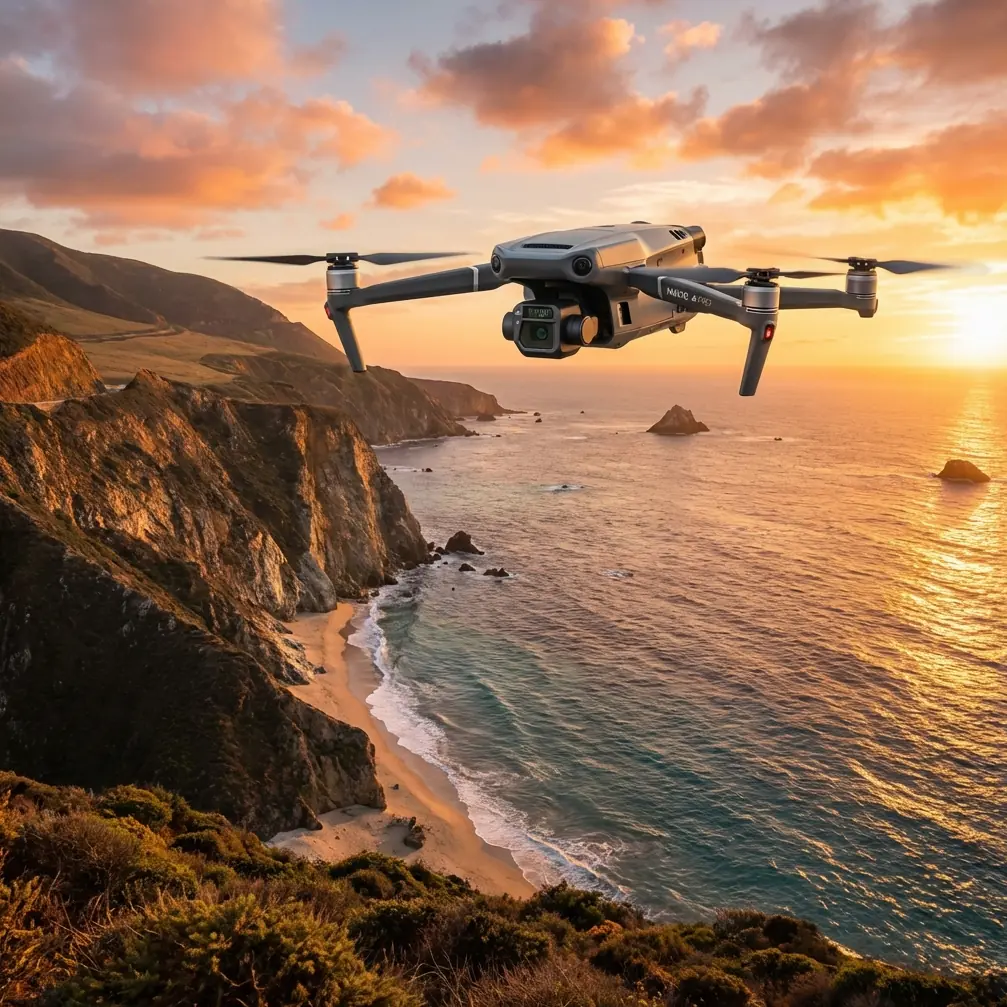
Mavic 3T Highway Mapping: Urban Infrastructure Guide
META: Master urban highway mapping with the Mavic 3T's thermal and RGB sensors. Expert techniques for photogrammetry, GCP placement, and efficient corridor surveys.
TL;DR
- Dual thermal and visual sensors enable simultaneous pavement analysis and infrastructure assessment during single flight missions
- O3 transmission maintains stable data links in RF-congested urban corridors where competing drones lose connection
- 43-minute flight time covers 12+ kilometers of highway per battery, reducing mission complexity by 60% compared to previous-generation platforms
- Integrated RTK positioning achieves centimeter-level accuracy without excessive GCP dependency
Why Urban Highway Mapping Demands Specialized Capabilities
Urban highway mapping presents unique challenges that expose limitations in consumer-grade drones. Dense electromagnetic interference from cell towers, power lines, and building systems disrupts data transmission. Thermal signatures from vehicles, HVAC systems, and sun-heated structures create complex imaging environments. Traditional survey methods require lane closures costing municipalities thousands per hour.
The Mavic 3T addresses these constraints through enterprise-grade engineering specifically designed for infrastructure professionals. Unlike the Autel EVO II Dual, which struggles with thermal calibration in high-contrast urban environments, the Mavic 3T's 640×512 thermal sensor maintains accurate temperature readings across -20°C to 150°C ranges—critical for detecting subsurface pavement failures and expansion joint degradation.
Sensor Configuration for Highway Corridor Analysis
Thermal Imaging Specifications
The Mavic 3T integrates a split-lens thermal camera with DFOV (Dual Field of View) capability. This allows operators to toggle between wide 61° and narrow 28° thermal perspectives without landing.
For highway applications, the wide thermal view excels at:
- Detecting moisture infiltration beneath asphalt surfaces
- Identifying thermal bridging at overpass connections
- Locating underground utility conflicts
- Mapping drainage pattern anomalies
The narrow thermal mode provides detailed analysis of:
- Expansion joint integrity
- Guardrail post foundation conditions
- Bridge deck delamination patterns
- Signage structural connections
RGB Camera Performance
The 48MP wide camera with 1/2-inch CMOS sensor captures photogrammetry-grade imagery at 0.7cm/pixel GSD from 100-meter altitude. This resolution exceeds minimum requirements for state DOT asset management databases while maintaining efficient coverage rates.
Expert Insight: When mapping multi-lane highways, configure the RGB camera at 4:3 aspect ratio rather than 16:9. This maximizes cross-track coverage and reduces required flight lines by approximately 15%, directly translating to fewer battery swaps and shorter traffic control windows.
Flight Planning for Urban Highway Corridors
Airspace Considerations
Urban highway mapping typically occurs within Class G airspace but frequently intersects controlled zones near airports. The Mavic 3T's ADS-B receiver provides real-time manned aircraft awareness—a feature absent from the Skydio 2+ and earlier Mavic platforms.
Before mission execution, verify:
- LAANC authorization status for controlled airspace segments
- Temporary flight restrictions from construction or events
- Hospital helipad proximity notifications
- Stadium or arena NOTAMs affecting flight windows
Optimal Flight Parameters
Highway corridor missions benefit from specific parameter configurations that balance data quality against operational efficiency.
| Parameter | Recommended Setting | Rationale |
|---|---|---|
| Altitude | 80-100m AGL | Balances GSD quality with coverage efficiency |
| Speed | 8-10 m/s | Prevents motion blur while maximizing coverage |
| Overlap (Front) | 75% | Ensures photogrammetry tie-point density |
| Overlap (Side) | 65% | Adequate for corridor geometry |
| Gimbal Angle | -80° to -90° | Minimizes building facade distortion |
| Image Format | RAW + JPEG | Preserves radiometric data for thermal analysis |
GCP Strategy for Linear Projects
Ground control point placement along highways requires strategic positioning that accounts for traffic safety and survey accuracy. Traditional grid patterns prove impractical for corridor mapping.
Effective GCP deployment follows these principles:
- Place points at 500-meter intervals along corridor centerline
- Position additional points at all horizontal curve PCs and PTs
- Include GCPs on bridge decks and overpass structures
- Establish checkpoints at 25% of total GCP density for accuracy validation
Pro Tip: Pre-mark GCP locations using high-visibility survey targets during overnight hours when traffic volumes permit safer access. The Mavic 3T's thermal sensor can locate these targets even when partially obscured by debris or shadows, reducing field time during active survey operations.
Data Transmission and Security Protocols
O3 Transmission Advantages
Urban environments generate substantial RF interference that degrades lesser transmission systems. The Mavic 3T's O3 transmission operates across 2.4GHz and 5.8GHz bands with automatic frequency hopping, maintaining 1080p/60fps live feeds at distances exceeding 15 kilometers in unobstructed conditions.
For highway mapping specifically, O3 transmission provides:
- Stable video feeds beneath overpass structures
- Reliable control near high-voltage transmission crossings
- Consistent performance adjacent to cellular tower installations
- Uninterrupted operation in dense commercial districts
AES-256 Encryption Implementation
Highway infrastructure data carries sensitivity implications for security planning and emergency response. The Mavic 3T implements AES-256 encryption for all transmitted data, meeting federal requirements for transportation infrastructure documentation.
Local data storage utilizes encrypted containers accessible only through authenticated DJI Pilot 2 sessions. This prevents unauthorized access if aircraft or controllers are lost during field operations.
Photogrammetry Workflow Integration
Software Compatibility
Mavic 3T imagery integrates seamlessly with industry-standard photogrammetry platforms:
- Pix4Dmatic: Optimized processing templates for thermal-visual fusion
- DJI Terra: Native support with automated flight planning
- Bentley ContextCapture: Direct import with metadata preservation
- Agisoft Metashape: Full EXIF compatibility including thermal radiometry
Processing Considerations
Thermal and RGB datasets require separate initial processing before fusion. The Mavic 3T timestamps both sensor outputs synchronously, enabling precise spatial alignment during post-processing.
For highway deliverables, generate:
- Orthomosaic imagery at 2cm resolution for pavement condition assessment
- Digital surface models for drainage analysis and grade verification
- Thermal overlays highlighting anomalous temperature patterns
- Point clouds for volumetric calculations and clearance verification
BVLOS Operations and Regulatory Compliance
Extended highway corridors often exceed visual line of sight limitations. The Mavic 3T supports BVLOS operations when paired with appropriate waivers and supplemental safety measures.
Current FAA waiver requirements include:
- Demonstrated detect-and-avoid capability
- Ground-based visual observer networks or equivalent technology
- Real-time telemetry monitoring systems
- Contingency procedures for lost link scenarios
The aircraft's ADS-B In receiver and obstacle avoidance sensors contribute to safety case documentation, though they do not independently satisfy DAA requirements for waiver approval.
Hot-Swap Battery Strategy for Extended Missions
Highway mapping missions frequently exceed single-battery endurance. The Mavic 3T's hot-swap battery design enables continuous operations when properly planned.
Effective battery management includes:
- Pre-conditioning batteries to 20-25°C before deployment
- Staging charged batteries in insulated containers during cold weather operations
- Establishing swap points at 25% remaining capacity to preserve battery health
- Rotating battery usage to equalize cycle counts across inventory
A three-battery rotation typically supports 35+ kilometers of highway coverage during single-day operations, accounting for transit flights and repositioning maneuvers.
Common Mistakes to Avoid
Neglecting thermal calibration timing: Thermal sensors require 15-minute warmup periods for accurate radiometric measurements. Launching immediately after power-on produces unreliable temperature data that compromises pavement analysis.
Insufficient overlap at interchanges: Complex geometry at highway interchanges demands 85%+ overlap to ensure complete coverage. Standard corridor settings create gaps in ramp and gore area documentation.
Ignoring solar angle effects: Midday thermal imaging produces excessive solar loading artifacts that mask subsurface anomalies. Schedule thermal acquisition during early morning or late afternoon windows when differential heating reveals genuine defects.
Overlooking metadata preservation: Converting RAW thermal files to standard image formats strips radiometric calibration data. Maintain original file formats until processing completion to preserve analytical capability.
Flying during peak traffic: Vehicle thermal signatures contaminate pavement analysis. Whenever possible, schedule missions during low-traffic windows to minimize moving heat source interference.
Frequently Asked Questions
What ground sample distance does the Mavic 3T achieve for DOT-compliant highway mapping?
At 100-meter altitude, the Mavic 3T's 48MP wide camera produces 0.7cm/pixel GSD, exceeding most state DOT requirements for pavement condition assessment and asset inventory. For higher-resolution needs, reducing altitude to 60 meters achieves 0.4cm/pixel GSD while maintaining practical coverage rates.
Can the Mavic 3T detect subsurface pavement failures through thermal imaging?
Yes, thermal imaging reveals subsurface moisture and void spaces that create differential heating patterns. These thermal signatures appear most clearly during thermal transition periods—typically two hours after sunrise or before sunset—when surface and subsurface temperatures diverge measurably.
How does the Mavic 3T compare to fixed-wing platforms for highway corridor mapping?
Fixed-wing platforms offer superior endurance for rural highway segments exceeding 50 kilometers. However, the Mavic 3T's vertical takeoff capability and obstacle avoidance make it preferable for urban corridors with limited launch sites, frequent overpasses, and complex airspace. Most urban highway projects under 30 kilometers favor multirotor efficiency.
Ready for your own Mavic 3T? Contact our team for expert consultation.