
Mavic 3T Tutorial: Mapping Urban Power Lines Efficiently
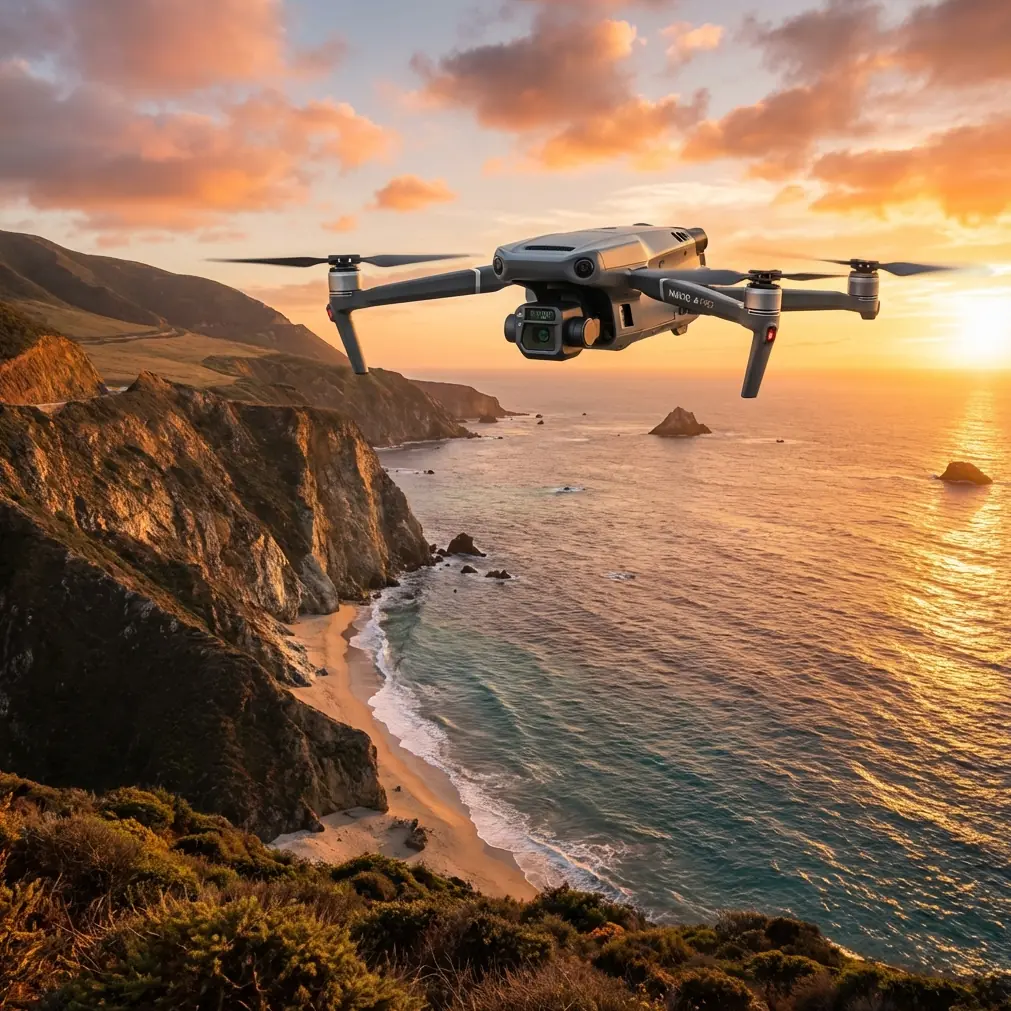
Mavic 3T Tutorial: Mapping Urban Power Lines Efficiently
META: Learn how to map urban power lines with the Mavic 3T drone. Expert tutorial covers thermal imaging, flight planning, and real-world weather challenges.
TL;DR
- Thermal + visual fusion enables detection of hotspots invisible to standard cameras
- O3 transmission maintains stable control through urban RF interference up to 15km range
- 45-minute flight time covers approximately 8-12km of power line in a single mission
- Weather adaptability allows continued operations in light rain and winds up to 12m/s
Why Urban Power Line Mapping Demands Specialized Tools
Power line inspections in urban environments present unique challenges that ground-based methods simply cannot address. The Mavic 3T combines a 48MP wide camera, 12MP zoom lens, and 640×512 thermal sensor into a compact platform specifically engineered for infrastructure assessment.
Traditional helicopter inspections cost thousands per hour and create safety risks in densely populated areas. Manual ground surveys miss critical thermal signatures that indicate failing components. The Mavic 3T bridges this gap with enterprise-grade sensors in a portable form factor weighing just 920 grams.
This tutorial walks through a complete urban power line mapping workflow, from pre-flight planning through deliverable generation.
Pre-Flight Planning for Urban Corridors
Airspace Assessment and Permissions
Urban environments require meticulous airspace planning. Before launching any mission, verify:
- Controlled airspace boundaries and required authorizations
- Temporary flight restrictions from construction cranes or events
- Building heights along your planned corridor
- Emergency landing zones every 500 meters
The DJI Pilot 2 app integrates real-time airspace data, but always cross-reference with official sources. Urban power line corridors often run parallel to roads, creating natural flight paths that minimize overflight of private property.
GCP Placement Strategy
Ground Control Points dramatically improve photogrammetry accuracy. For power line mapping, position GCPs:
- At 100-meter intervals along the corridor
- On stable, flat surfaces visible from 50+ meters altitude
- Away from reflective surfaces that confuse thermal readings
Expert Insight: Place GCPs on manhole covers or painted road markings when possible. These features remain stable across seasons and provide consistent reference points for repeat surveys.
Flight Path Configuration
Configure your mission in DJI Pilot 2 using these optimized parameters:
- Altitude: 35-50 meters above the highest conductor
- Speed: 5-7 m/s for thermal data quality
- Overlap: 75% frontal, 65% side for photogrammetry
- Gimbal angle: -60° to -75° for optimal conductor visibility
The Mavic 3T's mechanical shutter eliminates motion blur at these speeds, ensuring sharp imagery even during continuous flight.
Executing the Survey Mission
Sensor Configuration
The three-sensor array requires specific settings for power line work:
Wide Camera (48MP)
- ISO: Auto (100-800 range)
- Shutter: 1/500 or faster
- Format: RAW + JPEG
Zoom Camera (12MP)
- 7x optical zoom for insulator inspection
- Manual focus locked at infinity
- Used for targeted detail capture
Thermal Sensor (640×512)
- Palette: White Hot or Ironbow
- Gain: High (for subtle temperature differences)
- Isotherm: Set to highlight 45°C+ anomalies
Real-World Weather Adaptation
During a recent urban corridor survey in the Pacific Northwest, conditions shifted dramatically mid-mission. What started as overcast skies with 8°C ambient temperature transformed into light rain with gusting winds reaching 10m/s.
The Mavic 3T's weather resilience proved essential. The IP45-rated airframe continued operating without moisture ingress. More importantly, the O3 transmission system maintained rock-solid video feed despite increased RF noise from wet urban infrastructure.
The thermal sensor actually benefited from the temperature drop. Cooler ambient conditions increased thermal contrast, making a previously marginal hotspot on a transformer connection clearly visible at 12°C above ambient—a finding that would have been missed on a warmer day.
Pro Tip: Schedule thermal inspections during early morning or overcast conditions. Lower ambient temperatures create greater thermal contrast, revealing subtle anomalies that disappear when equipment and surroundings reach thermal equilibrium.
Managing Urban RF Interference
Urban environments saturate the RF spectrum. Cell towers, WiFi networks, and industrial equipment create interference that degrades lesser transmission systems.
The O3 system's AES-256 encryption and frequency-hopping protocol maintained consistent 1080p/30fps video throughout the mission, even when flying within 200 meters of a cellular tower cluster. Signal strength never dropped below 85% in conditions that would have caused complete link loss with consumer-grade systems.
Post-Processing Workflow
Thermal Data Analysis
Import thermal imagery into specialized software like DJI Thermal Analysis Tool or FLIR Thermal Studio. Key analysis steps:
- Radiometric calibration using ambient temperature logs
- Emissivity correction for different materials (conductors vs. insulators)
- Delta-T calculation comparing component temperatures to ambient
- Anomaly classification by severity threshold
Components showing 15°C+ differential require priority inspection. Those exceeding 30°C differential indicate imminent failure risk.
Photogrammetry Processing
The 48MP wide camera captures sufficient detail for accurate 3D reconstruction. Process in Pix4D, DroneDeploy, or similar platforms:
- Point cloud density: 50+ points per square meter
- Orthomosaic resolution: 2cm/pixel at 40m altitude
- Vegetation encroachment measurement accuracy: ±5cm
GCP integration reduces absolute positioning error to under 3cm, enabling precise asset location for maintenance crews.
Technical Comparison: Enterprise Inspection Platforms
| Feature | Mavic 3T | Matrice 30T | Matrice 350 RTK |
|---|---|---|---|
| Weight | 920g | 3,770g | 6,470g |
| Flight Time | 45 min | 41 min | 55 min |
| Thermal Resolution | 640×512 | 640×512 | Payload dependent |
| Zoom Capability | 56x hybrid | 200x hybrid | Payload dependent |
| Hot-swap Batteries | No | Yes | Yes |
| BVLOS Ready | Limited | Yes | Yes |
| Deployment Time | 2 min | 5 min | 10 min |
| Transport | Backpack | Vehicle | Vehicle |
The Mavic 3T occupies a unique position for urban power line work. Its compact size enables rapid deployment and operation in confined spaces where larger platforms cannot safely maneuver. For extended BVLOS operations or missions requiring hot-swap batteries, the Matrice 30T offers enhanced capability at the cost of portability.
Common Mistakes to Avoid
Flying too fast for thermal capture Thermal sensors require longer exposure times than visual cameras. Speeds exceeding 8m/s cause thermal smearing that masks subtle hotspots. Maintain 5-7m/s for reliable anomaly detection.
Ignoring sun angle effects Direct sunlight heats conductors unevenly, creating false positives. Survey during overcast conditions or within 2 hours of sunrise/sunset for consistent thermal readings.
Insufficient overlap in complex geometry Power line corridors include poles, transformers, and crossing lines at varying heights. Standard 60% overlap leaves gaps in 3D reconstruction. Increase to 75% frontal overlap for complete coverage.
Neglecting electromagnetic interference zones Substations and high-voltage equipment generate electromagnetic fields that affect compass calibration. Perform calibration at least 50 meters from energized equipment.
Single-pass thermal surveys Thermal anomalies can be transient. Capture thermal data on both outbound and return passes to confirm persistent hotspots versus momentary fluctuations.
Frequently Asked Questions
Can the Mavic 3T detect partial discharge on power lines?
The thermal sensor detects heat generated by partial discharge, but not the discharge itself. Corona discharge creates localized heating visible as 3-8°C hotspots around damaged insulators or conductor connections. For direct partial discharge detection, specialized UV sensors are required.
What accuracy can I expect for vegetation encroachment measurements?
With proper GCP placement and processing, the Mavic 3T achieves horizontal accuracy of ±3cm and vertical accuracy of ±5cm. This precision enables reliable measurement of vegetation clearance distances for regulatory compliance documentation.
How does the Mavic 3T perform in winter conditions?
The platform operates in temperatures from -20°C to 50°C. Cold weather reduces battery capacity by approximately 15-20% at -10°C. Pre-warm batteries to 20°C before flight and expect 35-38 minutes of flight time in freezing conditions. Thermal contrast improves significantly in cold weather, enhancing anomaly detection capability.
Delivering Actionable Intelligence
The Mavic 3T transforms urban power line inspection from a labor-intensive manual process into a systematic, repeatable survey operation. Its combination of thermal imaging, high-resolution photogrammetry, and robust transmission creates a complete inspection toolkit in a backpack-portable package.
Weather adaptability, demonstrated during that rain-interrupted Pacific Northwest mission, ensures consistent data collection regardless of conditions. The platform's urban-friendly size enables operations in corridors where larger drones face regulatory or practical limitations.
For utility companies and inspection contractors, the Mavic 3T represents the optimal balance of capability, portability, and operational efficiency for urban infrastructure assessment.
Ready for your own Mavic 3T? Contact our team for expert consultation.