
Mavic 3T in Urban Power-Line Mapping: A Field Report
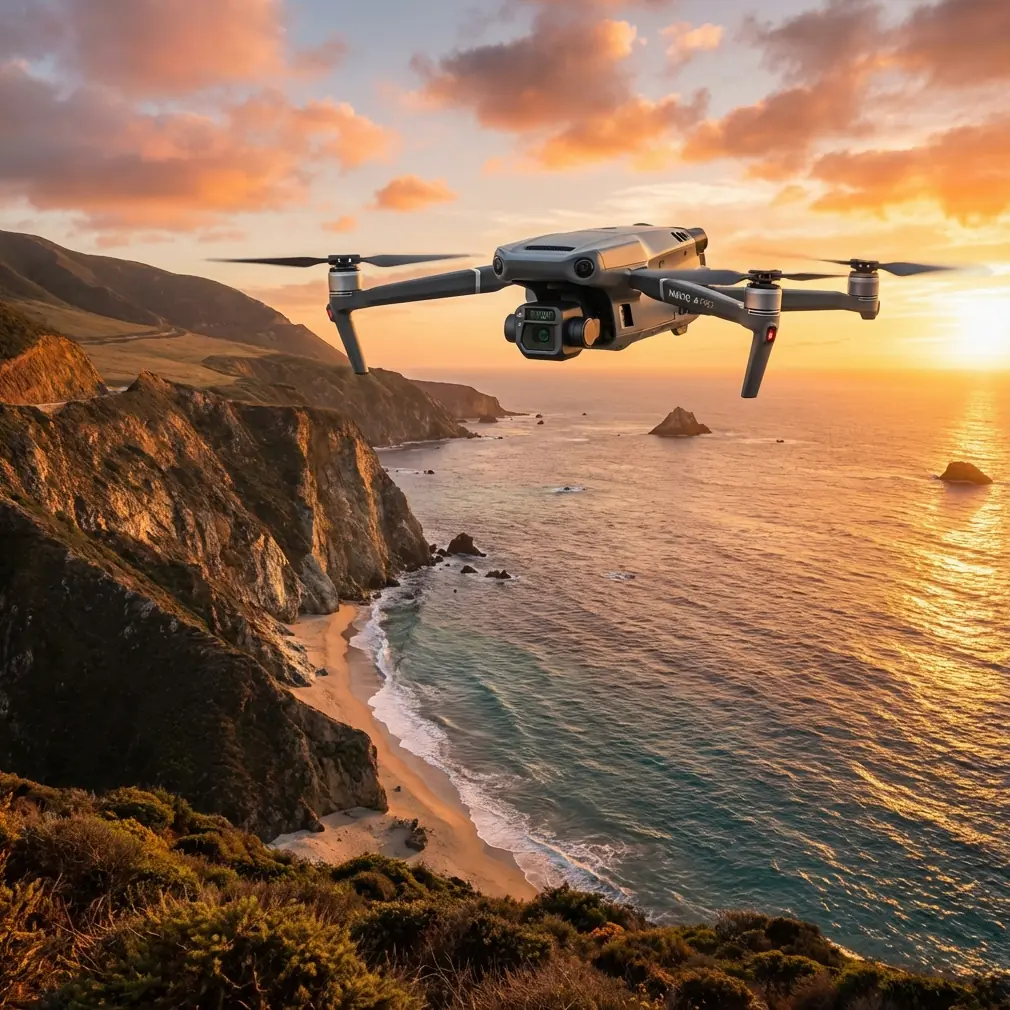
Mavic 3T in Urban Power-Line Mapping: A Field Report on What Actually Saves Time
META: Expert field report on using the DJI Mavic 3T for urban power-line mapping, with practical notes on antenna positioning, thermal workflows, transmission reliability, and post-processing efficiency.
Urban power-line mapping sounds straightforward until you are standing in a narrow street canyon with reflective glass on one side, trees on the other, and a signal path that behaves nothing like the open-field test videos. The Mavic 3T is often discussed as a thermal inspection tool first, but in real city work its value is broader: it can compress field collection, accelerate image review, and reduce the amount of repeat flying caused by weak planning or poor link discipline.
I’ve been looking at the Mavic 3T through that lens rather than as a generic spec sheet exercise. For teams mapping urban distribution lines, rooftop service corridors, transformer surroundings, and pole-top assets, the aircraft’s real advantage is not any single sensor headline. It is the way a compact platform can collect visible and thermal context in one pass while keeping the workflow tight enough that the office does not become the bottleneck.
That last point matters more than many operators admit.
The hidden cost in urban mapping is often not the flight
In many organizations, field capture is only half the job. The drag comes after landing: importing files one by one, adjusting color, sorting usable frames, preparing deliverables, and trying to reconcile thermal findings with visible imagery and map outputs. One recent report on an AI-based image workflow described a fully integrated process covering capture, retouching, layout, image selection, and delivery. Its headline claim was dramatic: work that traditionally took about 3 days could be compressed to about 3 minutes through batch automation.
Even if you discount that number heavily, the operational message is solid. Batch handling changes the economics of drone inspection deliverables.
For Mavic 3T users in urban power-line mapping, this matters because city missions generate messy datasets. You get angled views from constrained takeoff points, mixed lighting from building shadows, repetitive pole inspections, and plenty of imagery that needs quick normalization before it can be handed to asset managers or engineering teams. If your post pipeline still depends on manually tuning every frame, the drone is not your limiting factor. Your desktop is.
A compact aircraft like the Mavic 3T becomes far more valuable when paired with an integrated processing approach that can bulk-sort, batch-correct, and organize outputs by asset or route segment. The point is not cosmetic perfection. The point is faster decision-making. When a utility contractor needs to know which spans deserve a second look, or whether a thermal anomaly on a connector corresponds to a visible hardware issue, fast image triage beats artisanal editing every time.
Why the Mavic 3T fits the urban grid better than larger platforms
In city power-line work, the challenge is usually not raw distance. It is geometry. You are weaving around facades, dealing with partial GNSS masking, and maintaining line of sight in environments where the route bends around blocks instead of running across a valley.
That is where the Mavic 3T’s portability and rapid deployment become practical strengths. You can move launch points quickly, reposition without a truck roll, and collect supplementary thermal views when the original mapping plan meets reality. For dense urban corridors, that matters more than broad claims about maximum endurance.
The inclusion of thermal capability also changes how you plan a mapping mission. Standard photogrammetry seeks overlap, consistency, and clean geometry. Thermal inspection seeks contrast, emissivity awareness, and timing. In urban power-line work, those two goals often collide. Midday may be decent for visibility in some alleys but poor for thermal contrast on certain components. Early morning may improve thermal signature interpretation but create deep shadows for visual reconstruction.
The Mavic 3T gives teams room to make tradeoffs intelligently. You may not always produce survey-grade photogrammetry from every urban asset corridor with the same ease as a dedicated mapping platform, but combining thermal context with visual capture is often the more useful outcome for maintenance planning.
Thermal signature is only useful if the collection discipline is good
A lot of pilots assume thermal tells the story on its own. It does not. In urban power-line environments, heat sources stack on top of each other: HVAC exhaust, sun-loaded walls, vehicle roofs, asphalt, and electrical infrastructure. Without disciplined capture, thermal data can mislead as easily as it can help.
This is where route planning, consistent standoff distance, and repeatable viewing angles matter. If you are documenting pole-top transformers, junctions, or service drop connections, a comparable angle across assets makes anomalies easier to evaluate later. The Mavic 3T is especially useful here because you can pair thermal observations with immediate visible confirmation instead of guessing what structural element produced the hotspot.
That dual-context approach also reduces unnecessary follow-up visits. A suspicious thermal pattern without visible reference can trigger expensive reinspection. A thermal pattern aligned with clear visible hardware context can move the job directly into maintenance review.
Antenna positioning advice for maximum range in urban corridors
This is the simplest field habit that gets ignored most often.
If you want the cleanest possible O3 transmission performance in urban environments, do not point the controller antennas directly at the aircraft like laser pointers. Position the controller so the broad faces of the antennas are oriented toward the drone’s flight path. In practical terms, think about presenting the flat side of the signal pattern to the aircraft rather than the tip.
Why this matters in urban mapping:
- Buildings cause reflections and partial blockage.
- As the drone moves laterally down a street or behind tree cover, the link margin can shrink quickly.
- A poor antenna angle can make a marginal route unstable even when the aircraft is not far away.
I tell crews to check antenna posture every time the route changes direction. If the aircraft turns a corner around a building line, the pilot should not stay frozen in the original stance. Rotate your body. Reframe the controller orientation. Preserve the best signal plane.
This is not theory. On urban utility jobs, range problems are often really alignment problems. Operators blame interference when the more immediate issue is body shielding, bad antenna orientation, or launching from a low position that lets parked vehicles and roadside structures eat the signal path.
If your team is building urban BVLOS readiness procedures for future regulatory pathways, disciplined antenna technique under visual line of sight is still foundational. Good habits scale. Sloppy ones do too.
O3 transmission and AES-256 matter more in city work than in open land
Urban infrastructure mapping is a data problem as much as a flight problem. You are often documenting critical civilian assets, rooftop routes, easements, substations at the edge of neighborhoods, or service networks tied to commercial buildings. Link stability matters because interrupted video and telemetry can force repeats. Data security matters because those files may sit inside workflows that involve contractors, utility owners, and engineering reviewers.
That is why the Mavic 3T’s O3 transmission and AES-256 security features are not just marketing shorthand. Operationally, O3 helps preserve situational awareness when the route includes obstructions, while AES-256 contributes to stronger handling of sensitive inspection data in transit and storage workflows. For commercial operators serving utilities or infrastructure owners, that combination supports both field continuity and client confidence.
Neither feature removes the need for disciplined mission planning, of course. But together they fit the urban utility environment better than many people realize.
Where photogrammetry and GCPs still matter
Some readers approach the Mavic 3T expecting a pure inspection aircraft; others try to push it into a full mapping role on every project. The smarter approach is selective integration.
If the objective is asset inventory, clearance context, corridor documentation, or change tracking, the visible imagery can support lightweight photogrammetric outputs—especially when paired with carefully placed GCPs where access allows. In urban areas, though, GCP planning is not trivial. Pavement traffic, pedestrian movement, narrow work windows, and poor marker visibility can all reduce their usefulness.
That means you should decide early whether the mission is:
- thermal-first with supporting visual evidence,
- visual mapping with thermal validation, or
- a hybrid deliverable where moderate geometric accuracy is enough for planning.
The Mavic 3T performs best when the mission objective is honest. Trying to force every city power-line job into a single survey template usually creates more office cleanup than field value.
Materials, weathering, and why infrastructure surfaces complicate interpretation
One of the more overlooked realities in aerial inspection is that surfaces age differently, and coatings change what you see. Reference material from an aircraft design handbook highlights how protective coating systems vary by part location and operating environment. For example, certain external component coatings are described as having strong adhesion, good protective performance, and durability against weathering, while some systems are suitable for long-term use at 150C. Another section notes composite materials are increasingly used because of low density and high strength.
Why bring that into a discussion about urban power-line mapping with a Mavic 3T?
Because surface condition alters both visible and thermal interpretation. Protective finishes, weathered coatings, reflective paints, and mixed materials can change apparent texture in RGB imagery and influence how heat presents across fittings, housings, or enclosures. If you inspect urban electrical assets mounted on buildings, near industrial rooftops, or adjacent to mixed construction materials, not every hot-looking or dull-looking area means the same thing. Material system and coating history matter.
That same design handbook emphasizes coating adhesion, resistance to environmental exposure, and suitability for internal versus external parts. Translate that to field practice and the message is straightforward: do not evaluate thermal or visual anomalies in isolation. Compare component type, material class, environmental exposure, and surrounding surfaces before assigning significance.
Structural thinking helps even when you are not designing aircraft
Another engineering reference on load, strength, and stiffness discusses failure criteria in composite materials, including the idea that when any relevant stress component reaches a limiting value, the material is considered failed. For inspection teams, the operational lesson is not to start doing structural calculations from the sidewalk. It is to respect thresholds.
In other words, small visual changes are not always harmless just because the asset is still functioning. A cracked cover, heat-affected fitting, or deformed support member may indicate that one local stress state is already approaching an unacceptable limit, even if the overall system has not obviously failed. The Mavic 3T is valuable in these cases because it lets you pair thermal irregularity with visual form change, helping maintenance teams prioritize what deserves hands-on verification.
That threshold mindset is useful for urban mapping too. Do not wait for a corridor dataset to become unusable before changing your process. If glare, weak overlap, or unstable link quality repeatedly show up in the same route type, treat that as a workflow limit and redesign the mission profile.
A better field workflow for Mavic 3T urban jobs
The crews getting the best results with the Mavic 3T are not necessarily flying longer. They are closing the loop faster.
A strong urban power-line workflow usually looks like this:
- Predefine whether the job is inspection-led, mapping-led, or hybrid.
- Schedule around thermal conditions, not just traffic windows.
- Use disciplined antenna orientation throughout route changes.
- Capture thermal and visible views with repeatable geometry.
- Mark segments that may need GCP support instead of forcing full control across the entire route.
- Run batch post-processing immediately after collection so weak sets are identified the same day.
That last point returns us to the AI workflow story. If software can automate image selection, retouching, layout, and delivery in a single chain, then the Mavic 3T’s value rises sharply in contractor environments where turnaround speed matters. Urban utility clients rarely reward elegant raw data storage. They reward clear outputs, fewer revisits, and timely decisions.
If your team is refining exactly that kind of workflow, this practical Mavic 3T discussion channel is a sensible place to compare notes on field setup and data handling.
What I would tell a new urban utility operator
Do not treat the Mavic 3T as only a thermal drone. Do not treat it as only a mapper either.
For urban power-line work, its strength is convergence: thermal signature, visible context, compact deployment, secure transmission, and an output pipeline that can be made dramatically faster if you stop editing image by image. The article claiming a jump from 3 days to 3 minutes is obviously extreme on its face, but the direction is right. Batch intelligence is no longer optional for teams scaling drone deliverables.
Pair that with sound field habits—especially antenna positioning for O3 link quality—and the Mavic 3T becomes much more than a convenient airframe. It becomes a practical instrument for reducing uncertainty in crowded urban infrastructure jobs.
That is what matters in the field. Not abstract capability. Useful throughput.
Ready for your own Mavic 3T? Contact our team for expert consultation.