
Mavic 3T for Coastal Solar Farm Mapping: A Practical Field
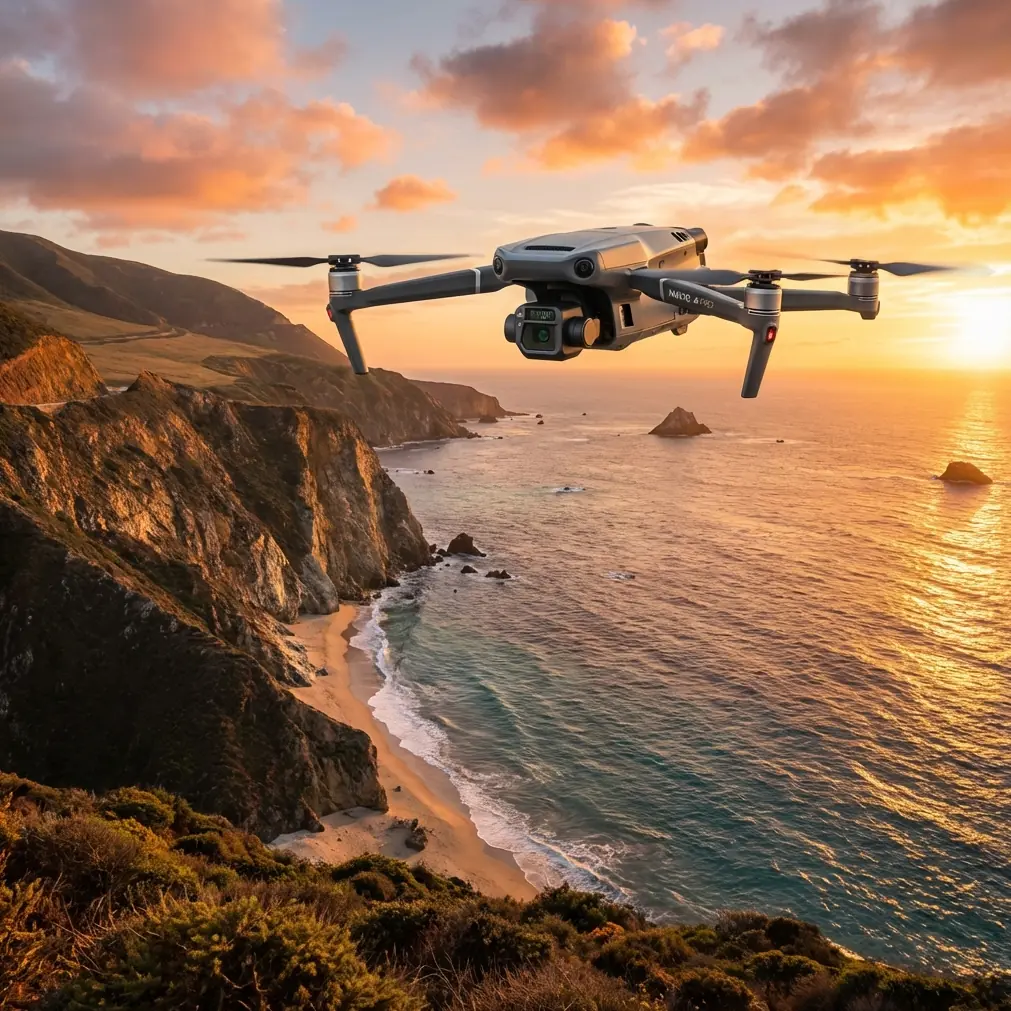
Mavic 3T for Coastal Solar Farm Mapping: A Practical Field Method That Respects Fatigue, Salt, and Signal Discipline
META: Expert how-to for using DJI Mavic 3T on coastal solar farm mapping, with thermal workflow, antenna positioning, salt exposure precautions, mission segment planning, and reliability-focused field practices.
Coastal solar farms look simple from the air until you actually have to map one well.
Rows are repetitive. Reflections are harsh. Wind shifts quickly. Salt hangs in the air even on days that seem clean. And when you are working with a Mavic 3T, the challenge is not just collecting pretty orthomosaics or thermal images. The real job is building a repeatable mission routine that protects data quality and aircraft reliability over many flights.
I approach this kind of work the same way I approach any professional UAV program: not as a single flight, but as a sequence of repeated load events, environmental exposures, and maintenance decisions. That framing matters more than most pilots realize.
Two ideas from classical aircraft engineering are especially useful here. First, mission activity should be broken into distinct segments—takeoff, climb, maneuver, descent, landing—rather than treated as one undifferentiated flight. Second, rare high-load events and frequent low-level cycles do not affect fatigue and service life in the same way. In one aircraft design reference, engineers explicitly warn that mishandling rare high-load events can distort life estimates, while excessive conservatism can create expensive maintenance schedules. That logic translates directly to drone operations on coastal solar sites: your airframe and gimbal do not “experience” a 22-minute inspection as one thing. They experience repeated transitions, turns, braking inputs, gust responses, ascents over inverter blocks, and landings on uneven surfaces.
If you want better maps and fewer avoidable repairs, build your Mavic 3T workflow around that reality.
Start by designing the mission in segments, not minutes
Many operators still plan by battery time alone. That is too crude for a coastal solar farm.
A better method is to define the mission as a chain of predictable segments:
- takeoff and initial climb
- transit to first array block
- photogrammetry passes
- thermal verification passes
- edge inspections around combiner boxes, transformers, or drainage areas
- return transit
- landing and turnaround
This sounds basic, but it changes how you fly. Segment planning helps you control aircraft stress, battery usage, image consistency, and pilot workload.
Why it matters operationally:
- Takeoff and landing are usually the highest-risk moments for dust, salt spray, and abrupt control input.
- Photogrammetry passes reward smooth, repeatable speed and height.
- Thermal passes often need different timing, sun angle awareness, and viewing geometry than visible-light mapping.
- Inspection detours can quietly introduce aggressive braking and yaw corrections that degrade both data consistency and long-term component wear.
That old aircraft handbook language about a “mission segment–mission spectrum” is surprisingly relevant here. When each mission segment is identified in advance, you can standardize the load and control pattern inside it. For a Mavic 3T mapping solar assets, that means fewer impulsive stick inputs, more consistent overlap, and cleaner thermal interpretation.
Why coastal conditions change the way you use a Mavic 3T
A coastal solar farm is not just “a solar farm near the sea.” It is a corrosion environment.
Salt exposure is cumulative, and it affects more than metal fasteners. It influences connectors, battery contacts, exposed fittings, landing surfaces, and the subtle reliability of repeated field handling. One reference standard for aircraft hose testing uses a sodium chloride solution around 35 g/L, followed by repeated immersion and drying cycles, specifically to expose weakness under corrosive conditions. The point is not that your Mavic 3T should be tested like an aircraft hose assembly. The point is that repeated salt exposure plus drying cycles is a known mechanism for hidden degradation.
In practical UAV terms, this changes your field routine:
- Avoid staging the aircraft on wet ground or salt-coated service roads.
- Keep batteries capped and isolated until use.
- Wipe landing gear and lower fuselage after each coastal session, not just at the end of the week.
- Inspect charging contacts and external seams with the same discipline you give props.
- Use transport cases that do not trap damp air after early-morning thermal work.
This is also why hot-swap battery discipline matters. Quick battery changes are useful on large solar sites, but every battery event is also a handling event. More battery turns mean more opportunities for salt contamination on contacts, rushed relaunches, and accidental debris ingress.
So yes, use hot-swap style field efficiency where your workflow supports it. Just do it with controlled handling rather than speed for its own sake.
Photogrammetry first, thermal second—unless the site objective says otherwise
The Mavic 3T is often treated as a thermal drone that happens to map. For coastal solar work, that mindset can lead to weak deliverables.
If your client needs georeferenced condition context across thousands of panels, start with a disciplined photogrammetry baseline. Then layer thermal interpretation onto known geometry. This is where GCP strategy matters.
On repetitive panel fields, panel-to-panel similarity can fool even good reconstruction. A few well-placed GCPs at corners, internal road junctions, drainage crossings, and equipment pads can stabilize the model and reduce ambiguity. You do not need to drown the site in control points. You need them where geometry breaks monotony.
Operationally, that gives you three benefits:
- Better confidence in defect location reporting
- Cleaner alignment between thermal findings and visible context
- More defensible repeat surveys over time
For thermal signature capture, do not simply rerun the same visible mission without thought. Thermal anomalies on solar modules are easiest to misread when angle, reflection, heating stage, and altitude are inconsistent. Build a second flight profile specifically for thermal work: lower altitude if needed, steadier speed, and fewer ad hoc pauses.
That is another place where segmented planning helps. A thermal mission should not inherit the maneuver pattern of a mapping mission by accident.
Smooth flying is not just elegant—it protects service life
A surprising amount of drone wear comes from pilots who think only crashes count as stress.
Repeated abrupt pitch corrections, hard braking at row ends, and aggressive climbs out of every turn create a different fatigue picture than smooth, pre-shaped tracks. Traditional aircraft fatigue analysis recognizes that not every load cycle deserves equal weight. Rare high loads are especially tricky. If you ignore them, life estimates can become misleading. If you overreact to them, you can end up with wasteful maintenance assumptions.
On a Mavic 3T, that translates into a simple field principle: eliminate unnecessary peaks.
Examples:
- Do not hammer the sticks to recover from lazy line planning.
- Expand turn radii where the site layout allows.
- Use altitude transitions between mission blocks rather than constant up-down micro-corrections.
- Land before the battery reserve forces a rushed return in gusty conditions.
- Avoid repeated hand repositioning from one short launch point to another unless the site really demands it.
The same handbook material also mentions that very frequent low loads may contribute little in some crack-growth contexts, and engineers sometimes trim them in testing to keep analysis practical. For drone operators, the lesson is not to ignore small stresses. It is to understand that a mission profile dominated by smooth, low-variation inputs is generally healthier than one punctuated by needless spikes.
Over a season of coastal solar jobs, that difference becomes real.
Antenna positioning advice for maximum range on large solar sites
Let’s get to the field detail many pilots overlook.
When mapping a large solar farm, especially one with long reflective rows and scattered electrical infrastructure, O3 transmission performance depends as much on how you stand as on what the drone can do. The Mavic 3T can maintain strong links, but only when you preserve clean geometry between controller and aircraft.
My rule set is simple:
- Keep the flat faces of the controller antennas oriented toward the aircraft, not the tips pointed at it.
- Reposition your own body so you are not shielding the controller with your torso.
- On long linear arrays, stand slightly elevated if possible—an equipment berm, safe service platform, or naturally higher access road can improve line quality.
- Avoid setting up directly beside inverter stations, metal fences, parked service vehicles, or dense cable infrastructure if you have a cleaner launch option nearby.
- If the aircraft is flying low over panel rows, anticipate signal attenuation caused by terrain undulation and reflective clutter. Do not wait for bars to dip before adjusting orientation.
That last point is key. Pilots often react too late.
A coastal solar site is full of low-angle reflections and line-of-sight interruptions that are not obvious from the ground. Good antenna positioning reduces retransmission burden, stabilizes live view, and gives you more confidence in visible and thermal framing. If you are planning BVLOS operations where permitted and properly authorized, this discipline becomes even more critical; for most teams, though, the takeaway is simpler: strong transmission starts with body position and antenna geometry, not menu settings.
Security and data integrity deserve the same rigor as flight technique
Solar farm maps are operational assets. They may reveal site layout, component condition, access routes, and maintenance priorities. That makes data handling part of the job, not an afterthought.
If your workflow uses AES-256 protected storage or transfer practices, keep that protection consistent from field capture through handoff. There is no value in flying an orderly mission if image sets are later mixed, mislabeled, or moved through sloppy channels.
For repeat coastal inspections, I recommend organizing every sortie by:
- site sector
- mission type
- battery set
- time block
- environmental notes
- observed thermal anomalies requiring revisit
That structure makes trend comparison far easier. It also supports practical maintenance traceability. If one battery or one aircraft begins producing odd behavior, you can tie it back to repeated mission segments rather than guessing.
A field workflow that works on coastal solar jobs
Here is the operating pattern I use for Mavic 3T-class site work.
1. Pre-brief by segment
Do not just brief total duration. Define where the mapping block ends and where the thermal block begins. Note planned launch points, return triggers, and any high-wind edge corridors.
2. Place GCPs where the site stops being repetitive
Corners alone are not enough on many solar fields. Use internal landmarks that anchor the geometry.
3. Fly the visible mission smoothly
Prioritize overlap, constant altitude, and gentle turns. Resist the urge to inspect every curiosity in real time.
4. Fly the thermal mission with a separate logic
Thermal signatures are sensitive to timing and angle. Different objective, different pattern.
5. Control battery handling like a maintenance task
Do not leave batteries open to damp air longer than necessary. Log swaps cleanly.
6. Inspect the aircraft after each coastal block
Props, vents, body seams, landing surfaces, gimbal area, and battery contacts. Quick but serious.
7. Clean before storage, not the next morning
Salt that dries overnight can become tomorrow’s hidden reliability problem.
If your team needs a second opinion on mission layout or site-specific range planning, send the site sketch here: share your mapping scenario.
What makes the Mavic 3T especially useful here
For coastal solar work, the Mavic 3T sits in a very practical middle ground.
It is portable enough to move efficiently across segmented sites, capable enough to collect thermal and visual context in one platform, and stable enough for repeatable industrial documentation when flown with discipline. The value is not merely that it has thermal capability. The value is that one crew can move from orthographic context to anomaly screening without changing aircraft classes.
That only pays off, though, if the operator respects the hidden engineering realities behind repeated use.
The aircraft design references behind this article were not written for solar drones. Yet the principles map cleanly onto the work. Segment the mission. Treat rare high-stress events seriously. Do not let maintenance assumptions drift into either complacency or wasteful overreaction. Respect corrosion exposure as a cycle, not a one-off incident.
That is how you get more from a Mavic 3T on coastal solar farms: not by flying harder, but by flying in a way that is structured, measurable, and kind to the machine.
Ready for your own Mavic 3T? Contact our team for expert consultation.