
Mavic 3T on Solar Farms in Extreme Temperatures
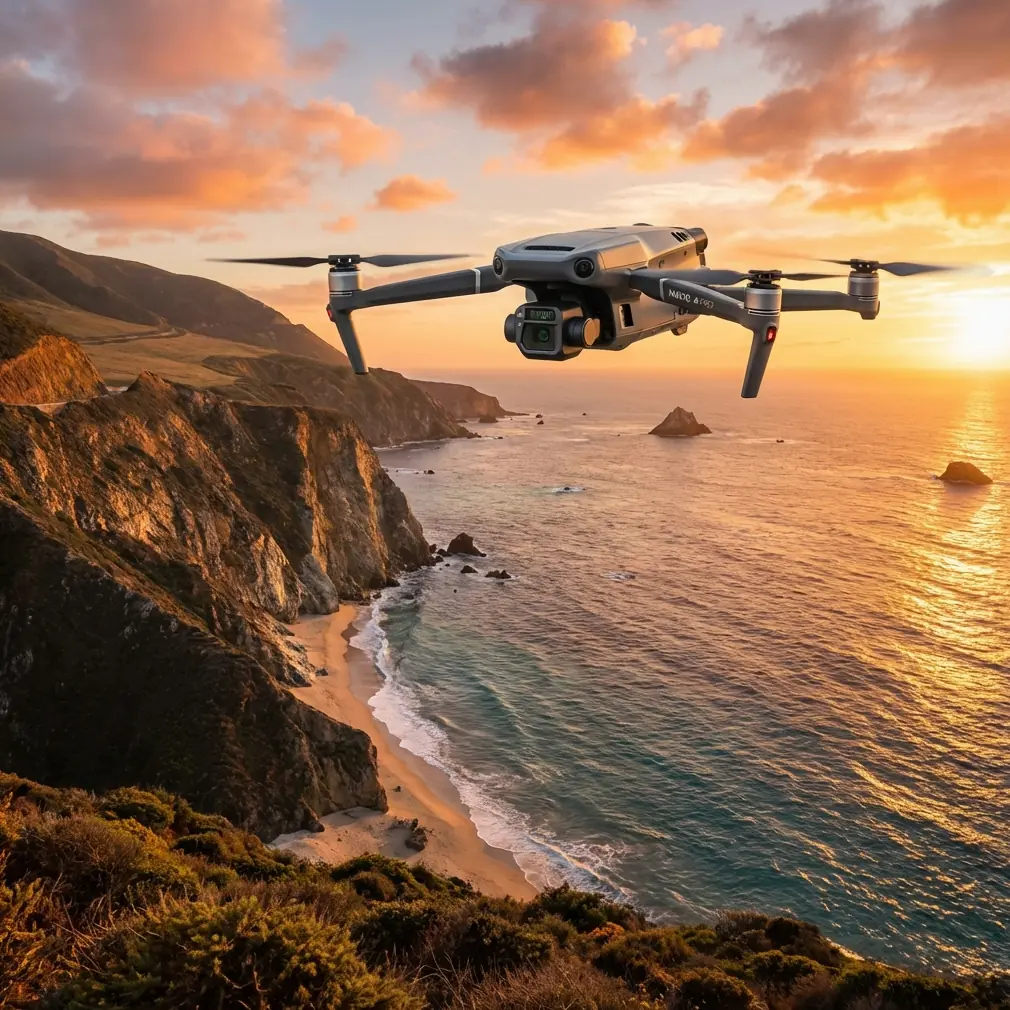
Mavic 3T on Solar Farms in Extreme Temperatures: A Field Case Study from the Flight Line
META: Expert case study on using DJI Mavic 3T for solar farm mapping in extreme temperatures, with practical advice on thermal signatures, battery management, O3 transmission, GCP workflow, and data reliability.
Solar farm work exposes every weak point in a drone workflow.
Not just the aircraft. The pilot. The batteries. The data capture plan. Even the assumptions you made back at the office when the weather looked manageable on paper.
The Mavic 3T has become a serious tool for utility-scale inspections because it compresses thermal observation, visual situational awareness, and portable deployment into one field kit. That matters on solar sites spread across long rows of panels where the terrain radiates heat upward, ambient conditions swing hard between morning and afternoon, and the difference between useful thermal imagery and noisy, misleading data can come down to timing, battery temperature, and mission discipline.
I want to frame this around a real operational problem: mapping a solar farm in extreme temperatures with the Mavic 3T, while preserving thermal consistency and producing usable outputs for engineering review. Not a brochure summary. A field method.
Why extreme temperatures change the whole mission
People tend to think of temperature as a simple comfort issue. It is not. It changes both equipment behavior and operator performance.
One of the more overlooked technical parallels comes from manned aviation physiology. In aircraft life-support design, oxygen partial pressure is treated as a critical measure because the total environment can appear normal while the body is receiving less useful oxygen. The handbook data behind that work is blunt: at sea level, inspired oxygen behavior is not the same as dry ambient air, and by 3048 m, alveolar oxygen pressure can fall to about 8.0 kPa. The same source notes that even around 1829 to 2438 m, reduced oxygen pressure can degrade vision in low-light conditions and weaken physiological performance.
Why mention that in an article about the Mavic 3T on solar farms?
Because drone operations in harsh environments fail for similar reasons: teams focus on the obvious number and miss the operational variable that actually controls performance. On a solar site, ambient temperature alone is not the real story. What matters is the aircraft’s internal thermal state, the battery’s behavior under load, the panel surface temperature, thermal contrast across strings, and the pilot’s cognitive sharpness during long repetitive flights. If you ignore those variables, your map may still look complete while your inspection quality quietly collapses.
This is where the Mavic 3T earns its place. It is not just about having a thermal camera on a compact aircraft. It is about being able to move fast enough to catch the site when thermal conditions are useful, without dragging a heavy platform or a large crew through difficult heat cycles.
The solar farm scenario that reveals the strengths of the Mavic 3T
On utility-scale sites, you usually need two things that are often treated separately: spatial coverage and thermal anomaly detection.
The Mavic 3T can bridge those needs when the job is organized properly. The visual payload helps with overall site context, row identification, access routes, inverter station positioning, and issue verification. The thermal payload helps isolate panel-level or string-level abnormalities by thermal signature. If the workflow is disciplined, you can build a site-wide condition narrative instead of collecting disconnected hot spots.
That distinction matters to asset owners. A random heat map is not the same as inspection intelligence.
For solar farms, thermal data is only valuable when it can be tied back to exact physical location and asset hierarchy. That is where photogrammetry planning and GCP discipline enter the picture, even when the main operational driver is thermal inspection. If your orthomosaic or site reference layer is sloppy, the thermal findings become harder to assign, track, and compare over time.
I usually advise teams to think of the Mavic 3T in this setting as a layered capture platform:
- rapid thermal screening across rows
- visible-light contextual mapping for verification
- repeatable georeferenced outputs that support maintenance planning
The compact form factor also reduces the setup burden during short weather windows. On a hot site, that is not a trivial advantage. Every minute spent assembling, calibrating, or cooling down equipment is a minute lost from the best thermal contrast window.
The battery management tip that saves missions
Here is the field lesson I wish more teams learned early: in extreme heat, do not put a freshly landed battery straight back into the charging cycle and expect stable afternoon performance.
That habit shortens your useful sortie rhythm and can create inconsistent power behavior right when your flight lines get long and the site starts shimmering. I have seen crews blame wind, transmission, or route planning when the real issue was thermal stress in the battery rotation.
My practical rule with the Mavic 3T is simple. Build a battery loop, not a battery pile.
Label each pack. Track flight number, landing temperature by touch or meter, charge start time, and whether the aircraft spent that flight hovering, transiting, or running constant mapping lines. A battery that just came down from a slow, hot inspection pass over reflective panels often needs more recovery time than one used for a shorter perimeter segment.
The best crews create three states:
- ready
- cooling
- charging
They never blur them.
On very hot days, batteries left in direct sun can become the hidden bottleneck that wrecks sortie consistency. Keep them shaded, ventilated, and separated from hot cases or vehicle dashboards. If you are running what people casually call “hot-swap batteries” in conversation, the real discipline is not the swap itself. It is preserving predictable battery condition between swaps so your mission timing and reserve calculations remain honest.
That one change improves flight continuity more than many software tweaks.
Thermal signature is only useful if you capture it at the right moment
Solar inspection teams often overestimate what thermal can do at any time of day. The Mavic 3T will show temperature differences, but the interpretation quality depends on operating conditions.
Panel heating, wind, irradiance, cloud movement, and row orientation all affect how defects express themselves. In extreme temperatures, the temptation is to assume stronger heat equals better findings. Sometimes it does. Sometimes it just saturates the scene and narrows the contrast that helps anomalies stand out cleanly.
On large sites, I prefer to divide the mission into thermal purpose zones:
- early passes for broad abnormality screening
- targeted revisits on suspect strings
- visible-light verification on components needing asset-level reporting
This keeps the Mavic 3T working as an inspection system, not just a thermal camera in the sky.
You also need to protect continuity between sorties. If one flight is captured under clear, stable sunlight and the next under drifting cloud with rising wind, comparing thermal signatures becomes less reliable. The aircraft did its job; the environment changed the meaning of the data.
That is why field notes still matter. Good operators log cloud transitions, panel glare conditions, wind shifts, and battery changes. A clean data set is rarely the product of automation alone.
O3 transmission matters more on long linear sites than many operators realize
Solar farms are deceptive from a transmission standpoint. They often look open and easy, but in practice the geometry of long rows, low structures, electrical infrastructure, and heat haze can make visual management and signal confidence more demanding than expected.
This is where O3 transmission becomes operationally important. Stable link quality is not just a convenience during mapping runs. It supports smoother route oversight, faster decision-making when you need to break off a flight, and more confidence when working broad site segments where aircraft distance can build quickly.
For teams planning advanced workflows, especially where BVLOS regulation may be relevant in approved civilian contexts, transmission integrity becomes part of the larger safety case and data continuity plan. That does not replace compliance requirements, observers, waivers, or local rules. It simply means the aircraft link architecture has a direct effect on how comfortably and consistently you can execute long asset corridors or large block captures.
On hot days, I also remind pilots that visual perception can degrade before they fully notice it. Again, the aviation physiology reference is useful here. The source material shows that reduced oxygen pressure can affect visual function in dim conditions at elevations around 1829 to 2438 m. The operational takeaway is broader: human sensing is fragile under environmental strain. Heat, glare, and repetitive scanning can dull attention even at ground level. A solid transmission system does not solve fatigue, but it reduces one source of mental friction.
Why GCP discipline still matters with a thermal-first mission
Some teams skip GCP planning when the brief says “inspection” rather than “survey.” That is a mistake on solar farms.
If the client needs maintenance crews to locate exact modules or correlate recurring anomalies over multiple inspection cycles, spatial consistency stops being optional. Even when the Mavic 3T is being used primarily for thermal work, a supporting photogrammetry layer anchored with GCPs can dramatically improve traceability.
This is especially useful when:
- row numbering on site is inconsistent
- maintenance records are tied to engineering drawings
- repeat inspections need time-series comparison
- the owner wants defect trends, not one-off findings
A thermal hotspot without disciplined location context creates extra labor downstream. Someone still has to figure out where, exactly, the problem sits in the real asset layout.
The Mavic 3T is strongest when the workflow combines speed with structure. Fast deployment, yes. But also repeatable references, careful row logic, and documentation that survives handoff from drone team to operations manager to field technician.
Data protection and client confidence
Utility clients are increasingly alert to how inspection data is handled. Site layouts, power infrastructure, and maintenance vulnerabilities are sensitive commercial information even when the use case is completely civilian.
That is where AES-256 support enters the discussion in a practical way. It is not a spec-sheet ornament. It supports a stronger chain of trust when you are collecting visual and thermal records of critical energy assets and moving that material through field devices, project folders, and review teams.
For EPC firms, O&M contractors, and consultants, data handling discipline can become part of the contract-winning equation. The aircraft is only one piece of credibility. The rest comes from workflow maturity.
A realistic Mavic 3T workflow for extreme-temperature solar mapping
If I were setting up a one-day solar farm operation with the Mavic 3T in punishing conditions, the day would look something like this:
Start early. Capture baseline thermal screening before the site enters its harshest convective period. Use visible imagery to anchor row references and identify any access or obstruction issues.
Mid-morning, shift into systematic thermal mapping across prioritized blocks. Keep sorties tight enough that battery reserves remain generous. This is not the place to squeeze every minute out of every pack.
As temperatures climb, tighten quality control. Watch for signs that the thermal story is becoming muddied by environmental instability. Use field notes aggressively. If a section looks questionable, revisit it deliberately instead of pretending the first pass is definitive.
After each landing, move batteries through the ready-cooling-charging loop. Keep the aircraft itself out of direct heat soak between launches when possible.
Then build your report around operational decisions, not just images. Show where thermal signatures appeared, how they were verified, what site conditions were present, and how geospatial references were maintained. That is the kind of output that gets used.
If you are refining your own solar inspection workflow and want to compare field methods, you can message our technical team here.
The deeper reason the Mavic 3T fits this role
The Mavic 3T works on solar farms because it aligns with the tempo of the job.
Solar inspection rarely rewards brute force. It rewards repeatability, speed of deployment, useful thermal perspective, and enough mapping discipline to turn observations into maintenance action. In extreme temperatures, those qualities matter even more because the environment punishes delay, inconsistency, and sloppy battery handling.
The old aviation reference about oxygen partial pressure may seem far removed from drone work, but it captures a truth that field operators know well: useful performance is shaped by the variables you do not always see directly. In that handbook, sea-level inspired air and alveolar air are not the same, and by 3048 m the physiological margin is clearly different. On a solar farm, ambient heat and mission heat are not the same either. The panel surface, the battery core, the pilot, the thermal contrast window, and the transmission link all live inside different margins.
The Mavic 3T gives you a compact platform that can work effectively inside those margins—if the operator respects them.
That is the real case for using it on solar farms. Not because it is small. Not because it has thermal. Because with the right field discipline, it can produce reliable inspection intelligence under conditions that expose weak workflows very quickly.
Ready for your own Mavic 3T? Contact our team for expert consultation.