
How I Map Remote Venues With the Mavic 3T When Control Point
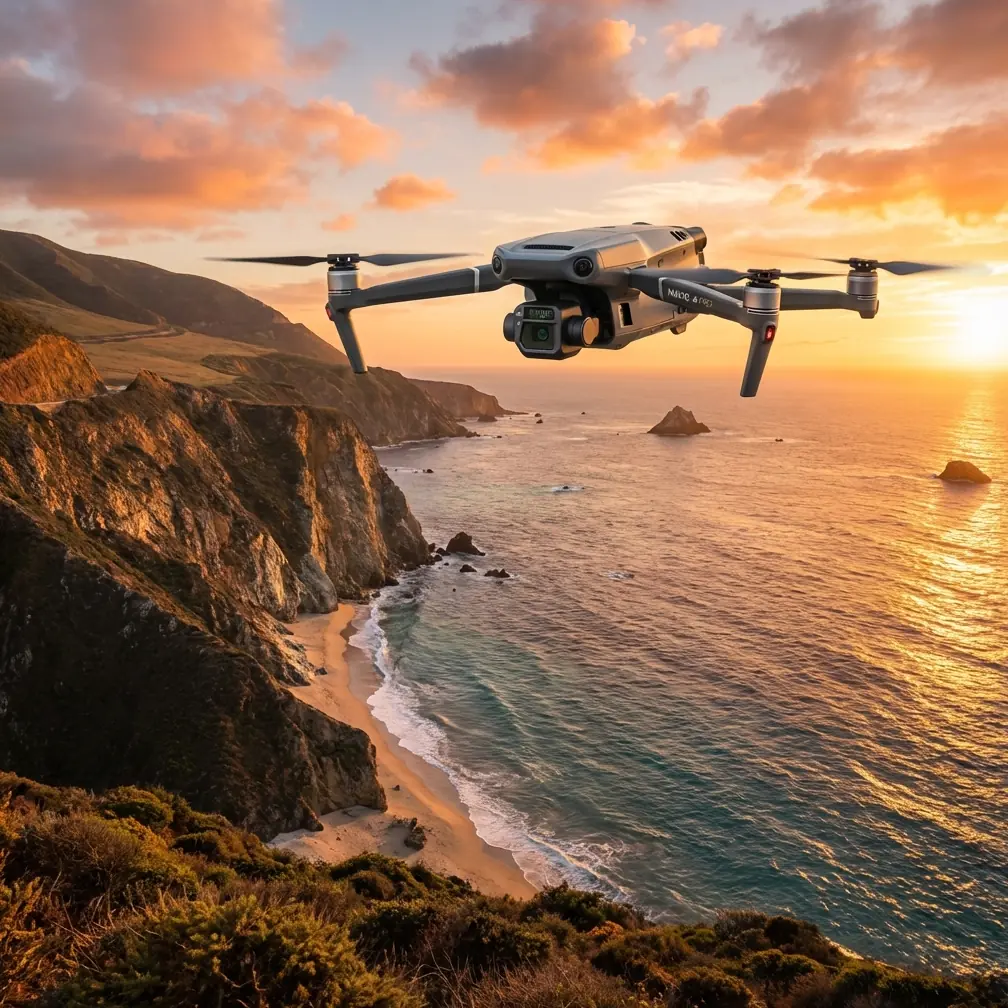
How I Map Remote Venues With the Mavic 3T When Control Points Are Hard to Place
META: A field-driven tutorial on using the Mavic 3T for remote venue mapping, with practical guidance on GNSS/INS-style workflows, reduced GCP dependence, antenna handling under electromagnetic interference, and why corrected attitude data matters.
Remote venue mapping looks easy on a screen. In the field, it rarely is.
You arrive at a hillside resort site, a rural solar installation, an unfinished event complex, or a mountain logistics yard. Access roads are poor. Crew movement is limited. Ground control points, if you planned them at all, are suddenly the hardest part of the mission. Wind shifts. The aircraft yaws more than expected on pass turns. Nearby communications equipment starts polluting your link budget. And the client still expects a usable model, a thermal layer that means something, and positional consistency from one visit to the next.
That is where the Mavic 3T becomes more interesting than its compact frame suggests.
This is not because it magically erases the rules of survey practice. It does not. What it does do, when handled properly, is let a small team execute disciplined venue mapping in places where traditional field setup is the real bottleneck. The reference material behind this article is actually useful here for one specific reason: it highlights a direct georeferencing mindset built around high-precision GNSS plus inertial data, including the operational goal of reducing or even eliminating ground control point deployment in some aerial remote sensing workflows. That matters a lot in remote venues.
The source describes a system that adds a high-precision inertial navigation module to capture the aircraft body’s three-dimensional attitude. The point is simple but often underestimated: even if the aircraft tilts during flight, the saved flight data can later be processed to correct the imagery and recover more accurate results. That same source also states that with differential processing and supporting software, accuracy can be pushed into the 1-centimeter class, while working toward zero ground control deployment in aerial measurement tasks.
Now, the Mavic 3T is not the AGS300 described in the source. But for a Mavic 3T operator, the lesson is clear: attitude quality and position correction are not background technicalities. They are the difference between a map that merely looks aligned and one that holds up when your client overlays utilities, roof edges, drainage paths, access lanes, or thermal anomalies over time.
The first decision: treat remote mapping as a positioning problem, not just a camera mission
A lot of operators approach the Mavic 3T as if the imaging payload is the whole story. For venue mapping, especially in remote areas, the camera is only one layer. The real task is spatial reliability.
That is why I start every mission with a blunt question: how much can I trust my georeferencing without building the day around GCP placement?
In ideal conditions, a full ground control network still gives you the strongest checkpoint discipline. But remote venues are full of situations where GCP deployment is impractical: steep terrain, private compounds with restricted movement, muddy seasonal access, roof-heavy industrial sites, or venues spread across multiple disconnected surfaces. Every extra target you place costs time, introduces safety exposure, and may force the crew to walk areas that the aircraft could document much more efficiently from above.
The reference material’s emphasis on direct georeferencing is valuable because it frames the whole workflow correctly. If the aircraft’s spatial data stream can capture body attitude and support accurate post-processing, then your dependence on dense ground control can drop sharply. Operationally, that means faster site entry, less labor on foot, and more repeatable data capture windows when weather is marginal.
For Mavic 3T users, this changes how you plan. You stop thinking, “How many photos can I gather?” and start thinking, “How stable and correctable is my position-and-attitude record across the whole mission?”
Why tilt correction matters more on remote venues than on easy urban sites
The source document points out a classic problem in low-altitude aerial imaging: aircraft tilt, large yaw deviation, and inconsistent camera orientation can create substantial image point error. Anyone who has flown mapping grids in gusty terrain already knows this, even without the formal wording.
Remote venues amplify the issue.
A broad flat lot in calm air is forgiving. A valley venue, quarry edge, ridge-top facility, or forest-cleared compound is not. Wind shear hits differently across elevation changes. Terrain can influence the aircraft’s behavior from leg to leg. If you are mapping structures with mixed heights—temporary halls, utility sheds, perimeter fencing, tower elements—small attitude inconsistencies show up quickly in your reconstruction.
That is why robust flight logs and careful post-processing matter. The value is not abstract. Correcting for body attitude after the mission helps preserve geometric consistency when the aircraft did not remain perfectly level in real conditions. Even if your software environment differs from the AGS300 ecosystem described in the source, the principle still transfers directly to the Mavic 3T workflow: poor attitude handling produces expensive downstream errors.
If your venue deliverable includes photogrammetry plus thermal signature review, this becomes even more sensitive. A thermal hotspot that appears to drift relative to a roof seam or electrical enclosure across survey dates is not always a thermal problem. Sometimes it is a georeferencing problem wearing a thermal disguise.
The practical GCP question: reduce dependency, do not abandon discipline
I see two common mistakes.
The first is trying to run every remote mission like a textbook survey with dense control, even when the site punishes every minute on the ground.
The second is the opposite: assuming modern drone positioning means checkpoints no longer matter.
Neither is smart.
The stronger model is selective control. Use the Mavic 3T in a way that minimizes unnecessary field placement while preserving validation. The reference source’s “zero ground control deployment” objective is significant because it shows where the industry has been pushing: less field burden through better onboard spatial awareness and better processing. Operationally, for remote venue mapping, that means you can reserve ground verification for critical checkpoints instead of turning every mission into a target-placement exercise.
That distinction saves time and improves safety. It also makes repeat visits much easier. If you are monitoring venue construction progress, agricultural processing yards, eco-tourism infrastructure, or remote industrial compounds, consistency across multiple flights matters more than one heroic control-heavy mission.
Handling electromagnetic interference: antenna adjustment is not optional
Let’s talk about a problem that often gets buried under marketing specs: electromagnetic interference.
In remote venues, operators assume EMI is an urban issue. Sometimes that is true. Sometimes the “remote” site has a microwave relay, temporary communications mast, high-voltage equipment, metal-roof utility rooms, or portable event networking hardware concentrated in one corner. You may also get reflected signal behavior from steel structures or containers.
When that happens, O3 transmission performance is not just about distance. It is about link quality, antenna orientation, and aircraft positioning relative to the interference source.
My field rule with the Mavic 3T is simple:
- identify the likely interference cluster before launch
- position the pilot station with a cleaner line of sight
- avoid standing directly beside metal barriers or powered communications cabinets
- adjust antenna orientation deliberately rather than waving the controller around after the signal degrades
- if one side of the venue is noisy, restructure your grid so the noisiest segment is flown with the strongest possible geometry to the controller
Antenna adjustment under EMI is less dramatic than people think. Usually, small changes are enough. Raise the controller position. Change your body orientation. Step several meters away from a reflective surface. Keep the broadside relationship of the antennas to the aircraft path in mind. Watch link stability trends early in the mission, not only after a warning appears.
This matters for mapping because transmission instability can lead to hesitation, broken rhythm in flight lines, and unnecessary manual interventions. Every one of those can compromise image consistency. When you are trying to preserve a clean geospatial dataset in a place where you may not get a second weather window, stable command and video link quality is part of the survey discipline.
If you want to compare signal behavior patterns before a deployment, I usually tell teams to send their site notes and screenshots through WhatsApp field review. It is a quick way to catch preventable setup errors.
The thermal side of venue mapping is useful only when it is spatially disciplined
The Mavic 3T’s appeal is obvious: visible mapping support plus thermal signature awareness in one aircraft. But the biggest misuse I see is treating the thermal layer as a separate inspection toy rather than part of the spatial record.
In remote venues, thermal can answer practical questions:
- is a temporary power node running abnormally hot?
- are rooftop HVAC points behaving unevenly across a distributed site?
- is a utility corridor near a venue edge showing heat leakage?
- does a remote agricultural processing structure show insulation or equipment stress?
Yet thermal findings are only useful when they can be tied back to a reliable map. This circles back to the source material again. The reason three-dimensional aircraft attitude data is operationally significant is that it supports correction after tilt and motion, producing more trustworthy positioning of captured data. If your thermal anomaly is not correctly located in the final model, the site team wastes time chasing it.
That is why I tell operators not to think of the Mavic 3T as “thermal plus camera.” Think of it as a platform where sensor outputs must remain geometrically coherent.
A remote venue workflow that works
My preferred workflow with the Mavic 3T on remote venues is lean but strict.
1. Pre-map the access burden
Before the aircraft comes out, determine which parts of the site are genuinely difficult to reach. That tells you where reduced GCP dependence creates the most value. If a checkpoint can be captured safely, keep it. If placing five targets requires an hour of walking on broken terrain, rethink the plan.
2. Build around consistency, not maximum coverage
Use flight lines and overlap settings that preserve model quality in the areas that matter most: entrances, structural edges, service corridors, parking geometry, roof zones, and thermal-interest assets. A huge dataset with weak consistency is slower to process and harder to trust.
3. Respect attitude error
If the aircraft flew through gusts or changed pitch and roll behavior across terrain, assume that matters. Review the flight data and process accordingly. The source’s emphasis on correcting imagery using saved attitude data after flight is not just a technical feature note. It is a reminder that your best work often happens after landing.
4. Control your link environment
Use O3 transmission intelligently. Antenna orientation, pilot placement, and EMI awareness are part of the mission plan, especially around communications hardware, power equipment, and metal-heavy compounds.
5. Protect the data chain
Secure transfer and storage matter, particularly for private venues, utility-adjacent sites, and commercial compounds. AES-256 level protection is not a buzzword in this context; it is part of responsible data handling when your map includes access layouts, rooftop systems, and operational infrastructure.
6. Keep turnaround realistic
Hot-swap batteries are not the point on a compact platform like the Mavic 3T in the same way they are on larger enterprise aircraft, but battery rhythm still matters. In remote mapping, continuity is everything. Organize your pack sequence, charging plan, and sortie order so your overlap logic does not break halfway through the venue.
Where Mavic 3T fits, and where discipline still wins
The most useful takeaway from the reference material is not a specification. It is a workflow philosophy. The AGS300 description highlights three things that serious venue mappers should care about: three-dimensional attitude capture, post-flight correction of tilted flight data, and differential positioning that can move results toward centimeter-level quality while reducing the burden of ground control.
Those ideas map neatly onto how the Mavic 3T should be used in remote civilian operations. Not as a shortcut machine. As a tool that rewards clean positioning strategy, careful processing, and disciplined field handling.
If your venue is remote, the win is not simply finishing the mission faster. The real win is reducing unnecessary ground movement, preserving spatial consistency despite aircraft tilt and environmental disturbance, and tying thermal observations back to a trustworthy visual map.
That is what clients remember. Not the drone. The reliability of the result.
Ready for your own Mavic 3T? Contact our team for expert consultation.