
Mavic 3T for Coastal Wildlife Mapping: What Actually
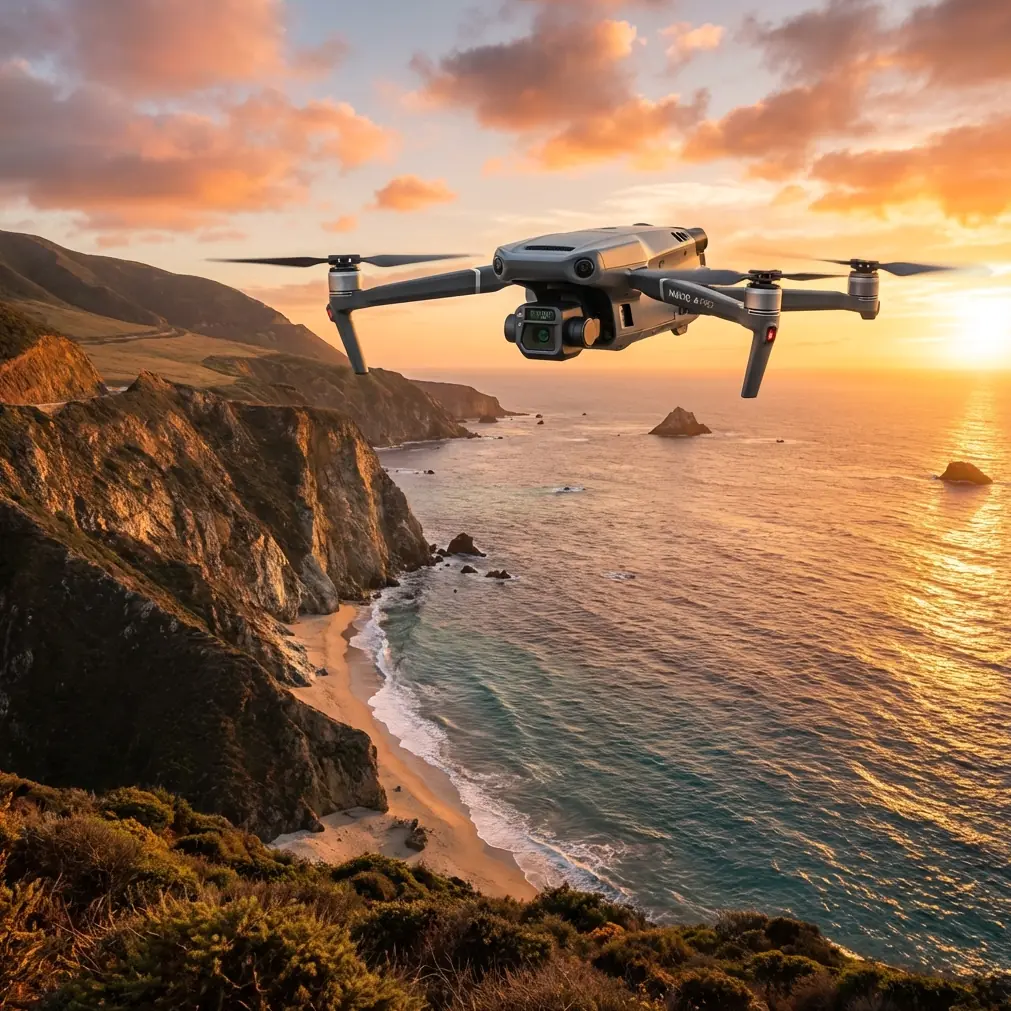
Mavic 3T for Coastal Wildlife Mapping: What Actually Matters in the Field
META: An expert look at using the DJI Mavic 3T for coastal wildlife mapping, with practical insight on thermal signature capture, photogrammetry accuracy, pre-flight safety cleaning, and why aviation-grade reliability principles matter.
Coastal wildlife work punishes weak workflow.
Salt hangs in the air. Sand gets into everything. Light changes fast over water. Heat contrast can disappear the moment the sun breaks through cloud. And if you are trying to map nesting zones, shoreline movement, or animal distribution with a Mavic 3T, the drone itself is only half the story. The other half is whether your operating method is stable enough to produce repeatable data.
That is where most field teams lose time.
They focus on sensor specs, then discover later that their thermal passes do not align well with visual mapping outputs, or that a morning mission is compromised by residue on the obstacle sensing surfaces, landing gear contamination, or small maintenance shortcuts that gradually degrade reliability. For coastal wildlife mapping, the Mavic 3T is a strong platform, but only when it is treated like an aircraft system rather than a camera with propellers.
The real coastal challenge: mixed mission requirements
Wildlife mapping near coastlines usually blends at least three jobs into one sortie plan.
First, you need area awareness. That often means visual mapping or photogrammetry over dunes, marsh edges, intertidal flats, and access corridors. Second, you need thermal signature detection for animals that are difficult to spot against mottled terrain. Third, you need enough transmission stability and battery discipline to work from awkward launch points without constantly repositioning crews.
The Mavic 3T suits this kind of mixed mission because it allows one aircraft to support thermal search and geospatial documentation in the same operational window. That matters in coastal habitats where disturbance should be minimized. Fewer launches. Fewer team movements. Less time over sensitive sites.
Still, capability on paper does not guarantee useful output.
Why pre-flight cleaning is not a trivial ritual
One detail that deserves more attention in wildlife operations is the pre-flight cleaning step, especially around safety-critical surfaces. In coastal work, salt film can build up surprisingly quickly. Fine sand can settle around moving joints and exposed edges. Even if the aircraft appears clean, residue on vision sensors, thermal window surfaces, landing pads, or battery contacts can create avoidable problems.
This is not just housekeeping. It affects mission safety and data quality.
A contaminated sensing surface may reduce the consistency of obstacle avoidance behavior when operating near scrub, cliff edges, or driftwood piles. A dirty optical path can reduce image sharpness enough to weaken photogrammetry results. Salt residue around seals and interfaces can accelerate wear over time, which is exactly the kind of slow reliability drift that field teams often miss until a critical day.
Before any coastal launch, I recommend a disciplined sequence: inspect propellers, wipe sensor faces with appropriate materials, check vent areas for buildup, inspect battery contacts, and verify that the landing area will not immediately re-contaminate the aircraft on takeoff. It sounds basic. It is not. These small habits are what keep a mapping program dependable over an entire season.
What aviation standards can teach a Mavic 3T operator
The reference material behind this article is not about the Mavic 3T specifically. It comes from aircraft design literature, including data on sealing performance and dynamic-cycle durability. That makes it unexpectedly useful.
One cited test standard requires an O-ring to survive at least 75,000 cycles without failure under dynamic testing. In that same source, leakage is treated as failure once total hydraulic oil loss reaches 70 uL, and qualification is based on averaging multiple test results rather than trusting a single good sample. Another section notes material changes after oil aging at roughly 275°F conditions, with limits placed on hardness shift, tensile loss, elongation loss, and compression set, including a maximum 55% compression permanent deformation figure.
Why bring up O-rings and material aging in a coastal wildlife article?
Because it highlights the mindset that separates casual drone use from operational reliability. Aircraft components are not judged by whether they work once. They are judged by whether they continue working after cycles, environmental exposure, and stress. Coastal drone teams should think the same way. If your Mavic 3T is flying repeatedly in saline air, landing on gritty surfaces, and being transported between humid and dry environments, you should assume every exposed interface and sealing element is under cumulative stress.
Operational significance is straightforward:
- Repeated battery swaps, folding and unfolding arms, and field charging create a cycle-based wear pattern.
- Salt and moisture accelerate material fatigue and contact degradation.
- Reliability should be tracked over time, not guessed from a quick visual once-over.
That does not mean the Mavic 3T is fragile. It means your maintenance logic should be mature. Build logs. Track battery behavior. Note error messages, even brief ones. Watch for small changes in gimbal startup, hatch fit, or sensor warnings after coastal missions. The field operator who respects cycles and environmental exposure will get cleaner results and fewer interruptions.
Thermal signature work on the coast is all about timing
The Mavic 3T is often discussed in terms of thermal capability, but in wildlife mapping the practical question is narrower: when can you extract a usable thermal signature against a difficult background?
Coastal terrain is unstable from a thermal perspective. Wet sand, shallow water, rock, vegetation mats, and manmade debris all heat and cool at different rates. The best thermal results usually come when contrast is still meaningful but ambient heating has not flattened the scene. Early morning often works, but not always. A cloudy late afternoon can outperform sunrise if the substrate has been unevenly loaded by sun and tide.
This is where disciplined mission planning beats improvisation. If you are mapping wildlife movement or nesting occupancy, fly the same route structure under comparable environmental windows whenever possible. The Mavic 3T can provide fast thermal reconnaissance, but consistency is what makes the outputs interpretable across weeks, not the fact that a hotspot showed up on one flight.
And thermal alone is rarely enough.
A heat anomaly in dune grass might be a bird, a mammal, retained solar warmth, or even a patch of wet substrate behaving differently. The operational advantage of the Mavic 3T is that you can quickly cross-reference thermal observations with visible imagery and then decide whether a full mapping pass or follow-up verification is justified.
Photogrammetry still depends on old-fashioned discipline
For coastal wildlife mapping, people sometimes separate thermal search from mapping as if they belong to different workflows. In practice, the useful projects combine them.
A typical coastal survey may begin with broad thermal screening to identify areas of biological activity, followed by a structured visual collection flight for photogrammetry. If the goal is habitat assessment, nesting-site documentation, or shoreline-use analysis, the map layer needs to be spatially trustworthy. That means stable overlap, controlled altitude, and where needed, proper GCP integration.
Ground control points matter more than many operators admit. Along coastlines, feature-poor surfaces such as sand flats or uniform marsh can make alignment messy. Even when onboard positioning is good, GCPs help anchor the dataset and reduce ambiguity across repeat surveys. If the purpose is to compare habitat change over time, casual mapping is not enough. You want datasets that can stand beside each other with minimal interpretation drift.
The Mavic 3T is not just a thermal observer in that context. It becomes a bridge platform: detect with thermal, document with visual, and tie the whole job into a usable geospatial record.
Transmission stability matters more in coastal corridors
One of the quieter strengths in field deployment is dependable link performance. Coastal operations often happen in awkward radio environments: open reflective water, variable terrain, sparse launch positions, and long lateral track lines. Strong O3 transmission is not merely convenient. It reduces the operational friction that causes teams to reposition too often or cut corners in route design.
That has a direct effect on wildlife work. If the aircraft can maintain a stable link while the crew stays at a respectful distance from sensitive areas, site disturbance is reduced. In some programs, especially where future BVLOS frameworks may become relevant, the discipline starts now: clear mission geometry, robust communication procedures, and strict separation between what is technically possible and what is legally authorized in your area.
Secure workflows matter too. If your imagery includes protected habitats or sensitive species-location information, handling that data carefully is part of professional practice. AES-256 security references are not just IT decoration. They are part of how responsible teams reduce exposure when transmitting or storing location-sensitive environmental data.
Borrow a page from rotorcraft design thinking
The second reference source discusses helicopter design choices such as rotor tip speed, with modern values often falling in the 160 to 240 m/s range, and the tradeoff between blade count, chord, vibration, structural complexity, and efficiency. On the surface, that seems far removed from a compact enterprise drone.
It is not.
The lesson is that aircraft performance is always a compromise between stability, efficiency, noise, complexity, and mission need. In coastal wildlife mapping, this perspective is useful because operators often chase maximum area coverage without respecting the hidden penalties: more aggressive flight profiles can reduce image quality, increase disturbance risk, and complicate interpretation.
Rotorcraft designers accept that every gain has a cost. Drone teams should do the same. If your task is to capture reliable wildlife distribution data, the smoothest and most repeatable flight plan is usually better than the fastest one. Lower stress on the aircraft, cleaner image geometry, and less vibration-driven blur all serve the final dataset.
That is why battery strategy also deserves more planning than it gets. Hot-swap style field discipline, even on platforms where the exact implementation differs from larger systems, means preparing replacement power, route segmentation, and relaunch timing so the mission remains coherent. The point is not speed for its own sake. The point is keeping thermal and visual collection windows aligned with environmental conditions before they shift.
A practical coastal workflow for the Mavic 3T
If I were building a repeatable Mavic 3T workflow for wildlife mapping on a coastal site, it would look like this:
Start with a contamination-aware pre-flight inspection. Clean all sensor-relevant surfaces, confirm batteries and contacts are dry and free of salt residue, and inspect props carefully.
Then define the mission in layers:
- Thermal reconnaissance pass during the best contrast window.
- Visual verification of detected points or zones.
- Structured photogrammetry pass over priority habitat or shoreline features.
- GCP-backed processing where comparative mapping matters.
Keep crew movement limited. Use O3 transmission range intelligently so launch sites are chosen for safety and minimal habitat intrusion, not convenience alone.
Log everything. Weather, tide state, sun condition, battery sequence, and any anomalies. Over time, those notes become more valuable than many operators expect.
If your team is building out this kind of field method and wants to compare notes on coastal setup, this direct WhatsApp line for Mavic 3T workflow questions is a practical place to start.
The Mavic 3T is best when treated like part of a system
The biggest mistake in coastal wildlife operations is treating the aircraft as the entire solution. It is not. The solution is the system around it: cleaning discipline, timing, thermal interpretation, mapping structure, transmission planning, battery management, and maintenance habits shaped by real aviation thinking.
That is why those reference details on cyclic durability and sealing matter, even though they come from broader aircraft design material. A component that must survive 75,000 cycles without failure embodies a standard of thinking: repeatability under stress. That is exactly the benchmark serious environmental drone work should aim for. Not a good flight. A good season. Not a clean image. A defensible dataset.
For coastal wildlife mapping, the Mavic 3T earns its place when it helps teams collect more useful information with less site disturbance and fewer avoidable failures. The aircraft is capable. The harder question is whether the workflow around it is equally mature.
Ready for your own Mavic 3T? Contact our team for expert consultation.