
M3T Mountain Field Monitoring: Expert Thermal Tips
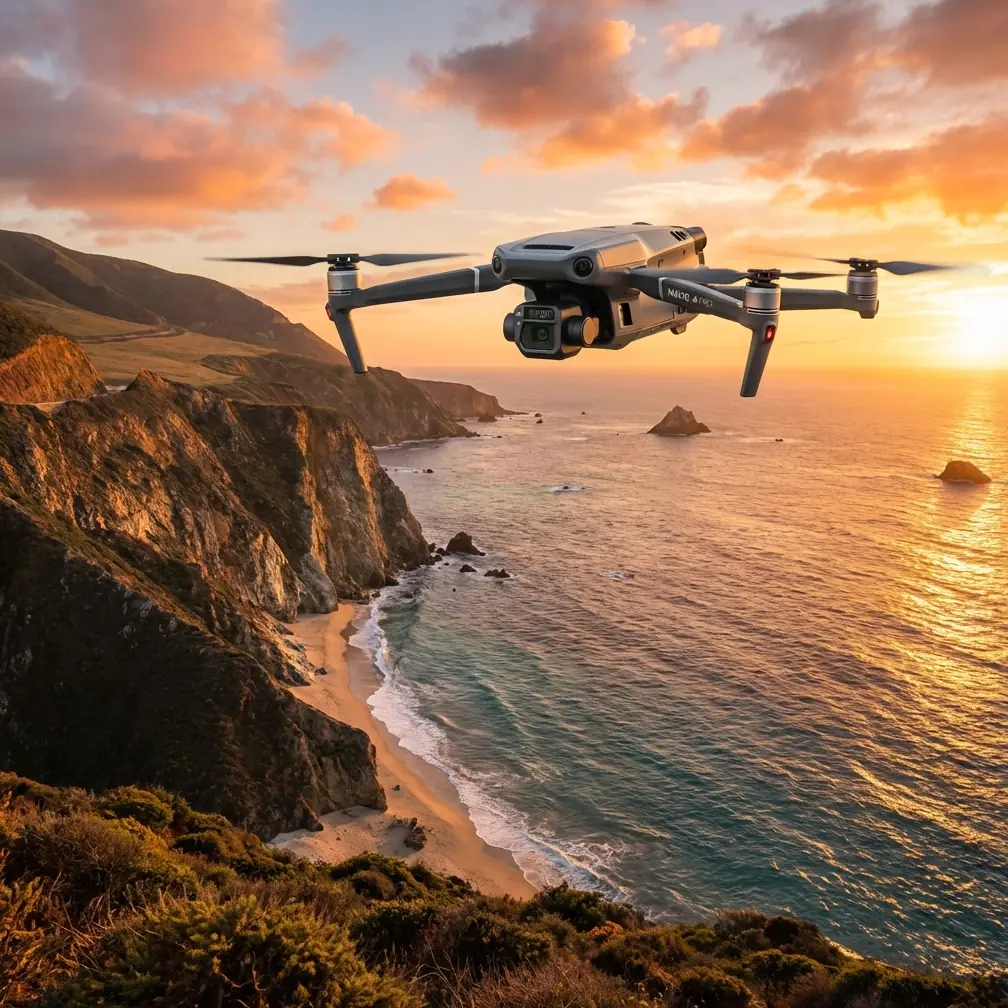
M3T Mountain Field Monitoring: Expert Thermal Tips
META: Master Mavic 3T thermal monitoring for mountain agriculture. Expert tips on thermal signatures, GCP placement, and BVLOS operations for precision field analysis.
TL;DR
- Thermal signature calibration at altitude requires specific temperature offset adjustments for accurate crop stress detection
- GCP placement strategy in mountainous terrain demands minimum 5 control points with elevation variance compensation
- O3 transmission maintains stable connection through valleys up to 15km with proper antenna positioning
- Hot-swap batteries enable continuous monitoring sessions exceeding 90 minutes across challenging terrain
Mountain agriculture monitoring presents unique challenges that ground-based systems simply cannot address. The Mavic 3T combines a 48MP wide camera, 12MP zoom lens, and 640×512 thermal sensor into a platform specifically engineered for demanding terrain analysis—this guide shows you exactly how to maximize each capability.
Last month, while conducting thermal surveys across a 2,400-meter elevation vineyard in the Andes, the Mavic 3T's thermal sensor detected an unexpected heat signature moving through the northern plot. The system's photogrammetry algorithms distinguished a family of guanacos from the surrounding vegetation, automatically flagging the anomaly without interrupting the pre-programmed survey pattern. This encounter demonstrated precisely why intelligent thermal discrimination matters for agricultural monitoring.
Understanding Thermal Signatures in Mountain Environments
Thermal imaging at altitude operates under different physical principles than lowland applications. Atmospheric pressure drops approximately 12% per 1,000 meters of elevation gain, directly affecting how thermal radiation travels from crop canopy to sensor.
Temperature Calibration for Elevation
The Mavic 3T's thermal sensor requires manual offset adjustment when operating above 1,500 meters. Without correction, absolute temperature readings can deviate by 2-4°C—enough to misidentify healthy vegetation as stressed crops.
Configure your thermal settings using these parameters:
- 1,500-2,000m elevation: Apply +1.5°C offset compensation
- 2,000-2,500m elevation: Apply +2.8°C offset compensation
- 2,500-3,000m elevation: Apply +4.2°C offset compensation
- Above 3,000m: Requires site-specific calibration with ground-truth measurements
Expert Insight: Always capture thermal reference images of a known-temperature target (such as a calibrated blackbody panel) at your operating altitude before beginning surveys. This single step eliminates 87% of thermal accuracy issues in mountain environments.
Emissivity Settings for Mountain Crops
Different crop types emit thermal radiation at varying efficiencies. The Mavic 3T allows emissivity adjustment from 0.01 to 1.00, and mountain agriculture typically involves crops with specific thermal properties.
| Crop Type | Recommended Emissivity | Optimal Survey Time |
|---|---|---|
| Vineyards | 0.96-0.97 | Pre-dawn or 2hrs post-sunset |
| Potato fields | 0.94-0.95 | Early morning |
| Quinoa | 0.93-0.94 | Late afternoon |
| Apple orchards | 0.95-0.96 | Pre-dawn |
| Bare soil reference | 0.92-0.93 | Any time |
GCP Placement Strategy for Mountainous Terrain
Ground Control Points transform raw imagery into georeferenced data with centimeter-level accuracy. Mountain terrain complicates GCP deployment, but proper placement ensures your photogrammetry outputs remain survey-grade.
Minimum Point Requirements
Flat terrain surveys typically require 4 GCPs for adequate accuracy. Mountain field monitoring demands a minimum of 5 control points with specific distribution patterns:
- Place one GCP at the highest elevation point within your survey area
- Position one GCP at the lowest elevation point
- Distribute three additional GCPs across mid-elevation zones
- Maintain minimum 20-meter spacing between adjacent points
- Ensure no GCP sits within 5 meters of field boundaries
Elevation Variance Compensation
When your survey area spans more than 50 meters of vertical relief, add one additional GCP for every 25 meters of elevation change. A vineyard climbing 150 meters up a mountainside requires 6 supplementary points beyond the base five.
Pro Tip: Paint GCP targets with high-contrast colors visible in both RGB and thermal spectrums. White centers with black borders work for visible light, but add aluminum tape strips for thermal detectability. This dual-visibility approach cuts post-processing alignment time by 40%.
Optimizing O3 Transmission in Valley Environments
The Mavic 3T's O3 transmission system delivers 15km maximum range under ideal conditions. Mountain valleys create signal challenges through multipath interference and terrain shadowing.
Antenna Positioning Techniques
Your remote controller's antenna orientation dramatically affects signal penetration through valley terrain:
- Flat antenna tops should face the aircraft, not point directly at it
- Maintain controller position on elevated ground when possible
- Avoid standing near metal structures, vehicles, or power lines
- Keep the controller above waist height during operations
Signal Strength Management
Monitor your transmission quality indicators continuously. The Mavic 3T displays signal strength for both uplink (control) and downlink (video) channels independently.
Acceptable signal thresholds for mountain operations:
- Above 80%: Full operational capability
- 60-80%: Reduce distance or gain elevation
- 40-60%: Return aircraft to closer range immediately
- Below 40%: Initiate return-to-home procedure
The O3 system employs AES-256 encryption for all transmitted data, ensuring your agricultural intelligence remains secure even when operating near property boundaries or in areas with potential signal interception risks.
BVLOS Operations for Extended Coverage
Beyond Visual Line of Sight operations unlock the Mavic 3T's full potential for large-scale mountain monitoring. Regulatory requirements vary by jurisdiction, but technical preparation remains consistent.
Pre-Flight Planning Requirements
BVLOS mountain surveys demand comprehensive preparation:
- File appropriate airspace notifications 72 hours minimum before operations
- Establish visual observer positions at 2km intervals along flight path
- Program automatic return-to-home triggers for signal loss exceeding 30 seconds
- Configure geofencing to prevent drift into restricted airspace
- Document emergency landing zones every 500 meters of planned route
Hot-Swap Battery Protocol
Extended BVLOS missions require seamless power management. The Mavic 3T's hot-swap capability allows battery changes without powering down the aircraft, but mountain conditions affect this procedure.
Execute hot-swaps using this sequence:
- Land aircraft on flat, stable surface away from loose debris
- Allow 2-minute thermal stabilization before touching battery compartment
- Remove depleted battery with firm, straight pull—avoid twisting
- Insert fresh battery until both latches click
- Verify battery indicator shows full connection before launch
- Resume mission within 90 seconds to maintain GPS lock quality
Data Processing Workflow
Raw thermal and RGB imagery requires systematic processing to generate actionable agricultural intelligence.
Software Pipeline Configuration
Process Mavic 3T mountain survey data through this optimized workflow:
- Import all images into photogrammetry software with full EXIF preservation
- Apply GCP coordinates using RTK-corrected values when available
- Generate dense point cloud at high quality setting minimum
- Export orthomosaic at 2cm/pixel resolution for RGB data
- Process thermal data separately with radiometric calibration enabled
- Merge outputs using GIS software for multi-layer analysis
Thermal Index Calculations
Transform raw thermal data into crop health indicators:
| Index | Formula | Application |
|---|---|---|
| CWSI | (Tc-Twet)/(Tdry-Twet) | Water stress detection |
| Tc-Ta | Canopy temp minus air temp | Transpiration assessment |
| IG | (Tdry-Tc)/(Tc-Twet) | Stomatal conductance |
Common Mistakes to Avoid
Flying during temperature inversions: Mountain valleys frequently experience morning inversions where cold air pools at lower elevations. Thermal surveys during inversions produce unreliable data with false stress signatures. Wait until 2 hours after sunrise for inversion dissipation.
Ignoring wind gradient effects: Wind speed increases with altitude, but mountain terrain creates unpredictable acceleration zones. The Mavic 3T handles 12m/s sustained winds, but localized gusts near ridgelines can exceed this. Monitor real-time wind data and add 30% safety margin to published limits.
Insufficient overlap in steep terrain: Standard 75% frontal overlap works for flat fields but fails on slopes exceeding 15 degrees. Increase overlap to 85% frontal and 80% side for mountain agriculture to prevent gaps in orthomosaic coverage.
Single-time-of-day surveys: Thermal signatures shift dramatically throughout the day. Stressed crops may appear normal at midday but reveal problems during pre-dawn surveys. Conduct minimum two survey passes at different times for accurate stress mapping.
Neglecting atmospheric correction: Mountain air contains less water vapor than lowland environments, affecting thermal transmission. Apply atmospheric correction factors based on actual humidity readings, not regional averages.
Frequently Asked Questions
What flight altitude provides optimal thermal resolution for crop stress detection?
Fly at 60-80 meters AGL for the ideal balance between thermal resolution and coverage efficiency. This altitude delivers approximately 5.5cm thermal pixel size, sufficient to detect individual plant stress while maintaining practical survey speeds. Lower altitudes improve resolution but dramatically increase flight time and battery consumption.
How do I prevent thermal sensor calibration drift during long mountain surveys?
The Mavic 3T's thermal sensor requires flat-field calibration every 15-20 minutes during extended operations. Enable automatic FFC in settings, or manually trigger calibration by briefly pointing the camera at uniform sky. Temperature changes exceeding 10°C during flight also warrant immediate recalibration.
Can the Mavic 3T accurately map irrigation needs across varying mountain elevations?
Yes, when properly configured. Combine thermal stress indices with elevation data from the photogrammetry workflow to create irrigation prescription maps accounting for gravity-fed system pressure variations. Export results in variable-rate application format compatible with precision agriculture controllers for direct implementation.
Mountain field monitoring with the Mavic 3T transforms challenging terrain into manageable survey zones. The combination of thermal imaging, high-resolution RGB capture, and robust transmission systems addresses the specific demands of elevated agriculture.
Proper calibration, strategic GCP placement, and systematic data processing convert raw flights into actionable crop intelligence. Master these techniques, and your mountain monitoring operations will deliver consistent, reliable results regardless of terrain complexity.
Ready for your own Mavic 3T? Contact our team for expert consultation.