
Mavic 3T Monitoring Tips for High-Altitude Fields When
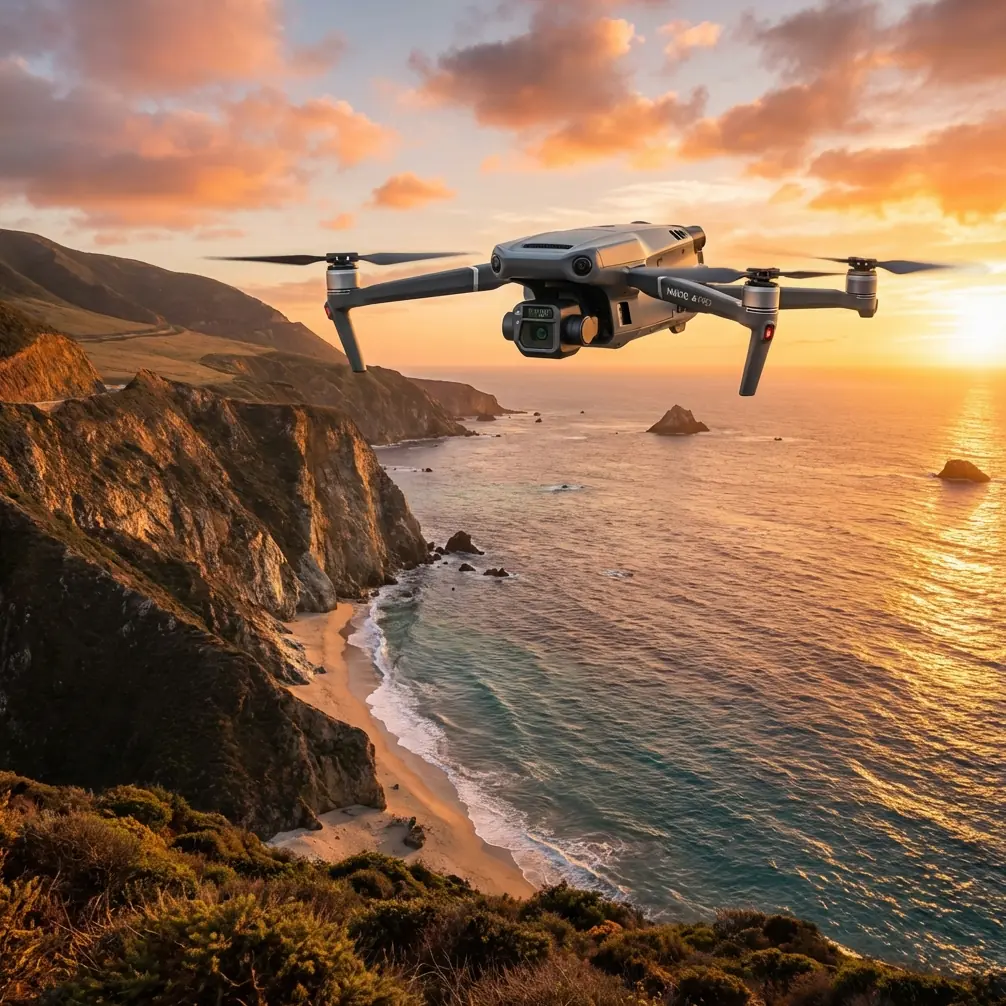
Mavic 3T Monitoring Tips for High-Altitude Fields When Conditions Shift Mid-Flight
META: Practical Mavic 3T field monitoring advice for high-altitude agriculture, with thermal workflow tips, O3 transmission considerations, battery planning, and weather-response tactics.
By Dr. Lisa Wang, Specialist
High-altitude field monitoring looks straightforward on a planning screen. Draw the boundary, assign the route, launch, collect imagery, land. On the mountain itself, the script changes. Light can flatten contrast. Wind can build along ridgelines with almost no warning. Battery behavior becomes less forgiving. A field that seemed uniform from the road can split into temperature zones once the air cools and cloud cover moves in.
This is where the Mavic 3T earns its place.
Not because it solves every problem automatically, but because its sensor mix and flight platform give agricultural operators a practical way to keep decision-making intact when the environment stops cooperating. For farms and research plots at elevation, the question is rarely whether you can get a drone airborne. The real question is whether the data will still be trustworthy after weather, terrain, and signal conditions start pushing against the mission.
The actual problem with high-altitude field monitoring
At higher elevations, crop stress rarely presents as one clean, easy-to-read symptom. You may be tracking moisture imbalance, uneven irrigation reach, drainage patterns, edge exposure, or localized disease pressure. Standard visible-light imagery helps, but it can also hide early-stage issues when the canopy still looks acceptable to the human eye.
That is why thermal signature matters.
The Mavic 3T gives operators a thermal view that can separate visually similar areas into operationally different zones. In a high-altitude field, that difference becomes especially valuable after sudden weather changes. A patch that appears healthy in RGB may cool or warm differently than the surrounding crop once cloud bands move through or wind exposure increases. That divergence is often the clue, not the final diagnosis, but without it many teams never know where to inspect next.
The second problem is consistency. High-altitude missions often begin in one set of conditions and end in another. If the weather shifts mid-flight, a workflow built around clean, static assumptions can fall apart quickly. Thermal readings become harder to compare if the operator does not understand how ambient changes affect apparent heat patterns. Mapping overlap can suffer if wind alters groundspeed and attitude. And if the crew loses confidence in the link as terrain intervenes, they may rush the flight and sacrifice data quality.
Why the Mavic 3T fits this scenario better than a generic drone
The Mavic 3T is not just a camera in the sky. For field monitoring at elevation, it works because several elements support one another.
Start with transmission. DJI’s O3 transmission system matters in mountainous farmland because signal reliability is not a luxury feature there. It is part of data discipline. When a drone is crossing irregular terrain, moving away from a launch point tucked beside terraces or sloping access roads, clear situational awareness helps the pilot avoid overcorrecting, aborting too early, or skipping important passes. The value is not simply “long range.” It is maintaining confidence and control when the landscape is trying to interrupt both.
Then there is security. AES-256 encryption is often discussed in abstract terms, but in commercial agriculture it has a very practical role. Operators collecting field condition data, irrigation patterns, trial-plot results, or crop variability maps are often handling sensitive farm information. Secure transmission is not just a procurement checkbox. It can be relevant for co-ops, research teams, consultants, and enterprises managing proprietary agronomic data across multiple sites.
The aircraft also fits field teams because of battery workflow. Hot-swap batteries are not a cosmetic convenience. In remote or high-altitude operations, minimizing downtime between sorties keeps environmental changes from invalidating comparisons. If one section is surveyed now and the next block only after a long delay, shifting sun, temperature, or wind can make interpretation more difficult. Faster turnarounds help preserve comparability across a mission day.
A real-world pattern: weather changes mid-flight
Consider a common mountain-farm scenario.
The mission begins just after sunrise to capture stable thermal contrast before solar loading complicates the picture. The air is cool. The first passes show a distinct warm band across an upper section of the field, likely related to thinner moisture retention near a slope break. RGB imagery alone would not make that obvious yet.
Twelve minutes into the mission, cloud cover thickens from the west. Wind increases as it spills over a ridgeline. Ground shadows move. Surface temperature response begins to change. This is where inexperienced teams either keep flying as if nothing happened or terminate too abruptly and come home with fragmented data.
The better response with a Mavic 3T is more disciplined.
First, the pilot watches flight stability and link quality closely through the O3 connection, especially if the route approaches terrain features that can affect line of sight. If the aircraft remains stable and mission safety margins are intact, the operator can continue with adjusted expectations rather than panic. Second, the crew marks the moment of weather shift in the flight log and in the field notebook. That matters later when reviewing thermal frames. A change in thermal signature after cloud arrival may reflect crop condition, atmospheric change, or both. Without that timestamp, interpretation gets sloppy.
Third, the pilot may shorten the route and prioritize suspect zones over full-property coverage. This is often the right move. A complete but noisy dataset can be less useful than a partial dataset with strong comparability. The Mavic 3T supports this kind of practical triage because it can move quickly from broad reconnaissance to targeted thermal inspection without changing platforms.
When this sort of weather change happens, the drone’s handling is only half the story. The other half is the operator’s ability to preserve meaning in the data. The aircraft gives you a chance to do that.
Thermal is only useful if you know what to compare
A thermal image by itself can seduce people into false certainty. Bright areas look urgent. Darker areas look fine. That is not analysis.
In high-altitude fields, thermal interpretation works best when tied to context: elevation changes, irrigation layout, recent weather, crop stage, sun angle, and the timing of the flight. The Mavic 3T helps because it allows teams to pair thermal observations with visual review in the same operational sequence. You can identify a temperature anomaly, then cross-check what the canopy structure, soil exposure, or row condition looks like in visible imagery.
This becomes especially useful for scouting after abrupt weather changes. A field edge exposed to wind may cool differently than a sheltered interior block. A wet zone may retain a distinctive thermal pattern after clouds move in. The thermal camera does not replace agronomy. It accelerates where agronomy should look next.
That distinction matters for operators who want better decisions, not just dramatic images.
Where photogrammetry and GCP discipline still matter
A lot of Mavic 3T discussions focus on thermal only. That is too narrow for serious field monitoring.
If you are tracking conditions over time across high-altitude acreage, photogrammetry still plays a central role. Orthomosaics, elevation-aware field context, and repeatable mapping grids give thermal findings a spatial framework that is hard to replace with ad hoc flights. Even when the mission’s primary concern is stress detection, the ability to tie anomalies to exact field positions improves follow-up inspection and treatment planning.
This is where GCP practice enters the workflow. Ground Control Points are not always mandatory for every agricultural mission, but in sloped or uneven terrain they can significantly improve spatial confidence, especially if outputs are going to be compared across dates or integrated into a broader farm GIS process. At elevation, where terrain distortion and slope-driven perspective shifts can be more pronounced, GCP-supported mapping makes your results more defensible.
The operational significance is simple: if you identify a thermal hotspot on a steep field and return later without strong positional consistency, you may waste time searching the wrong area. Good geospatial discipline turns drone data from interesting imagery into a repeatable management tool.
Battery strategy changes at altitude
Field crews often underestimate how much planning battery management deserves in mountain agriculture.
Even with a capable platform like the Mavic 3T, high-altitude work can increase power demands due to cooler temperatures, wind exposure, and the need for more conservative route planning around terrain. This is why hot-swap batteries matter so much in practice. The advantage is not merely convenience at the tailgate. It helps preserve mission tempo when environmental windows are short.
Imagine trying to capture a consistent thermal set during the first hour after dawn. If your turnaround between flights drags, the field’s temperature relationships may change faster than your workflow. Hot-swapping lets the team get back up with minimal interruption, covering adjacent sectors while the thermal story is still coherent.
That can be the difference between identifying a meaningful irrigation imbalance and ending up with mixed-condition data that no one fully trusts.
What about BVLOS?
BVLOS is often mentioned in conversations about large or difficult farmland, but it should be handled carefully and strictly within the local regulatory framework. For high-altitude fields, the underlying issue is understandable: some sites are awkward, expansive, and broken by terrain.
Still, the smarter takeaway for Mavic 3T operators is not to treat BVLOS as a shortcut. It is to design missions that respect visibility, terrain masking, weather volatility, and the operational limits of the team. In many cases, repositioning launch points, segmenting fields, and sequencing flights around topography will produce cleaner and safer outcomes than trying to force one oversized route.
The Mavic 3T is effective in these environments because it supports flexible mission design, not because it removes the need for one.
A practical workflow that holds up in mountain fields
For teams using the Mavic 3T to monitor high-altitude agriculture, a sensible field method looks like this:
Start early. Thermal differences are often more interpretable before strong solar influence complicates the surface response.
Walk the field edge first. Note standing water, wind exposure, shade lines, irrigation hardware, and obvious elevation transitions. These observations improve your reading of later thermal results.
Build the mission around priorities, not ego. If weather is unstable, target high-risk blocks first.
Use thermal and visual imagery together. One tells you where to look. The other helps explain what you are seeing.
Mark any weather shift immediately. If wind, cloud cover, or sun conditions change mid-flight, record the time. This single habit can save hours during analysis.
Use GCPs when positional repeatability really matters, especially on sloped or research-managed sites.
Keep battery swaps tight and organized. High-altitude data quality is often a race against changing conditions as much as it is a flight-time problem.
If your team wants to compare workflows or discuss field-specific setup questions, use this direct WhatsApp line: https://wa.me/85255379740
The Mavic 3T’s real value in this use case
The Mavic 3T is well suited to high-altitude field monitoring not because it promises perfect certainty, but because it gives operators several ways to stay competent when conditions deteriorate.
Its thermal capability helps surface problems that visible imagery can miss. O3 transmission supports steadier decision-making across difficult terrain. AES-256 encryption protects sensitive operational data. Hot-swap battery workflow keeps short environmental windows usable. And when combined with photogrammetry and GCP discipline, the aircraft can support repeatable, location-accurate field intelligence rather than one-off aerial impressions.
That is the real story.
A drone mission in mountain agriculture rarely fails because the drone cannot fly. It fails because the operator does not adapt when the field, the weather, and the terrain start interacting in messy ways. The Mavic 3T gives you enough flexibility to adapt without losing the thread of the mission.
That makes it a strong tool for specialists who need field data they can act on, especially when the weather has its own agenda.
Ready for your own Mavic 3T? Contact our team for expert consultation.