
Mavic 3T for Coastal Field Monitoring: A Specialist
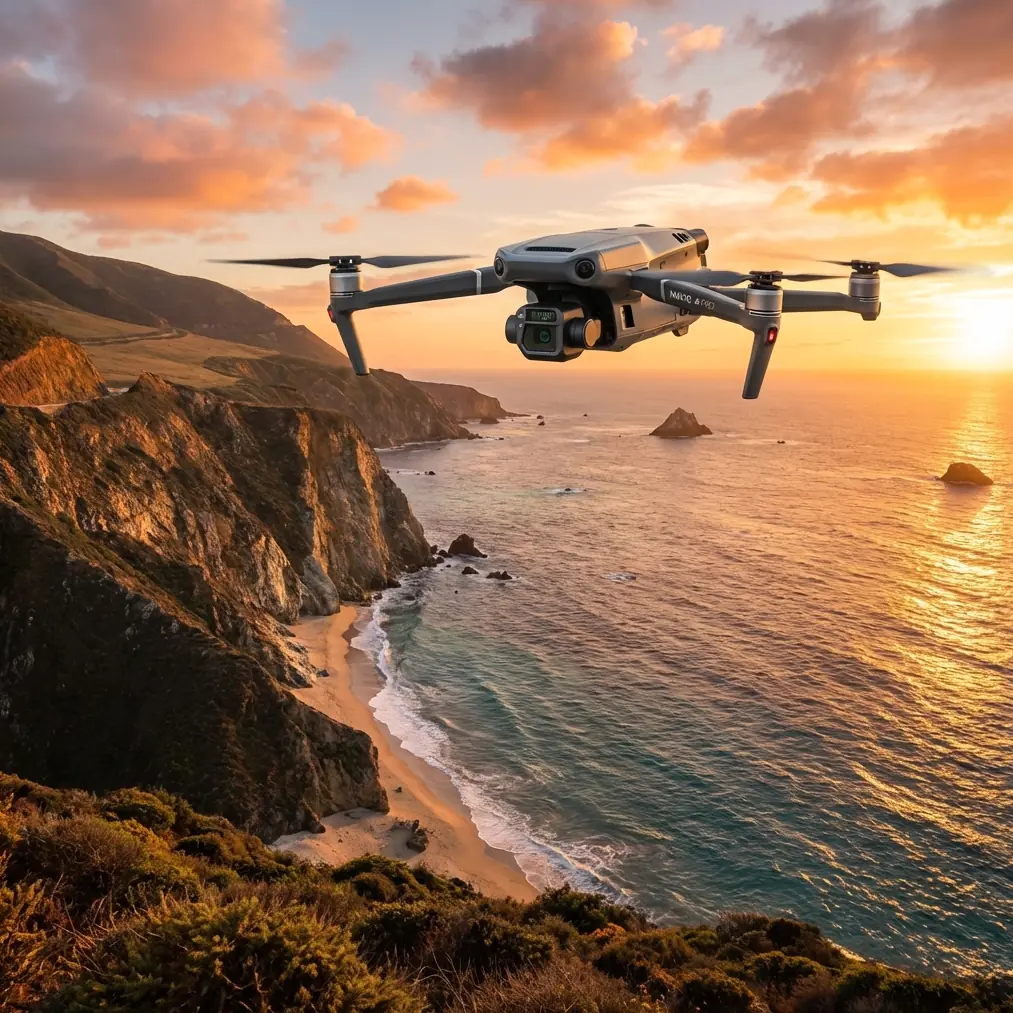
Mavic 3T for Coastal Field Monitoring: A Specialist Technical Review
META: Expert review of the DJI Mavic 3T for coastal field monitoring, with practical insight on thermal signature, O3 transmission, AES-256, workflow planning, and sensor use in humid, wind-exposed environments.
By Dr. Lisa Wang, Specialist
Coastal field monitoring looks simple from a distance. Launch, collect images, map the crop, identify stressed zones, land. In reality, the edge conditions change everything. Salt air affects visibility. Wind over flat ground can turn a neat grid into a battery management exercise. Temperature gradients shift quickly between wet soil, standing water, drainage channels, and crop rows. Wildlife is not a side note either. In one early-morning survey near a brackish irrigation perimeter, a flock of egrets lifted from a reed line just as the aircraft was entering a low-altitude leg. The mission stayed safe because the pilot could identify the movement immediately, pause the run, and re-route around the disturbance instead of pressing on blind.
That kind of moment is where the Mavic 3T becomes interesting. Not because it is a general-purpose drone with thermal added on, but because its sensing stack and field mobility change how a coastal monitoring team can work when conditions are dynamic and time windows are short.
This review takes a technical angle. The goal is not to repeat a spec sheet. It is to explain where the Mavic 3T fits in real field operations, and where deeper aircraft-design thinking still matters even in a compact UAV.
Why coastal fields are a harder test than inland farms
A coastal site compresses several inspection challenges into a single mission area. Moisture levels vary fast. Surface reflectivity can be inconsistent. Wind is often less predictable because open terrain gives it room to build. Morning thermal contrast can be excellent, then flatten out faster than expected once the sun starts heating the top layer of soil and vegetation. If your workflow depends only on visible imagery, you can miss subsurface irrigation issues, saturated patches, or drainage anomalies until they become obvious in the canopy.
That is where thermal signature analysis earns its place. On the Mavic 3T, the practical value is not just “seeing heat.” It is separating patterns that would otherwise blend together in RGB imagery: a blocked drainage line warming differently than surrounding soil, uneven evaporation across planted rows, or a pump-fed section of a field behaving unlike gravity-fed sections nearby.
In coastal operations, those distinctions matter because salinity management and water movement are often inseparable. A thermal layer can expose the consequences before a standard visual pass tells the full story.
The Mavic 3T’s real strength: short deployment cycles with multi-layer evidence
For field teams, the Mavic 3T shines when one launch can support more than one decision path. You can run a broad visual survey, check thermal anomalies, and validate suspect zones without bringing a second platform. That matters at coastal sites because weather windows can narrow abruptly. A machine that is easy to reposition is often more useful than a larger aircraft that promises more endurance but requires a more cumbersome setup.
The Mavic 3T also fits well into mixed workflows. A grower or agronomist may need quick thermal reconnaissance in the morning, then a tighter photogrammetry run over selected blocks later with proper overlap and GCP-backed control points. Even though the aircraft is often associated with public-safety marketing, its civilian value in industrial and agricultural monitoring is strongest when it reduces delays between detection and verification.
This is especially true when teams are tracking water stress, embankment seepage, levee softening, or irregular irrigation performance along coastal plots.
What classic aircraft design can still teach Mavic 3T operators
The reference material behind this article comes from civil aircraft design manuals, not from small-drone brochures. At first glance, exhaust nozzle integration and fuel-system electrostatic safety seem unrelated to a folding UAV. They are not unrelated at all. They remind us that aircraft performance is never just about one component.
One reference point states that exhaust system nozzle design should be handled as an integrated problem across overall layout, aerodynamics, structure, and acoustics. That systems view is directly relevant to Mavic 3T operations. On a small drone, you are not designing a nozzle, but you are still balancing linked variables: airframe behavior in gusts, sensor payload usefulness, flight path geometry, noise near sensitive wildlife, and data quality under changing environmental loads. The operational lesson is straightforward: do not treat imaging, flight stability, and mission timing as separate decisions.
The same source also emphasizes that nozzle layout can strongly affect drag and thrust because of interaction between jet flow and the surrounding external flow. For a Mavic 3T operator in coastal fields, the equivalent principle is propulsive efficiency under disturbance. You feel it when crosswinds on an exposed dike force more aggressive stabilization, which then affects battery burn and timing on mapping legs. The manual’s language may come from larger aircraft, but the operational significance carries over cleanly: vehicle-environment interaction is not abstract theory. It shapes what data you can trust by the end of the flight.
The source goes even deeper by listing performance parameters used in nozzle design, including thrust, mass flow, static pressure, total pressure recovery, and thrust coefficient. Nobody flying a Mavic 3T in a field is calculating nozzle thrust coefficient on-site, but the mindset matters. Serious aerial data collection depends on measurable performance variables, not just “it flew fine.” If your coastal mission has inconsistent ground speed, unusual power consumption, or unstable altitude hold over certain legs, that should be treated as a data-quality issue, not just a piloting footnote.
Why signal reliability matters more over wet ground and open edges
Coastal monitoring often means long visual corridors with very little shielding. That sounds ideal for a transmission link, but reflected surfaces, moving equipment, shelter belts, and terrain transitions can still complicate consistency. This is where O3 transmission becomes more than a marketing checkbox. On a practical level, a robust link helps preserve decision-making margin when you are investigating a thermal anomaly near a drainage canal or a soft field boundary and need to pause, zoom, and reposition without guesswork.
For operators working within approved visual-line-of-sight constraints today but preparing for more scalable workflows tomorrow, link confidence is part of BVLOS readiness thinking, even if the actual mission is not flown BVLOS. The aircraft, the procedures, and the organization all need to mature together. A platform with stable transmission behavior helps teams build disciplined habits around route design, contingency planning, and data review.
Security also deserves more attention than it usually gets in agriculture. If you are collecting imagery over managed fields, pumping stations, storage areas, or contracted infrastructure, encryption is not a luxury. AES-256 support matters because rural operations are increasingly data-driven. Crop health layers, thermal reports, and georeferenced inspection outputs can have commercial sensitivity. The question is no longer whether small-drone data needs protection. It does.
Thermal use in the field: what the Mavic 3T reveals that RGB often does not
The Mavic 3T’s thermal channel is most useful when the operator understands what not to trust at first glance. Coastal terrain creates false confidence. A warm patch may indicate restricted water flow. It may also be sunlight history, shallow standing water, compacted soil, or a difference in plant density. That is why thermal must be interpreted against mission timing, recent weather, and field structure.
The right workflow usually has three steps:
- Wide thermal reconnaissance to identify outliers.
- Visual confirmation with the zoom or standard imaging view.
- Follow-up mapping or ground inspection in narrowed target zones.
This sequence avoids the common mistake of trying to treat thermal imagery as a standalone diagnosis. The Mavic 3T is excellent at flagging priority areas. It becomes far more valuable when paired with disciplined verification.
During the egret incident I mentioned earlier, thermal was also useful after the reroute. The birds had been standing in a shallow, cooler wet strip that visually blended into the surrounding vegetation from certain angles. Once the disturbance cleared, the team could see that the wet band itself extended farther than expected, which then justified a second inspection pass. A wildlife interruption turned into a drainage finding. That is a very coastal kind of outcome.
Photogrammetry, GCPs, and the “don’t overpromise” rule
The Mavic 3T can support mapping workflows, but experienced operators should resist the urge to present every mission as survey-grade by default. Coastal field management often benefits from relative change detection more than legal-grade measurement. If the purpose is to compare drainage performance block by block or track recurring stress patterns, repeatable methodology matters at least as much as maximum precision.
Still, GCP discipline has a place. When embankment deformation, channel edge movement, or infrastructure adjacency matters, introducing GCPs improves trust in the outputs. The point is not to force a heavy survey workflow onto every agricultural task. The point is to know when field decisions require stronger positional confidence.
Photogrammetry in coastal areas also demands care with overlap, sun angle, and wind timing. Crops moving in the breeze reduce reconstruction quality. Tidal influence near low-lying areas can alter surface appearance within the same operational day. A Mavic 3T user who understands those variables will get more practical value from the platform than one who flies neat grids without environmental context.
Battery logic matters more than brochure endurance
Hot-swap batteries are often discussed like a convenience feature. In field operations, they are really a continuity feature. Coastal monitoring missions often happen in narrow windows: before wind rises, before irrigation cycles change the thermal picture, before glare becomes unmanageable, before machinery enters a block. A battery workflow that minimizes turnaround preserves the validity of the dataset.
That said, battery management is not only about speed. It is about consistency. If a field block is captured under one thermal regime and the next block under a materially different one because of delays, comparisons become weaker. The Mavic 3T rewards crews that think in mission sequences, not isolated flights.
The overlooked lesson from fuel-system fire safety
The second reference document deals with preventing electrostatic ignition in aircraft fuel systems. On the surface, that belongs to a different class of aviation entirely. Yet one detail is especially instructive: it specifies that fuel-tank materials should have resistivity below 10^7 ohm-cm, and that the electrostatic leakage resistance between fuel, aircraft structure, and ground should satisfy a threshold below 10^8. The document also warns against conditions where insulating surfaces create electrically isolated parts, turning them into charge collectors and spark risks.
Why bring that into a Mavic 3T article for coastal fields? Because it reinforces a habit that professional drone teams need: environmental exposure changes system risk in ways that are not always visible. In coastal operations, moisture, salt contamination, and repeated handling can affect connectors, charging practice, storage discipline, and maintenance quality. The exact fuel-tank physics do not transfer one-to-one to a battery drone, but the engineering principle does: conductivity paths, material choices, and hidden isolation problems can become safety issues if ignored.
For a field operator, the operational significance is practical. Do not reduce aircraft readiness to firmware, props, and remaining battery percentage. Pay equal attention to charging infrastructure, contact cleanliness, storage cases, and post-mission inspection routines, especially in salty environments. The big-aircraft manuals are reminding us that small faults in energy systems are often discovered too late.
Is the Mavic 3T the right aircraft for coastal field monitoring?
For many teams, yes—if the mission requires fast deployment, thermal screening, visual verification, and compact logistics. It is particularly effective for recurring inspections over irrigation zones, drainage infrastructure, coastal crops, access roads, and field-edge disturbances where conditions shift quickly and decisions need to be made the same day.
It is less ideal when operators confuse convenience with immunity from environmental limits. The Mavic 3T is still a compact aircraft. Wind, moisture, reflective surfaces, and moving vegetation all influence the quality of what it can tell you. Used correctly, though, it closes the gap between “something looks wrong out there” and “we know where to inspect first.”
That is its real value.
If you are planning a coastal field workflow and want a practical discussion around mission design, thermal interpretation, mapping discipline, or secure data handling, you can message a field specialist directly here.
Ready for your own Mavic 3T? Contact our team for expert consultation.