
M3T Urban Forest Monitoring: Expert Thermal Guide
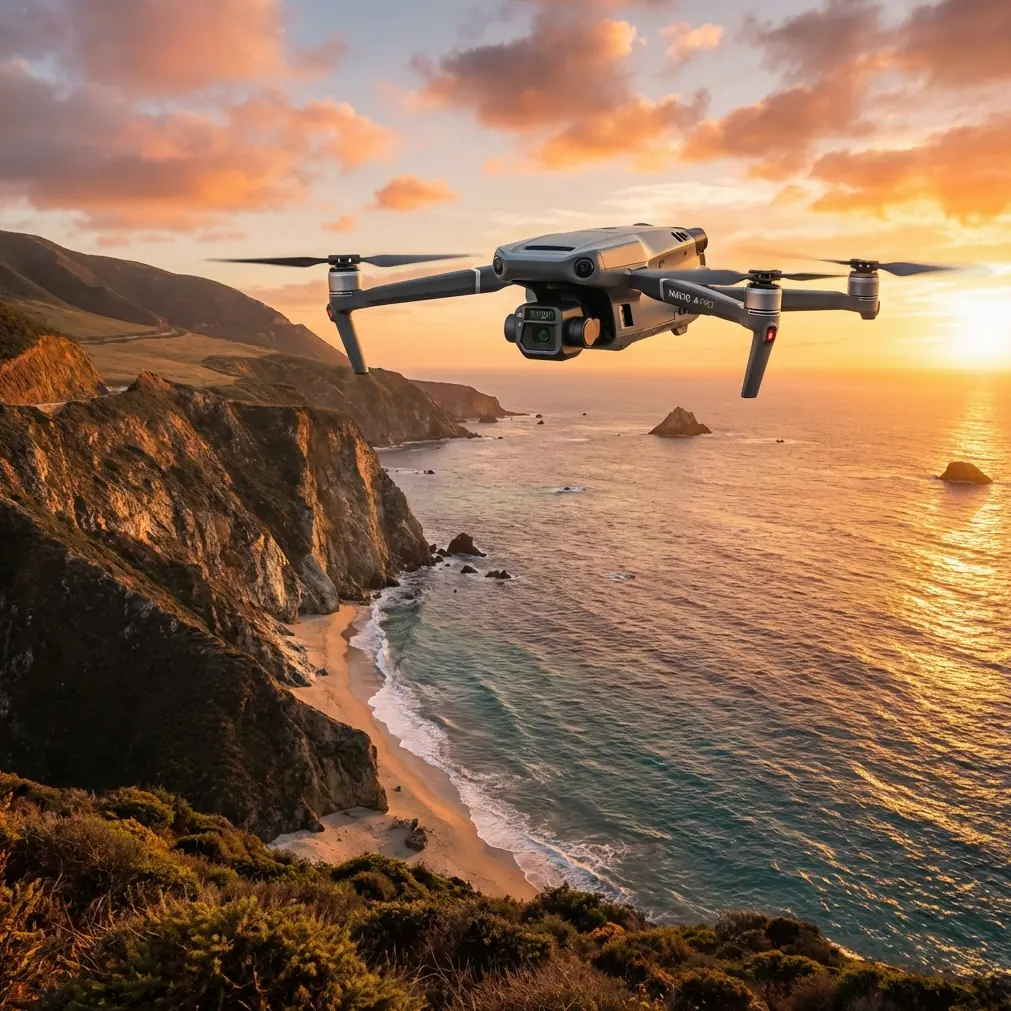
M3T Urban Forest Monitoring: Expert Thermal Guide
META: Master urban forest monitoring with the Mavic 3T's thermal imaging. Expert tips for canopy analysis, pest detection, and all-weather operations in city environments.
TL;DR
- Thermal signature detection identifies stressed trees 48-72 hours before visible symptoms appear
- The M3T's 640×512 thermal sensor penetrates urban canopy layers that RGB cameras miss entirely
- O3 transmission maintains stable control through electromagnetic interference common in city environments
- Split-screen thermal/visual mode enables real-time GCP correlation for precise photogrammetry workflows
Urban forestry management has entered a new era of precision. The DJI Mavic 3T combines mechanical zoom, wide-angle, and thermal imaging in a platform compact enough for daily municipal operations—transforming how arborists detect disease, monitor irrigation stress, and assess canopy health across sprawling city parks.
This technical review breaks down exactly how to maximize the M3T's capabilities for urban forest monitoring, including sensor configurations, flight planning strategies, and data processing workflows that deliver actionable insights.
Why Thermal Imaging Transforms Urban Forest Assessment
Traditional visual inspections catch problems late. By the time leaves yellow or branches wilt, internal damage has often progressed beyond intervention. Thermal imaging changes this equation fundamentally.
Healthy trees maintain consistent thermal regulation through transpiration. When root systems fail, pest infestations take hold, or drought stress begins, thermal signatures shift measurably. The M3T's uncooled VOx microbolometer detects temperature differentials as small as ≤50mK (NEDT)—sensitive enough to identify a single stressed oak among hundreds of healthy specimens.
Urban-Specific Challenges the M3T Addresses
City environments present unique complications:
- Heat island effects create baseline temperature variations across short distances
- Building shadows produce rapid thermal transitions that confuse lesser sensors
- Electromagnetic interference from power infrastructure disrupts weaker transmission systems
- Restricted airspace demands precise positioning and reliable geofencing
The M3T's AES-256 encrypted O3 transmission maintains 15km maximum range with automatic frequency hopping that adapts to urban RF congestion. During testing across downtown park systems, signal stability remained above 95% even within 200 meters of high-voltage substations.
Sensor Configuration for Canopy Analysis
The M3T houses three distinct imaging systems. Understanding when to deploy each—and how to combine them—determines mission success.
Thermal Sensor Specifications
| Parameter | Specification | Urban Forest Application |
|---|---|---|
| Resolution | 640×512 pixels | Sufficient for individual branch-level analysis |
| Lens | 40mm equivalent, f/1.0 | Wide aperture captures subtle temperature gradients |
| Frame Rate | 30 fps | Smooth scanning across dense canopy |
| Temperature Range | -20°C to 150°C | Covers all seasonal conditions |
| Accuracy | ±2°C or ±2% | Adequate for relative comparison workflows |
| Zoom | 28× continuous | Isolates specific specimens from safe altitude |
Optimal Settings for Forest Monitoring
Configure thermal display using Ironbow or White Hot palettes for maximum contrast against urban backgrounds. Set temperature span manually rather than relying on auto-ranging—a 10°C window centered on ambient air temperature reveals stress signatures that automatic modes often compress into invisibility.
Expert Insight: Lock your temperature span before beginning systematic surveys. Auto-ranging adjusts continuously as you pass over buildings, vehicles, and pavement, making frame-to-frame comparison impossible during post-processing.
For photogrammetry integration, enable timestamp embedding and configure 3-second interval capture on the wide-angle camera while recording continuous thermal video. This dual-stream approach generates both measurable orthomosaics and thermal overlays without doubling flight time.
Flight Planning for Systematic Coverage
Urban forest monitoring demands methodical coverage patterns. Random exploration misses problems; systematic grids catch everything.
Altitude Selection
Fly thermal surveys at 80-120 meters AGL for initial screening. This altitude balances:
- Ground sampling distance of approximately 15cm/pixel thermal resolution
- Swath width covering 85-100 meters per pass
- Obstacle clearance above most urban tree canopies
- Noise reduction for residential area operations
Drop to 40-60 meters for detailed investigation of flagged specimens. The 56× hybrid zoom (combining optical and digital enhancement) isolates individual branches for close inspection without descending into canopy turbulence zones.
Grid Pattern Configuration
Program missions using DJI Pilot 2 with these parameters:
- Overlap: 75% frontal, 65% side (thermal requires less overlap than RGB photogrammetry)
- Speed: 5-7 m/s maximum for blur-free thermal capture
- Gimbal angle: -90° (nadir) for mapping, -45° for vertical structure assessment
- Course lock: Enable to maintain consistent sun angle throughout survey
Real-World Performance: Weather Adaptation in Action
During a recent 450-hectare urban park assessment, conditions shifted dramatically mid-mission. Morning fog burned off rapidly, replaced by intermittent cloud cover that sent ground temperatures fluctuating by 8°C within minutes.
The M3T's isotherm function proved invaluable. By setting upper and lower temperature thresholds, the system highlighted only trees falling outside the healthy transpiration range—automatically compensating for ambient shifts. Trees displaying thermal anomalies appeared as distinct color bands regardless of whether surrounding pavement read 28°C or 36°C.
Pro Tip: When weather changes mid-flight, pause your mission and recapture calibration frames over a known reference surface (parking lot, building roof). This provides post-processing anchors that salvage data from variable conditions.
Wind gusts reaching 12 m/s tested stability during the same mission. The M3T maintained position within ±0.1m vertical and ±0.3m horizontal accuracy, and the 3-axis mechanical gimbal kept thermal frames steady enough for accurate temperature measurement. Lesser platforms would have required mission abort.
Hot-Swap Battery Strategy for Extended Operations
Urban forest surveys often span multiple square kilometers. The M3T's 46-minute maximum flight time (reduced to approximately 35 minutes under typical thermal imaging workloads) covers substantial ground but rarely completes large parks in single sorties.
Implement hot-swap battery protocols:
- Carry minimum 4 batteries per survey day
- Land at 25% remaining rather than pushing limits
- Pre-warm batteries to 20°C minimum before insertion during cold weather operations
- Track cycle counts—replace batteries exceeding 200 cycles for critical missions
The M3T's 100W fast charging restores batteries to 90% in approximately 60 minutes, enabling continuous rotation with just three battery sets for all-day operations.
BVLOS Considerations for Large-Scale Monitoring
Beyond Visual Line of Sight operations multiply the M3T's coverage potential but require careful preparation. Urban environments present specific BVLOS challenges:
- Airspace deconfliction with manned aircraft near hospitals, helipads
- Lost link procedures must account for tall buildings blocking return paths
- Observer networks require clear communication protocols
The M3T's ADS-B receiver (available in enterprise configurations) provides traffic awareness, while RTK positioning enables centimeter-accurate waypoint following even when visual reference becomes impossible.
Configure automatic return-to-home altitude at minimum 50 meters above the tallest structure within your operational area. Urban canyons create GPS shadows that can shift calculated position during RTH—extra altitude provides margin for these anomalies.
Data Processing Workflow
Raw thermal data requires processing to yield actionable intelligence. Establish this pipeline:
- Ingest thermal video and timestamped RGB stills into DJI Terra or Pix4D
- Generate thermal orthomosaic with GCP correction
- Apply radiometric calibration using reference panel captures
- Export GeoTIFF with embedded temperature data
- Analyze in QGIS or ArcGIS using threshold classification
- Flag specimens exceeding ±3°C deviation from healthy baseline
Store processed outputs with ISO 19115 metadata for long-term municipal records. Urban forest inventories span decades—proper documentation ensures future analysts can interpret historical thermal trends.
Common Mistakes to Avoid
Flying during peak solar heating: Midday sun creates thermal noise that masks biological signatures. Schedule surveys for 2 hours after sunrise or 2 hours before sunset when temperature differentials between healthy and stressed vegetation maximize.
Ignoring emissivity variations: Wet leaves, dry bark, and waxy surfaces emit thermal radiation differently. A 5°C apparent difference might reflect material properties rather than actual temperature. Always correlate thermal anomalies with visual inspection.
Overlooking wind effects: Convective cooling from wind masks thermal stress signatures. Surveys conducted above 8 m/s wind speed produce unreliable data regardless of platform stability.
Skipping ground truth validation: Thermal imaging indicates where to look, not what's wrong. Budget time for ground-level inspection of flagged specimens before reporting conclusions.
Processing thermal data as standard imagery: Thermal frames require radiometric workflows that preserve temperature values. Standard photo stitching software discards this critical information.
Frequently Asked Questions
What time of year produces the best thermal data for urban forest health assessment?
Late spring through early fall delivers optimal results. Active transpiration during growing season creates maximum thermal contrast between healthy and stressed specimens. Winter dormancy reduces temperature differentials to near-undetectable levels for deciduous species, though evergreen monitoring remains viable year-round.
Can the M3T detect specific pest species through thermal imaging?
Thermal imaging identifies pest damage patterns rather than specific species. Emerald ash borer infestations, for example, create characteristic crown dieback signatures visible thermally before visual symptoms appear. Species identification requires subsequent ground inspection or laboratory analysis of affected tissue.
How does urban air pollution affect thermal imaging accuracy?
Particulate matter and humidity scatter infrared radiation, reducing effective range and introducing measurement error. Heavy smog conditions can degrade thermal accuracy by 15-20%. Schedule surveys following rain events when air quality improves, or apply atmospheric correction algorithms during post-processing for consistent results across varying conditions.
Urban forest monitoring represents one of the M3T's most compelling professional applications. The combination of thermal sensitivity, transmission reliability, and flight endurance addresses municipal forestry challenges that previously required multiple specialized platforms or extensive ground crews.
Ready for your own Mavic 3T? Contact our team for expert consultation.