
Mavic 3T for High-Altitude Power Line Monitoring
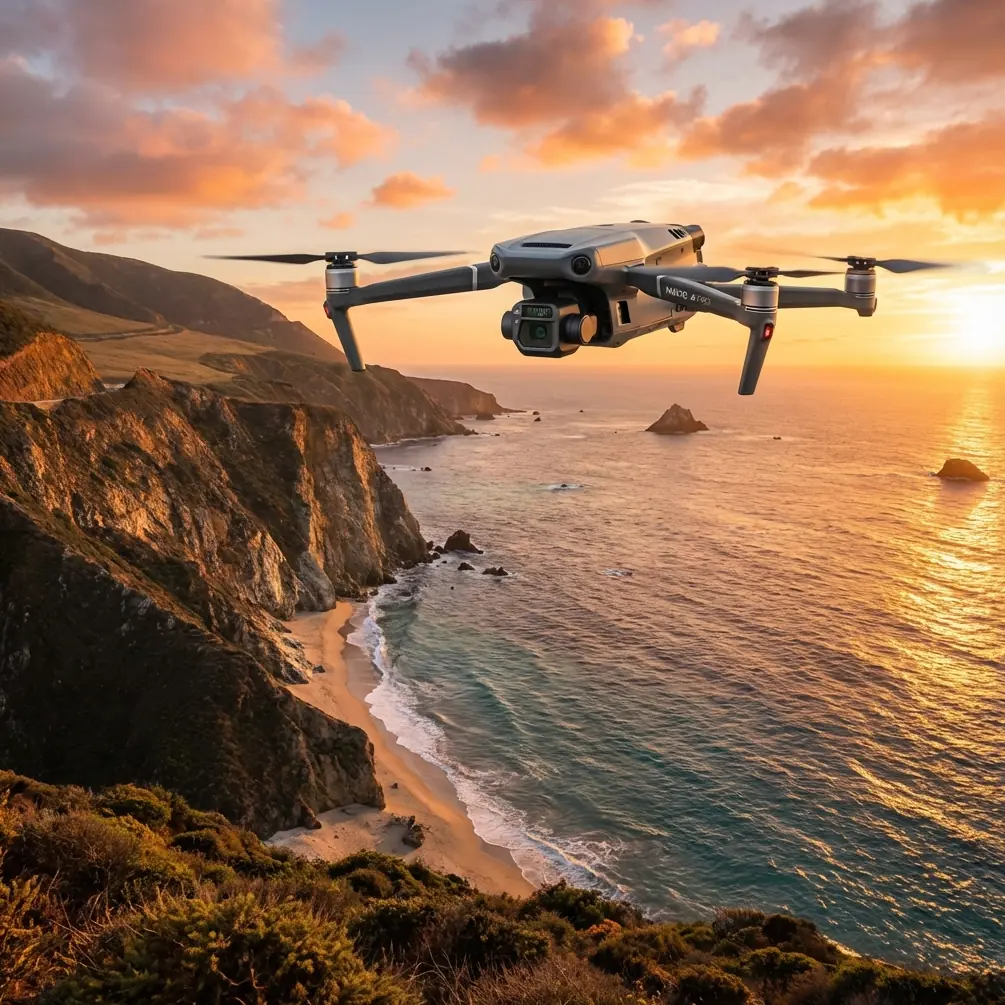
Mavic 3T for High-Altitude Power Line Monitoring: A Practical Field Tutorial
META: Expert tutorial on using the DJI Mavic 3T for high-altitude power line inspection, covering thermal workflow, weather shifts, transmission reliability, and data capture strategy.
High-altitude power line inspection asks more from a drone than a standard visual survey. Thin air changes flight behavior. Wind moves unpredictably around ridgelines and towers. Temperature swings can distort what a thermal sensor sees. And if the aircraft drops signal behind terrain, the mission quickly shifts from efficient to risky.
That is exactly where the Mavic 3T earns attention. Not because it is the biggest aircraft in the utility toolbox, but because it combines a thermal payload, a tele camera, a wide camera, and robust transmission in a package that can be deployed fast when a crew needs answers now. For utilities working on mountain corridors or elevated transmission routes, that matters more than spec-sheet theater. The value is operational: get in, collect evidence, and get out before weather or access conditions worsen.
This guide is built around that use case—monitoring power lines in high altitude with the Mavic 3T—and it is written from a field perspective rather than a marketing one.
Why the Mavic 3T fits this specific job
The Mavic 3T is not just a camera drone with a thermal add-on. Its strength is the way its sensors work together during inspection. You can use the wide camera to establish context, the tele camera to isolate hardware details from a safer stand-off distance, and the thermal sensor to identify abnormal heat patterns that may point to resistance issues, connector degradation, or load-related anomalies.
That layered workflow matters on power lines because not every thermal hotspot means a defect, and not every visible defect presents an obvious thermal signature. A clamp with slight corrosion may show subtle heating under load. An insulator contaminated by environmental buildup may demand close optical confirmation. A crossarm assembly partially shadowed by terrain can look normal in a visible image while still producing a suspicious thermal contrast if conditions are right.
For crews operating at elevation, the aircraft’s O3 transmission system also deserves practical attention. Long corridors, uneven topography, and steel infrastructure can complicate signal behavior. Strong transmission does not grant immunity from terrain masking, but it does expand the margin for maintaining a stable live feed while repositioning along a right-of-way. In utility work, that extra resilience is not a luxury. It directly affects how confidently the pilot can inspect from offset angles without repeatedly breaking visual understanding of the scene.
Security also enters the conversation more often than casual users realize. Utility imagery may include critical infrastructure layouts, substation approaches, or access roads. AES-256 encryption is therefore not just a line in a brochure. It is operationally relevant when teams are transmitting live feeds or moving inspection data through controlled internal workflows.
Mission planning for mountain and elevated corridors
If the task is power line monitoring at altitude, mission success starts before the props spin.
Begin with terrain, not towers. Review elevation profiles across the inspection segment and identify where ridgelines, cut slopes, or dense vegetation could interrupt line of sight. A corridor that looks straightforward on a map can produce difficult RF geometry once the drone moves below a crest or behind a steel structure. Build launch and recovery points around communication reliability as much as around road access.
Next, define the mission type. If the goal is defect detection, your capture plan should prioritize oblique inspection angles, telephoto verification, and thermal comparison across similar components. If the goal is corridor documentation or asset mapping, then photogrammetry enters the picture. The Mavic 3T is not a dedicated high-end surveying platform, but it can still support useful mapping deliverables when the operator controls overlap, altitude consistency, and GCP placement. Ground control points become especially valuable in mountain environments where elevation change can magnify alignment errors. Even a strong image set loses value if the resulting model drifts in position relative to the actual infrastructure.
The third planning layer is weather. At high altitude, forecasts often understate local variability. You may launch in stable light with manageable wind and watch conditions change within minutes as cloud cover builds on one side of the valley. Thermal work is also sensitive to environmental timing. Surface heating, wind chill effects, and reflected radiation can alter the apparent thermal signature of hardware. If you want thermal data that supports maintenance decisions, record ambient conditions and understand how those conditions shape what the sensor is showing you.
A field workflow that actually works
For most power line tasks, I recommend a four-stage workflow with the Mavic 3T.
Stage one: context pass.
Use the wide camera to establish the structure, conductor routing, vegetation proximity, and terrain relationships. Do not rush into close detail immediately. At altitude, the environment can be more revealing than the hardware in the first minutes of flight. Watch the wind effects on the drone and note where rotor corrections increase. That tells you where precision hovering may be less comfortable later in the mission.
Stage two: optical isolation.
Shift to the tele camera and inspect connectors, insulators, jumpers, dampers, and attachment points from a controlled offset position. This stand-off approach is one of the Mavic 3T’s practical advantages. You do not need to crowd energized infrastructure to document detail. That improves safety and often gives better image discipline because the aircraft is not constantly making tiny position corrections near the structure.
Stage three: thermal validation.
Now bring in the thermal payload with a specific question in mind. You are not hunting for “anything warm.” You are comparing components, phases, and similar connection points under similar viewing conditions. Thermal inspection becomes useful when the image tells a maintenance story. Is one connector running hotter than its counterpart? Is there asymmetry across phases? Is the hotspot persistent from multiple angles, or does it disappear with a slight change in perspective, suggesting reflection rather than real heat concentration?
Stage four: evidence capture.
Before leaving the structure, capture a small but disciplined package of evidence: one wide contextual frame, several tele close-ups, and thermal images with notes about angle, distance, and environmental conditions. Utilities do not benefit from hundreds of redundant images if none are organized around a clear finding.
When weather turns mid-flight
One of the most common mistakes in high-altitude drone inspection is assuming that a stable takeoff means a stable mission.
On one mountain corridor flight, conditions shifted halfway through a tower inspection. The first leg was clean: light crosswind, sharp visibility, and consistent telemetry. Then cloud moved faster than expected across the ridge, flattening contrast on the visible feed while gusts started spilling down the slope. Nothing dramatic. But enough to change how the aircraft behaved.
This is where the Mavic 3T’s compact form becomes both an advantage and a limit. It handles moderate change well when the pilot reacts early. The aircraft can maintain a composed hover long enough to finish a short evidence sequence, and the O3 link helps preserve situational awareness even as the aircraft moves slightly off the original inspection line. But weather shifts at altitude punish hesitation. If gust correction becomes frequent, if the live image starts losing useful clarity, or if terrain begins threatening link geometry, the right move is not to “push through.” It is to shorten the task, capture the minimum decisive data, and reposition or recover.
The drone handled that weather change because the crew adjusted the mission immediately. They stopped chasing a full structure inventory and focused on one suspect connector that already showed a distinct thermal signature compared with the adjacent phase. They secured wide, tele, and thermal documentation, then brought the aircraft back before the ridge turbulence built further. That is not a compromise. That is professional field judgment.
The lesson is simple: the Mavic 3T gives you enough sensor flexibility to salvage a mission when conditions degrade, but only if you shift from collection volume to collection quality.
Reading thermal data without fooling yourself
Thermal inspection on power infrastructure looks easy from the outside. Point the sensor, find the bright spot, flag the problem. In reality, high-altitude work adds several traps.
Wind can cool components unevenly. Sun angle can warm one side of hardware and leave another side shaded. Reflective surfaces can produce misleading signatures. Distance and viewing angle can reduce confidence if the target occupies too little of the frame. That means thermal interpretation on the Mavic 3T should always be tied back to the visible cameras.
If a fitting appears hotter than neighboring hardware, verify it with the tele camera. Check whether the anomaly aligns with a logical mechanical or electrical feature. Compare it against similar components on the same structure. If possible, circle slightly to test whether the hotspot persists. A true issue tends to remain consistent across minor changes in viewpoint; a false read often does not.
This is why the Mavic 3T is effective in utility work. Its thermal capability is not isolated. It is supported by a camera stack that helps the pilot interpret what the thermal feed is actually saying.
Photogrammetry and GCP use around line assets
Not every line inspection needs a map product, but some operations benefit from a documented 3D record of tower surroundings, access routes, or vegetation encroachment zones. In those cases, photogrammetry can add value if used carefully.
At high altitude, the temptation is to fly higher and faster to cover more ground. That can work for broad corridor awareness, but once the project calls for measurement confidence, discipline matters. Maintain consistent flight geometry. Watch overlap. And if the terrain is irregular, use GCPs in locations that represent the vertical variation of the site rather than clustering them on one easy flat surface near the road.
The operational significance is straightforward: without solid control, a terrain-heavy reconstruction may look convincing while being misaligned where it matters most—around tower bases, slope breaks, or access paths. A utility team planning maintenance access or checking clearance concerns needs positional trust, not just a visually pleasing model.
Battery management and continuity in the field
Utility crews care about time on task, but they care even more about continuity. At altitude, every interruption costs more because launch points are harder to reach and conditions may close quickly.
That is where a hot-swap battery workflow becomes valuable at the team level, even if the aircraft itself still requires disciplined turnaround procedures. In practice, this means structuring the operation so the next battery set, storage media check, and flight objective are prepared before the aircraft lands. The point is to minimize idle time and prevent rushed decision-making between sorties.
For power line monitoring, battery discipline also affects data quality. A pilot trying to “squeeze in one more tower” on a marginal pack is more likely to rush framing, cut corners on thermal verification, or return with incomplete evidence. Shorter, cleaner sorties usually outperform ambitious ones in mountain environments.
BVLOS considerations
Many power line operators are naturally interested in BVLOS because corridors are long and access is uneven. The Mavic 3T can support serious utility workflows, but BVLOS is never just a hardware question. It is a regulatory, procedural, communications, and risk-management framework.
For high-altitude infrastructure, that framework becomes even more demanding due to terrain masking, changing weather, and the consequences of losing positional awareness near critical assets. If you are planning operations beyond visual line of sight, the aircraft’s transmission capability is only one part of the answer. Observer strategy, route segmentation, emergency procedures, and local regulatory compliance define whether the mission is viable.
That said, the Mavic 3T is a useful platform for building disciplined corridor inspection methods that can later inform more advanced operational models. It teaches crews to think in terms of signal geometry, evidence capture priorities, and environmental thresholds rather than casual point-and-shoot flying.
A practical setup for your next inspection
If you are taking the Mavic 3T into a high-altitude power line environment, keep the workflow simple:
- Start with a terrain and signal plan, not just an asset list.
- Use the wide camera to read the structure in context.
- Use the tele camera to inspect from stand-off distance.
- Use thermal to answer specific comparison questions.
- Treat weather changes as mission-changing events, not inconveniences.
- Support any mapping deliverables with well-placed GCPs.
- Protect inspection data with secure handling practices that match the sensitivity of critical infrastructure.
If your team wants to compare mission profiles or inspection checklists for mountain corridors, this field coordination channel is a practical place to continue the discussion.
The Mavic 3T is at its best when the operator respects what high-altitude utility work demands. It is not a substitute for inspection judgment. It is a compact platform that rewards methodical flying, disciplined thermal interpretation, and fast adaptation when the mountain decides to rewrite your plan mid-flight.
Ready for your own Mavic 3T? Contact our team for expert consultation.