
Mavic 3T in Windy Wildlife Missions: A Technical Review
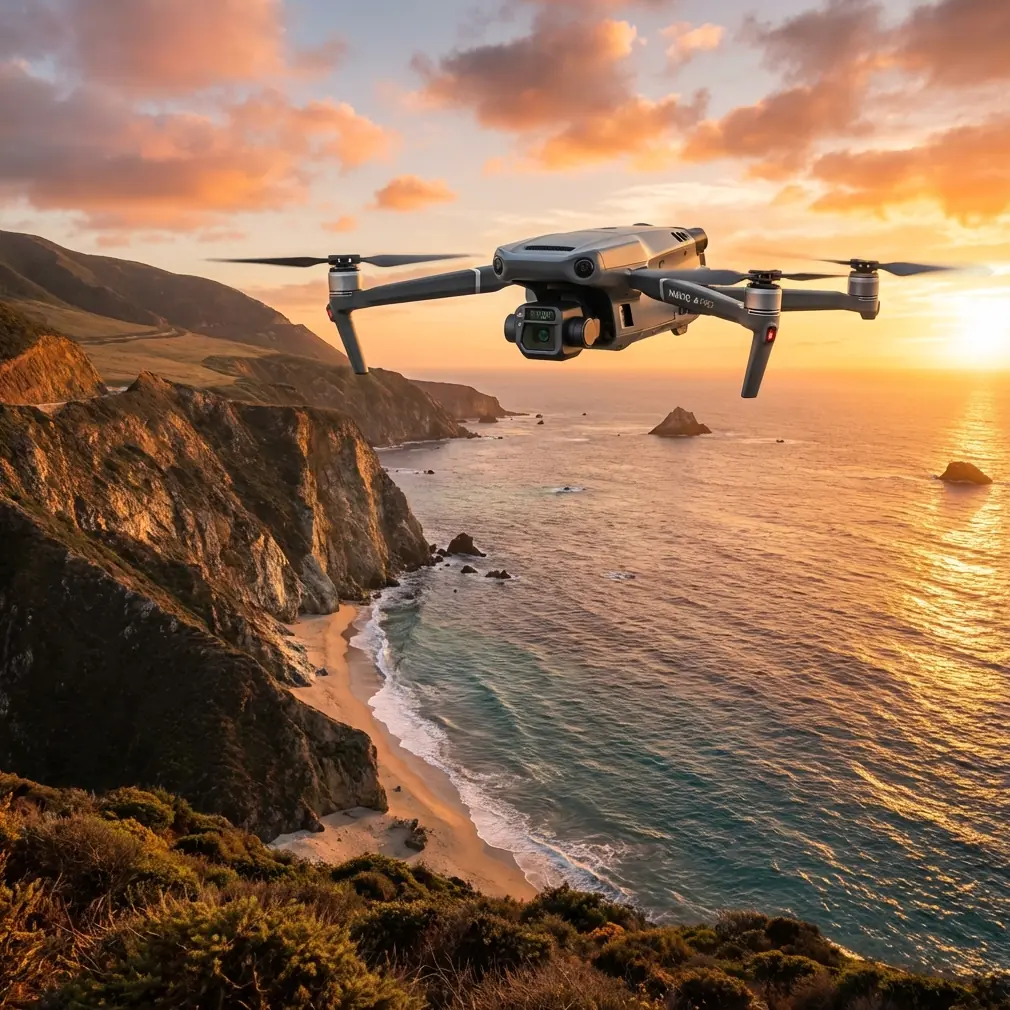
Mavic 3T in Windy Wildlife Missions: A Technical Review from the Field
META: Expert review of the DJI Mavic 3T for wildlife monitoring in windy conditions, covering thermal detection, O3 transmission, AES-256 security, photogrammetry limits, and practical field tactics.
Wind changes everything in wildlife operations. It shifts scent, bends cover, moves birds off lines you expected them to hold, and adds a layer of instability to every drone decision you make. The Mavic 3T is often discussed as a compact thermal platform for public safety and industrial inspection, but in real wildlife work, especially in gusty conditions, its value comes down to something more specific: how reliably it helps you find, verify, and follow animal activity without turning the aircraft into the story.
That distinction matters. When you are monitoring wildlife, the goal is not simply to get airborne and collect imagery. The real task is to gather useful information while minimizing disturbance, holding safe margins in imperfect weather, and preserving enough image quality for decisions that may need to stand up to scientific review or management action. In windy terrain, those demands expose the difference between a drone that looks capable on paper and one that is actually useful in the field.
The Mavic 3T sits in an interesting position. It is portable enough to deploy quickly, sophisticated enough to provide thermal and visual context in one flight, and connected enough to support secure mission workflows through AES-256 encrypted data links. Add O3 transmission into the picture and you get a platform designed to maintain a stable live feed over serious operational distance, which becomes especially relevant when observers are working from a sheltered launch point while tracking movement across open ground. For wildlife teams operating near fragile habitats, cliff edges, marshes, or broad grasslands, that is not a marketing checkbox. It is operational breathing room.
Why Wind Exposes the Real Character of the Mavic 3T
A calm-day evaluation can flatter almost any modern drone. Wind strips away that illusion.
In wildlife monitoring, turbulence introduces three immediate problems. First, it degrades image steadiness and complicates precise visual identification. Second, it increases the pilot’s workload at exactly the moment when attention should stay on animal behavior and mission geometry. Third, it shortens useful loiter time by driving more aggressive power consumption. Those effects stack fast.
The Mavic 3T handles this environment better than many operators expect from a foldable airframe, but not for simplistic reasons. The real advantage is not merely flight stability. It is the way the aircraft lets the pilot switch between thermal interpretation and visual confirmation without wasting time repositioning or swapping systems. In wildlife work, seconds matter. A heat source glimpsed through patchy brush can vanish behind terrain before a crew in a single-sensor workflow has properly classified it.
I saw that dynamic clearly during a windy dawn survey along rough moorland edges where a roe deer doe and a hidden fawn were sheltering in low vegetation. The gusts were enough to shake the canopy and create a cluttered visual scene from above. In RGB alone, the fawn was almost indistinguishable from the surrounding grass pattern. Through thermal, the pair separated from the background immediately as distinct heat signatures, but the stronger significance came from the handoff: the thermal image revealed presence, and the visual sensor helped verify spacing, terrain context, and safe stand-off distance. In plain terms, the drone did not just “spot animals.” It prevented a false negative in conditions where wind made the site harder to read.
That is the kind of outcome professionals care about.
Thermal Signature Detection Is the Core Story
For wildlife teams, the Mavic 3T earns attention because thermal is not an accessory. It changes the structure of the mission.
A thermal signature is rarely a complete answer on its own. Wind, sun angle, wet ground, rock surfaces, and vegetation all complicate what the sensor shows. But in field monitoring, thermal dramatically improves first-pass detection. That is especially useful for crepuscular activity, recovery surveys, nest protection work, and locating animals in mixed cover where visual contrast is weak.
The most practical strength of the Mavic 3T is that it allows an operator to work from detection to interpretation quickly. That matters in windy settings because prolonged hovering over a target area is exactly what you want to reduce. Shorter identification cycles mean less exposure to gusts, less battery drain, and less chance of disturbing the subject.
Operationally, two details stand out:
O3 transmissionhelps preserve a dependable live feed when the aircraft is pushed farther from the crew’s sheltered position, which is common when launch points are chosen for safety rather than perfect line placement.AES-256encryption matters for sensitive wildlife work, especially where location data for protected species, denning sites, or nesting zones must not be casually exposed through insecure workflows.
Those are not abstract enterprise features. If you are documenting a vulnerable raptor site or surveying animals in an area where human pressure is a concern, transmission reliability and link security have direct field consequences.
Wind Changes Thermal Interpretation Too
One mistake I still see is assuming thermal gets easier in wind. Sometimes it does. Often it does not.
Air movement can sharpen the contrast between an animal and a cooling background in early morning periods, which helps. But gusts also move grass, brush, and branches across the frame, adding distraction and making small animals harder to isolate. Surface temperature patterns shift as well. The result is that the operator must know whether they are reading a true thermal signature or a momentary artifact from the environment.
The Mavic 3T is well suited to this judgment call because it encourages a layered scan method. I recommend using broad thermal sweeps first, then narrowing the search with controlled oblique visual passes rather than dropping straight into a static overhead hover. In windy wildlife work, oblique views often tell you more about animal posture, surrounding cover, and escape routes than a high vertical shot.
That becomes critical with species that crouch or flatten when disturbed. A fox cub near a den edge, for instance, may show clearly on thermal but blend visually into broken ground unless the viewing angle is changed. The aircraft’s ability to move from one interpretation mode to another without changing platforms is what makes it genuinely efficient.
The Mavic 3T and Photogrammetry: Useful, But Not the Whole Story
Because photogrammetry and GCP workflows are part of many drone programs, it is worth being precise here. The Mavic 3T can support mapping-oriented tasks, habitat documentation, and change detection, but wildlife operators should avoid treating it as a pure survey machine first and a biological observation tool second.
In windy conditions, mapping quality degrades long before casual observers realize it. Crosswinds alter consistency in overlap patterns, vegetation movement reduces surface coherence, and even minor aircraft attitude adjustments can complicate downstream reconstruction. If your goal is habitat modeling, erosion tracking near nesting areas, or documenting animal pathways relative to terrain, GCP placement becomes even more important. Ground control provides the reference stability that the environment is trying to take away.
That said, the best use of the Mavic 3T in these missions is usually hybrid. Fly the site for contextual thermal observation, collect visual data where environmental conditions permit, and reserve strict photogrammetric outputs for windows when wind and lighting support cleaner capture. Too many teams try to force one sortie into every role. Experienced crews separate biological detection from precision mapping when the conditions demand it.
The aircraft rewards that realism.
Battery Logic in Wildlife Work
Battery management is often discussed like a generic checklist item. In the field, it is central to whether the mission remains controlled.
The phrase hot-swap batteries appears frequently in operational planning, but with a platform like the Mavic 3T, the more meaningful point is mission continuity. Wildlife observation often depends on narrow timing: first light, last heat retention after sunset, a brief lull in animal movement, or a window before weather worsens. Fast battery turnover keeps the crew in that window.
In windy conditions, this becomes more than convenience. Headwinds on return legs consume reserve faster than many less experienced pilots expect, particularly when they linger on a target during classification. Good crews build battery thresholds around the real environment, not the ideal one. They also stage spare packs in a way that minimizes turnaround delay and keeps the observer, pilot, and spotter aligned on the next objective before the relaunch happens.
The Mavic 3T supports that tempo well, and that is one reason it works for wildlife teams that need repeated short launches rather than one oversized flight plan.
Transmission and Trust in Complex Terrain
There is another reason O3 transmission deserves more respect in wildlife operations: terrain rarely cooperates.
You may be working from behind a ridge shoulder, near tree lines, or from a vehicle position chosen to reduce noise near a study area. In those situations, transmission resilience is not just about range. It is about preserving control confidence and video readability when the mission geometry is imperfect. Wind magnifies the need for that confidence because a delayed or unstable feed increases the chance of overcorrecting, creeping too close, or abandoning a promising target area too early.
I would go further: in wildlife missions, trust in the link directly affects behavior around the animals. When pilots feel blind or uncertain, they tend to reposition aggressively. When they trust the feed, they fly cleaner lines and hold better stand-off distances.
That is a practical benefit, not a technical vanity.
Where BVLOS Conversations Start — and Stop
The BVLOS angle often enters discussions around compact enterprise drones, and understandably so. Wildlife monitoring across broad landscapes would benefit enormously from beyond-visual-line-of-sight capability. But a responsible review has to separate platform potential from regulatory and operational reality.
The Mavic 3T has attributes that make people think in BVLOS terms: strong transmission architecture, compact deployment, multisensor utility. Yet wildlife teams should treat BVLOS as a system-level issue, not an aircraft feature. Airspace integration, detect-and-avoid strategies, local authorization, crew competency, terrain analysis, and emergency procedures all matter more than wishful thinking about distance.
In practice, the smarter takeaway is this: even inside visual-line-of-sight operations, the Mavic 3T gives crews some of the workflow efficiency that people often associate with larger BVLOS-capable systems. It covers ground quickly, lets pilots work from safer or less disruptive positions, and compresses detection plus confirmation into a compact sortie. That is already valuable.
Best-Use Cases for Windy Wildlife Monitoring
If I were assigning the Mavic 3T to windy wildlife tasks, I would trust it most in the following scenarios:
- Dawn and dusk thermal scans for mammals using cover edges
- Nesting-site perimeter checks where direct human approach would create more disturbance
- Recovery surveys after habitat management work or controlled burns
- Rapid checks of inaccessible ground before field teams move in
- Mixed observation missions where thermal detection and visual confirmation both matter
I would be more cautious when the objective depends on survey-grade mapping outputs in active wind, very fine species-level identification at long visual stand-off, or prolonged stationary observation in strong gust cycles. The aircraft remains capable, but the mission design has to respect what the environment is doing.
Final Assessment
The Mavic 3T is not interesting because it is small and multisensor. It is interesting because, in wildlife operations, it closes the gap between seeing a possibility and confirming a biological reality. In windy conditions, that gap gets wider. This aircraft narrows it.
Its thermal capability improves detection. Its visual system adds context. O3 transmission helps keep the live view usable when launch positions are dictated by terrain or sensitivity around animals. AES-256 supports the kind of data discipline that protected-species work increasingly requires. And when paired with disciplined battery planning, careful stand-off technique, and realistic expectations around photogrammetry and GCP workflows, it becomes a serious field tool rather than a convenient gadget.
If you are trying to monitor wildlife in wind, the question is not whether the Mavic 3T can fly. Of course it can. The question is whether it helps you make better decisions while keeping disturbance low and mission control high. In my experience, that is where it proves itself.
If you want to compare mission setups or discuss a field workflow, you can message our UAV desk here.
Ready for your own Mavic 3T? Contact our team for expert consultation.