
Mavic 3T Guide: Scouting Coastlines in Remote Areas
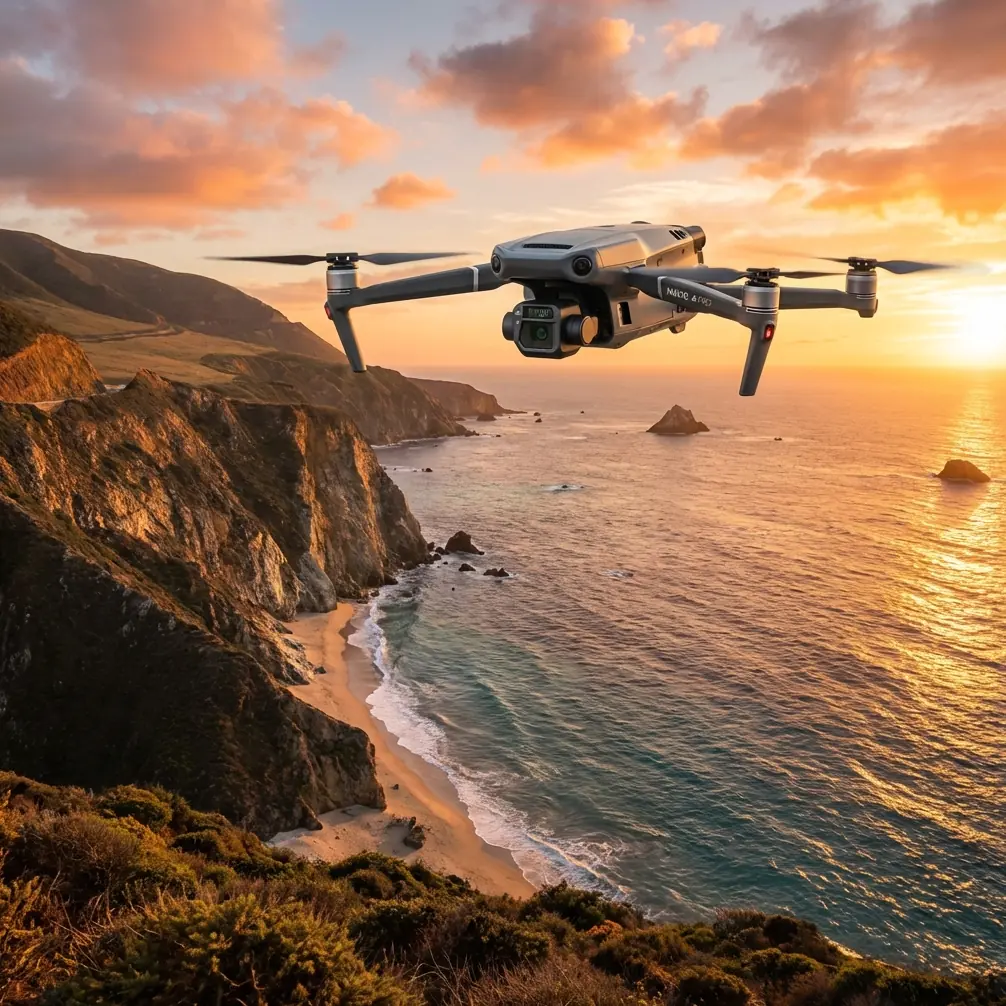
Mavic 3T Guide: Scouting Coastlines in Remote Areas
META: Discover how the Mavic 3T transforms remote coastline scouting with thermal imaging, photogrammetry, and BVLOS capability. Expert guide inside.
By Dr. Lisa Wang, Remote Sensing Specialist | Coastal Geomorphology & Drone Survey Operations
TL;DR
- Optimal flight altitude for coastal scouting sits between 80–120 meters AGL, balancing thermal resolution with coverage area for shoreline mapping.
- The Mavic 3T's triple-sensor payload (wide, zoom, and thermal) eliminates the need for multiple aircraft on remote coastline missions.
- O3 transmission maintains reliable video feeds up to 15 km, critical when surveying stretches of coastline far from launch points.
- Hot-swap batteries and a compact airframe make the Mavic 3T the most field-deployable enterprise drone for expeditionary coastal work.
The Problem: Coastline Scouting Is Broken
Remote coastline surveys have historically demanded expensive helicopter flights, multi-person field crews, and days of ground-truthing. Erosion monitoring, wildlife habitat assessment, search-and-rescue planning, and infrastructure inspection along rugged shorelines all share the same bottleneck: getting reliable, multi-spectral data from terrain that is dangerous, inaccessible, and constantly changing.
Traditional fixed-wing survey drones cover distance but lack the hover precision needed for cliff-face inspection. Larger multirotors deliver sensor quality but are logistically punishing to transport into backcountry launch sites. And single-sensor platforms force operators to fly the same transect multiple times—once for RGB, once for thermal—burning battery life and daylight.
The Mavic 3T was engineered to collapse these tradeoffs into a single, backpack-portable airframe. This guide breaks down exactly how to deploy it for coastline scouting, the altitude strategies that maximize data quality, and the mistakes that sabotage remote missions before they start.
Why the Mavic 3T Dominates Remote Coastal Operations
Triple-Sensor Architecture: One Flight, Three Datasets
The Mavic 3T integrates three sensors into a single gimbal-stabilized payload:
- Wide Camera: 48 MP, 1/2-inch CMOS sensor with an 82.1° FOV for broad contextual mapping.
- Zoom Camera: 48 MP with 56× max hybrid zoom for inspecting sea cliffs, nesting sites, and coastal structures without closing distance.
- Thermal Camera: 640 × 512 resolution uncooled VOx sensor, capturing thermal signature data across a –20°C to 150°C range.
For coastline scouting, this triple-payload means a single sortie at 100 meters AGL simultaneously captures orthomosaic-grade visible imagery, pinpoints wildlife thermal signatures against cool rock faces, and allows real-time zoom verification of erosion features—all without landing to swap sensors.
Expert Insight: When scouting tidal zones, fly thermal passes during pre-dawn or post-sunset windows. Water-saturated sand and exposed rock create maximum thermal contrast during these periods, revealing groundwater seepage paths, buried drainage channels, and animal burrows invisible to RGB sensors. The Mavic 3T's split-screen thermal overlay lets you correlate these thermal signature anomalies with visible features in real time.
O3 Transmission: Command Range That Matches the Coastline
Remote coastlines punish weak data links. Salt spray, wind gusts, and the sheer linear distance of shoreline transects demand a transmission system that doesn't fold under pressure.
DJI's O3 enterprise transmission provides:
- 15 km max transmission range (FCC-compliant, unobstructed)
- 1080p/30fps live feed with sub-200 ms latency
- AES-256 encryption on all data links, ensuring survey data remains secure—essential for government-contracted environmental assessments or defense-related coastal reconnaissance
- Automatic frequency hopping across 2.4 GHz and 5.8 GHz bands, mitigating interference from marine radar and coastal communication infrastructure
This range allows operators to launch from a single accessible point—a beach parking area, a boat deck, a clifftop clearing—and survey kilometers of coastline in a single flight without repositioning.
Hot-Swap Batteries and Field Endurance
Each Mavic 3T battery delivers approximately 45 minutes of flight time under ideal conditions. In coastal environments with sustained winds of 15–25 km/h, expect 33–38 minutes of effective mission time.
Hot-swap batteries are the operational multiplier here. A solo operator carrying four batteries can execute roughly 2.5 hours of flight time in a single field session—enough to survey 8–12 km of linear coastline at mapping-grade overlap settings.
The compact form factor (weight under 920 g with battery) means the entire system—aircraft, controller, four batteries, charging hub—fits in a single backpack under 8 kg, viable for hike-in access to remote launch sites.
Optimal Flight Altitude Strategy for Coastal Scouting
Altitude selection is the single most consequential planning decision for coastline missions. Get it wrong, and you either waste batteries on excessive overlap or produce data too coarse for analysis.
Altitude Selection by Mission Objective
| Mission Type | Recommended Altitude (AGL) | GSD (Wide Camera) | Thermal Pixel Size | Notes |
|---|---|---|---|---|
| Erosion mapping | 80–100 m | ~2.1 cm/px | ~16 cm/px | Sufficient for volumetric change detection |
| Wildlife survey | 100–120 m | ~2.6 cm/px | ~19 cm/px | Minimizes disturbance; thermal signature detection reliable for mammals >30 cm |
| SAR scouting | 60–80 m | ~1.6 cm/px | ~12 cm/px | Prioritize thermal resolution; reduce speed to 5 m/s |
| Infrastructure inspection | 30–50 m | ~0.8 cm/px | ~6 cm/px | Use zoom camera for detail; wide camera for context |
| Photogrammetry / 3D model | 80–100 m | ~2.1 cm/px | N/A | 75% frontal / 65% side overlap minimum; deploy GCP targets on accessible beach sections |
Pro Tip: For photogrammetry-grade coastline models, place GCP (Ground Control Points) every 150–200 meters along accessible beach stretches, using high-visibility targets weighted against wind. Even partial GCP coverage dramatically improves absolute positional accuracy when combined with the Mavic 3T's onboard RTK-compatible GNSS. Without GCPs, expect horizontal accuracy of ±1.5 m; with them, you can achieve ±2 cm.
BVLOS Considerations for Extended Coastline Surveys
Many coastline scouting missions inherently push beyond visual line of sight (BVLOS). A 5 km stretch of shoreline disappears behind headlands, cliff faces, and vegetation within the first kilometer of flight.
The Mavic 3T supports BVLOS operations through:
- Waypoint-based autonomous flight via DJI Pilot 2 and FlightHub 2 integration
- ADS-B receiver for manned aircraft awareness
- Return-to-Home (RTH) with dynamic altitude adjustment to clear terrain obstacles
- O3 transmission redundancy maintaining link integrity far beyond visual range
Operators must secure appropriate BVLOS waivers or exemptions from their national aviation authority before executing these missions. In many jurisdictions, this requires a safety case demonstrating reliable command-and-control, detect-and-avoid capability, and contingency procedures for link loss.
Document every mission with automated flight logs and AES-256-encrypted telemetry records—these are mandatory evidence for regulatory compliance and client deliverables.
Technical Comparison: Mavic 3T vs. Alternative Coastal Survey Platforms
| Feature | Mavic 3T | Competitor A (Mid-Range Enterprise) | Competitor B (Fixed-Wing Mapper) |
|---|---|---|---|
| Weight | <920 g | ~2.1 kg | ~4.5 kg |
| Flight Time | Up to 45 min | ~38 min | ~90 min |
| Sensors | Wide + Zoom + Thermal | Wide + Thermal | Wide only |
| Transmission Range | 15 km (O3) | 10 km | 12 km |
| Zoom Capability | 56× hybrid | 30× hybrid | None |
| Thermal Resolution | 640 × 512 | 640 × 512 | N/A |
| Portability | Backpack | Pelican case | Launcher required |
| BVLOS Support | Waypoint + RTH | Waypoint + RTH | Waypoint + auto-land |
| Data Encryption | AES-256 | AES-128 | None |
| Hot-Swap Batteries | Yes | No | No |
The Mavic 3T's combination of triple sensors, sub-kilogram weight, and AES-256 security makes it uniquely suited to remote coastline work where logistics, data quality, and operational security intersect.
Common Mistakes to Avoid
1. Ignoring Wind Gradient Near Cliffs
Coastal cliffs produce rotor-like wind shear on their lee side. Flying the Mavic 3T within one cliff-height distance downwind of a vertical face can trigger aggressive attitude corrections, drain battery reserves 20–30% faster, and compromise gimbal-stabilized imagery. Always approach cliffs from the windward side.
2. Skipping Pre-Flight Thermal Calibration
The Mavic 3T's thermal sensor requires a flat-field calibration (FFC) shutter cycle after power-on and whenever ambient temperature shifts more than 5°C. Launching directly from a sun-heated car hood into cold coastal air without allowing the sensor to stabilize produces banded thermal artifacts in the first 3–5 minutes of flight.
3. Neglecting Tidal Timing
A photogrammetry survey flown at high tide produces a fundamentally different terrain model than one flown at low tide. Coastal scouting demands tidal synchronization—document the exact tidal state for every sortie, and schedule repeat surveys at matching tidal windows for valid change detection.
4. Over-Relying on Automated Flight Plans in Dynamic Terrain
Coastal environments shift. Rockfalls, storm surge debris, and temporary sandbars create obstacles that weren't present during desktop mission planning. Always perform a manual reconnaissance pass at conservative altitude before executing automated photogrammetry grids.
5. Failing to Rinse the Aircraft Post-Mission
Salt air corrodes electronics. After every coastal mission, wipe down the airframe, gimbal, and motor bells with a lightly dampened fresh-water cloth. Neglecting this step accelerates bearing wear and sensor-window fogging within 10–15 coastal flights.
Frequently Asked Questions
Can the Mavic 3T produce survey-grade photogrammetry outputs for coastline mapping?
Yes. At 80–100 m AGL with 75/65 overlap and properly distributed GCP targets, the Mavic 3T's 48 MP wide camera produces orthomosaics and digital surface models with sub-3 cm GSD. Post-processing in software like DJI Terra, Pix4D, or Agisoft Metashape yields outputs suitable for erosion volumetrics, habitat classification, and coastal engineering design—provided GCP accuracy matches the desired output tolerance.
How does AES-256 encryption protect my coastal survey data?
AES-256 encryption secures the data link between the Mavic 3T and its remote controller, preventing interception of live video feeds and telemetry. For government, military, or environmentally sensitive coastline surveys, this means real-time imagery of restricted areas, critical infrastructure, or endangered species habitats cannot be captured by unauthorized receivers. Flight logs and stored media on the aircraft's internal storage also benefit from DJI's enterprise data-security protocols, including local data mode that blocks all internet connectivity during operations.
What is the realistic range for BVLOS coastline surveys with the Mavic 3T?
While O3 transmission supports up to 15 km under optimal conditions, real-world coastal BVLOS range typically settles between 8–12 km depending on terrain masking, electromagnetic interference from marine installations, and atmospheric moisture. For missions exceeding 5 km linear distance, plan intermediate waypoints with hover-and-verify checkpoints to confirm link quality before proceeding. Always carry a secondary handheld monitor as a redundant display in case the primary controller screen becomes sun-washed in exposed coastal environments.
Ready for your own Mavic 3T? Contact our team for expert consultation.