
Scouting Fields with the Mavic 3T | Dust-Ready Tips
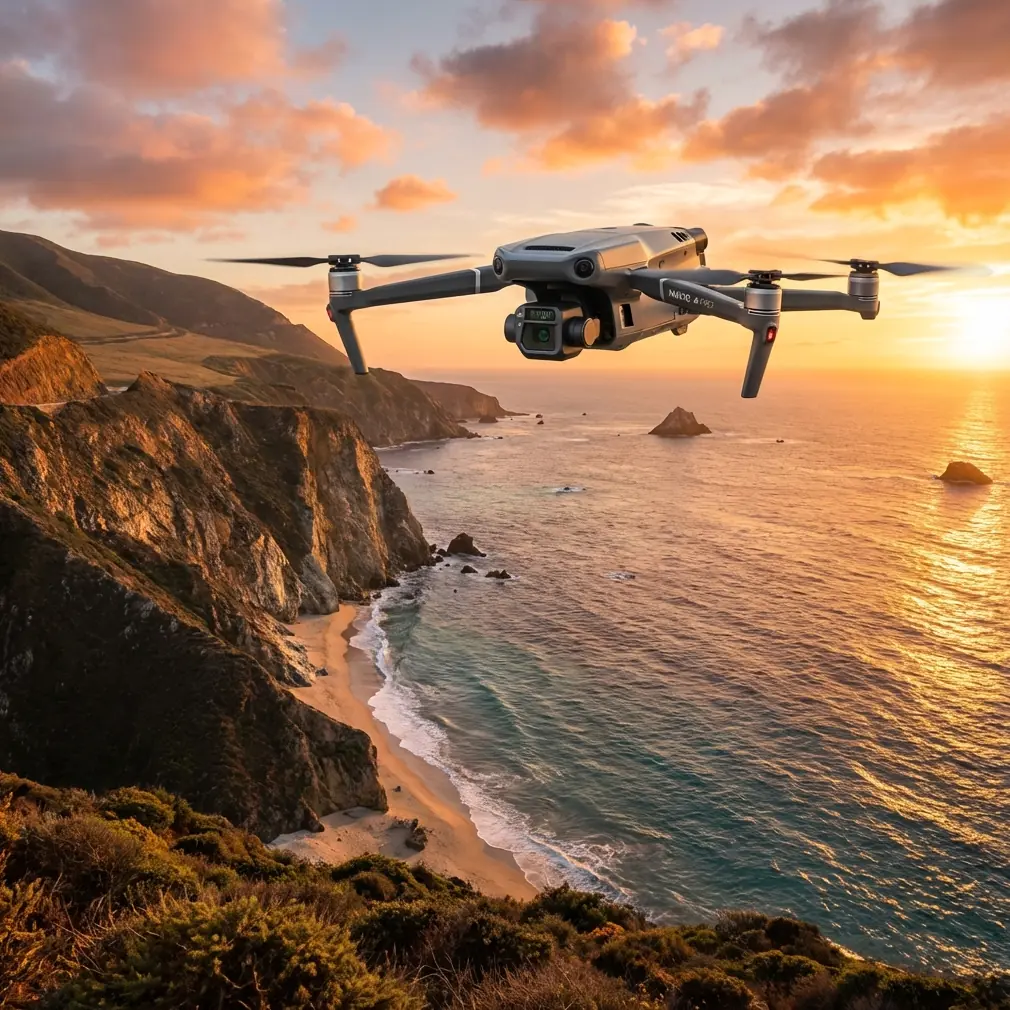
Scouting Fields with the Mavic 3T | Dust-Ready Tips
META: Learn how the DJI Mavic 3T handles dusty field scouting with thermal imaging, photogrammetry, and rugged performance. Expert tips inside.
By James Mitchell, Agricultural Drone Specialist & Certified Remote Pilot
TL;DR
- The Mavic 3T combines a thermal sensor, zoom camera, and wide-angle lens to scout dusty agricultural fields where visibility and crop stress detection are critical challenges.
- O3 transmission maintains a stable video feed up to 15 km, even when dust interference degrades signals from competing platforms.
- Hot-swap batteries and IP-rated construction keep the Mavic 3T flying in conditions that ground lesser drones.
- Photogrammetry-ready outputs with GCP support let agronomists generate actionable orthomosaic maps from a single flight session.
The Problem: Dusty Fields Kill Drone Operations
Scouting large agricultural plots during planting, mid-season, or harvest generates enormous amounts of airborne particulate. Dust clogs cooling vents, scatters optical sensors, and wreaks havoc on radio links between pilot and aircraft. If you've ever tried to run a field survey during tillage season with a consumer-grade drone, you already know the result: degraded image quality, dropped video feeds, and a drone that overheats within 15 minutes.
This article breaks down exactly how the DJI Mavic 3T solves every one of those problems—and why it outperforms the closest alternatives for agricultural scouting in harsh, dusty environments.
Why the Mavic 3T Excels in Agricultural Field Scouting
Triple-Sensor Payload: See What Dust Hides
The Mavic 3T carries three sensors on a single stabilized gimbal:
- Wide camera: 1/2-inch CMOS, 48 MP, 24mm equivalent lens for broad field-of-view context shots.
- Zoom camera: 1/2-inch CMOS, 48 MP, up to 56× max hybrid zoom for inspecting irrigation lines, fence rows, and individual plant health from altitude.
- Thermal camera: 640 × 512 resolution, uncooled VOx microbolometer covering the 8–14 μm spectral band.
The thermal sensor is where the Mavic 3T separates itself from every other sub-enterprise drone on the market. When airborne dust reduces visible-light contrast to near zero, thermal imaging cuts through particulate to reveal thermal signatures of waterlogged soil, stressed crop canopies, and equipment hot spots. Visible cameras are essentially blind in heavy dust; thermal is not.
Expert Insight: Set the thermal palette to "Ironbow" when scouting irrigated fields during midday. Wet soil registers 3–5°C cooler than surrounding dry zones, making leak detection trivial—even through a moderate dust haze.
O3 Transmission: Reliable Links in Noisy Environments
Dust isn't just an optical problem—it's an electromagnetic one. Charged particulate in dry agricultural environments increases RF noise across the 2.4 GHz and 5.8 GHz bands. The Mavic 3T's O3 enterprise transmission system addresses this with:
- Triple-channel, auto-frequency-hopping technology that dynamically avoids interference.
- Max transmission range of 15 km (FCC), providing a generous margin for large-parcel scouting.
- 1080p/30fps live feed to the DJI RC Pro Enterprise controller, ensuring the pilot can make real-time decisions even when the aircraft is working at the far edge of the property.
- AES-256 encryption on all data links, protecting sensitive agricultural data—especially relevant for precision ag operations handling proprietary yield models.
By comparison, competitors relying on standard Wi-Fi-based links (such as the Autel EVO II Dual 640T V3) frequently report feed dropouts at ranges beyond 8 km in clean-air conditions. Add dust, and that effective range can shrink to under 5 km. The O3 system's resilience is measurably superior.
Built for Dust: Environmental Resilience
The Mavic 3T is rated to operate in wind speeds up to 12 m/s and across a temperature range of -20°C to 50°C. While DJI does not publish a formal IP rating for the Mavic 3T, the enterprise-grade construction includes sealed motor bearings and recessed sensor ports that resist particulate ingress far better than consumer Mavic models.
Key durability features for dusty environments:
- Sealed gimbal cover protects all three sensors during transport and takeoff/landing—the most dust-intensive phases of any flight.
- Hot-swap batteries eliminate the need to power down between flights, reducing the number of times the battery compartment is exposed to airborne grit.
- Compact folding design (weight: 920 g) allows the pilot to store the aircraft in a sealed hard case between flights, minimizing cumulative dust exposure.
Pro Tip: Carry a compressed-air canister in your field kit. Before each battery swap, give the battery rails and compartment a 2-second blast to clear fine dust. This single habit can extend battery contact life by an entire season.
Photogrammetry and Mapping Workflow
From Flight to Orthomosaic
The Mavic 3T supports waypoint flight planning through DJI Pilot 2, which means scouting flights are repeatable, consistent, and can be pre-programmed in the office before driving to the field. For photogrammetry workflows, the drone captures geotagged images that feed directly into processing software like DJI Terra, Pix4Dfields, or Agisoft Metashape.
Recommended settings for dusty-condition photogrammetry:
- Altitude: 60–80 m AGL to stay above the densest dust layer while maintaining adequate GSD (ground sampling distance of ~2 cm/px at 80 m).
- Overlap: 80% frontal, 70% side for reliable stitching.
- GCP placement: Deploy at least 5 ground control points per survey block. Use high-contrast checkerboard targets—standard white GCP markers become invisible under a layer of field dust within hours.
- Time of day: Early morning flights (before 9:00 AM local) minimize thermal convection-driven dust and reduce atmospheric shimmer that degrades photogrammetry accuracy.
BVLOS Considerations
For operations on very large properties (>500 acres), BVLOS (Beyond Visual Line of Sight) flight authorization can transform the Mavic 3T from a tactical scouting tool into a full-parcel survey platform. The O3 transmission range and onboard ADS-B receiver support BVLOS operations under appropriate regulatory waivers. Always verify local regulations before conducting BVLOS flights.
Technical Comparison: Mavic 3T vs. Competing Platforms
| Feature | DJI Mavic 3T | Autel EVO II Dual 640T V3 | Skydio X10 |
|---|---|---|---|
| Thermal Resolution | 640 × 512 | 640 × 512 | 320 × 256 |
| Zoom (Max Hybrid) | 56× | 32× | 20× |
| Transmission System | O3 (15 km) | SkyLink 2.0 (15 km claimed) | Skydio Link (10 km) |
| Weight | 920 g | 1192 g | 1530 g |
| Max Flight Time | 45 min | 39 min | 35 min |
| Encryption | AES-256 | AES-256 | AES-256 |
| Hot-Swap Batteries | Yes | No | No |
| Waypoint Planning | DJI Pilot 2 | Autel Explorer | Skydio Cloud |
| Operating Temp Range | -20°C to 50°C | -20°C to 50°C | -10°C to 43°C |
| Photogrammetry GCP Support | Yes (DJI Terra) | Yes (Pix4D) | Limited |
The Mavic 3T wins on flight time, zoom capability, weight, and hot-swap battery support—all of which are force multipliers in dusty field conditions where efficiency per sortie matters enormously.
Common Mistakes to Avoid
1. Launching from Bare Soil
Rotor downwash kicks up a dense dust cloud on takeoff. Always deploy a portable landing pad (at least 75 cm diameter) on bare or tilled ground. This single step protects the gimbal and sensors from the highest-concentration dust exposure of the entire flight.
2. Ignoring Thermal Calibration
The Mavic 3T's thermal sensor performs a flat-field correction (FFC) shutter calibration automatically, but dusty conditions can cause the FFC to trigger more frequently. Do not interrupt this process—the screen will briefly freeze for 1–2 seconds. Interrupting a waypoint mission during FFC can result in corrupted thermal data for that flight segment.
3. Skipping Post-Flight Cleaning
Dust accumulation on the gimbal's mechanical components causes micro-vibrations that degrade image sharpness over time. After every field day, wipe the gimbal housing with a microfiber cloth and inspect the sensor glass for scratches.
4. Flying in Peak Dust Hours
Mid-afternoon thermal convection lifts the most particulate. Schedule flights for early morning or late afternoon when dust is settled and thermal contrast is strongest.
5. Using Default White Balance for Visible Imagery
Dust-laden air shifts color temperature warm. Set white balance to "Cloudy" or a manual Kelvin value of 6500K to maintain accurate crop color data for NDVI-adjacent analysis.
Frequently Asked Questions
Can the Mavic 3T detect crop irrigation leaks through dust?
Yes. The 640 × 512 thermal sensor detects temperature differentials as small as ≤50 mK (NETD). Even when visible-light cameras are compromised by airborne dust, the thermal channel reveals wet-soil thermal signatures that indicate underground pipe leaks, blocked emitters, or uneven pivot irrigation patterns. Fly at 40–60 m AGL for optimal thermal resolution on irrigation diagnostics.
How does the Mavic 3T handle GPS accuracy in remote agricultural areas?
The Mavic 3T supports GPS, GLONASS, Galileo, and BeiDou satellite constellations simultaneously. In open agricultural fields—where satellite sky-view is typically excellent—expect horizontal positioning accuracy of ±1.5 m without RTK. For photogrammetry missions requiring sub-centimeter accuracy, pair the aircraft with GCPs and process in DJI Terra or a compatible third-party suite.
Is the Mavic 3T suitable for BVLOS agricultural surveys?
The hardware is BVLOS-capable: 15 km O3 transmission range, integrated ADS-B receiver for manned-aircraft awareness, and robust waypoint automation through DJI Pilot 2 all support extended-range operations. However, BVLOS flight requires specific regulatory authorization (e.g., FAA Part 107 waiver in the United States). The Mavic 3T's lightweight 920 g profile and enterprise-grade safety features strengthen waiver applications compared to heavier platforms.
Ready for your own Mavic 3T? Contact our team for expert consultation.