
Mavic 3T for Urban Forest Scouting: What Aircraft Sealing
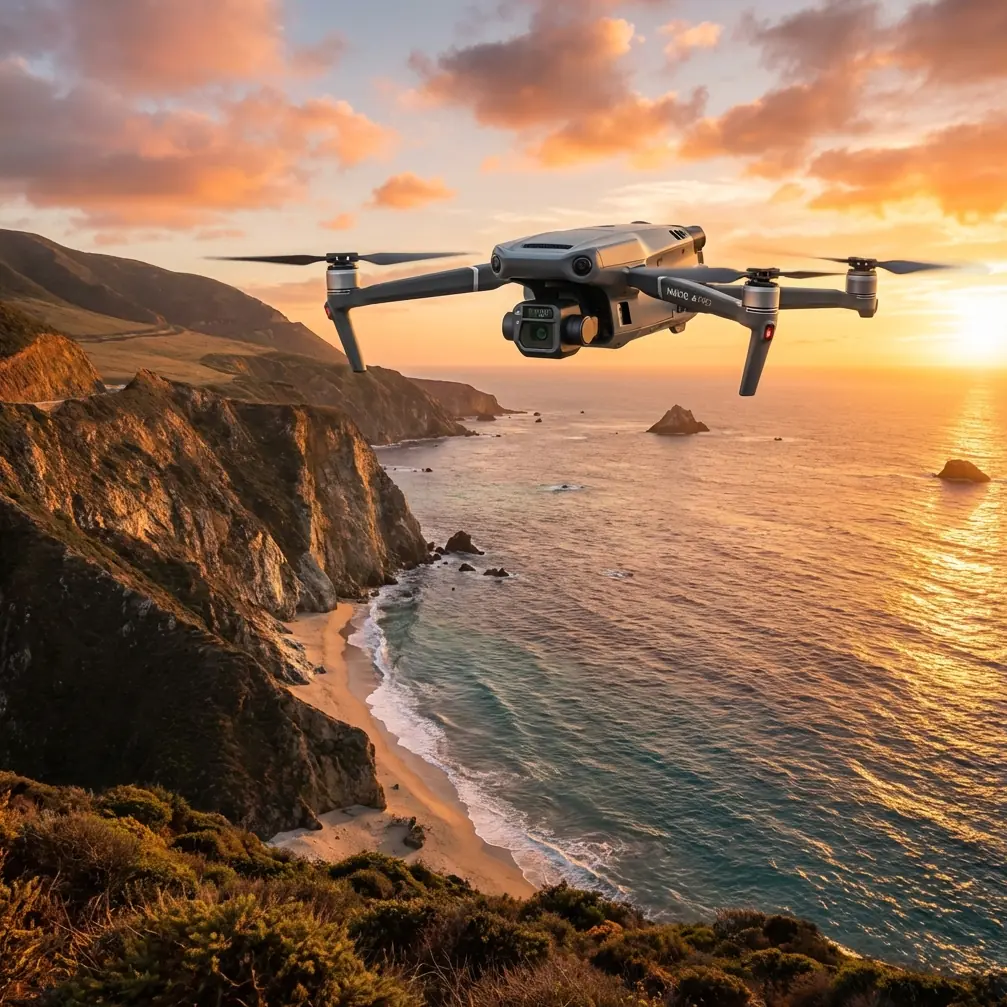
Mavic 3T for Urban Forest Scouting: What Aircraft Sealing Tolerances Teach Us About Better Thermal Results
META: Practical Mavic 3T best practices for urban forest scouting, with expert advice on thermal signature detection, antenna positioning, transmission stability, and why airframe sealing and tolerances matter in real operations.
Urban forest scouting sounds simple until you actually do it.
Trees block line of sight. Rooftops reflect heat. Wind funnels between buildings, then disappears under canopy. On paper, the Mavic 3T looks like an easy fit for this kind of work because it combines thermal imaging, visual sensing, compact deployment, and dependable transmission in a platform one person can carry. In the field, though, the difference between useful data and misleading data often comes down to details operators usually ignore: airflow, fit and finish, sealing, antenna orientation, and how the aircraft behaves when small disturbances stack up.
That may sound like an odd place to start an article about the Mavic 3T. But it is exactly the right place.
Two technical references from aircraft design manuals point to a discipline that matters more than most drone teams realize. One manual catalogs sealing materials, including silicone sealants like XM-31 and YGM-1, nitrile sealants such as HM-501, and low-temperature two-component sealants like YXGM-4 and YGM-5. Another lays out strict airframe tolerances: a leading-edge high-lift surface profile deviation of just 0.5 mm in flight, and requirements that wing trailing-edge cavities be sealed so air does not leak from the lower surface to the upper surface during 1g cruise wing flex.
A Mavic 3T is not a transport aircraft. Still, the principle carries over cleanly: when unwanted airflow, leakage, and misalignment are controlled, sensing becomes more trustworthy. For urban forest scouting, that operational truth matters every single flight.
The real problem in urban forest scouting
Most teams buying or deploying a Mavic 3T for forest-edge work in urban zones are not struggling to get airborne. They are struggling to trust what they see.
A thermal signature can appear where no subject exists. Sun-warmed retaining walls, HVAC exhaust, dark roofing membranes, and recently disturbed ground all create patterns that look meaningful until you compare them with visual context and flight geometry. Under canopy, branches obscure shapes and break up thermal contrast. At the edge of a park, a narrow corridor between apartment blocks can interrupt your O3 transmission path at exactly the wrong time. If you are running a structured search pattern, even a brief drop in signal quality can force repositioning that changes viewing angle, overlap, and the consistency of your interpretation.
This is why skilled Mavic 3T operation in urban forest scouting is less about the sensor headline and more about controlling variables.
Why aircraft sealing logic belongs in a Mavic 3T workflow
The old aircraft references are useful here because they remind us that aerodynamic cleanliness is not cosmetic. It is functional.
One source specifies that wing trailing-edge openings should be sealed to prevent air leaking from the lower wing surface to the upper one, and to stop spanwise flow inside the cavity. Another sets a tolerance as tight as 0.5 mm for a leading-edge surface profile under flight conditions. These are not arbitrary numbers. They exist because tiny geometric imperfections can change airflow behavior in ways that affect stability, efficiency, and predictability.
With a Mavic 3T, the same mindset improves scouting in three practical ways.
1. Stable aircraft attitude improves thermal interpretation
The more stable the platform, the easier it is to compare one thermal scene with the next. Small pitch or yaw corrections are normal, but if the aircraft is constantly fighting turbulent air near treetops or buildings, thermal signatures smear across your mental model of the site. You may still get an image, but you lose confidence in repeatability.
That is one reason preflight inspection should include more than propellers and battery charge. Look at body panel fit, landing gear condition, gimbal freedom, and any field-added accessories. Even minor protrusions or loose protective attachments can create extra drag or vibration. Civil aviation design practice has always treated sealing and surface continuity as performance issues, not just maintenance issues. Drone teams should think the same way.
2. Cleaner airflow helps preserve hover precision in cluttered spaces
Urban forests create mixed microclimates. Open grass, dense foliage, asphalt footpaths, and building walls each shape air differently. The Mavic 3T can handle this environment well, but only if the aircraft remains aerodynamically tidy and the operator does not force poor positioning.
If your mission includes repeated low-speed holds near canopy edges to verify a thermal anomaly, any unnecessary instability becomes operationally expensive. You burn battery, increase pilot workload, and raise the chance of needing an extra pass. In a compact system, every efficiency gain matters.
3. Reliability starts before the mission software opens
The materials reference is also a subtle reminder that aircraft reliability often depends on the right sealant in the right environment. It lists different compounds for different purposes, including silicone and low-temperature formulations. For Mavic 3T users, the takeaway is not to start modifying the aircraft with industrial sealants. The takeaway is environmental discipline.
Cold mornings, damp bark, foggy clearings, and temperature swings between shadow and concrete heat islands all change how your drone behaves. Moisture management, clean storage, and proper transport matter. If your aircraft leaves a vehicle with condensation on exposed surfaces and goes straight into a mission, your thermal interpretation may be less trustworthy before the first waypoint begins.
Mavic 3T best practices for urban forest scouting
Now let’s bring this down to field level.
Build the mission around thermal ambiguity, not thermal certainty
The Mavic 3T’s thermal capability is powerful, but urban forest environments produce false positives by default. Plan each sortie assuming the first thermal hit is only a lead, not a conclusion.
A better workflow is:
- thermal pass to identify suspicious heat contrast
- visual confirmation from a slightly offset angle
- second thermal look from a changed altitude or bearing
- context note tied to map position
That sequence helps separate a real thermal signature from roof vent discharge, sun-loaded rock, or warm vehicle remnants near trail entrances.
If you are also producing site maps, photogrammetry should be treated as a companion product rather than a separate job. Even a lightweight visual reconstruction with carefully distributed GCPs can make later thermal interpretation far stronger, especially when you need to explain why one anomaly was dismissed and another required ground verification.
Fly with transmission geometry in mind
The Mavic 3T’s O3 transmission gives you strong operational flexibility, but range on a spec sheet is not the same as range in an urban forest corridor. Trees attenuate signal. Buildings reflect and block it. Wet leaves can be particularly unfriendly.
Antenna positioning advice for maximum practical range is simple, but many operators still get it wrong: do not point the antenna tips directly at the aircraft. Orient the flat faces of the controller antennas toward the drone, because that is where the strongest radiation pattern is useful. Then adjust your own body position as the aircraft moves. In dense mixed terrain, one step to the left or a slight change in shoulder angle can improve link quality more than climbing another 10 meters.
When scouting near urban tree lines, I prefer to choose a launch point with three things:
- a clear first-leg line of sight above the nearest canopy,
- enough lateral space to sidestep for signal optimization,
- minimal reflective clutter directly behind the pilot.
That third point is often overlooked. Metal fencing, parked vehicles, and glazed building surfaces behind the operator can complicate the local RF environment. The best launch spot is not always the closest one.
Respect the edge zone
The boundary between open urban space and tree cover is where the mission usually gets messy. This is where thermal contrast can be strongest, but it is also where turbulence and signal interruptions are most likely.
Instead of driving straight into the edge, work it in layers. Start with an oblique pass outside the canopy line. Then run a parallel leg just above treetop height if conditions allow. Only after those passes should you commit to tighter inspections of individual targets.
This layered approach reduces rushed maneuvers and gives the Mavic 3T more chances to build an interpretable thermal story. It also protects battery margin, which matters if you need to reposition for a stronger link or circle back for visual confirmation.
Manage batteries like mission continuity tools
Hot-swap batteries are not part of the Mavic 3T in the way they are on some larger enterprise platforms, so urban forest teams need to think in terms of staged continuity rather than true no-shutdown replacement. That means organizing batteries by mission segment, not by convenience.
For example:
- Battery 1: wide-area perimeter scan
- Battery 2: anomaly verification
- Battery 3: mapping or documentation follow-up
This sounds basic, but it changes decisions in the field. If you spend your first pack improvising near a difficult canopy edge, you may lose the chance to revisit a heat source under similar ambient conditions later in the session. Thermal data is highly sensitive to timing. Battery planning should reflect that.
Use AES-256 security as a workflow issue, not a marketing bullet
Urban forest scouting often happens near schools, residential blocks, utility corridors, campuses, or commercial properties. Data handling should be part of your risk management. AES-256 matters because it supports secure handling expectations in environments where location intelligence and imagery can become sensitive even when the mission is routine and fully civilian.
That becomes especially relevant when teams share data with land managers, consultants, or maintenance contractors. Build your file transfer and archive process before the flight program scales. The safest workflow is the one operators will actually follow under time pressure.
What the 0.5 mm tolerance mindset means for operators
That 0.5 mm figure from the civil aircraft reference deserves a second look. It is a reminder that small deviations have consequences larger than they appear.
For Mavic 3T teams, the equivalent mindset is this:
- a slight gimbal contamination can distort interpretation
- a small crack in a propeller can create vibration that weakens image confidence
- a poorly fitted accessory can degrade handling
- a lazy antenna angle can shorten usable transmission distance
- a casual launch point choice can turn a clean route into a signal fight
Professional outcomes are usually built from tiny corrections made early.
This is also where operator training matters more than feature familiarity. A pilot who understands airflow around canopy edges, thermal false positives, and line-of-sight geometry will get more from a Mavic 3T than someone who simply knows the menu system.
BVLOS language needs discipline in urban scouting
Some operators are tempted to talk loosely about BVLOS whenever a drone moves behind sparse tree cover or momentarily out of direct view. That is not a helpful habit. In urban forest environments, mission planning should be explicit about what the observer can actually maintain, what the local framework allows, and how terrain or structures affect practical visibility.
For many civilian teams, the smarter move is to optimize launch placement and route design so the Mavic 3T can do near-continuous productive work without forcing the operation into a riskier visibility profile. Good scouting is not about stretching the mission. It is about preserving interpretation quality.
A field-ready workflow I recommend
If I were setting up a Mavic 3T for urban forest scouting tomorrow, I would use this structure:
Site read before power-on
Identify canopy gaps, heat-reflective surfaces, likely RF blockers, and a launch area with room for antenna repositioning.Airframe discipline check
Confirm prop condition, body integrity, gimbal movement, and clean sensor surfaces. Think like an aircraft technician: surface condition matters.Transmission-first climbout
Gain stable separation from local clutter early rather than hugging terrain immediately.Outer thermal sweep
Scan edge zones first, where thermal contrast and escape routes for repositioning are both better.Visual cross-check
Revisit anomalies with optical context before drawing conclusions.Structured documentation
Tie observations to mapped references, especially if photogrammetry or GCP-based site products will be used later.Battery segmentation
Preserve one battery for second-look confirmation when ambient conditions have shifted slightly.
That workflow sounds conservative. It is. Conservative methods usually produce the best evidence.
When teams need help refining their setup
Many crews can fly a Mavic 3T competently. Fewer can consistently extract trustworthy thermal information from mixed urban and forest terrain. The difference usually comes from workflow tuning, launch geometry, and operator habits rather than hardware changes.
If you’re building a scouting program and want a second set of eyes on route design, antenna use, or thermal interpretation practice, you can message Dr. Lisa Wang’s team directly here.
The deeper lesson from the aircraft references is straightforward. Sealing, alignment, and tolerance control are not abstract engineering trivia. They are expressions of respect for data quality. A manned aircraft uses them to protect aerodynamic integrity. A Mavic 3T operator should adopt the same philosophy to protect sensing integrity.
That is how better urban forest scouting actually happens: not through hype, but through disciplined control of the little things that quietly shape every result.
Ready for your own Mavic 3T? Contact our team for expert consultation.