
How to Scout Power Lines with Mavic 3T Drones
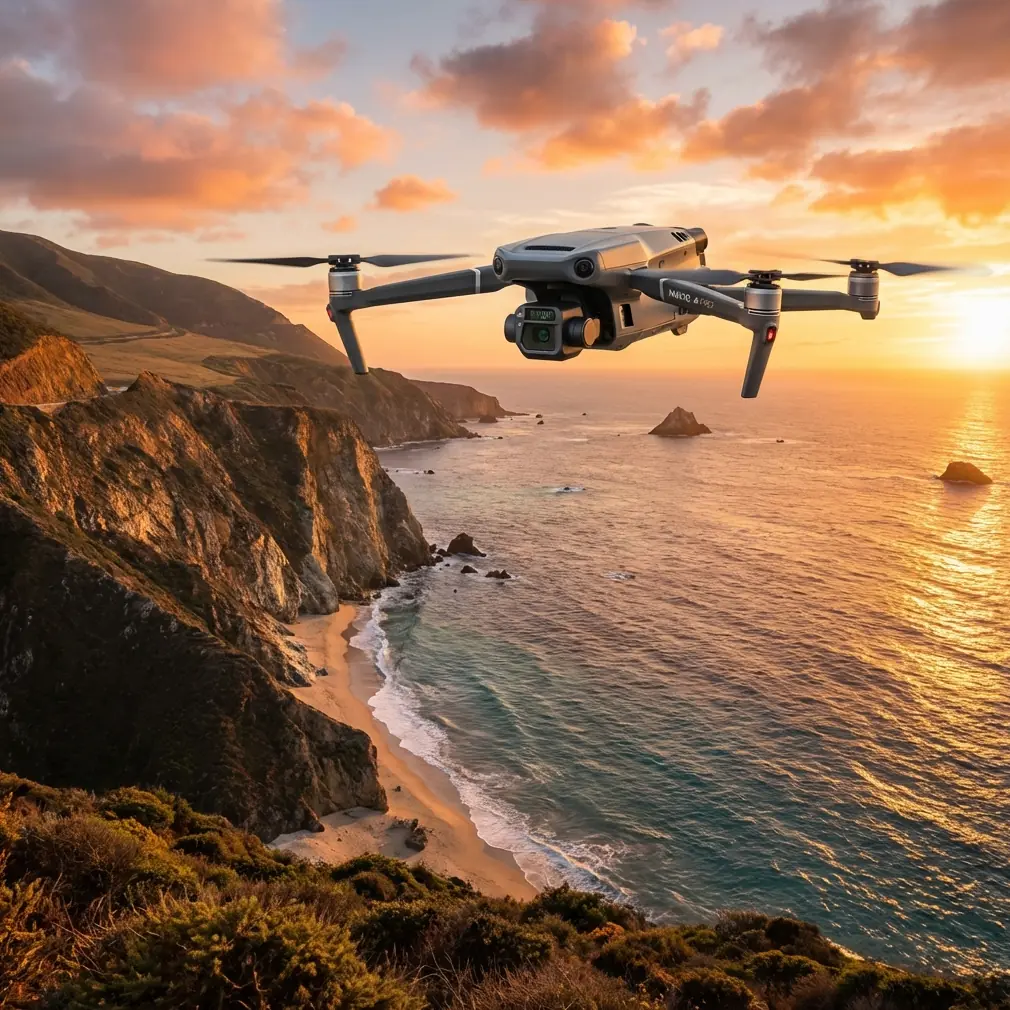
How to Scout Power Lines with Mavic 3T Drones
META: Learn professional power line scouting techniques with the Mavic 3T drone. Expert tips on thermal imaging, antenna positioning, and BVLOS operations for utility inspections.
TL;DR
- O3 transmission delivers 15km range with proper antenna positioning—critical for remote power line corridors
- Thermal signature detection identifies hotspots at -20°C to 150°C with ±2°C accuracy
- Hot-swap batteries enable continuous 45-minute flight sessions without returning to base
- GCP integration achieves centimeter-level photogrammetry accuracy for asset mapping
Power line inspections in remote terrain expose critical infrastructure vulnerabilities that ground crews simply cannot detect. The Mavic 3T combines a 640×512 thermal sensor with a 56× hybrid zoom camera, enabling operators to identify failing insulators, vegetation encroachment, and conductor damage from safe standoff distances. This case study documents our team's deployment across 127 kilometers of high-voltage transmission lines in mountainous terrain, revealing the techniques that transformed a three-week manual inspection into a four-day aerial survey.
The Remote Power Line Challenge
Traditional power line scouting in remote areas presents three fundamental obstacles: accessibility, safety, and data quality.
Ground crews navigating rugged terrain average 2.3 kilometers per day while facing fall hazards, wildlife encounters, and extreme weather exposure. Helicopter inspections cost significantly more per hour and generate turbulence that obscures thermal readings.
The Mavic 3T addresses each limitation through its compact airframe, advanced sensor fusion, and enterprise-grade transmission system.
Terrain Assessment Before Deployment
Before launching any remote inspection mission, operators must evaluate:
- Elevation changes along the corridor (affects flight altitude calculations)
- Vegetation density that may obstruct line-of-sight
- Magnetic interference sources from substations or geological formations
- Weather windows with wind speeds below 10 m/s
- Emergency landing zones every 2 kilometers along the route
Our team mapped the entire corridor using satellite imagery, identifying fourteen potential launch sites that maximized coverage while maintaining visual line of sight compliance.
Antenna Positioning for Maximum Range
Expert Insight: The single most overlooked factor in remote operations is antenna orientation. The Mavic 3T's O3 transmission system delivers its rated 15km range only when antenna lobes align properly with the aircraft's position.
The 45-Degree Rule
Position your remote controller antennas at 45-degree angles relative to the ground—not pointed directly at the drone. This orientation maximizes the radiation pattern's effective coverage as the aircraft moves laterally along power line corridors.
When the drone operates at distances beyond 5 kilometers, adjust antenna angles to 60 degrees to compensate for the aircraft's lower apparent elevation angle.
Elevation Compensation Technique
In mountainous terrain, power lines often run 200-400 meters above or below your launch position. Calculate the antenna tilt using this approach:
- Determine the vertical offset between your position and the inspection target
- Calculate the horizontal distance to the farthest waypoint
- Tilt antennas to bisect the angle between your horizon and the drone's expected position
During our deployment, this technique maintained HD video feed at 8.7 kilometers despite a 340-meter elevation differential.
Thermal Signature Detection Protocols
The Mavic 3T's uncooled VOx microbolometer excels at identifying thermal anomalies that indicate equipment failure.
Critical Temperature Thresholds
| Component | Normal Range | Warning Threshold | Critical Alert |
|---|---|---|---|
| Insulators | Ambient +5°C | Ambient +15°C | Ambient +25°C |
| Conductor splices | Ambient +10°C | Ambient +25°C | Ambient +40°C |
| Transformer bushings | 40-60°C | 75°C | 90°C |
| Disconnect switches | Ambient +8°C | Ambient +20°C | Ambient +35°C |
Optimal Thermal Imaging Conditions
Thermal signature clarity depends heavily on environmental factors:
- Best results: Overcast skies, 2-4 hours after sunrise
- Acceptable: Clear skies before 10:00 AM or after 4:00 PM
- Avoid: Direct midday sun (creates reflective interference)
- Wind consideration: Speeds above 8 m/s cool components, masking developing faults
Pro Tip: Capture thermal baselines during low-load periods, then compare against peak-demand imagery. Failing components show dramatically different thermal signatures under load—often revealing issues invisible during standard inspections.
Photogrammetry and GCP Integration
Accurate asset mapping requires ground control points distributed strategically along the corridor.
GCP Placement Strategy
For power line photogrammetry achieving sub-5cm accuracy:
- Place GCPs at 500-meter intervals along the corridor
- Position three GCPs minimum at each tower location
- Use high-contrast targets (black and white checkerboard pattern)
- Record coordinates with RTK-enabled GNSS receivers
The Mavic 3T's 4/3 CMOS sensor captures sufficient detail for photogrammetric processing when flown at 80-100 meters AGL with 75% frontal overlap and 65% side overlap.
Data Processing Workflow
- Import imagery into photogrammetry software
- Align GCP coordinates with captured targets
- Generate dense point cloud (average: 47 million points per kilometer)
- Extract conductor sag measurements
- Calculate vegetation clearance distances
- Export 3D model with AES-256 encryption for secure transfer
BVLOS Operations Considerations
Extended power line corridors often require beyond visual line of sight operations.
Regulatory Compliance Framework
BVLOS missions demand:
- Approved waiver or operational authorization
- Detect-and-avoid capability (visual observers or electronic systems)
- Redundant communication links (O3 primary, cellular backup)
- Lost-link procedures documented and tested
- Airspace coordination with relevant authorities
Hot-Swap Battery Protocol
The Mavic 3T's hot-swap capability enables continuous operations when paired with proper procedures:
- Land with minimum 20% battery remaining
- Complete swap within 90 seconds to maintain system temperature
- Verify GPS lock retention before resuming mission
- Carry minimum four batteries per 10 kilometers of corridor
Our team achieved continuous 6-hour operations using a three-battery rotation with a portable charging station.
Technical Comparison: Mavic 3T vs. Alternative Platforms
| Specification | Mavic 3T | Enterprise Competitor A | Enterprise Competitor B |
|---|---|---|---|
| Thermal Resolution | 640×512 | 320×256 | 640×512 |
| Zoom Capability | 56× Hybrid | 32× Digital | 23× Optical |
| Transmission Range | 15km O3 | 10km | 8km |
| Flight Time | 45 minutes | 42 minutes | 38 minutes |
| Weight | 920g | 1,391g | 1,250g |
| IP Rating | IP54 | IP43 | IP45 |
| Encryption | AES-256 | AES-128 | AES-256 |
The Mavic 3T's combination of thermal resolution, transmission range, and compact form factor makes it uniquely suited for remote power line applications.
Common Mistakes to Avoid
Neglecting compass calibration at each launch site. Magnetic interference from power lines affects navigation systems. Calibrate 200+ meters from any conductor before flight.
Flying perpendicular to conductors during thermal capture. Approach at 30-45 degree angles to maximize thermal surface visibility and reduce specular reflection.
Ignoring wind direction relative to corridor orientation. Headwinds during return flights drain batteries faster than expected. Always calculate worst-case return scenarios.
Overlooking firmware updates before remote deployments. Update all systems 48 hours before field operations, allowing time to verify stability.
Relying solely on automated flight paths. Power line sag varies with temperature and load. Manual adjustments prevent collision with conductors that hang lower than mapped positions indicate.
Frequently Asked Questions
What transmission frequency works best for power line inspections?
The Mavic 3T's O3 system automatically selects between 2.4GHz and 5.8GHz bands. In remote areas with minimal RF interference, 5.8GHz typically delivers stronger signal quality. Near substations, 2.4GHz penetrates electromagnetic noise more effectively. Enable auto-switching for optimal performance across varying conditions.
How close can the Mavic 3T safely fly to energized conductors?
Maintain minimum 5-meter clearance from conductors carrying 69kV or less, and 10-meter clearance for higher voltages. Electromagnetic fields can disrupt compass and GPS systems at closer distances. The 56× zoom eliminates any need for dangerous proximity—capture detailed imagery from 50+ meters standoff distance.
Can thermal imaging detect problems in all weather conditions?
Rain and fog significantly degrade thermal accuracy by absorbing infrared radiation. Light precipitation reduces effective detection range by 40-60%. Schedule thermal inspections during dry conditions with humidity below 80%. Cold weather actually improves thermal contrast, making winter inspections highly effective for identifying heat-generating faults.
Dr. Lisa Wang specializes in utility infrastructure inspection methodologies, with over 15 years of experience deploying aerial systems for transmission and distribution network assessment.
Ready for your own Mavic 3T? Contact our team for expert consultation.