
How to Scout Solar Farms Remotely with Mavic 3T
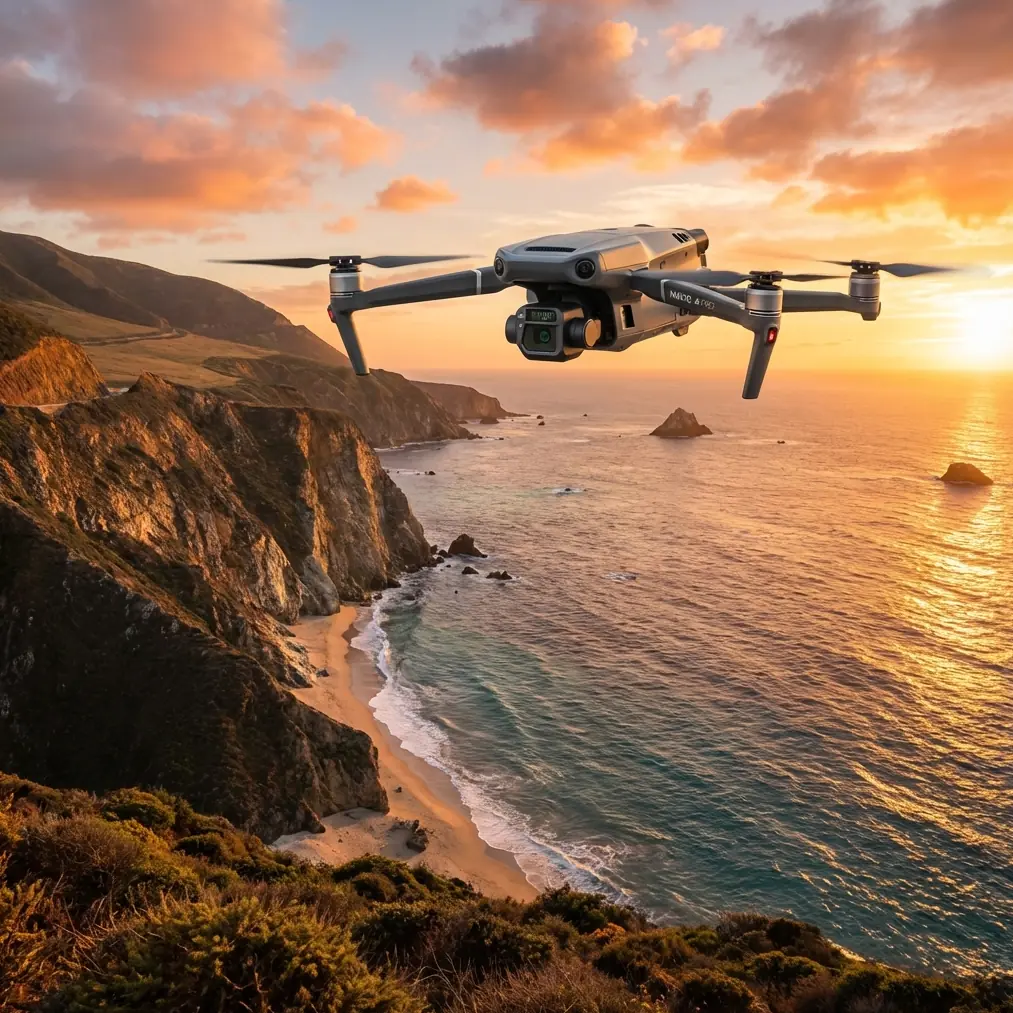
How to Scout Solar Farms Remotely with Mavic 3T
META: Learn expert techniques for scouting remote solar farms with the DJI Mavic 3T. Discover thermal imaging tips, antenna positioning, and workflow optimization.
TL;DR
- Thermal imaging at 30Hz enables real-time detection of faulty panels, hotspots, and connection failures across vast solar arrays
- O3 transmission reaches 15km with proper antenna positioning—critical for remote site assessments
- Hybrid zoom camera combines 56× magnification with thermal overlay for precise anomaly identification
- Hot-swap batteries and offline mapping capabilities make multi-day remote surveys practical
Solar farm inspections in remote locations present unique challenges that ground-based methods simply cannot address efficiently. The DJI Mavic 3T transforms how professionals scout and assess photovoltaic installations, combining enterprise-grade thermal imaging with the portability needed for off-grid operations.
This technical review breaks down the specific capabilities, optimal configurations, and proven workflows that make the Mavic 3T the preferred tool for solar farm reconnaissance. Whether you're evaluating a potential installation site or conducting preliminary assessments of existing arrays, these techniques will maximize your data quality while minimizing time on location.
Understanding the Mavic 3T's Solar Inspection Capabilities
The Mavic 3T integrates three distinct imaging systems into a 640×512 thermal sensor, a 48MP wide camera, and a 12MP telephoto lens with 56× hybrid zoom. For solar farm applications, this combination addresses the full spectrum of inspection requirements.
The thermal camera operates at 30Hz refresh rate with a NETD of less than 50mK, meaning it detects temperature differentials as small as 0.05°C. This sensitivity proves essential when identifying:
- Underperforming cells within panel strings
- Junction box thermal anomalies
- Inverter cooling system failures
- Vegetation encroachment causing shading losses
- Ground-mounted racking thermal expansion issues
Expert Insight: When scouting remote solar farms, I always capture thermal data during two windows—early morning (6-8 AM) when panels are near ambient temperature, and peak irradiance (11 AM-2 PM) when thermal signatures are most pronounced. Comparing these datasets reveals intermittent faults that single-pass inspections miss entirely.
Antenna Positioning for Maximum Range in Remote Operations
Remote solar installations often lack cellular connectivity, making the Mavic 3T's O3 transmission system your primary communication lifeline. Achieving the advertised 15km range requires deliberate antenna management.
Optimal Controller Orientation
The DJI RC Pro controller features directional antennas that broadcast in a 120-degree forward cone. Position the controller so antenna faces point directly toward the aircraft—not upward as many operators assume.
For ground-level operations at solar farms:
- Mount the controller on a tripod at chest height
- Angle antennas 15-20 degrees above horizontal when the aircraft operates at typical survey altitudes
- Avoid positioning yourself between metal structures (inverters, transformers) and the flight path
- Keep the controller's rear facing away from vehicles, which create RF shadows
Terrain Considerations
Remote solar installations frequently occupy valleys, hillsides, or areas with irregular topography. The O3 system handles non-line-of-sight conditions better than previous generations, but physical obstructions still degrade signal quality.
| Obstruction Type | Signal Impact | Mitigation Strategy |
|---|---|---|
| Dense vegetation | -6 to -12 dB | Gain elevation, use waypoint missions |
| Metal structures | -15 to -25 dB | Maintain 30m clearance, reposition GCS |
| Terrain blocking | Complete loss | Pre-plan with elevation data, use repeaters |
| Atmospheric moisture | -3 to -8 dB | Reduce range expectations by 20% |
Pro Tip: Before launching at a new remote site, I conduct a "radio survey" by walking the perimeter with the controller powered on and the aircraft stationary. The signal strength indicator reveals dead zones and optimal ground control station positions before you commit to a flight plan.
Photogrammetry Workflow for Site Assessment
Beyond thermal inspection, the Mavic 3T supports comprehensive photogrammetric surveys essential for solar farm planning and documentation. The 4/3 CMOS sensor captures sufficient detail for 2.5cm/pixel GSD at 120m AGL—adequate for most site assessment requirements.
Ground Control Point Strategy
Remote locations complicate traditional GCP deployment. The Mavic 3T's RTK module compatibility offers centimeter-level positioning without ground markers, but standalone operations require strategic GCP placement:
- Deploy minimum 5 GCPs distributed across the survey area
- Position points on stable, permanent features (concrete pads, equipment foundations)
- Capture oblique imagery at panel edges to strengthen tie points
- Use high-contrast targets (minimum 30cm diameter) visible in both RGB and thermal bands
Data Security Considerations
Solar farm operators increasingly require AES-256 encryption for aerial survey data. The Mavic 3T supports local data mode, preventing any cloud synchronization during sensitive operations.
Configure these settings before arriving on site:
- Enable Local Data Mode in DJI Pilot 2
- Format SD cards using the aircraft's internal formatter
- Disable automatic flight log uploads
- Document chain of custody for physical media
Flight Planning for Comprehensive Coverage
Efficient solar farm scouting demands systematic flight planning that accounts for panel orientation, time constraints, and battery limitations.
Thermal Survey Parameters
For accurate thermal signature capture:
- Altitude: 30-50m AGL for detailed cell-level analysis
- Speed: Maximum 5 m/s to prevent motion blur in thermal frames
- Overlap: 80% frontal, 70% side for photogrammetric processing
- Gimbal angle: -90° (nadir) for quantitative analysis, -60° for visual inspection
- Time window: 4-hour period centered on solar noon
Hot-Swap Battery Management
The Mavic 3T's 46-minute flight time enables substantial coverage per battery, but remote operations require careful power management. Each battery provides approximately:
- 35 minutes of active survey time (accounting for transit and safety margins)
- 12-15 hectares of coverage at standard thermal survey parameters
- 800-1000 thermal images at 2-second intervals
Bring minimum 4 batteries for sites under 50 hectares, adding one battery per additional 15 hectares of coverage required.
Common Mistakes to Avoid
Ignoring solar angle effects on thermal data Panel surface temperatures vary dramatically based on sun position. Surveys conducted at inconsistent times produce incomparable datasets. Standardize your capture windows and document solar angle for every mission.
Overlooking electromagnetic interference sources Inverters and transformers generate significant EMI. Maintain minimum 15m horizontal clearance from high-voltage equipment during flight operations. The Mavic 3T's compass is particularly susceptible to interference during low-altitude passes.
Neglecting pre-flight thermal calibration The thermal sensor requires 15-20 minutes of powered operation to stabilize. Launching immediately after power-on produces unreliable absolute temperature readings. Use this warm-up period for flight planning and site assessment.
Failing to document environmental conditions Thermal signatures depend heavily on ambient temperature, wind speed, cloud cover, and humidity. Record these parameters at mission start and end—without context, thermal anomalies cannot be accurately interpreted.
Underestimating data storage requirements A comprehensive thermal survey generates 15-25GB per 100 hectares. The Mavic 3T's internal storage fills quickly when capturing simultaneous RGB and thermal imagery. Carry multiple high-speed SD cards and verify write speeds exceed 100MB/s.
BVLOS Considerations for Extended Operations
Beyond Visual Line of Sight operations unlock the Mavic 3T's full potential for large-scale solar farm assessment. While regulatory requirements vary by jurisdiction, technical preparation remains consistent.
Successful BVLOS solar farm surveys require:
- Detailed airspace analysis including NOTAMs and restricted zones
- Visual observer network or approved detect-and-avoid systems
- Redundant communication links (cellular backup where available)
- Pre-programmed emergency procedures including automatic RTH triggers
- Comprehensive risk assessment documentation
The O3 transmission system's 1080p/30fps live feed provides sufficient situational awareness for trained operators, but regulatory approval remains the primary barrier to routine BVLOS operations.
Frequently Asked Questions
What thermal resolution is needed to detect individual cell failures?
The Mavic 3T's 640×512 thermal sensor resolves individual cells when flying at 30-40m AGL over standard 60-cell residential panels. For utility-scale installations with larger panel formats, 50-60m AGL provides adequate resolution while improving coverage efficiency. Cell-level detection requires minimum 3 thermal pixels per cell—calculate your specific requirements based on panel dimensions.
How does weather affect thermal inspection accuracy?
Cloud cover, wind speed, and ambient temperature all influence thermal signature reliability. Ideal conditions include clear skies, wind below 5 m/s, and ambient temperatures between 15-35°C. Light cloud cover creates inconsistent irradiance that produces false thermal patterns. Wind speeds above 8 m/s cool panel surfaces unevenly, masking genuine hotspots. Document conditions meticulously—marginal weather doesn't prevent useful data collection but requires adjusted interpretation.
Can the Mavic 3T replace manned aircraft for large solar farm surveys?
For installations under 500 hectares, the Mavic 3T typically offers superior cost-effectiveness and data quality compared to manned thermal surveys. The lower flight altitude produces higher-resolution thermal imagery, while multiple daily sorties accommodate optimal timing windows. Installations exceeding 1000 hectares may benefit from hybrid approaches—manned aircraft for rapid overview assessment, followed by targeted Mavic 3T missions investigating identified anomalies.
Remote solar farm scouting demands equipment that balances imaging capability with operational flexibility. The Mavic 3T delivers both, providing thermal sensitivity that rivals dedicated inspection platforms while maintaining the portability essential for off-grid operations.
Ready for your own Mavic 3T? Contact our team for expert consultation.