
Mavic 3T Field Report: Scouting Remote Solar Farms When
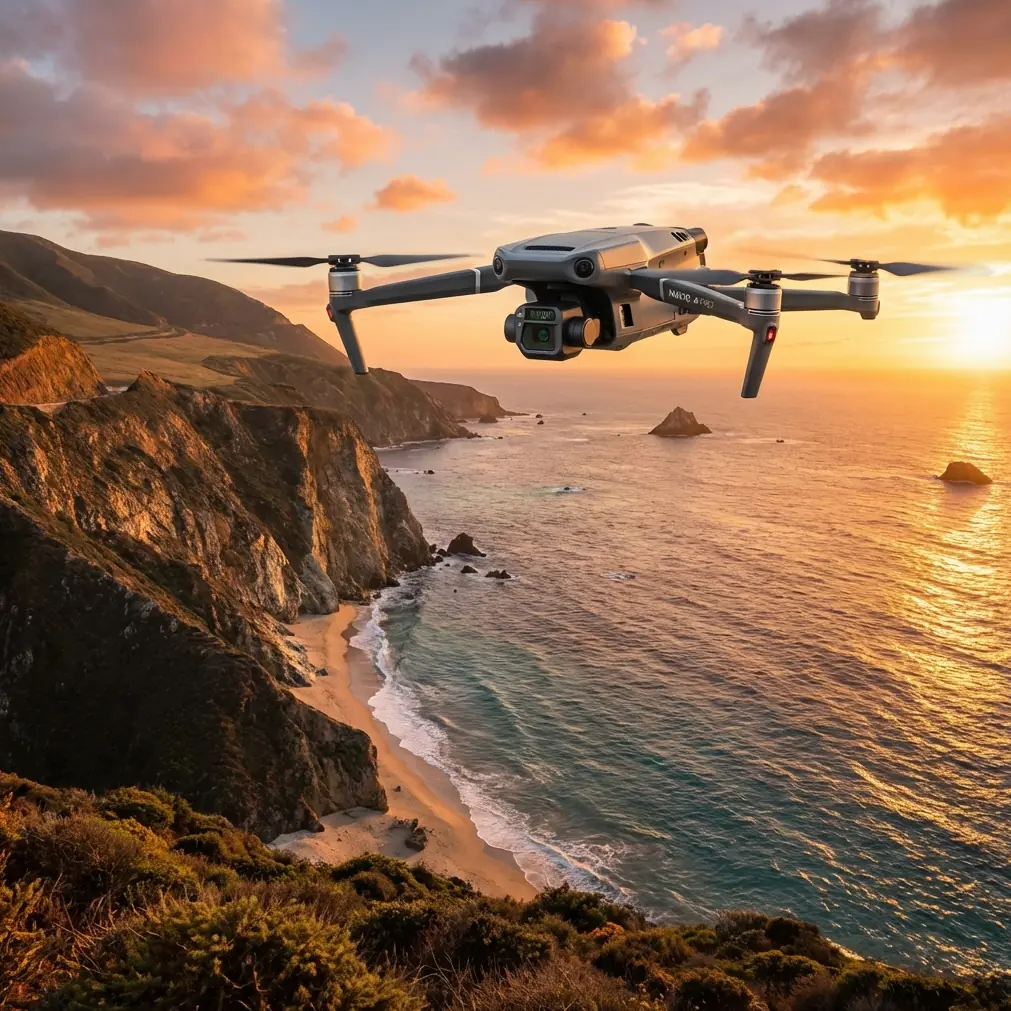
Mavic 3T Field Report: Scouting Remote Solar Farms When the Weather Turns
META: Expert field report on using the DJI Mavic 3T for remote solar farm scouting, with thermal workflow tips, transmission reliability, mapping considerations, and weather-response lessons.
Remote solar sites expose weak tools fast. Long access roads, patchy cell coverage, shifting wind, and the sheer scale of utility arrays can turn a simple inspection into a slow, expensive day. That is exactly where the Mavic 3T earns its place. Not because it solves every problem, and not because the badge on the airframe does the work for you, but because its sensor mix and field practicality line up unusually well with how solar scouting actually happens.
I have used aircraft across mapping, thermal inspection, and site recon work, and the Mavic 3T sits in an interesting slot. It is not a heavy enterprise platform built around maximum endurance and payload flexibility. It is also far more capable than the lightweight camera drones many operators still try to force into industrial jobs. For remote solar farms, that middle ground matters. You need something you can deploy quickly, trust in inconsistent conditions, and use to collect information that a project manager, EPC team, or operations lead can act on the same day.
This field report focuses on that exact scenario: scouting a remote solar installation with the Mavic 3T, using thermal interpretation, visual inspection, and practical mapping logic rather than treating the aircraft as a generic drone.
Why the Mavic 3T fits solar scouting better than many expect
Solar farm scouting is rarely a single-task mission. One flight may need to confirm access conditions, identify damaged rows, check inverter pad areas, look for washouts near service roads, and flag strings or modules that appear thermally abnormal. That multi-role requirement is where the Mavic 3T separates itself.
Its tri-sensor approach is the real story. You are not just flying a thermal drone. You are flying a platform that can switch between a thermal view, a wide visual perspective, and a tele camera that helps validate what you think you saw without walking half a kilometer through rows of panels and ground vegetation. Operationally, that matters because thermal anomalies are not useful by themselves. A hot spot is only the beginning. You then need context.
A module edge heating up differently from adjacent panels may suggest damage, contamination, mismatch, or an electrical issue. But without visible confirmation, you are still only halfway to a useful decision. The Mavic 3T’s ability to pair a thermal signature with immediate visual cross-checking cuts wasted time in the field. That is especially valuable at remote sites where sending a second team or repeating a flight later can cost more than the original mission.
The aircraft’s O3 transmission system also deserves more respect in solar work than it usually gets. On paper, a strong link sounds like a convenience feature. In the field, it is mission continuity. Solar farms are full of long straight lanes, reflective surfaces, low terrain variation, and often enough local interference from infrastructure to create frustrating signal behavior if your platform is marginal. When you are working across a large footprint and trying to maintain precise awareness of aircraft position relative to roads, fences, strings, and substation boundaries, a stable downlink is not just nice to have. It reduces hesitation and keeps the inspection sequence intact.
The weather shift that changed the mission
On one remote solar scouting run, the day started clean enough: thin morning cloud, manageable wind, dry ground, and decent thermal separation across the site. About halfway through the operation, the weather changed in the way it often does on exposed land. A crosswind built faster than expected, and a thicker cloud layer moved in, flattening the scene and changing the thermal picture.
That kind of mid-flight shift reveals whether your workflow is solid or just optimistic.
The first effect was obvious. Gusts increased battery consumption and demanded tighter route discipline. The second effect was more subtle and more important: changing irradiance began to alter how panel temperature differences presented in the thermal view. This is where inexperienced crews make bad calls. They assume every new hot or cool pattern is a fault. Often it is not. Under changing cloud cover, the thermal contrast across rows can soften, move, or become harder to interpret cleanly.
The Mavic 3T handled the conditions well from a control and situational awareness standpoint, but the real win came from how quickly the aircraft let us adjust the mission logic. Instead of chasing suspect signatures across the entire field, we narrowed the task. We shifted from broad anomaly hunting to targeted verification of zones already flagged under more stable sunlight. Wide visual passes preserved site context. Thermal was used more selectively. The tele camera then helped confirm whether suspect modules showed visible soiling, shading influence, edge damage, or hardware irregularities.
That is the kind of adaptation remote solar work demands. A drone does not make decisions; a system does. The Mavic 3T supports that system because it can pivot quickly when environmental conditions stop cooperating.
Thermal data is only useful if you respect the limitations
A lot of people talk about thermal as though it is self-explanatory. It is not. On solar sites, thermal interpretation can be thrown off by angle, wind, cloud transitions, module condition, seasonal heating patterns, and inspection timing. The Mavic 3T gives you access to thermal information quickly, but speed should not be confused with certainty.
For remote scouting, I treat thermal output as a prioritization layer. It tells me where to look first, what to revisit, and which areas may deserve handheld follow-up or higher-confidence diagnostics. That approach prevents overclaiming and keeps the drone in the role it performs best: fast screening over large acreage.
This is also why flight discipline matters. If your altitude, angle, or route spacing changes too much between passes, your ability to compare signatures weakens. Consistency matters even more when the weather is unstable. If conditions are degrading, the best practice is often to preserve a usable subset of comparable data rather than push for total site coverage with diminishing reliability.
On remote solar farms, a thermal anomaly without location precision can waste maintenance time. Tie the suspect area to a clear row reference, road landmark, inverter block, or map overlay. The Mavic 3T is strong in quick reconnaissance, but that quickness only becomes operationally valuable when the findings are easy to hand off.
Where photogrammetry still matters, even on a thermal-first mission
Some operators make the mistake of separating thermal inspection from mapping work too rigidly. In real projects, they often support each other. When scouting a solar farm, photogrammetry is not always the headline deliverable, but it can be the framework that makes inspection findings usable.
If the site needs updated context for drainage, access planning, staging, expansion review, or vegetation management, a structured visual capture can provide that baseline. This is where GCP strategy becomes important. Ground control points are not always required for every recon task, but when positional confidence matters, especially if findings will feed into engineering or contractor coordination, GCP-backed mapping improves the value of the entire mission.
The Mavic 3T is not the first platform I would choose for a pure high-accuracy photogrammetry campaign if maximum mapping throughput were the only goal. But in the field, jobs are rarely that cleanly divided. When one aircraft can identify thermal exceptions, document visible site conditions, and support map-based reporting with disciplined capture, the logistics improve. That matters at remote sites where every extra vehicle movement and every additional field day multiplies the burden.
Security and link reliability are not abstract features
Industrial clients increasingly ask two questions before they care about camera specs: how secure is the data path, and how dependable is the aircraft when communications are weak. The Mavic 3T’s AES-256 support is relevant here because solar assets are infrastructure. Site imagery, thermal records, and operational layouts can be sensitive. Security features are easy to ignore until a client’s compliance team gets involved. Then they become central to project approval.
The same goes for transmission resilience. A remote solar farm is not always truly isolated in the RF sense. You may have nearby equipment, terrain edges, or enough distance across the array to expose weak links. O3 transmission helps maintain usable video and telemetry continuity in a way that directly supports safer decision-making. When weather starts moving in and you need to shorten routes, confirm your return path, and finish priority checks without hesitation, that communication reliability becomes part of risk management.
Battery rhythm can decide the quality of the mission
People often focus on total flight time, but field productivity is really about battery rhythm. On remote solar jobs, the difference between a smooth battery rotation and a clumsy one can decide whether the team captures the right windows of sunlight and temperature behavior.
Hot-swap batteries are not a native “swap without shutdown” talking point in the strict technical sense most operators use for larger systems, but the practical lesson still stands: battery management has to be fast, organized, and planned around the thermal window. If your crew is slow on turnaround, the environmental conditions can shift enough to compromise data consistency between sorties.
With the Mavic 3T, the compact deployment profile helps. It takes less friction to land, replace power, relaunch, and continue a structured workflow than it does with larger platforms that require more setup overhead. For remote solar scouting, that efficiency adds up. Shorter reset times mean more useful continuity across the mission.
What the Mavic 3T does well in a BVLOS-shaped world
Many remote solar assets are exactly the kind of properties that make people ask about BVLOS. The acreage is large, the inspection paths are linear, and the temptation to extend operational range is obvious. Whether BVLOS is legally available is a separate matter determined by local regulation, authorization, and operational controls. But the Mavic 3T is still relevant in that conversation because it fits the underlying operational need: covering a lot of infrastructure quickly while preserving enough sensor flexibility to make the flight worthwhile.
Even in standard visual-line-of-sight operations, the platform lets crews inspect in a BVLOS-shaped pattern of work: long corridors, segmented sectors, repeatable route logic, and selective escalation when something unusual appears. That is often the real productivity gain. Not reckless range extension, but smarter mission partitioning.
My practical scouting workflow for remote solar farms
When I send a team out with the Mavic 3T for solar recon, I want them thinking in layers, not camera modes.
First, establish site structure. Use the wide camera to understand access roads, row geometry, drainage issues, perimeter integrity, and any obvious construction or maintenance constraints. Second, build a thermal screening pass targeted to the time of day and current irradiance conditions. Third, use zoom selectively to verify anomalies rather than wandering visually through the whole site. Fourth, log every finding in a handoff format maintenance personnel can use without interpretation gymnastics.
If the weather begins to shift mid-flight, do not stubbornly follow the original route just because it was the original route. Re-rank the site. Finish the high-confidence zones first. Revisit already flagged problem areas while conditions are still comparable. Reduce speculative passes. In practical terms, that usually leads to a better report, even if you cover slightly less ground.
And if your team needs a quick field checklist tailored to remote solar missions, I sometimes share one directly through our inspection chat line because it helps crews tighten their launch-to-report flow before they ever leave the truck.
The bigger takeaway
The Mavic 3T is not interesting because it has a thermal camera. Plenty of platforms do. It is interesting because it compresses several necessary inspection functions into a field package that matches the tempo of remote infrastructure work. For solar farm scouting, that means faster deployment, tighter anomaly verification, reliable transmission, and a smoother handoff from flight data to maintenance action.
The weather episode I described is exactly why this aircraft makes sense in the real world. Remote inspections are not performed in a vacuum. Light changes. Wind rises. Battery windows shrink. Thermal scenes evolve. The teams that get value from the Mavic 3T are the teams that use its sensor stack to adapt instead of forcing a fixed script.
That is the difference between collecting footage and producing operational intelligence.
For solar developers, EPCs, O&M providers, and independent inspectors working beyond easy road access, the Mavic 3T offers a practical balance. It is quick enough for recon, capable enough for meaningful thermal screening, and disciplined enough for repeatable field workflows when operated by people who understand what the data can and cannot say.
That balance is why it remains one of the most useful aircraft in this category for remote solar scouting. Not flashy. Useful. And in this line of work, useful wins.
Ready for your own Mavic 3T? Contact our team for expert consultation.