
Expert Scouting with Mavic 3T: A Solar Farm Case Study
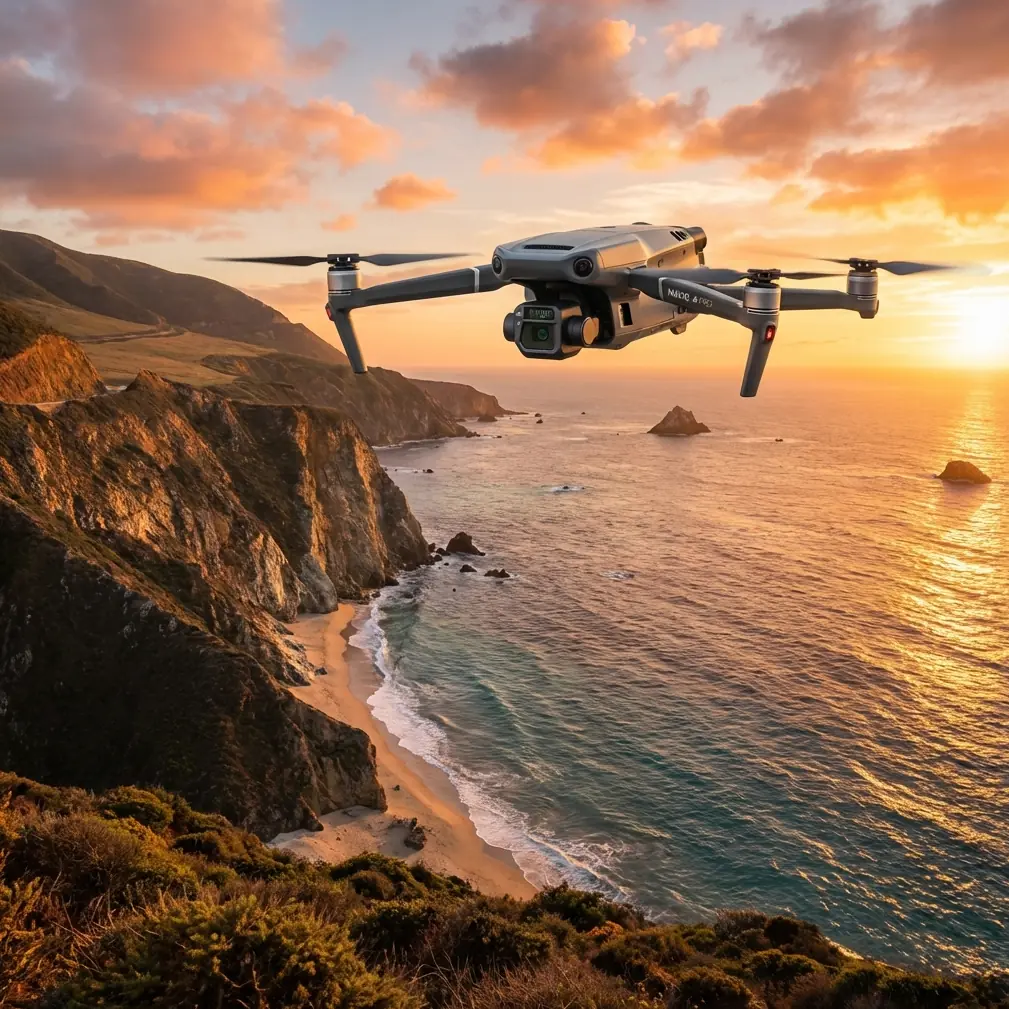
Expert Scouting with Mavic 3T: A Solar Farm Case Study in Extreme Heat and Cold
META: How the DJI Mavic 3T performs for solar farm scouting in extreme temperatures, with practical insight on thermal signature capture, O3 transmission, AES-256 security, GCP workflow, and field efficiency.
By Dr. Lisa Wang, Specialist
Solar farms look orderly from the access road. Neat rows. Predictable geometry. A clean asset class. Then you start inspecting them in the field.
By midday in desert conditions, module surfaces can run hot enough to distort expectations and strain flight planning. In winter, battery behavior changes, frost complicates thermal interpretation, and crews lose time just keeping operations moving. Add hundreds of acres, uneven terrain, and pressure to document faults clearly for engineering teams, and the difference between a capable drone and a merely convenient one becomes obvious very quickly.
This is where the Mavic 3T has carved out a real role. Not because it is the largest platform in the category. It is not. Not because it replaces every enterprise airframe. It does not. It succeeds because its mix of thermal imaging, visual capture, compact deployment, transmission stability, and field practicality suits the actual rhythm of solar scouting better than many heavier or more specialized alternatives.
What follows is a case-style breakdown of why the Mavic 3T works so well when a team is scouting solar farms in extreme temperatures, and where its design has meaningful operational advantages.
The assignment: cover ground fast, find anomalies early, and keep data usable
A typical solar scouting mission is not the same as a full engineering survey. The goal is usually triage and prioritization.
You need to:
- identify suspicious thermal signatures across strings or module groups
- verify whether apparent hotspots are likely true defects, load-related effects, shading issues, or environmental artifacts
- collect enough visual context to guide maintenance crews
- create records that can be compared across time
- do all of this without turning deployment into a logistical exercise
The Mavic 3T is particularly strong in that first-response layer. It gives site managers and inspection teams a fast way to move from “we think there may be underperforming sections” to “here are the exact arrays that need follow-up.”
That distinction matters. On a utility-scale site, every unnecessary truck roll and every delayed diagnosis has a cost in labor and lost generation time.
Why the thermal payload matters on solar sites
The core reason to consider the Mavic 3T for this kind of work is simple: thermal tells you where to look before the naked eye does.
On solar farms, abnormal heat patterns can indicate cracked cells, faulty bypass diodes, connection issues, contamination, or localized degradation. A conventional RGB-only platform can document panel condition beautifully while missing the most urgent clue. The thermal camera on the Mavic 3T changes the sequence. Instead of flying for visuals first and diagnosing later, you can spot suspicious heat behavior during the mission itself.
That operational shift is huge in extreme weather.
In high ambient heat, many systems begin to blur together visually. Everything looks harsh and bright. Thermal contrast can also become harder to interpret if the flight is poorly timed. The Mavic 3T helps because it lets teams pair thermal signature detection with immediate visual confirmation in one compact aircraft. If a string shows an abnormal hotspot pattern, the pilot can cross-check with the visual sensor rather than scheduling a second platform or second pass.
Compared with some competitor setups that require separate thermal and mapping workflows, this reduces handoffs. Less equipment. Fewer launch cycles. Fewer opportunities for data mismatch.
A real advantage over bulkier alternatives: deployment speed
Large enterprise multirotors absolutely have their place, especially when payload flexibility is the priority. But on solar scouting routes, speed to launch often beats payload modularity.
This is where the Mavic 3T often outperforms heavier competitors in practical terms. A smaller foldable platform can be deployed quickly from a service vehicle, repositioned across multiple sectors of a site, and packed down with minimal delay. If your crew is chasing weather windows or trying to inspect several subfields before module temperatures become less useful for comparison, those minutes matter.
In extreme heat, the field team wants fewer exposed setup steps. In extreme cold, they want fewer bare-hand adjustments and shorter downtime between flights. The Mavic 3T’s form factor supports that. It is less of an event to launch.
For solar operators, that translates into more actionable flights per day, especially on large sites where access roads and internal travel consume more time than office-based planning suggests.
O3 transmission is not just a spec sheet item
The Mavic 3T’s O3 transmission system deserves more attention than it usually gets. On paper, transmission technology can seem abstract. In the field, it is one of the things that determines whether a solar inspection feels controlled or compromised.
Solar farms create their own visual complexity. Repeating rows, reflective surfaces, distance compression, heat shimmer, and occasional terrain undulation all make it harder to maintain confidence in what the aircraft is seeing and where it is relative to the target section. A stable transmission link helps the pilot assess thermal anomalies in context rather than flying partially blind and reviewing the consequences later.
That matters even more on very large sites where teams may be planning beyond-visual-line-of-sight style workflows in the future, subject to local regulation and authorization. Even when operating strictly within standard visual procedures, stronger video and control reliability make long-row scouting far more efficient.
Some competing compact drones are fine for basic visual overviews but start to feel thin when the mission depends on reading subtle heat behavior and maintaining consistent situational awareness over distance. The Mavic 3T’s O3 link helps close that gap between compact airframe convenience and enterprise-grade confidence.
AES-256 has a place in commercial energy operations
Security is often treated as an IT concern until an energy client asks a very direct question: how is inspection data protected?
For solar operators, especially those managing distributed assets or working under third-party O&M contracts, imagery can reveal infrastructure layout, equipment status, and maintenance conditions. The Mavic 3T’s AES-256 support is not marketing garnish. It addresses a real issue in commercial field operations where data transfer and storage standards matter.
When inspection teams are moving images and thermal records between field crews, analysts, EPC contractors, and asset owners, secure handling becomes part of project credibility. It will not make a hotspot easier to detect, but it can make procurement and compliance conversations significantly easier.
That is one of the reasons the Mavic 3T tends to fit comfortably into professional workflows. It is not only about sensors. It is also about whether the aircraft can sit inside a modern commercial documentation chain without creating friction.
Extreme temperatures expose weak battery workflows
Any drone can look good in mild conditions. Solar sites do not always offer mild conditions.
In very hot environments, flight planning has to respect thermal stress on both the aircraft and the crew. In cold weather, battery readiness becomes a direct operational bottleneck. This is where battery logistics start to matter as much as camera quality.
The Mavic 3T benefits from a field workflow that supports rapid turnaround, and teams often build missions around hot-swap battery habits to keep downtime low. Strictly speaking, the aircraft itself is not landing with motors running for a literal battery hot swap in the industrial power-systems sense. But operationally, crews can rotate packs quickly enough that the inspection cadence remains efficient. On a solar farm, that means fewer gaps in thermal consistency and less wasted travel time between arrays.
This is one of those areas where compact systems often beat larger rivals. A heavy aircraft may offer more payload options, yet if battery changes are slower, transport is more cumbersome, and launch recovery takes longer, total site productivity can still favor the Mavic 3T.
On a long inspection day, the winning aircraft is not always the one with the most intimidating spec sheet. It is the one your team can keep flying smoothly.
Thermal is only half the story: why photogrammetry and GCP still matter
A common mistake in solar drone operations is treating thermal and mapping as separate departments. In practice, they support each other.
The Mavic 3T is often discussed for hotspot detection, but it also has value as part of a broader photogrammetry-informed workflow. Even if a dedicated mapping platform handles the highest-accuracy deliverables, the Mavic 3T can help bridge thermal findings to site context. If you mark suspect sections and relate them to a georeferenced map, maintenance teams can navigate directly to the right rows and strings without interpretation loss.
This is where GCPs, or ground control points, remain relevant. On large utility sites, GCP-backed mapping improves confidence in location accuracy. That matters when one thermal anomaly needs to be tied to a precise physical module group among thousands of visually similar panels.
The operational significance is straightforward: thermal shows the problem, geospatial discipline makes the problem findable.
Teams that ignore this often produce attractive thermal images that maintenance crews struggle to use efficiently. Teams that connect thermal observations to mapped site references close the loop faster. The Mavic 3T fits well into that loop because it can act as a nimble front-end detector while still supporting documentation that integrates with broader asset management practices.
Interpreting thermal signatures in heat and cold
Extreme temperatures do not only test aircraft performance. They also test operator judgment.
In hot conditions, a bright panel is not automatically a failing panel. You have to look at pattern behavior. Is the heat concentrated at a cell level, spread across a module, or aligned with a string issue? Is the anomaly persistent from angle to angle? Does the RGB image reveal soiling, debris, damage, or shadowing that explains it?
In cold conditions, contrast can sometimes make anomalies stand out sharply, but frost, low sun angle, and transient surface conditions can mislead inexperienced crews. The Mavic 3T supports good decision-making because the pilot can compare thermal and visual information on the same mission without delay.
That reduces false positives, which is one of the hidden costs in solar inspection. Every misidentified issue wastes technician time. Every missed issue delays remediation. The right drone is not the one that generates the most dramatic thermal imagery. It is the one that helps teams classify what they are seeing with enough confidence to act.
The case for Mavic 3T over competitor platforms in this scenario
If the mission is deep, survey-grade mapping over very large acreages with maximum payload flexibility, there are situations where bigger systems deserve the nod. If the mission is routine solar scouting in difficult temperature conditions, the Mavic 3T often lands in the sweet spot.
Why?
Because it combines:
- a thermal camera suited to anomaly detection
- immediate visual cross-reference
- compact deployment
- strong O3 transmission for long-row situational awareness
- AES-256 support that fits professional data governance
- efficient battery rotation habits for continuous fieldwork
That package is unusually well balanced.
Some competitors offer thermal capability but feel less integrated in day-to-day enterprise workflow. Others offer robust enterprise features but at the cost of mobility and speed. The Mavic 3T avoids those extremes. For solar scouting crews, that balance is often exactly the point.
What a smart field workflow looks like
On a real site, the best results usually come from a layered process:
Start early enough to capture meaningful thermal contrast for the day’s conditions. Use the Mavic 3T to sweep priority blocks and flag suspicious thermal signatures. Cross-check anomalies with visual imagery immediately. Log findings against mapped site references or GCP-supported basemaps. Push the shortlist to maintenance with clear location context and image evidence. Return later with a secondary workflow if a subset of assets needs deeper measurement or engineering review.
That is an efficient use of the aircraft. It does not ask the Mavic 3T to be every tool. It uses it where it is strongest.
If your team is refining that kind of inspection program and wants a practical discussion rather than a generic brochure pitch, you can start the conversation here: message Dr. Lisa Wang’s team on WhatsApp.
Final take
The Mavic 3T makes sense for solar farm scouting because it respects field reality. Thermal signatures need context. Mapping needs location discipline. Large sites punish slow deployment. Extreme temperatures punish weak battery routines and vague workflows. Secure data handling is not optional in commercial energy operations.
The aircraft will not eliminate the need for trained interpretation. Nothing will. But it gives skilled teams a platform that is fast to deploy, reliable to fly, and well matched to the actual first-response demands of solar inspection.
That is why it stands out. Not as a catch-all enterprise drone, but as a particularly sharp instrument for finding the right problems early, documenting them clearly, and keeping the inspection day moving when the weather is working against you.
Ready for your own Mavic 3T? Contact our team for expert consultation.