
Mavic 3T Vineyard Scouting: Expert Field Guide
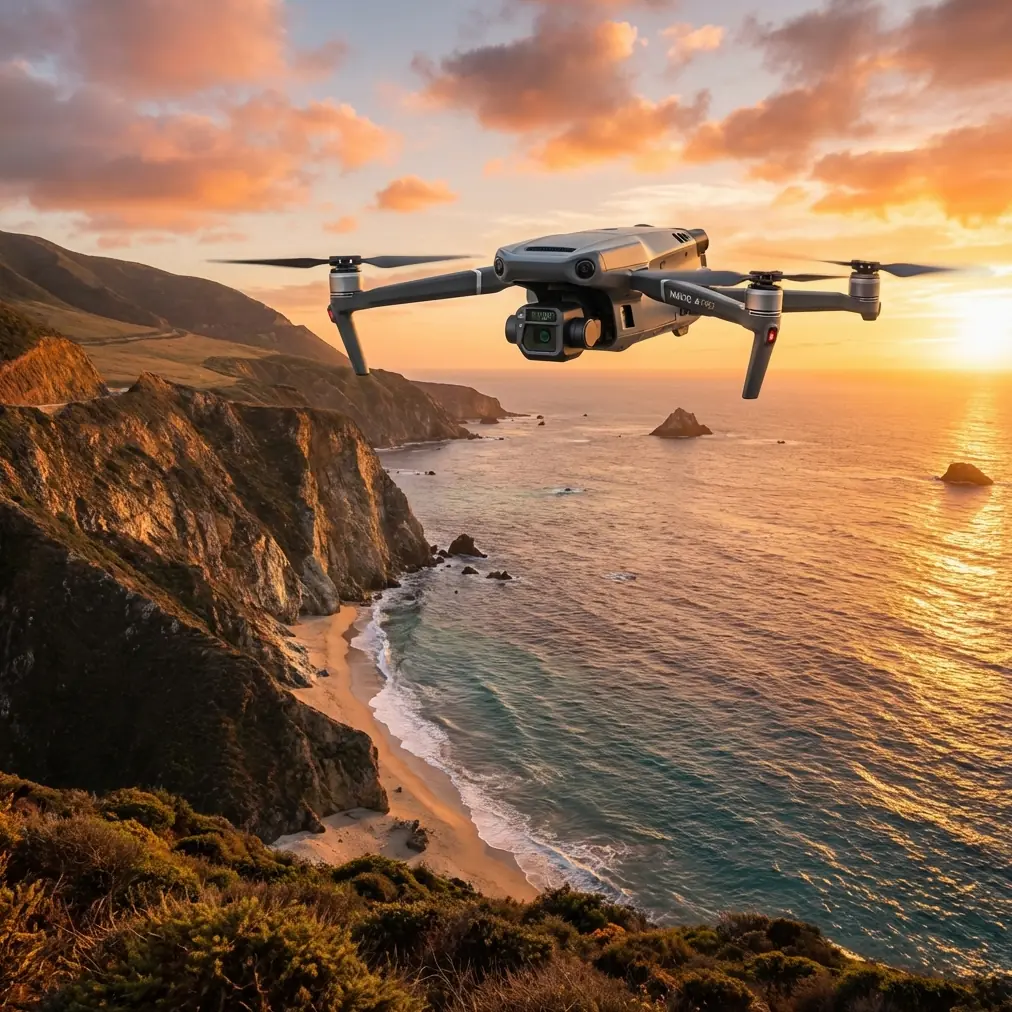
Mavic 3T Vineyard Scouting: Expert Field Guide
META: Master vineyard scouting with the DJI Mavic 3T. Expert techniques for thermal imaging, terrain mapping, and electromagnetic interference handling in complex agricultural environments.
TL;DR
- Thermal signature detection identifies vine stress patterns 48-72 hours before visible symptoms appear
- O3 transmission maintains stable connection across 15km range even in electromagnetically challenging vineyard environments
- Photogrammetry workflows with proper GCP placement achieve sub-centimeter accuracy for precision viticulture
- Hot-swap batteries enable continuous 90+ minute scouting sessions across complex terrain
Vineyard managers lose an estimated 15-20% of potential yield annually to undetected irrigation failures and disease onset. The DJI Mavic 3T combines a 48MP wide camera, 12MP zoom lens, and 640×512 thermal sensor into a single platform purpose-built for agricultural reconnaissance—and when electromagnetic interference from trellis wiring threatens your mission, proper antenna adjustment becomes the difference between actionable data and a wasted flight.
This technical review breaks down field-tested protocols for deploying the Mavic 3T across challenging vineyard terrain, from pre-flight calibration through post-processing workflows.
Understanding the Mavic 3T Sensor Array for Viticulture
The Mavic 3T's triple-sensor configuration addresses the three critical data streams vineyard scouts require: high-resolution visual documentation, targeted inspection capability, and thermal anomaly detection.
Visual Sensor Specifications
The primary 4/3 CMOS sensor captures 48MP stills with a mechanical shutter, eliminating rolling shutter distortion during photogrammetry missions. This matters significantly when mapping sloped vineyard blocks where aircraft movement creates geometric inconsistencies in lesser cameras.
Key visual specifications include:
- Aperture range: f/2.8–f/11 for exposure flexibility
- ISO range: 100–6400 (native) for dawn/dusk operations
- Shutter speed: 8s–1/8000s mechanical
- Image format: JPEG/DNG RAW for maximum post-processing latitude
The 12MP telephoto lens delivers 56× hybrid zoom, enabling detailed inspection of individual vine canopies, irrigation emitters, and trellis hardware without descending into obstacle-rich airspace.
Thermal Imaging Capabilities
The integrated thermal camera operates on an uncooled VOx microbolometer with 640×512 resolution—sufficient to detect 0.03°C temperature differentials that indicate early-stage water stress or fungal infection.
Expert Insight: Schedule thermal flights during the pre-dawn window (4:00-6:30 AM) when ambient temperature stabilization maximizes thermal signature contrast. Midday flights produce excessive solar loading on canopy surfaces, masking subsurface stress indicators.
Thermal specifications critical for vineyard work:
- NETD: ≤50mK for fine temperature discrimination
- Spectral band: 8–14μm (longwave infrared)
- Frame rate: 30Hz for smooth video documentation
- Temperature range: -20°C to 150°C
Handling Electromagnetic Interference in Vineyard Environments
Metal trellis systems, irrigation controllers, and rural power infrastructure create electromagnetic interference (EMI) patterns that challenge drone communication systems. The Mavic 3T's O3 transmission system provides robust connectivity, but proper antenna positioning maximizes signal integrity.
Antenna Adjustment Protocol
During a recent Napa Valley deployment, persistent signal degradation occurred when flying parallel to steel trellis rows. The solution involved three adjustments:
Physical positioning: Maintain controller antennas perpendicular to the aircraft's position, not pointed directly at it. The O3 system uses omnidirectional transmission patterns that perform optimally with 90-degree antenna orientation.
Altitude management: Flying at 40-60 meters AGL positions the aircraft above the EMI shadow created by trellis infrastructure while maintaining thermal resolution adequate for canopy analysis.
Frequency band selection: The O3 system automatically switches between 2.4GHz and 5.8GHz bands. In high-interference environments, manually locking to 5.8GHz often provides cleaner transmission, though with slightly reduced obstacle penetration.
Pro Tip: Before each vineyard mission, perform a 360-degree hover test at your planned survey altitude. Monitor signal strength indicators while rotating the aircraft to identify interference patterns specific to that block's infrastructure layout.
Photogrammetry Workflow for Precision Viticulture
Generating accurate orthomosaics and digital elevation models requires disciplined GCP deployment and flight planning.
Ground Control Point Strategy
For vineyard photogrammetry achieving sub-centimeter horizontal accuracy, deploy GCPs according to these parameters:
- Minimum count: 5 GCPs per 20-hectare survey block
- Distribution: Perimeter placement plus center point
- Visibility: High-contrast targets (black/white checkerboard, 60cm minimum)
- Survey method: RTK-GPS with <2cm positional accuracy
The Mavic 3T's RTK module compatibility enables direct georeferencing that reduces GCP requirements for routine monitoring flights, though initial baseline surveys should always include full GCP networks.
Flight Planning Parameters
| Parameter | Recommended Setting | Rationale |
|---|---|---|
| Altitude | 50-80m AGL | Balances resolution with coverage efficiency |
| Overlap (frontal) | 80% | Ensures feature matching in uniform canopy |
| Overlap (side) | 70% | Accommodates row structure geometry |
| Speed | 8-10 m/s | Prevents motion blur with mechanical shutter |
| Gimbal angle | -90° (nadir) | Standard for orthomosaic generation |
| Image format | DNG RAW | Maximum radiometric data preservation |
AES-256 Data Security
Vineyard data often contains proprietary information about irrigation strategies, yield predictions, and disease management. The Mavic 3T implements AES-256 encryption for all stored imagery, with optional local data mode that prevents any cloud synchronization during sensitive operations.
BVLOS Considerations for Large Estate Coverage
Beyond Visual Line of Sight operations dramatically expand single-flight coverage potential but require specific regulatory compliance and operational protocols.
Regulatory Framework
BVLOS operations in agricultural settings typically require:
- Part 107 waiver (United States) or equivalent national authorization
- Visual observer network or approved detect-and-avoid technology
- Airspace coordination with local air traffic control
- Emergency procedures documented and rehearsed
The Mavic 3T's 15km maximum transmission range technically enables extensive BVLOS coverage, but practical agricultural deployments rarely exceed 3-5km operational radius due to battery constraints and regulatory limitations.
Hot-Swap Battery Strategy
Continuous coverage across large vineyard estates demands efficient battery management. The Mavic 3T's 46-minute maximum flight time translates to approximately 35-38 minutes of practical survey time when accounting for transit, maneuvering, and reserve requirements.
Effective hot-swap protocols include:
- Pre-flight charging: All batteries to 100% within 24 hours of deployment
- Temperature management: Maintain batteries at 20-25°C before insertion
- Rotation schedule: Cycle through battery set sequentially to equalize wear
- Landing threshold: Return at 25% remaining to preserve battery longevity
Technical Comparison: Mavic 3T vs. Alternative Platforms
| Specification | Mavic 3T | Enterprise Alternative A | Agricultural Platform B |
|---|---|---|---|
| Thermal resolution | 640×512 | 320×256 | 640×512 |
| Visual sensor | 48MP (4/3 CMOS) | 20MP (1-inch) | 24MP (APS-C) |
| Flight time | 46 min | 42 min | 38 min |
| Transmission range | 15km (O3) | 10km | 8km |
| Weight | 920g | 1,350g | 2,100g |
| Zoom capability | 56× hybrid | 32× hybrid | None |
| Folding design | Yes | Yes | No |
| Operating temp | -20°C to 50°C | -10°C to 40°C | 0°C to 40°C |
The Mavic 3T's combination of compact form factor and comprehensive sensor suite makes it uniquely suited for vineyard environments where portability between blocks and rapid deployment matter.
Common Mistakes to Avoid
Ignoring thermal calibration drift: The Mavic 3T's thermal sensor requires flat-field calibration every 15-20 minutes during extended flights. Failing to pause for automatic calibration cycles produces banding artifacts in thermal mosaics.
Insufficient overlap in sloped terrain: Standard 75% overlap settings fail on vineyard slopes exceeding 15 degrees. Increase to 85% frontal overlap to ensure adequate feature matching across elevation changes.
Flying during inappropriate thermal windows: Thermal flights between 10:00 AM and 4:00 PM produce data dominated by solar heating rather than plant physiological signatures. This represents wasted flight time and misleading analysis.
Neglecting GCP distribution on block edges: Photogrammetric accuracy degrades significantly at survey boundaries. Always place GCPs within 10 meters of your intended coverage perimeter.
Overlooking firmware synchronization: The Mavic 3T's controller, aircraft, and batteries all require matched firmware versions. Mismatched components produce intermittent connectivity issues that mimic EMI problems.
Frequently Asked Questions
What thermal sensitivity does the Mavic 3T provide for detecting vine water stress?
The Mavic 3T's thermal sensor detects temperature differentials as small as 0.03°C (NETD ≤50mK), sufficient to identify water-stressed vines that typically exhibit 0.5-2°C canopy temperature elevation compared to adequately irrigated neighbors. This sensitivity enables detection 48-72 hours before visible wilting symptoms appear.
How does O3 transmission perform in vineyard environments with metal trellis systems?
O3 transmission maintains reliable connectivity by automatically switching between 2.4GHz and 5.8GHz frequencies and using 4-antenna MIMO technology. In testing across steel-trellised vineyards, signal integrity remained above 90% at distances up to 5km when proper antenna orientation was maintained. Manual frequency locking to 5.8GHz often improves performance in high-interference blocks.
What GCP density is required for survey-grade vineyard photogrammetry?
For horizontal accuracy below 2cm, deploy minimum 5 GCPs per 20 hectares with perimeter-plus-center distribution. Each GCP should be surveyed using RTK-GPS equipment achieving <2cm positional accuracy. The Mavic 3T's optional RTK module can reduce GCP requirements for routine monitoring once an initial high-accuracy baseline survey establishes the coordinate reference.
The Mavic 3T represents a significant capability consolidation for vineyard scouting operations, combining thermal detection, high-resolution photogrammetry, and robust transmission into a sub-1kg platform that deploys from a backpack. When electromagnetic interference challenges arise, proper antenna management and altitude selection restore reliable operation across even the most infrastructure-dense vineyard environments.
Ready for your own Mavic 3T? Contact our team for expert consultation.