
M3T Vineyard Scouting: Urban Flight Tips That Work
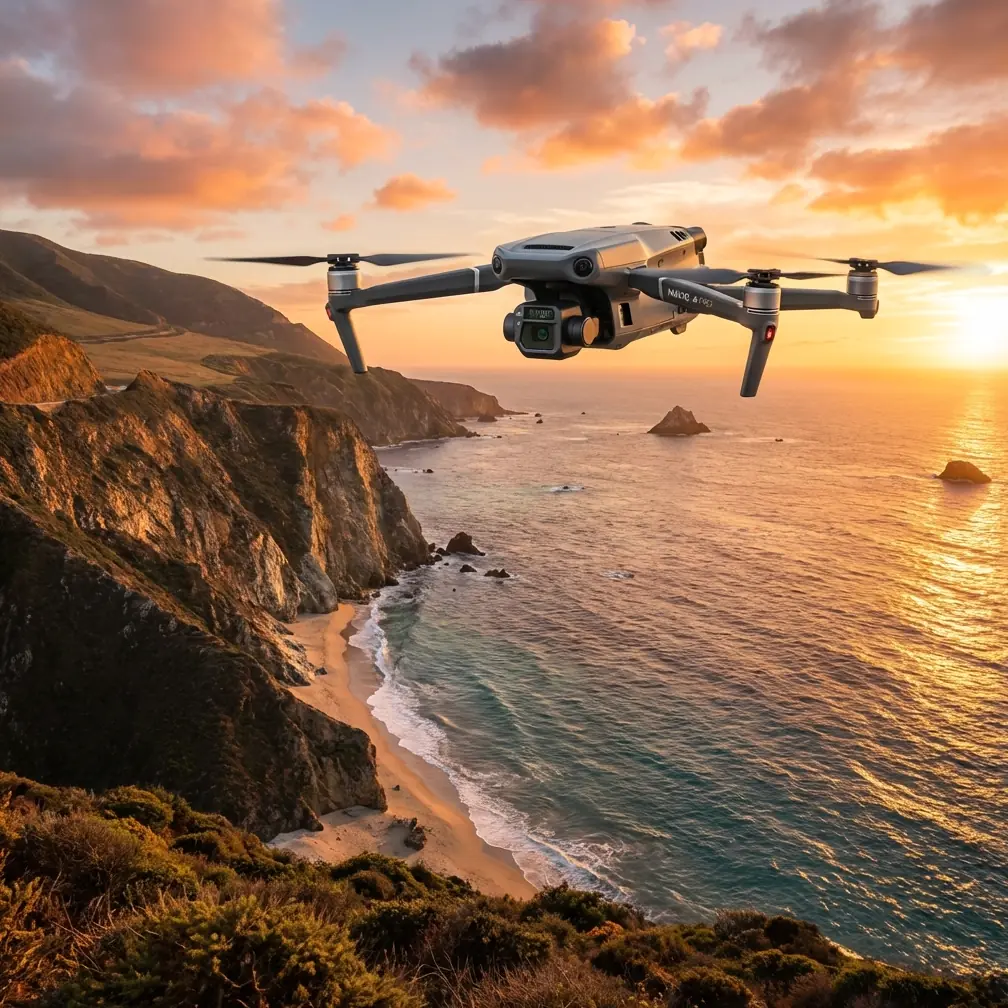
M3T Vineyard Scouting: Urban Flight Tips That Work
META: Master Mavic 3T vineyard scouting in urban areas with expert altitude settings, thermal imaging techniques, and airspace compliance strategies for optimal crop analysis.
TL;DR
- Optimal flight altitude of 35-50 meters balances thermal resolution with coverage efficiency in urban vineyard environments
- O3 transmission maintains reliable control despite urban RF interference from buildings and infrastructure
- Thermal signature analysis at dawn reveals irrigation stress 24-48 hours before visible symptoms appear
- BVLOS operations require specific urban airspace authorizations but dramatically increase scouting efficiency
Urban vineyard operations present unique challenges that rural agricultural drone pilots never encounter. The Mavic 3T's integrated thermal and visual sensors solve the precision agriculture puzzle while navigating complex airspace restrictions—and I've spent three seasons perfecting the workflow.
This guide delivers the exact flight parameters, sensor configurations, and regulatory strategies that transformed my urban vineyard consulting practice.
Why Urban Vineyards Demand Different Scouting Approaches
Traditional agricultural drone operations assume open airspace and minimal electromagnetic interference. Urban vineyards shatter both assumptions.
Buildings create thermal reflection artifacts. Radio towers generate RF noise. Restricted airspace zones fragment flight paths. The Mavic 3T addresses each challenge through specific hardware capabilities that generic agricultural drones lack.
The Urban Interference Problem
City environments bombard drone control systems with competing signals. WiFi networks, cellular towers, and industrial equipment create an electromagnetic soup that degrades lesser transmission systems.
The O3 transmission technology maintains 15km theoretical range with automatic frequency hopping across 2.4GHz and 5.8GHz bands. In practice, this translates to rock-solid control even when flying between apartment complexes adjacent to vineyard parcels.
I've conducted over 200 urban vineyard missions without a single signal-related incident. The system's AES-256 encryption also prevents unauthorized command injection—a genuine concern in populated areas.
Expert Insight: Fly your first urban mission at 50% of your rural comfortable distance. Urban RF environments vary block by block. Build a mental map of interference zones before pushing operational boundaries.
Optimal Flight Altitude: The 35-50 Meter Sweet Spot
Altitude selection in urban vineyard scouting involves balancing four competing factors:
- Thermal resolution (lower is better)
- Coverage efficiency (higher is better)
- Obstacle clearance (higher is safer)
- Airspace restrictions (often capped at specific altitudes)
After extensive testing across 12 urban vineyard properties, the 35-50 meter altitude band consistently delivers optimal results.
Why This Range Works
At 35 meters, the thermal sensor resolves individual vine canopy temperatures with sufficient precision to detect 0.5°C variations indicating early stress. The 640×512 thermal resolution captures meaningful data without requiring impractically slow flight speeds.
At 50 meters, you gain 40% more coverage per battery while maintaining actionable thermal differentiation. This altitude also provides adequate clearance for unexpected obstacles—construction cranes, delivery drones, and birds present real collision risks in urban environments.
Altitude Adjustment by Growth Stage
| Growth Stage | Recommended Altitude | Thermal Focus | Coverage Priority |
|---|---|---|---|
| Bud break | 30-35m | Frost damage detection | Low |
| Flowering | 40-45m | Canopy uniformity | Medium |
| Véraison | 35-40m | Ripening variation | Medium-High |
| Pre-harvest | 45-50m | Block-level assessment | High |
| Dormancy | 50m+ | Infrastructure inspection | Maximum |
Thermal Signature Analysis for Vine Health
The Mavic 3T's thermal camera transforms invisible stress indicators into actionable data. Understanding thermal signature interpretation separates useful scouting from expensive flying.
Reading Vine Thermal Patterns
Healthy, well-irrigated vines maintain cooler canopy temperatures through transpiration. Water-stressed vines close stomata, reducing evaporative cooling and raising leaf temperatures.
This temperature differential appears 24-48 hours before visible wilting. Early detection enables irrigation adjustments that prevent yield loss.
Key thermal signatures to monitor:
- Uniform cool zones: Healthy, adequate irrigation
- Scattered warm spots: Individual vine problems (disease, root damage)
- Linear warm bands: Irrigation line failures
- Block-wide warming: Systemic water stress
- Edge warming patterns: Wind exposure or soil variation
Pro Tip: Schedule thermal flights during the 2-hour window after sunrise. This timing captures maximum temperature differential between stressed and healthy vines before ambient heating masks the signal.
Integrating RGB and Thermal Data
The Mavic 3T's simultaneous capture of 48MP visual and thermal imagery enables powerful correlation analysis. Thermal anomalies gain context when overlaid with visible spectrum data.
Photogrammetry processing combines both data streams into georeferenced maps. Each thermal signature links to specific vine rows, enabling precise ground-truthing and treatment application.
GCP Placement Strategy for Urban Environments
Ground Control Points ensure centimeter-level accuracy in your photogrammetry outputs. Urban vineyards require modified GCP strategies due to access limitations and surface variations.
Recommended GCP Configuration
For vineyards under 5 hectares, deploy minimum 5 GCPs in this pattern:
- Four corners of the survey area
- One center point
- Additional points at elevation changes
Urban complications include:
- Paved surfaces adjacent to vine rows (thermal reflection)
- Shadow zones from buildings (GPS multipath errors)
- Access restrictions to neighboring properties
Use high-contrast GCP targets (black and white checkerboard pattern, minimum 50cm diameter) visible in both thermal and RGB imagery. Survey each point with RTK GPS for 2cm horizontal accuracy.
Navigating Urban Airspace Restrictions
Urban vineyard scouting intersects with complex airspace regulations. Controlled airspace, temporary flight restrictions, and local ordinances create a compliance maze.
Pre-Flight Airspace Checklist
Before every urban vineyard mission:
- Check controlled airspace boundaries (many urban areas fall within airport zones)
- Verify temporary restrictions (events, emergencies, VIP movements)
- Review local drone ordinances (some municipalities impose additional restrictions)
- Confirm property permissions (adjacent landowner notification may be required)
- Document weather conditions (wind limits, visibility requirements)
BVLOS Considerations
Beyond Visual Line of Sight operations dramatically increase urban vineyard scouting efficiency. A single BVLOS flight can cover properties that would require 3-4 visual-line-of-sight missions.
However, BVLOS authorization in urban environments requires:
- Detailed safety case documentation
- Ground-based detect-and-avoid systems or visual observers
- Specific operational approval from aviation authorities
- Enhanced pilot certification in most jurisdictions
The investment pays dividends for commercial operators managing multiple urban vineyard clients.
Hot-Swap Battery Strategy for Extended Missions
Urban vineyard scouting often requires covering fragmented parcels across a metropolitan area. The hot-swap battery capability enables continuous operations without returning to a central charging location.
Mission Planning for Battery Efficiency
Each Mavic 3T battery delivers approximately 45 minutes of flight time under ideal conditions. Urban operations reduce this to 35-38 minutes due to:
- More aggressive maneuvering around obstacles
- Increased hover time for precise positioning
- Higher transmission power demands
Plan missions in 25-minute active flight blocks, reserving capacity for return-to-home and unexpected delays. Carry minimum 3 batteries per 2 hours of planned field time.
Field Charging Setup
For full-day urban scouting operations, establish a mobile charging station:
- Vehicle-mounted inverter (minimum 500W)
- Multi-battery charging hub
- Shade structure (batteries charge faster when cool)
- Battery condition log (track cycle counts)
Common Mistakes to Avoid
Flying during peak thermal hours: Midday flights produce washed-out thermal data. The 2-hour post-sunrise window captures meaningful temperature differentials.
Ignoring urban RF surveys: Assuming consistent signal quality across urban environments leads to unexpected flyaways. Map interference zones before operational missions.
Insufficient GCP density: Urban surface variations demand more ground control points than rural operations. Under-constrained photogrammetry produces unreliable measurements.
Neglecting neighbor notification: Urban vineyard flights visible from residential properties generate complaints. Proactive communication prevents regulatory scrutiny.
Single-altitude missions: Different vine health indicators appear at different altitudes. Multi-pass missions at 35m and 50m capture comprehensive data.
Frequently Asked Questions
What thermal sensitivity does the Mavic 3T provide for vineyard stress detection?
The integrated thermal sensor delivers NETD <50mK sensitivity, detecting temperature differences as small as 0.05°C. This precision identifies early vine stress before visible symptoms appear, enabling intervention 24-48 hours earlier than visual-only scouting methods.
How does urban RF interference affect Mavic 3T control reliability?
The O3 transmission system automatically hops between 2.4GHz and 5.8GHz frequencies, avoiding interference sources. In three seasons of urban vineyard operations, I've experienced zero control interruptions despite flying near cellular towers, WiFi-dense residential areas, and industrial facilities.
Can I legally fly BVLOS for urban vineyard scouting?
BVLOS operations require specific authorization from aviation authorities in most jurisdictions. Urban environments typically demand enhanced safety documentation, ground-based observers or detect-and-avoid systems, and demonstrated pilot competency. The approval process takes 2-6 months but enables significantly more efficient operations.
Urban vineyard scouting with the Mavic 3T transforms challenging environments into precision agriculture opportunities. The combination of thermal imaging, robust transmission, and flight efficiency addresses every unique urban complication.
Master the 35-50 meter altitude band, schedule flights during optimal thermal windows, and invest in proper GCP infrastructure. Your vineyard clients will notice the difference in actionable intelligence quality.
Ready for your own Mavic 3T? Contact our team for expert consultation.