
How to Scout Vineyards in Dusty Fields with M3T
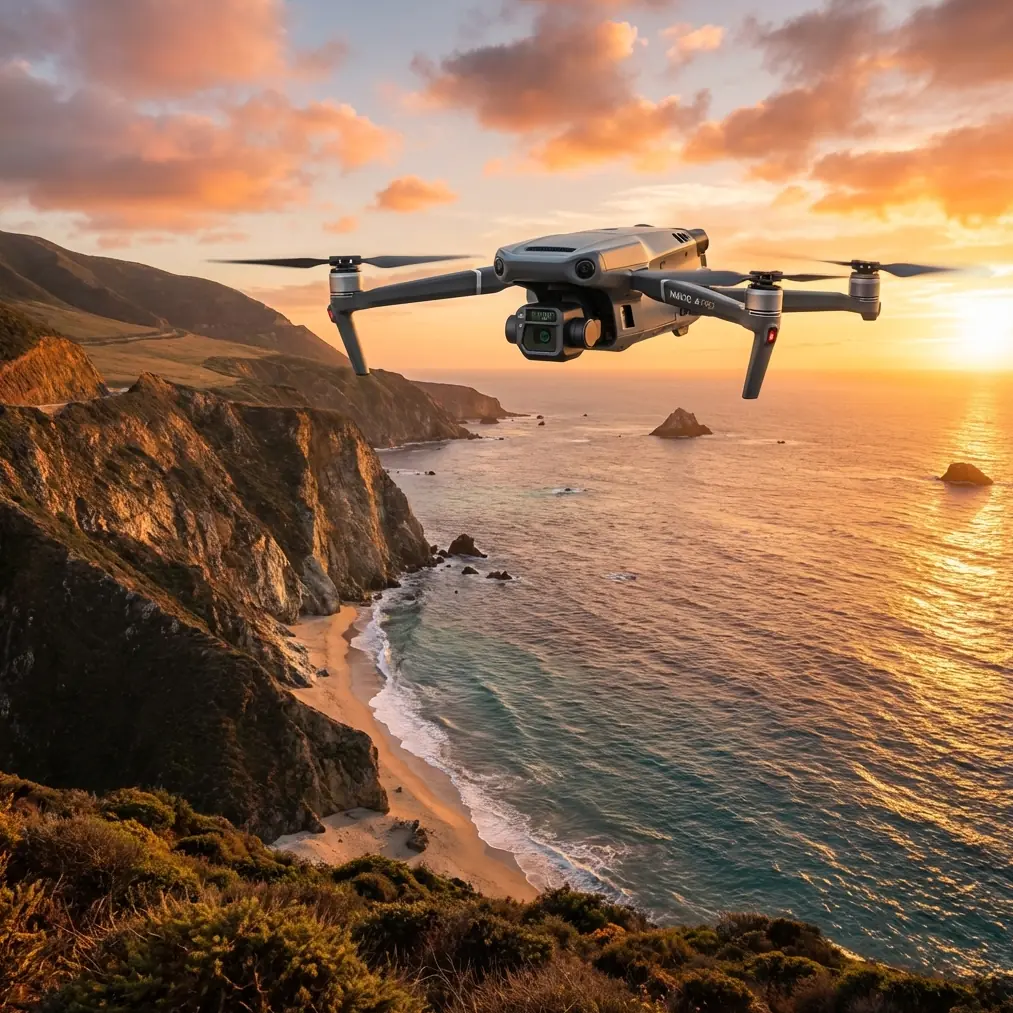
How to Scout Vineyards in Dusty Fields with M3T
META: Learn how the Mavic 3T transforms vineyard scouting in dusty conditions. Expert field report covering thermal imaging, flight tips, and battery management strategies.
Author: James Mitchell | Role: Precision Agriculture & Drone Operations Expert | Published: July 2025
TL;DR
- The Mavic 3T's thermal signature detection identifies vine stress patterns invisible to the naked eye, even through heavy dust and particulate interference.
- Hot-swap batteries are essential for covering large vineyard blocks—a disciplined rotation system can extend your total flight window by over 35%.
- Photogrammetry workflows paired with GCP placement produce centimeter-accurate vineyard maps that integrate directly with precision agriculture platforms.
- O3 transmission maintains a reliable video feed at up to 15 km, critical when dust degrades visual line-of-sight conditions.
The Battery Lesson That Changed My Vineyard Workflow
Dust kills drone batteries faster than you think. During a 240-acre Cabernet Sauvignon scouting mission in California's Central Valley last September, I burned through my first Mavic 3T battery in 31 minutes—well short of the rated 45-minute maximum. The culprit wasn't a hardware defect. It was heat.
Ambient temperature on the vineyard floor hit 41°C (106°F). Batteries I'd left sitting on my truck's tailgate in direct sunlight were already warm before they ever touched the drone. The Mavic 3T's intelligent battery management system throttled performance to protect the cells, cutting my effective flight time by nearly a third.
Here's the field-tested fix I now use on every dusty vineyard job: keep spare batteries in an insulated cooler with frozen gel packs, stored between 18°C and 25°C. Before each swap, I let the battery acclimate outside the cooler for exactly 3 minutes—long enough to avoid condensation shock, short enough to prevent heat soak. This single discipline restored my per-battery flight times to a consistent 40–43 minutes, even in extreme heat.
Pro Tip: Label each battery with a number and log its insertion temperature and flight duration in a simple spreadsheet. Over a season, you'll identify which cells are degrading fastest and can rotate them out before a mid-mission failure ruins your data set.
That experience reshaped my entire approach to vineyard scouting with the M3T. What follows is the complete field report—hardware configuration, mission planning, data capture, and the mistakes that cost me time so they don't cost you.
Why the Mavic 3T Is Built for Vineyard Scouting
The Mavic 3T packs three sensors into a platform that weighs under 1 kg: a 48 MP wide camera, a 12 MP zoom camera with 56× hybrid zoom, and a 640 × 512 thermal imaging sensor. For vineyard work, that combination is transformative.
Thermal Imaging for Vine Stress Detection
Healthy grapevines transpire water through their stomata, keeping canopy temperatures relatively cool. Stressed vines—whether from drought, disease, or root damage—show elevated thermal signatures because their transpiration rates drop.
The M3T's thermal sensor captures these temperature differentials with a NETD (noise equivalent temperature difference) of less than 50 mK. In practical terms, that means the drone can distinguish a 0.05°C difference between adjacent vine rows.
Key thermal applications in vineyard scouting include:
- Irrigation uniformity mapping—identifying drip emitters that are clogged or underperforming
- Early disease detection—spotting fungal infections like powdery mildew 5–10 days before visual symptoms appear
- Frost damage assessment—quantifying which blocks suffered cellular damage after a cold event
- Rootstock vigor analysis—comparing canopy temperatures across different rootstock varieties
Dealing with Dust Interference
Dusty conditions pose a real challenge for thermal readings. Airborne particulates between the sensor and the canopy scatter infrared radiation, reducing measurement accuracy. I've developed a reliable protocol for managing this:
- Fly early morning or late afternoon when wind speeds are typically below 8 km/h and dust is settled
- Set flight altitude to 35–50 m AGL to minimize the column of dusty air between sensor and target
- Use the M3T's mechanical shutter on the wide camera to avoid rolling shutter artifacts caused by vibrations from grit on the props
- Clean the sensor window with a microfiber cloth and isopropyl alcohol before every flight—even a thin dust film degrades thermal accuracy by up to 12%
Mission Planning and GCP Strategy
Photogrammetry That Actually Works
Vineyard photogrammetry demands precision. The trellis structure of vine rows creates repetitive visual patterns that confuse automated stitching algorithms. Without proper ground control, your orthomosaic can warp by several meters—useless for variable-rate application maps.
I place a minimum of 5 GCPs per 40-hectare block, surveyed with an RTK GPS receiver to ±2 cm accuracy. GCP placement follows this pattern:
- One at each corner of the survey area
- One in the center
- Additional points every 200 m along the longest axis for blocks exceeding 60 hectares
For the GCP targets themselves, I use 60 cm × 60 cm checkerboard panels in high-contrast black and white. In dusty conditions, I've learned to bring a hand broom and wipe each target immediately before the flight. A dust-covered GCP that blends into the soil is a GCP your software won't detect.
Flight Parameters for Vineyard Mapping
| Parameter | Recommended Setting | Notes |
|---|---|---|
| Flight altitude | 40 m AGL | Balances resolution with coverage |
| Front overlap | 80% | Compensates for vine row repetition |
| Side overlap | 75% | Prevents gaps between passes |
| Speed | 8 m/s | Reduces motion blur in dusty air |
| Camera angle | -90° (nadir) | Standard for orthomosaic generation |
| Thermal capture interval | Every 2 seconds | Ensures full thermal coverage |
| GSD (ground sampling distance) | ~1.05 cm/pixel (wide camera at 40 m) | Sufficient for individual vine analysis |
| AES-256 encryption | Enabled | Protects proprietary vineyard data in transit |
Expert Insight: When flying the thermal sensor and RGB cameras simultaneously, the M3T generates roughly 1.2 GB of data per 10 minutes of flight. Bring high-speed microSD cards rated at V30 or above and carry at least 3 spares. In dusty environments, keep cards in a sealed plastic bag when not in use—a single grain of sand in the card slot can end your day.
O3 Transmission and BVLOS Considerations
The Mavic 3T's O3 (OcuSync 3.0) transmission system delivers 1080p/30fps live video at distances up to 15 km with automatic frequency hopping between 2.4 GHz and 5.8 GHz. For vineyard scouting, this range is rarely the limiting factor—but signal reliability absolutely is.
Dusty air doesn't significantly attenuate radio signals at these frequencies. The real threat in vineyard environments is multipath interference from metal trellis wires, steel T-posts, and irrigation infrastructure. To maintain a solid link:
- Position your controller on elevated ground—even standing on the truck bed adds 1.5–2 m of antenna height that reduces ground-level reflections
- Keep the controller antennas pointed toward the drone at all times
- Monitor the transmission quality indicator and set an automatic RTH (Return to Home) trigger at 70% signal strength, not the default 30%
For operations approaching BVLOS (Beyond Visual Line of Sight) territory—common on large vineyard estates—ensure your country's aviation authority permits such flights and that you've filed the appropriate waivers. In the U.S., this means a Part 107.31 waiver with the FAA. The M3T's ADS-B receiver helps with airspace awareness, but it does not replace regulatory compliance.
Data Processing and Deliverables
After landing, I process vineyard data through a three-stage pipeline:
- RGB orthomosaic generation using photogrammetry software (Pix4D or DroneDeploy) with GCP constraints applied
- Thermal index mapping to produce CWSI (Crop Water Stress Index) layers calibrated against ground-truth soil moisture readings
- NDVI extraction from the wide camera's spectral response, correlated with the thermal data to build a composite vine health score
The final deliverable for my vineyard clients is typically a multi-layer GeoTIFF that their precision agriculture platform (such as John Deere Operations Center or Trimble Ag Software) can ingest directly for variable-rate irrigation scheduling.
Mavic 3T vs. Alternative Vineyard Scouting Platforms
| Feature | Mavic 3T | Multispectral Fixed-Wing | Handheld Thermal Camera |
|---|---|---|---|
| Thermal resolution | 640 × 512 | 320 × 256 (typical) | 640 × 480 |
| Coverage per hour | 80–120 hectares | 200+ hectares | 2–3 hectares |
| Setup time | Under 5 minutes | 20–40 minutes | Immediate |
| Dust resilience | High (enclosed sensors) | Moderate (prop wash stirs dust) | Low (operator exposure) |
| Data georeferencing | Built-in GPS + GCP support | Built-in GPS + GCP support | Manual geotagging required |
| Portability | Fits in a backpack | Requires vehicle transport | Handheld |
| Hot-swap battery system | Yes—swap in under 30 seconds | No (typically single battery) | N/A |
Common Mistakes to Avoid
1. Flying in peak dust conditions. Mid-afternoon wind gusts in arid vineyard regions can suspend enough particulate to degrade both thermal accuracy and RGB sharpness. Schedule flights for early morning when air is still.
2. Ignoring battery temperature management. As detailed above, hot batteries throttle performance. Never leave cells on a sun-exposed surface. Use an insulated cooler system and log temperatures religiously.
3. Skipping GCPs because "GPS is good enough." The M3T's onboard GPS provides ±1.5 m horizontal accuracy. That might sound adequate, but for variable-rate prescription maps, a 1.5 m shift can place irrigation adjustments on the wrong vine row. Always use GCPs.
4. Processing thermal and RGB data separately without cross-referencing. A thermal hotspot alone doesn't tell you the cause of stress. Overlay it with the RGB orthomosaic and zoom imagery to determine whether the issue is canopy gap, soil exposure, missing vines, or actual physiological stress.
5. Neglecting lens cleaning between flights. Dust accumulation is cumulative. A lens that looks "fine" after one flight will produce noticeably softer images after three. Clean every sensor window before every takeoff—no exceptions.
Frequently Asked Questions
Can the Mavic 3T's thermal sensor detect irrigation leaks beneath vine canopy?
Yes, but with caveats. Active leaks that saturate the soil surface produce a distinct cool thermal signature due to evaporative cooling. The M3T can detect these from 40 m AGL when the temperature differential between wet and dry soil exceeds approximately 2°C. Subsurface leaks that haven't reached the topsoil require ground-based investigation.
How does dust affect the Mavic 3T's obstacle avoidance system?
The M3T uses omnidirectional obstacle sensing with visual and infrared sensors. Heavy dust can reduce the effective detection range from the rated 30+ meters down to approximately 15–20 meters. In thick dust, I recommend reducing flight speed to 5 m/s and increasing your minimum obstacle clearance setting to 10 m horizontal distance.
What's the minimum vineyard size where a Mavic 3T scouting mission makes economic sense?
Based on my field experience, the crossover point is roughly 15–20 hectares. Below that, a trained scout with a handheld thermal camera can cover the ground in comparable time. Above that threshold, the M3T's speed advantage—80+ hectares per hour—makes it dramatically more efficient, and the photogrammetry data delivers value that manual scouting simply cannot replicate.
Ready for your own Mavic 3T? Contact our team for expert consultation.