
Mavic 3T in Vineyard Heat and Frost: Practical Scouting
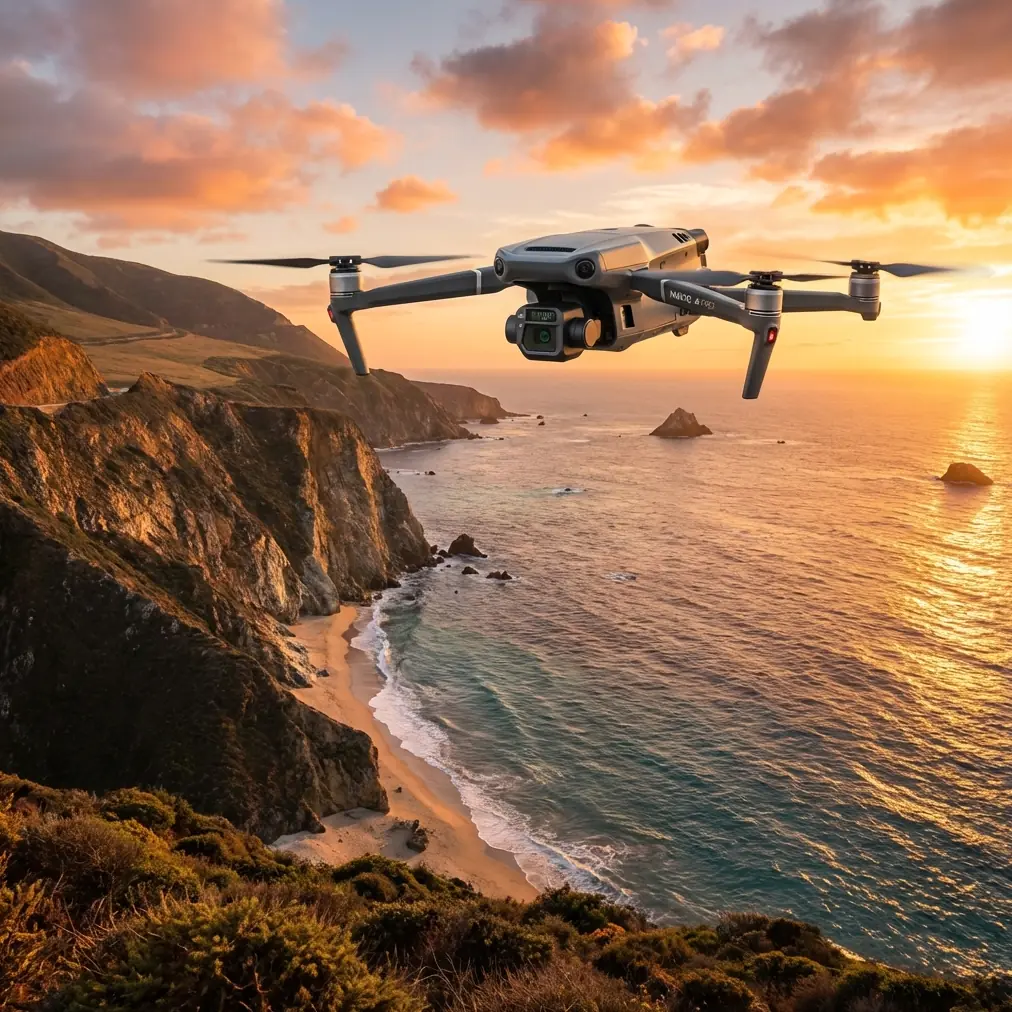
Mavic 3T in Vineyard Heat and Frost: Practical Scouting Tactics That Actually Hold Up
META: Expert field guide to using the DJI Mavic 3T for vineyard scouting in extreme temperatures, including thermal signature interpretation, flight altitude strategy, battery planning, and mapping workflow tips.
Vineyards look orderly from the ground. From the air, they rarely are.
That matters most when temperatures swing hard. A block that seems uniform during a quick walk-through can hide stressed rows, patchy irrigation performance, frost pockets, weak drainage, and canopy gaps that only become obvious when you combine thermal and visual data at the right time of day. For growers and consultants working in severe heat or cold, the Mavic 3T has become a very practical aircraft for that job—not because it is the biggest platform available, but because it compresses several useful sensing tools into a system that can be deployed fast, flown repeatedly, and interpreted without turning every scouting mission into a full survey campaign.
I’ve seen a common mistake in vineyard operations: crews either fly too high and collect pretty but vague thermal imagery, or they fly too low and lose the context needed to understand what is happening across an entire block. The result is a map that looks technical but doesn’t lead to decisions. The better approach is to treat the Mavic 3T as a decision-support tool first and a data-collection tool second.
For vineyard scouting in extreme temperatures, that difference changes everything.
The core problem: extreme temperatures distort what you think you’re seeing
Heat and cold produce very different vineyard signatures, but both can mislead operators.
In hot conditions, canopy stress does not always show up as a simple “hotter is worse” pattern. A row may appear warmer because of water stress, poor vine vigor, exposed soil between weaker canopies, uneven irrigation, or row-edge effects caused by terrain and wind exposure. During severe heat, even healthy vines can present elevated leaf temperatures in the afternoon, narrowing the contrast between normal and abnormal areas.
Cold weather creates the opposite challenge. Frost-prone sections often sit in low-lying ground, but not every cold-looking area is a vine problem. Bare soil, shadows, damp patches, rocks, trellis components, and drainage channels all influence the thermal signature. If you fly too late after sunrise, the thermal story changes quickly as the sun reshapes surface temperatures. If you fly too early without enough visual context, you may identify cold zones without understanding why they formed.
This is why the Mavic 3T’s value in vineyards is not just that it carries a thermal camera. It is that you can pair thermal inspection with visible imaging in one compact mission and verify anomalies immediately while the conditions still exist.
Why the Mavic 3T fits this job
The Mavic 3T is especially useful for vineyard scouting because it balances mobility with enough imaging capability to support repeatable field decisions. In steep terrain or long vineyard corridors, setup speed matters. So does confidence in your link quality. DJI’s O3 transmission is particularly relevant here. Vineyards often create line-of-sight interruptions through rolling topography, tree lines, utility structures, and long row geometry. A stable transmission system gives the pilot a clearer live view of the thermal scene and helps maintain smoother route execution across blocks.
That matters operationally because thermal interpretation is highly time-sensitive. If you lose continuity during a frost morning or a narrow heat-stress window, you may not get a second chance to capture the same temperature pattern. Having dependable video transmission is not a comfort feature in this scenario; it supports data consistency.
Security also enters the conversation more than many growers expect. Vineyard imagery can reveal block performance, water distribution issues, infrastructure layouts, and management practices. For operators working with estate vineyards, research plots, or contracted crop advisory teams, AES-256 data protection is a meaningful detail. It supports safer handling of operational data when scouting results move between pilot, manager, agronomist, and owner.
The altitude question: fly lower than most people think, but not as low as your instincts suggest
If you want one practical recommendation for vineyard scouting with the Mavic 3T in extreme temperatures, here it is:
For most thermal scouting passes, start around 40 to 60 meters above ground level.
That range is usually the best compromise between thermal detail and block-level readability.
Below that, you often gain leaf-level drama without enough pattern continuity. Individual vines and trellis features can dominate the frame, making it harder to distinguish whether a hotspot is truly systemic or simply a local geometric artifact. In vineyards with variable row spacing or trellis height, very low flights also make mosaicking and repeatability harder.
Above that, thermal anomalies begin to flatten into broader zones. You may still identify major stress clusters or cold-air drainage patterns, but subtle row-to-row differences get diluted. For growers trying to isolate irrigation underperformance, missing emitters, canopy gaps, or weak vigor lanes, that loss of resolution can make the map less actionable.
My preferred workflow is simple:
- 40 to 60 m AGL for thermal scouting
- Higher overview passes when you need terrain context
- Lower targeted verification passes only after anomalies are identified
This sequence avoids the trap of collecting too much “close-up evidence” before you know what deserves closer inspection.
In heat stress assessments, flying around 50 m often gives a strong balance between canopy temperature patterning and row continuity. In frost work, especially if the vineyard has subtle terrain variation, 60 m can be useful because it helps reveal the shape of cold pockets across broader drainage lines and low points. If there is complex topography, I’d rather begin slightly higher, understand the thermal geography, then descend for validation.
Timing matters more than the sensor spec sheet
A capable thermal camera can still produce weak scouting data if the flight timing is wrong.
For heat stress, avoid the assumption that the hottest part of the day is always best. Mid-afternoon can create uniform thermal overload, especially in exposed blocks. A late morning to early afternoon window often produces more useful contrast between stressed and stable areas, though this depends on canopy density, soil moisture, and local weather. The key is repeatability. Fly at the same stage of heat development if you want comparable results across days.
For frost risk or post-frost assessment, fly near dawn or just after first light, before solar heating starts smoothing out the differences. A vineyard floor can warm unevenly within minutes. If you are late, your thermal map may become more of a sun-exposure diagram than a frost map.
The Mavic 3T shines here because it is easy to launch quickly in short environmental windows. In practice, portability often beats larger, more cumbersome systems that promise more but take too long to deploy when the thermal event is already changing.
Reading a vineyard thermal signature the right way
Thermal imagery in vineyards becomes useful when interpreted as a relationship, not a color palette.
What you are looking for is not just hot versus cold. You are looking for pattern behavior:
- Does the anomaly follow row structure?
- Does it appear in low terrain?
- Does it correlate with irrigation zones?
- Does it stop at a management boundary?
- Does it line up with trellis repair areas, replant sections, or compacted access lanes?
A heat anomaly that tracks along several rows may suggest irrigation inconsistency, root-zone stress, or lower canopy density. A patch that ignores row orientation and follows topography may indicate drainage issues or terrain-driven temperature exposure. A cold pocket forming repeatedly in the same depression is operationally significant because it points to a recurring frost risk zone rather than a one-off event.
That is where the Mavic 3T’s dual-use logic becomes powerful. You can spot a thermal issue, switch to visual confirmation, and evaluate whether the problem is likely canopy structure, missing growth, exposed soil, or infrastructure-related.
For vineyard managers, that shortens the distance between image capture and field action.
When photogrammetry still matters, even with a thermal-first mission
Many growers think thermal scouting and photogrammetry are separate jobs. In vineyards, they often belong together.
Thermal tells you where to look. Photogrammetry helps explain why.
If a block repeatedly shows thermal irregularities, building a visual map or surface model can clarify grade changes, drainage pathways, erosion channels, canopy gaps, and access-track compaction. Even though the Mavic 3T is often discussed for thermal work first, pairing its scouting missions with a structured photogrammetry workflow creates stronger operational records over time.
If you need measurements reliable enough for trend comparison, use GCPs. Ground control points are not necessary for every quick scouting flight, but they become very valuable when you are comparing seasonal changes, correlating stress zones with terrain, or sharing data across consultants and managers who need alignment from one mission to the next. In steep or irregular vineyard blocks, GCPs reduce the chance that subtle shifts in map geometry get mistaken for agricultural change.
That is especially useful after extreme weather. A thermal map may show a suspicious pattern. A photogrammetric layer with GCP support can reveal whether the area also corresponds to poor drainage, slope transitions, or structural row variation.
Battery planning in extreme temperatures: overlooked, until it hurts your data
Extreme temperatures don’t just affect vines. They affect mission discipline.
In high heat, battery performance can taper faster, and aircraft cooling deserves more attention during repeated sorties. In cold conditions, pack behavior can become less predictable, especially during early-morning launches. That is why hot-swap batteries are not just a convenience item in vineyard operations. They protect mission continuity.
If you are trying to document a frost pattern across several blocks within a narrow window, long delays between launches can ruin comparability. Conditions shift too quickly. A fast battery change keeps the sequence tight enough that your maps still describe the same environmental event.
The same principle applies in severe heat. If you pause too long, the block can move into a different thermal phase and the second half of your mission may no longer match the first. Efficient battery rotation preserves temporal consistency.
Operationally, I advise vineyard teams to think in terms of temperature windows, not just flight time. The aircraft may still be ready to fly, but the data opportunity may already be gone.
What about BVLOS?
Some large vineyard estates naturally ask about BVLOS because row networks can stretch well beyond what feels practical in a single visual operation. The concept is understandable, especially for broad acreage scouting, but the real planning issue is not ambition—it is data quality and regulatory suitability.
For most vineyard thermal work, shorter, well-structured flights usually produce better results than pushing too far simply to cover more ground in one leg. Extreme-temperature scouting is sensitive to timing, altitude, angle, and environmental change. Breaking large properties into repeatable sectors often improves interpretation. If a BVLOS framework is available in your local operating environment and managed properly, it may expand efficiency. But from a pure data perspective, disciplined segmentation often beats brute-force coverage.
A practical field workflow for vineyard managers
Here is a field-tested structure that works well with the Mavic 3T:
1. Define the temperature question before launch
Are you checking irrigation unevenness during heat, identifying frost-prone depressions, verifying canopy recovery, or comparing suspect rows after a weather event? Thermal missions become noisy when the objective is vague.
2. Start with a 40 to 60 m AGL pass
This is the sweet spot for most vineyard blocks. It preserves row-level thermal discrimination while keeping enough spatial context to identify meaningful patterns.
3. Use visible imagery immediately after anomaly detection
Don’t wait to review everything back at the office. Cross-check while you are still on site and conditions are still recognizable.
4. Repeat at consistent times
One thermal flight is interesting. Several flights captured under comparable conditions become management intelligence.
5. Add photogrammetry when patterns recur
If a hotspot or cold pocket appears repeatedly, build a mapping layer and use GCPs if alignment matters across multiple surveys.
6. Keep battery transitions tight
Extreme-temperature missions have short windows. Hot-swap discipline protects continuity.
If your team is refining a vineyard scouting workflow and wants a field-specific discussion, this direct WhatsApp line for Mavic 3T vineyard questions is a straightforward place to start.
The bottom line for extreme-temperature vineyard scouting
The Mavic 3T is at its best in vineyards when it is used as a fast, repeatable observation platform rather than a one-flight miracle machine. Its strength comes from combining thermal awareness, visual verification, portable deployment, dependable O3 transmission, and secure handling through AES-256 in a package that can be used before conditions change.
For most vineyard managers, the smartest altitude choice is not dramatic: begin at 40 to 60 meters AGL. That is where the aircraft usually delivers the clearest balance between actionable thermal detail and whole-block interpretation. Go lower only when you already know what needs closer inspection. Go higher only when terrain context is missing.
In extreme heat, this helps separate genuine canopy stress from noise. In frost conditions, it reveals cold-air behavior before the morning sun erases the evidence. Add a photogrammetry layer when recurring anomalies demand explanation. Use GCPs when consistency matters. Keep battery changes fast. Treat every flight as part of a repeatable system.
That is how the Mavic 3T becomes genuinely useful in vineyard operations—not as a generic drone with a thermal payload, but as a practical scouting tool for decisions that have to be made while temperature is still writing its signature across the rows.
Ready for your own Mavic 3T? Contact our team for expert consultation.