
Mavic 3T on Mountain Construction Sites: What Actually
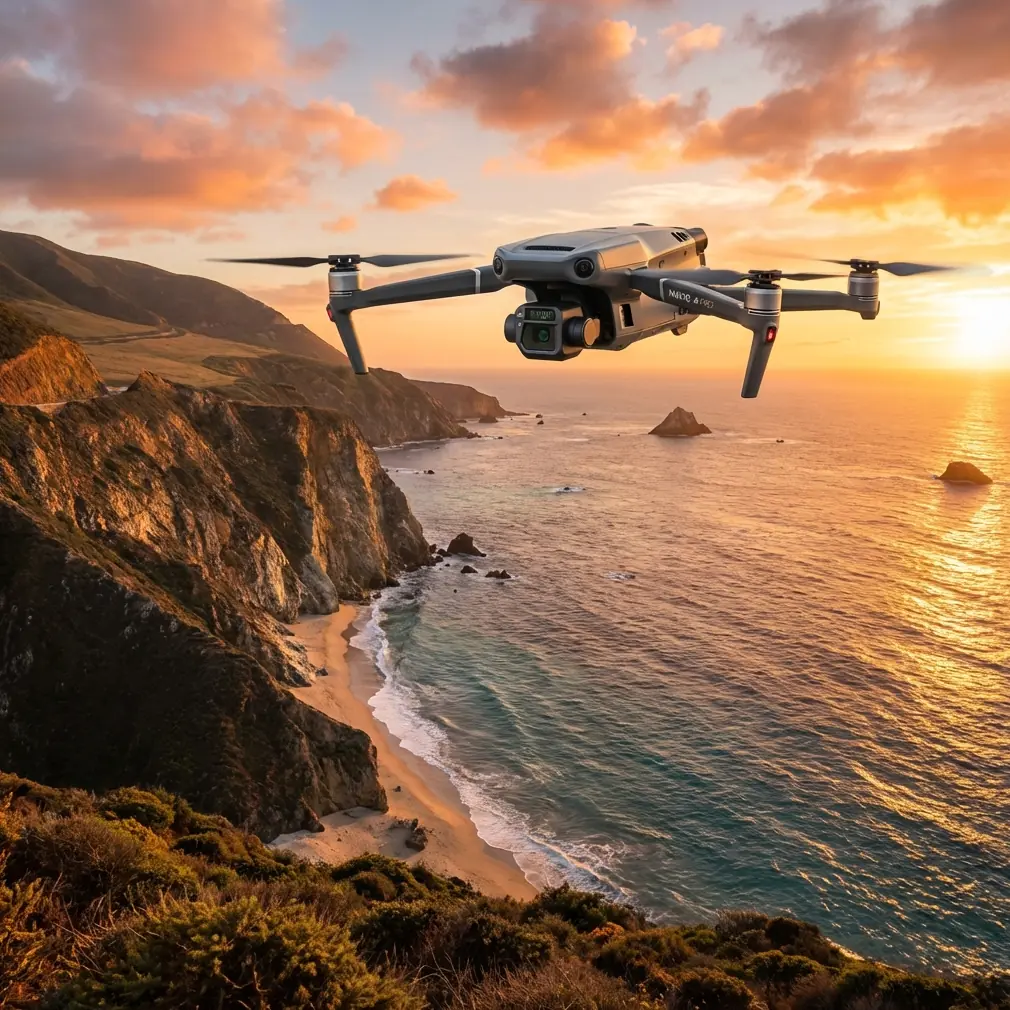
Mavic 3T on Mountain Construction Sites: What Actually Matters in the Air
META: Expert analysis of using the DJI Mavic 3T for mountain construction site spraying, with practical insight on thermal use, signal reliability, structural limits, and safe workflow design.
Mountain construction sites punish weak drone workflows.
The terrain breaks line of sight. Dust coats optics. Wind behaves differently at the cut slope than it does above the ridge. Crews move between retaining walls, temporary access roads, drainage channels, and raw spoil piles that radiate heat in uneven patterns. If your mission is spraying water, suppressants, sealants, or treatment agents across these environments, the drone is not just a flying camera. It becomes a decision tool, a safety layer, and a productivity multiplier—if you use the right platform for the job.
That is why the Mavic 3T keeps coming up in serious conversations around mountain-site operations. Not because it can do everything, and not because the airframe magically removes operational risk. It doesn’t. The real value is that it solves a cluster of site problems at once: seeing temperature differences, maintaining stable situational awareness in broken terrain, documenting progress, and helping crews act before a small issue becomes a shutdown.
I’ve seen this first-hand on steep construction corridors where manual inspection before spraying was slow and incomplete. One morning, while preparing a treatment pass over a freshly cut mountain access bench, the aircraft’s sensors picked up movement along the edge of a drainage swale. It turned out to be a wild boar moving through brush just below the work line. Without the aircraft’s elevated thermal and visual awareness, the crew would have started the task with people and equipment entering the same zone. That sort of detection is not a novelty. On remote sites, wildlife, livestock, and unexpected human movement all become operational variables.
The mountain-site problem isn’t spraying alone
Readers often frame this as a narrow question: can the Mavic 3T help with spraying on construction sites in the mountains?
The better question is broader: can it reduce uncertainty before, during, and after treatment work?
On steep sites, spraying is usually tied to one of several jobs. Dust suppression on haul routes. Moisture control on graded surfaces. Surface treatment before stabilization. Spot application on erosion-prone slopes. Sometimes crews are responding to seepage zones or trying to identify where runoff is undermining a prepared surface. The direct application step may be simple. The surrounding decisions are not.
You need to know where the material should go, where the site condition is changing fastest, whether the route is safe, and whether your aircraft link will hold when the pilot is standing one contour lower than the treatment area. You also need records. Not generic footage—usable site evidence.
This is where the Mavic 3T earns its place. Its strength is not payload volume. For larger liquid application volumes, dedicated spraying platforms will still be the main workhorses. The Mavic 3T is valuable because it sharpens the entire operation around those larger assets and around ground crews.
Thermal signature is not just for search tasks
A lot of operators underuse thermal imaging on construction work because they think of it only as a way to find heat leaks or people. On mountain projects, thermal signature reading is far more practical than that.
A fresh cut slope can hold moisture unevenly. Buried drainage lines can change local surface temperature. Water collecting behind compacted material often presents differently from drier zones, especially at daybreak or during evening transitions. A thermal pass before a treatment run can show where the surface is behaving differently from the surrounding grade. That matters if your next step is spraying water, dust control compound, curing agent, or another site-approved material.
The operational significance is simple: you stop treating the entire area as if it were uniform. It isn’t.
The Mavic 3T gives teams a fast way to isolate anomalies before they commit people, vehicles, and product. On mountain sites, that can save hours in repositioning alone. More importantly, it can help prevent repeat work caused by missing a wet seam, an unstable shoulder, or a section of slope that looks visually consistent but behaves differently under temperature contrast.
Reliability matters more than specs on paper
Broken terrain exposes every weak point in a drone system. Signal path is one of them.
For mountain construction work, O3 transmission is not a marketing bullet. It is an operational advantage because ridges, benches, and retaining structures constantly interfere with the link between pilot and aircraft. A reliable feed supports better route control when you are checking treatment zones near blind edges or flying parallel to a slope face.
Pair that with AES-256 protection and you get a practical benefit many site managers care about more than they say aloud: controlled handling of project imagery and site data. Large infrastructure jobs, quarry-adjacent developments, and private utility builds often treat aerial records as sensitive operational material. Strong transmission security helps when your thermal footage, progress imagery, and inspection logs are part of the project record rather than casual media capture.
That doesn’t mean you should lean on connectivity and fly recklessly into difficult geometry. It means the Mavic 3T gives you a stronger operational baseline in places where weak links waste time and create avoidable re-flights.
What aircraft design principles tell us about real-world limits
The reference material behind this discussion comes from aircraft design manuals, not consumer drone brochures. That distinction matters.
One source highlights a basic but critical structural principle: working stress should not exceed allowable limits, and in severe cases should never approach destructive stress. Another gives a concrete design number, noting that a general safety factor of 1.5 is commonly used in aircraft strength design, though it may be adjusted for special requirements or special environments.
For Mavic 3T operators on mountain construction sites, this is the right mindset.
A drone may not expose its structural calculations to the pilot, but the same engineering logic still applies in the field. When you fly in gusty mountain wind, near reflective rock faces, around heavy dust, or in temperature swings that affect battery and motor behavior, you are consuming margin. Not visible margin—engineering margin. The aircraft may still fly well. That is not the same as saying conditions are benign.
The practical lesson is to plan around margin, not around theoretical capability.
If a site team is repeatedly asking the Mavic 3T to hold station in turbulent updrafts, make long repositioning legs beyond ideal visibility, or fly with a rushed battery rhythm to “just finish this section,” they are eating into the same design buffer that all aircraft depend on. That is why mission discipline matters more in the mountains than on flat industrial estates.
A second reference detail, although coming from a damaged text extract, clearly concerns imperial thread standards. On its face, that sounds unrelated to a Mavic 3T article. It isn’t. Mountain construction work has a habit of mixing equipment ecosystems: imported mounting hardware, third-party accessories, field cases, antennas, tripod adapters, vehicle chargers, and survey targets. Thread standards become relevant the minute teams start integrating add-ons, quick-mount brackets, or repair components in rough field conditions.
Operational significance? Small fastening mismatches create real problems. A poorly fitted mounting point on a tablet holder, thermal monitor, landing pad fixture, or GCP marker mount can introduce vibration, loosen over time, or fail during transport over rough access roads. The manuals remind us of something drone teams often overlook: standardization is a safety issue, not just a maintenance convenience.
Photogrammetry still matters even when thermal is the headline
On mountain sites, the Mavic 3T should not be treated as a single-purpose thermal tool. Its value grows when thermal observation is paired with photogrammetry.
A thermal pass may show a cooler strip across a graded shoulder. Good. Now what? If the crew needs to relate that anomaly to slope geometry, drainage direction, volume of disturbed soil, or the spread pattern of a treatment area, they need mapped context. That is where photogrammetry becomes useful. Orthomosaics and terrain models give the thermal clue a physical location within the jobsite.
Add properly placed GCPs when accuracy matters. On steep and irregular sites, that extra control can tighten alignment between the aerial model and the real-world work zone. For teams documenting repeated treatment cycles over days or weeks, this avoids a common problem: comparing maps that look aligned visually but drift enough to confuse decision-making.
This matters if you are managing erosion control, slope stabilization prep, runoff monitoring, or dust suppression routes that have to be repeated under changing conditions. The Mavic 3T can become the bridge between “we saw something unusual” and “we have a defensible site record showing where, when, and how conditions changed.”
Battery workflow is where many field teams win or lose the day
Mountain jobs waste time in hidden ways. Walking back to a staging area takes longer than expected. Vehicles cannot always park near the safest takeoff zone. Weather windows close fast. That’s why battery handling is not a side issue.
A hot-swap style workflow—keeping aircraft downtime minimal through disciplined battery rotation—has outsized value on these sites. Even if the phrase sounds mundane, the field effect is dramatic. A team that can land, change power quickly, verify payload status, and relaunch with a clear next objective will outperform a team that treats every sortie as an isolated task.
For the Mavic 3T, this means planning flight groups around actual site decisions: pre-spray thermal scan, visual route confirmation, mapping pass, spot recheck after treatment. Not “fly until low battery and see what else we can capture.” That approach creates fragmented data and unnecessary risk.
BVLOS temptation is real in the mountains
Mountain construction creates a powerful temptation to stretch distance. The aircraft climbs a ridge, the video still looks good, and the pilot wants to continue because the target area is “just beyond” the next contour.
That is exactly where discipline has to hold.
BVLOS considerations may enter the discussion on large projects, but unless the operation is specifically approved and designed for it, mountain terrain should push operators toward conservative mission segmentation. Launch from better positions. Use relay crew placement where allowed. Break the job into blocks. Don’t let terrain seduce you into flying by optimism.
The Mavic 3T’s strong transmission system is helpful, but it should support a good plan, not excuse a weak one.
A practical workflow for mountain construction treatment support
If I were building a repeatable Mavic 3T workflow for this environment, it would look something like this:
Start early, ideally when thermal contrast is still useful. Run a short reconnaissance pass over the intended treatment area, drainage edges, spoil margins, and access track. Note any heat irregularities, standing moisture clues, wildlife movement, or surface changes.
Then capture the visual data needed for orientation and photogrammetric reference. If the project requires measurable repeatability, place GCPs where they can be seen clearly and safely. Build your map products so they can inform the treatment crew, not just archive the day.
Before the spraying team starts, confirm communications, terrain blind spots, wind behavior by elevation, and any exclusion areas around active plant or unstable ground. If you need help tailoring that field setup, this site coordination channel is the kind of direct line that makes more sense than trading vague screenshots after the fact.
Once treatment begins, use the Mavic 3T selectively. Don’t hover endlessly over the operation. Fly with purpose: verify coverage pattern, check drift behavior against terrain, review edge conditions, and re-scan any suspect zones after application.
Finally, use post-flight review to compare what the thermal image suggested with what the visual and mapped record now shows. This is how site teams improve. Not by collecting more drone data, but by connecting each data type to a real field decision.
Where the Mavic 3T fits honestly
The Mavic 3T is not a bulk spraying platform for large-acreage output. On a mountain construction site, its role is more intelligent than that.
It is the aircraft that helps you see the site before committing resources. It helps you identify uneven conditions that a truck crew or a hand team might miss. It lets you document slope and drainage context through photogrammetry. It keeps situational awareness stronger in broken terrain through robust transmission. It supports secure handling of project imagery. And when used with an engineer’s respect for structural margin—remember that 1.5 safety-factor principle from aircraft design—it encourages the kind of disciplined operation that rugged terrain demands.
That is the difference between owning a capable drone and running a capable workflow.
On mountain sites, the workflow is what pays.
Ready for your own Mavic 3T? Contact our team for expert consultation.