
Spraying Steep and Irregular Fields with the Mavic 3T
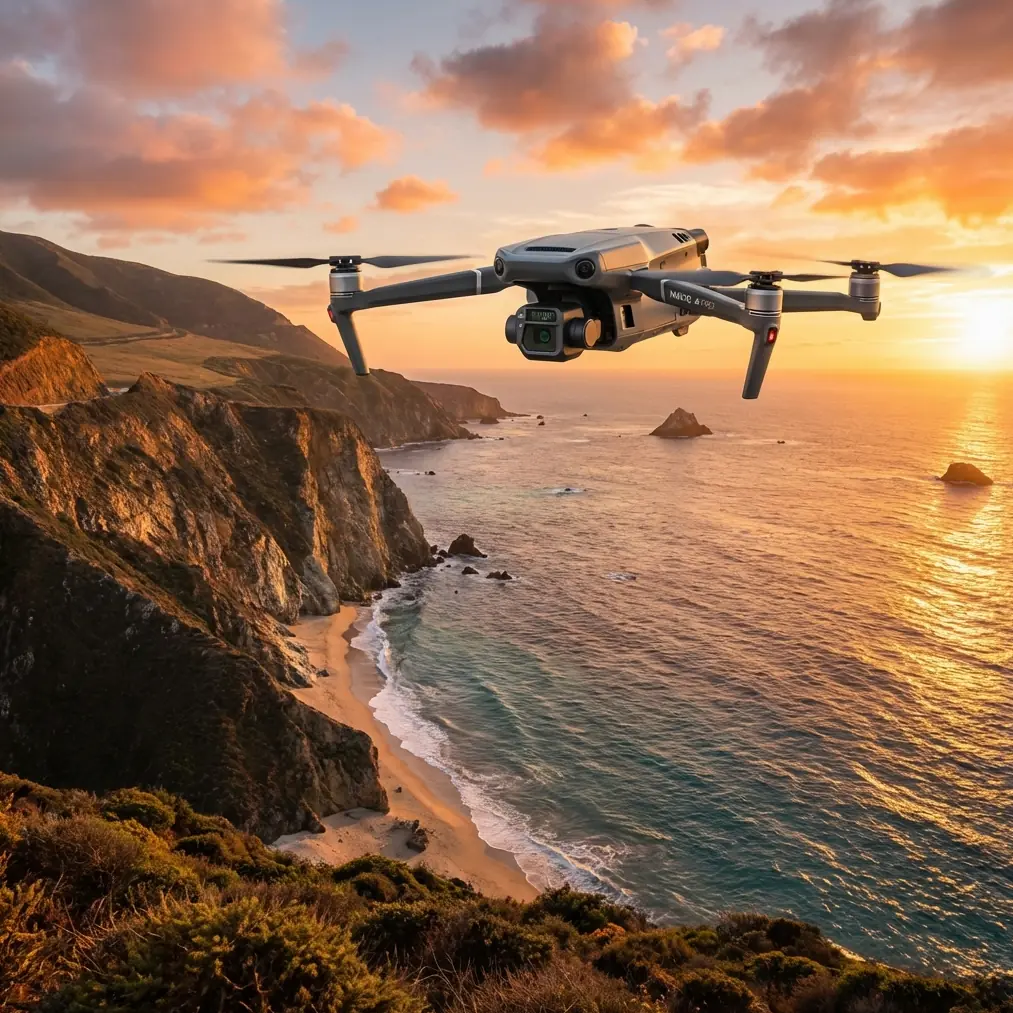
Spraying Steep and Irregular Fields with the Mavic 3T: A Practical Field Method
META: Expert tutorial on using the Mavic 3T around complex terrain for agricultural spraying support, thermal scouting, battery discipline, mapping logic, and safer workflow planning.
Complex terrain punishes lazy planning.
Flat fields let crews get away with rough assumptions: one launch point, one battery estimate, one visual check from the edge of the plot. Hillsides, terraces, tree breaks, wet pockets, and fragmented parcels do not. In that environment, the Mavic 3T becomes far more useful as a decision tool than as a simple camera platform. Used properly, it helps you read the field before any spray operation starts, spot uneven crop stress, identify access constraints, and tighten your battery routine so you do not lose time repositioning in the middle of the day.
I have seen crews treat the Mavic 3T as an afterthought to the spraying workflow. That is backwards. In difficult terrain, the quality of the reconnaissance pass shapes everything that follows: route design, refill staging, battery timing, operator placement, and even whether a section should be worked now or later.
This tutorial is built around that reality.
Start with the terrain, not the aircraft
When the target area includes elevation changes, narrow access lanes, embankments, irrigation cuts, or separate blocks of crop, the first question is not “How long will the battery last?” It is “Where will efficiency break down?”
The Mavic 3T is especially effective here because it can combine visible inspection with thermal signature analysis in one compact workflow. A standard RGB overview might show missing growth or obvious waterlogging. Thermal imagery often reveals a pattern earlier: warm stressed rows on a slope, cool wet sections collecting below a terrace, or irregular canopy temperature where coverage from a previous pass may have been inconsistent.
That matters because spraying in complex terrain is rarely just about applying product. It is about applying it where the field condition, slope exposure, moisture behavior, and plant stress actually justify the sortie sequence.
If you are surveying before a spray mission, divide the site into operational zones rather than crop zones. They are not always the same thing.
For example:
- upper dry slope
- shaded lower basin
- fragmented strip near tree line
- inaccessible edge requiring offset staging
- muddy access corridor that may delay refill logistics
The Mavic 3T helps you see those distinctions quickly. Once you think in operational zones, battery planning becomes much more accurate.
Thermal scouting is not a gimmick in agriculture
Many operators mention thermal because it sounds advanced. In steep or broken farmland, it is simply practical.
A thermal signature can help distinguish between crop stress caused by moisture deficit and stress caused by drainage or compaction patterns. That difference affects timing. If a section is already heat-stressed by late morning, you may want spraying assets staged there earlier. If another zone remains cooler due to retained moisture or shade, it may tolerate a later operational window.
This is one of the strongest reasons to use the Mavic 3T before field application support. It gives context that a visual pass alone can miss.
Thermal also helps with post-rain decisions. In uneven ground, surface appearance can be deceptive. A row may look navigable from the field entrance and still hold wet pockets farther in. Those pockets often read differently in thermal imagery, giving you a better sense of where support vehicles or crews may bog down. That saves more time than most people expect.
Why disciplined scaling matters in field planning
One detail from the reference material may seem unrelated at first: the engineering table showing preferred numerical series such as R20 and values like 1.12, 1.18, 1.25, 1.40, 1.60, 2.00, and 2.50. In machinery and systems design, these kinds of standard progressions are used because they create rational step sizes rather than random jumps.
That mindset is valuable in complex agricultural planning with the Mavic 3T.
Do not scale your field workflow in crude leaps like “small field,” “medium field,” and “large field.” Use repeatable increments. If one hillside block requires 1.25 times the normal battery reserve because of altitude changes, repositioning, and conservative return margins, document that. If a fragmented terrace system routinely pushes your scouting duration to around 1.40 times the estimate you use for flat parcels, make that a standard planning factor.
This is not theoretical. The logic behind values such as 1.25 and 1.60 from the reference series is operationally useful because it forces you to create proportional adjustments instead of vague guesses. Over a season, those increments become a reliable planning language for your team.
I often recommend that crews build a simple terrain multiplier sheet:
- flat open blocks: baseline
- mildly broken ground: 1.12 to 1.18 planning factor
- terraced or access-constrained fields: 1.25 to 1.40
- steep fragmented zones with multiple launch adjustments: 1.50 to 1.60
You are not copying an engineering table for fun. You are borrowing a disciplined way to think. That reduces underestimation, especially when operators are tired or moving quickly between sites.
A battery management tip that actually holds up in the field
Here is the habit I trust most: never evaluate the next Mavic 3T battery only by remaining percentage. Evaluate it by what kind of terrain segment it is about to fly.
On paper, two scouting flights may both look possible with the same remaining charge profile. In reality, a straight pass over an accessible flat orchard edge is not the same as a pass that includes a climb, cross-slope hold, visual verification of drainage channels, and a longer return path because you launched from the only safe dry patch.
My rule is simple:
Use your strongest batteries for the ugliest terrain segments.
Not the first segment of the day. Not the nearest one. The ugliest one.
This is where many crews waste usable cycles. They start with fresh packs on easy reconnaissance flights, then discover that the most complex slope block is left for later with a weaker battery and rising afternoon heat. That is backwards.
I tag batteries by observed field behavior, not just age:
- stable performers for high-load segments
- average performers for routine visible-light perimeter checks
- reserve packs for short confirmatory flights only
If a battery has started showing earlier voltage sag in warm conditions, I do not retire it immediately. I downgrade its role. It becomes a short-hop verification pack, not a “let’s just squeeze in one more hillside scan” pack.
That one habit improves tempo, reduces rushed recoveries, and gives your thermal data more consistency because you are not cutting scans short.
Hot-swap batteries are often discussed as a convenience. In actual agricultural support, the real value is continuity of decision-making. The shorter your ground pause, the less likely you are to lose the visual and thermal context you just developed over the previous zone.
Build your terrain model before you need it
A lot of field teams still wait until the morning of work to understand the site. That is late.
Use the Mavic 3T in advance to create a terrain and access reference. Even if your primary goal is spraying support rather than full mapping, there is value in a photogrammetry mindset. You do not always need a textbook survey deliverable, but you do need a dependable spatial model of the work area.
This is where photogrammetry, GCP discipline, and field annotation connect.
If you are documenting a complex parcel, a few well-placed ground control references can improve confidence in repeat visits, especially if you need to compare crop stress patterns after weather changes or verify that difficult sections were handled in the intended order. In fragmented farmland, the operational benefit of GCP-backed reference points is not abstract accuracy for its own sake. It is repeatability.
That means:
- same launch points
- same zone boundaries
- same refill access nodes
- same trouble spots flagged every visit
The Mavic 3T is not just helping you see the field. It is helping you standardize how the field is discussed by everyone involved.
Transmission reliability matters more in broken ground
Open fields are forgiving. Ravines, trees, embankments, buildings, and elevation shifts are not.
That is where stable O3 transmission becomes more than a spec-sheet line. In complex terrain, the quality of your link affects whether you can maintain a smooth reconnaissance pattern around visual obstructions and whether you need unnecessary repositioning. Each reposition costs time, battery, and continuity.
If your workflow includes handing imagery or findings across a wider farm operation, secure data handling matters too. The relevance of AES-256 is straightforward in commercial agriculture: field imagery, treatment timing, crop stress records, and mapped operational notes may all be sensitive business information. For growers, service providers, and cooperatives, that is not paranoia. It is normal professional data hygiene.
So yes, transmission and encryption belong in the conversation. Not because they sound advanced, but because they support dependable work in real operating environments.
What the controller reference teaches us about workflow discipline
The second reference document is a microcontroller setup page, but one part stands out operationally: a debug environment using a J-Link adapter and a listed Cortex-M0 target configuration. That is a reminder that reliable systems are built through structured setup, not improvisation.
For Mavic 3T field work, the parallel is obvious. Your flight operation should have a defined preflight configuration path just like a good embedded system project does.
Before you launch over complex terrain, confirm:
- mission objective for this battery
- thermal or RGB priority
- return threshold for this terrain class
- pilot position and alternate recovery position
- image tagging method
- weather change trigger
- handoff method for scouting findings to the spray team
The engineering lesson is simple: good outcomes come from a controlled setup, not last-minute clicking around. Embedded developers know that one missed configuration item can waste hours. Agricultural drone crews face the same truth in the field.
A simple Mavic 3T pre-spray workflow for difficult fields
Here is the sequence I recommend.
1. Run an early thermal sweep
Start before the day’s heat flattens temperature differences. Focus on slope variation, low-lying moisture zones, and irregular canopy behavior.
2. Confirm access and staging points
Use visible imagery to verify where crew movement, refill logistics, and battery swap activity can happen without slowing the operation.
3. Divide the parcel into workable segments
Do not use field boundaries alone. Use terrain logic, access logic, and crop condition together.
4. Assign battery classes to segment difficulty
Your strongest packs go to the segments with the highest energy uncertainty.
5. Capture reference imagery for repeatability
Think in terms of photogrammetry discipline even if you are not producing a formal survey every time. If needed, use GCP-supported references for recurring problem areas.
6. Push findings to the operational team fast
If you need a quick field discussion, share the route notes and marked issues through a direct channel like this WhatsApp contact for farm-flight coordination.
7. Recheck one critical zone later in the day
Thermal and visible conditions change. On complex terrain, a short follow-up pass can prevent a bad assumption from becoming a wasted sortie.
BVLOS thinking, even when you are not flying that way
Some readers will be planning for BVLOS-capable operations in permitted commercial frameworks. Even if your current work remains closer and more conservative, BVLOS thinking improves your setup today.
It forces you to ask:
- What information must be known before aircraft movement begins?
- Which zones become ambiguous from a single observer position?
- Where will terrain interfere with continuity of oversight?
- How much battery reserve is needed when route assumptions fail?
That mental discipline is useful whether the site is a tea plantation on stepped hillsides, a fragmented fruit block, or a mixed vegetable operation cut by drainage channels.
The real value of the Mavic 3T in spraying support
The Mavic 3T does not replace a dedicated spraying platform. That misses the point.
Its value is upstream. It helps you decide where the day will go smoothly and where it will break. In complex terrain, that may be the difference between a controlled agricultural workflow and a reactive one.
Use thermal to find what the eye misses. Use mapping logic so every revisit starts from knowledge, not memory. Use transmission and secure data practices because farm operations are still professional operations. And above all, treat batteries as terrain tools, not generic power packs.
That is what experienced field crews eventually learn. The aircraft is capable. The real edge comes from how precisely you fold its information into the rest of the job.
Ready for your own Mavic 3T? Contact our team for expert consultation.